Flower Duet: Cello Sheet Music Preview

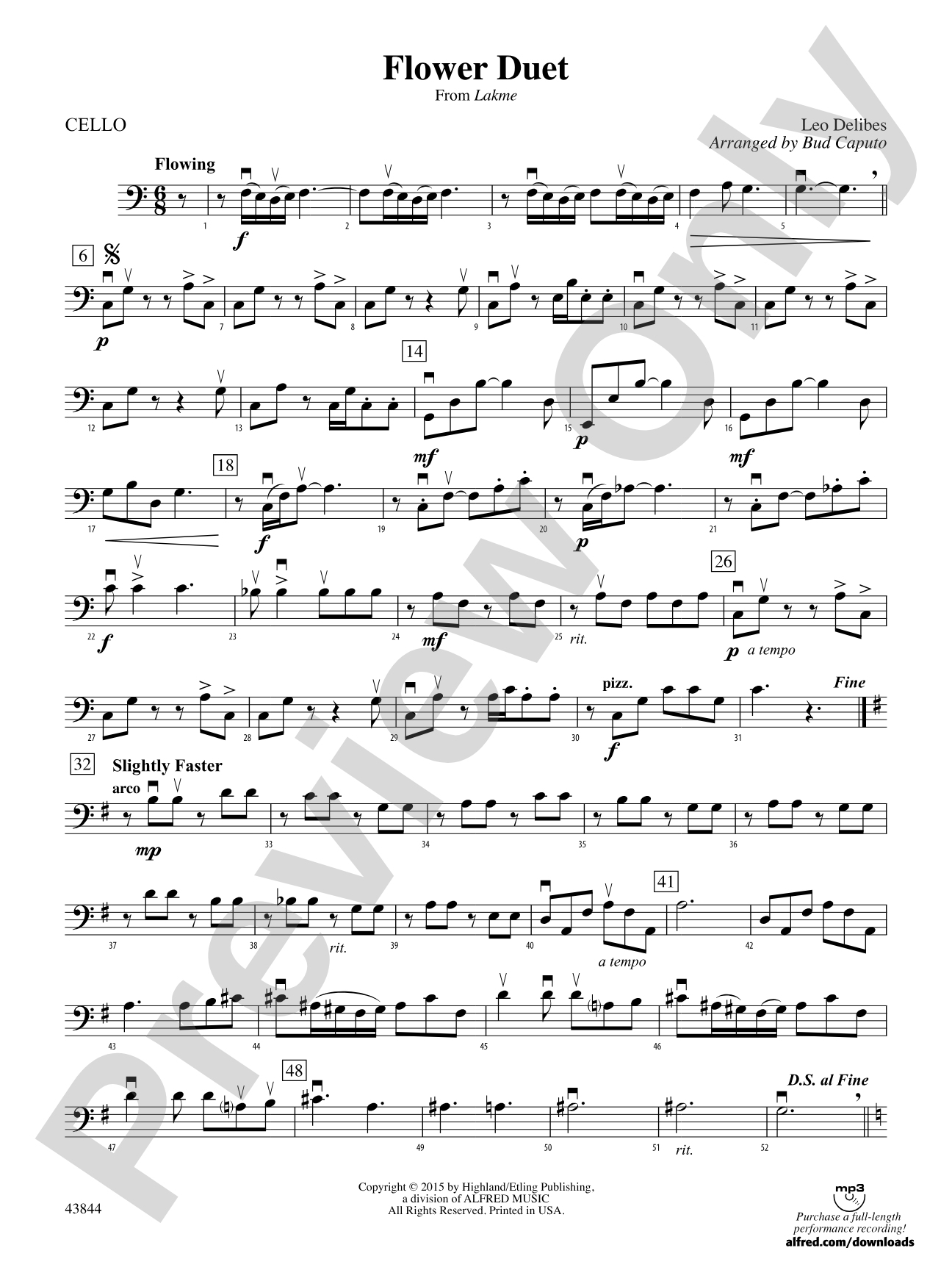
Flower Duet: Cello

From Lakme

By Léo Delibes / arr. Bud Caputo

Grade: 3

Item: 00-PC-0016940_VC1

Digital Download
$5.99
Description
The violins carry the duet lines all while in 1st position while the other sections have challenging arpeggios creating a beautiful string transcription that is very close to the original. Perfect to expand students' understanding of opera! (3:45)

Don't just read it, hear it, play along with it, and watch your students grow with it. In MakeMusic Cloud, Flower Duet: Cello comes alive with professional accompaniment, adjustable tempo, and built-in practice tools that turn solo practice into real progress.

Sample Audio
0:00
0:00
Sample Video
Additional Details
Series: Highland/Etling String Orchestra
Publisher: Alfred Music
Page Count: 104
SKU: 00-PC-0016940_VC1

More about this title

About the Composer: Leo Delibes

Leo Delibes (1836-1891) stands as one of the nineteenth century's most gifted melodists, a composer whose gift for memorable, singable lines made him a master of opera and ballet. His work in the French lyric theater shaped the sound of Romantic opera, and pieces like Lakmé and Coppélia remain central to the operatic and ballet repertoires today. For music educators, Delibes represents an essential voice in exposing students to the sophistication and accessibility of Romantic-era composition.

Why we love this

This arrangement preserves the gorgeous melodic writing that makes the Flower Duet unforgettable while keeping the technical demands reasonable for a Grade 3 ensemble. Bud Caputo's transcription puts the iconic duet lines in first position violin, freeing students to focus on phrasing and character rather than wrestling with position shifts, while the arpeggios in lower voices add textural richness without overwhelming younger players.

What to expect

Lush and romantic, with a sense of theatrical elegance that transports players into the world of nineteenth-century French opera. The gentle arpeggios and soaring violin lines create an atmosphere of warmth and nostalgia, inviting the listener into an intimate musical conversation.

Who it's for

String orchestra programs at the intermediate level looking to introduce students to opera repertoire without overwhelming them technically. Directors seeking a concert or festival piece that demonstrates how orchestral arrangers can faithfully transform vocal music for instrumental ensembles.

How to get the most out of it

  • Balance the violin duet so both lines sing with equal prominence; the accompaniment figures should sit clearly below the melodic texture.
  • Shape the phrasing in long arcs rather than by measure; this music breathes like a vocal line, so encourage players to listen to singers performing the duet before rehearsal.
  • Use the three-minute-forty-five-second running time as a guide for tempo; rushing this piece sacrifices the lyrical beauty that makes the Flower Duet memorable.
  • Let the viola and cello arpeggios establish a gentle pulse without becoming mechanical; light, singing tone makes these accompaniment figures blend into the overall harmonic wash.

How to use it

Program this alongside other Romantic masterwork arrangements to build thematic unity around a "Romantic Opera and Ballet" concert or festival. It works particularly well as an opener or intermezzo, offering a brief respite of beauty and accessibility for audiences unfamiliar with classical music.

Skills your students will build

  • Sustaining legato phrasing in first position across multiple measures
  • Balancing two simultaneous melodic lines within a single section
  • Playing flowing accompaniment figures (arpeggios) at a consistent dynamic level
  • Interpreting Romantic-era orchestral texture and style
  • Recognizing and performing familiar operatic music in orchestral arrangement

You May Also Like