Flower Duet Sheet Music Preview

Flower Duet: Piano Chords/Lyrics

As performed by Leo Delibes

Item: 35-DS00184782

Digital Download
$2.99
Description

Discover MakeMusic Cloud: thousands of interactive titles your students can play along with today.

Sample Audio
No sample audio found.
Sample Video
Additional Details
Publisher: Hal Leonard
Page Count: 2
SKU: 35-DS00184782

More about this title

About the Artist: Leo Delibes

Léo Delibes (1836–1891) shaped the sound of French opera and ballet through his gift for melody and orchestral color. His work spans operetta, full-length operas, and ballets, but it is his ballets—particularly Coppélia and Sylvia—that cemented his legacy as a master of theatrical music.

For music educators, Delibes represents an essential bridge between classical structure and Romantic accessibility. His music rewards both singers and instrumentalists with grateful vocal lines and orchestral writing that demonstrates orchestration principles without demanding virtuosity beyond reach.

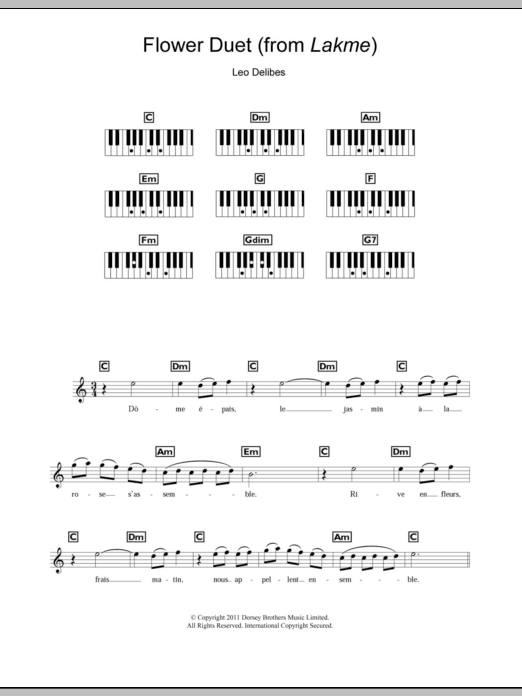
Why we love this

The Flower Duet glows with the kind of tunefulness that singers actually want to perform. Delibes writes for the human voice with intelligence and generosity; the parts sit well, the harmony supports without overwhelming, and the piece contains real musical content—not mere vocal display.

What to expect

Graceful and intimate, the Flower Duet blooms with a gentle elegance that feels both timeless and warmly human. The harmony drifts through soft chromaticism and major key warmth, inviting singers to savor each passing phrase without haste.

Who it's for

This duet works well for intermediate singers of any voice type pairing, and it is a natural choice for programs exploring French operatic tradition or introducing Delibes to choral singers. It also serves effectively in voice lessons as a vehicle for musical phrase and collaborative listening.

How to get the most out of it

  • Balance the voices so both singers share equal presence. Delibes shapes this as a conversation, not a solo with accompaniment.
  • Shape each phrase with gentle rubato that honors the lyrical melody without becoming indulgent; let the harmony breathe.
  • Coordinate your diction across both parts so consonants articulate together and vowels blend seamlessly.

How to use it

Pair this with other 19th-century French vocal music for a focused concert segment, or use it to open a program requiring a moment of lyrical repose. It fits naturally into a spring or garden-themed concert, or as a tonal anchor in a diverse voice recital.

Skills your students will build

  • Shaping longer melodic lines with purposeful phrasing
  • Balancing two independent vocal lines of equal musical weight
  • Interpreting chromatic harmony and functional chord movement
  • Collaborative listening and ensemble blend in duet texture

You May Also Like