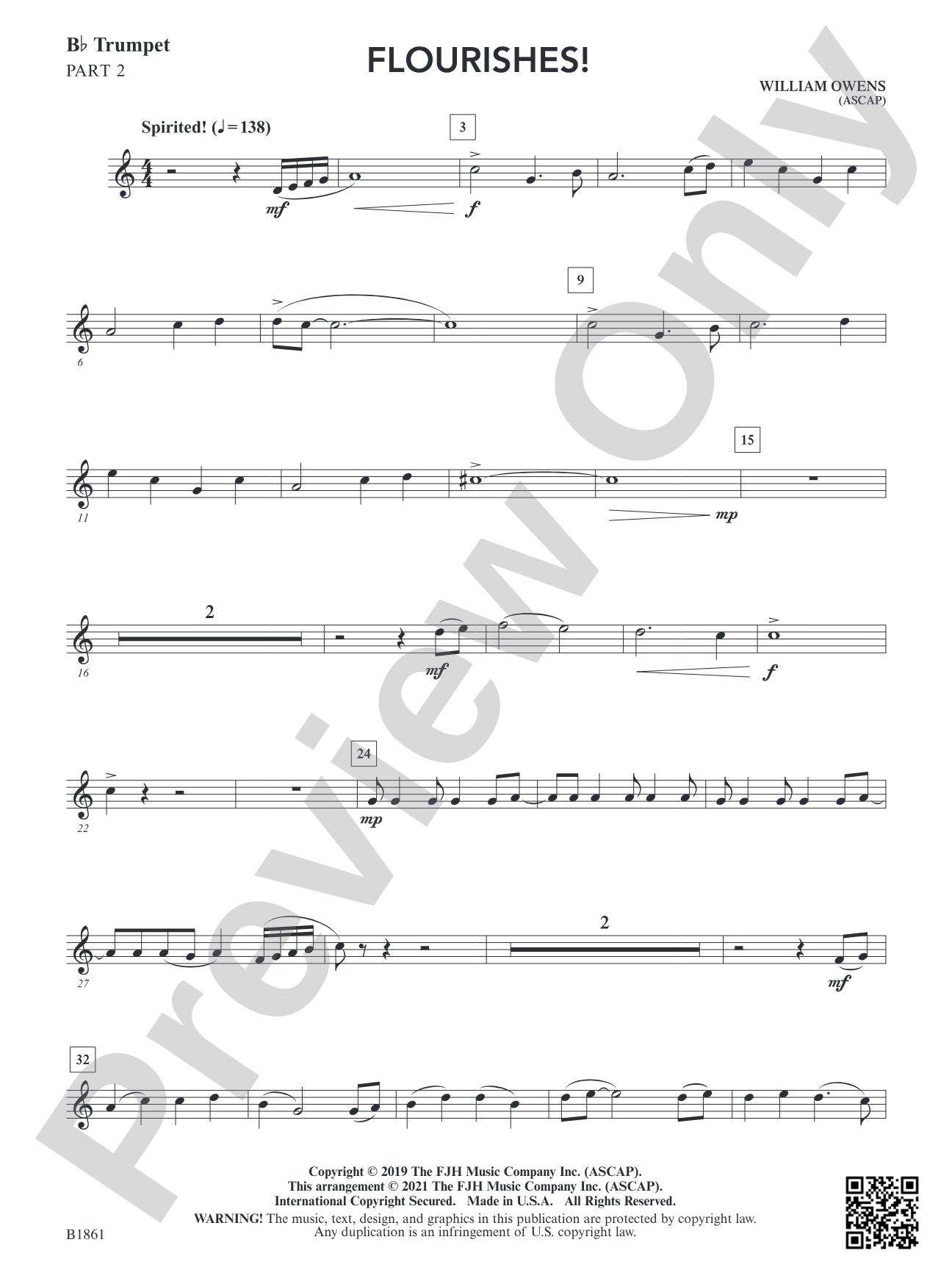
Flourishes!: Part 2 - B-flat Trumpet Sheet Music Preview

Flourishes!: Part 2 - B-flat Trumpet

By William Owens

Grade: 2.5;3

Item: 98-PC-DB1861_PT2_T

Digital Download
$7.00
Description
Dynamic and highly spirited, the bold opening quickly sets the stage for lush harmonies, driving rhythms and a variety of tonal colors. An excellent way to announce the beginning of your concert while leaving plenty of endurance for the rest of the program!

Don't just read it, hear it, play along with it, and watch your students grow with it. In MakeMusic Cloud, Flourishes!: Part 2 - B-flat Trumpet comes alive with professional accompaniment, adjustable tempo, and built-in practice tools that turn solo practice into real progress.

Sample Audio
0:00
0:00
Sample Video
Additional Details
Series: FJH Flex Series
Publisher: The FJH Music Company, Inc.
SKU: 98-PC-DB1861_PT2_T

More about this title

About the Composer: William Owens

William Owens

William Owens has spent decades composing accessible yet musically substantial works for young ensembles. A VanderCook College of Music graduate and former Texas band director with 30 years in the classroom, he brings direct knowledge of what student musicians can achieve and what conductors need from their repertoire. His catalog exceeds 300 titles across concert band, string orchestra, and small ensemble contexts, and his compositions regularly appear on festival required lists and in educational curricula across North America.

Owens's approach to composition balances practical considerations with genuine artistic ambition. He has been recognized with commissions from prestigious organizations including the American Bandmasters Association and Phi Beta Mu International, and holds memberships in ASCAP and the Texas Music Educators Association. His work has been analyzed in educational texts and established itself as foundational literature in the young band repertoire.

Why we love this

This opening statement makes a real impact without overtaxing your ensemble's resources or attention span. Owens writes with clarity and purpose here: the writing sits well for flexible instrumentation, the orchestration shifts through interesting colors without losing coherence, and the piece actually accomplishes what it promises. You get a concert-worthy proclamation that your students can execute convincingly at Grade 2.5-3.

What to expect

The piece announces itself with confidence and style. What begins as a bold declaration blooms into richer harmonic territory, with instrumental colors shifting and intensifying across the middle section before the driving rhythms carry momentum forward. The overall effect is spirited and polished without feeling overwrought.

Who it's for

Conductors looking for a concert opener that establishes presence and energy without demanding advanced technique or exceptional endurance from their ensemble. This works equally well for bands or flexible instrumentation groups at the intermediate level who need a professional-sounding statement piece.

How to get the most out of it

  • Establish the bold opening gesture with clean attacks across all sections; the opening's effectiveness depends on ensemble unity, not individual flourish
  • Shape the phrase arcs through the lush harmonic sections by maintaining tone quality while observing dynamic contours; avoid letting texture become muddy even as density increases
  • Support the driving rhythms by locking in with your rhythm section early in rehearsal, ensuring steady articulation that propels rather than sits

How to use it

Position this at the start of your concert to command attention and set an energetic tone for what follows. Because it leaves endurance intact, you can move directly into a substantial work without interval or regrouping. It also works well as an opening for a festival appearance or concert where you need to establish your ensemble's capabilities immediately.

Skills your students will build

  • Executing clean ensemble attacks and releases
  • Balancing independent lines within harmonic textures
  • Sustaining tone quality across dynamic changes
  • Responding to shifting orchestration and color shifts
  • Maintaining rhythmic precision in driving passages

You May Also Like