
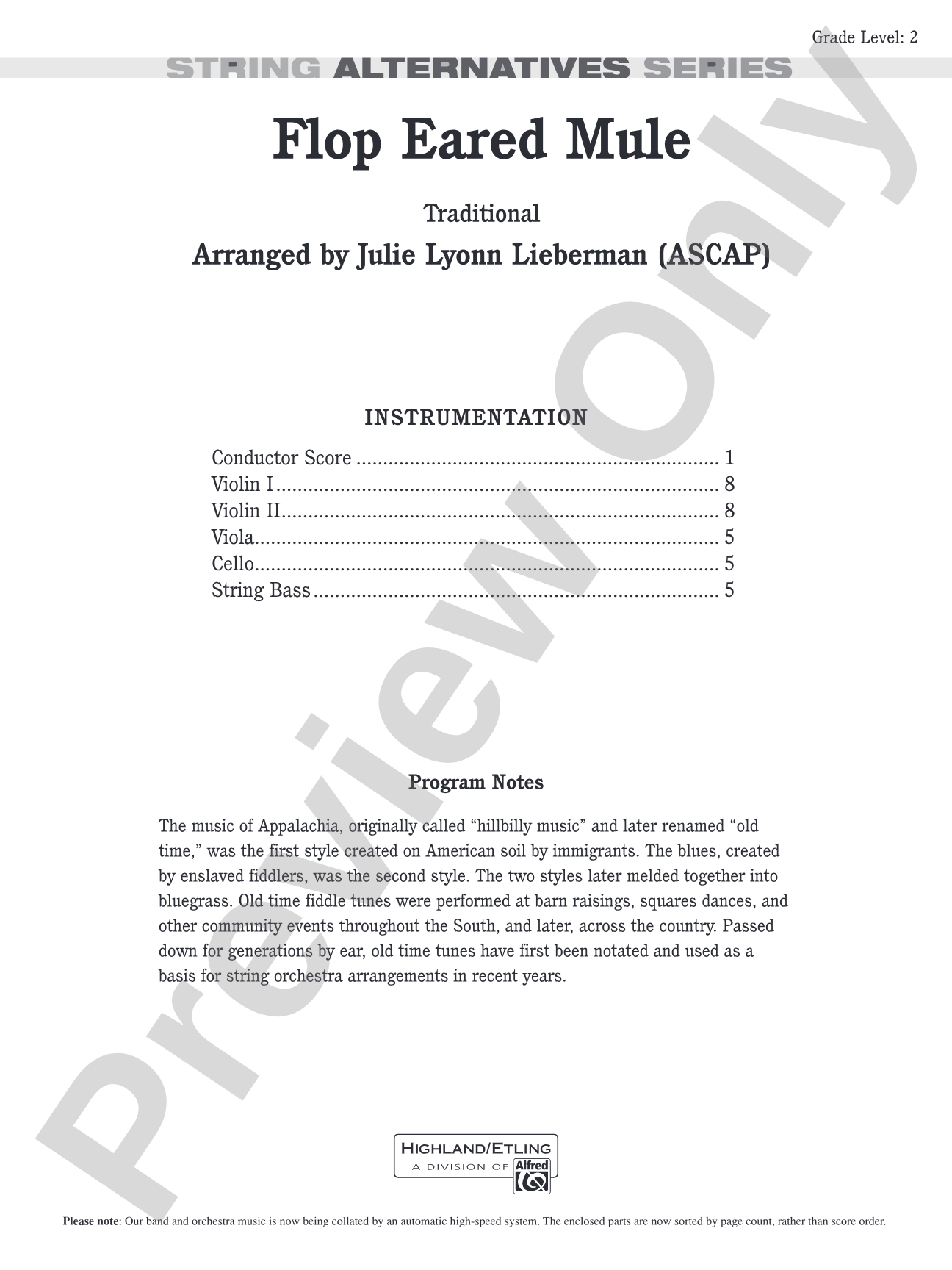
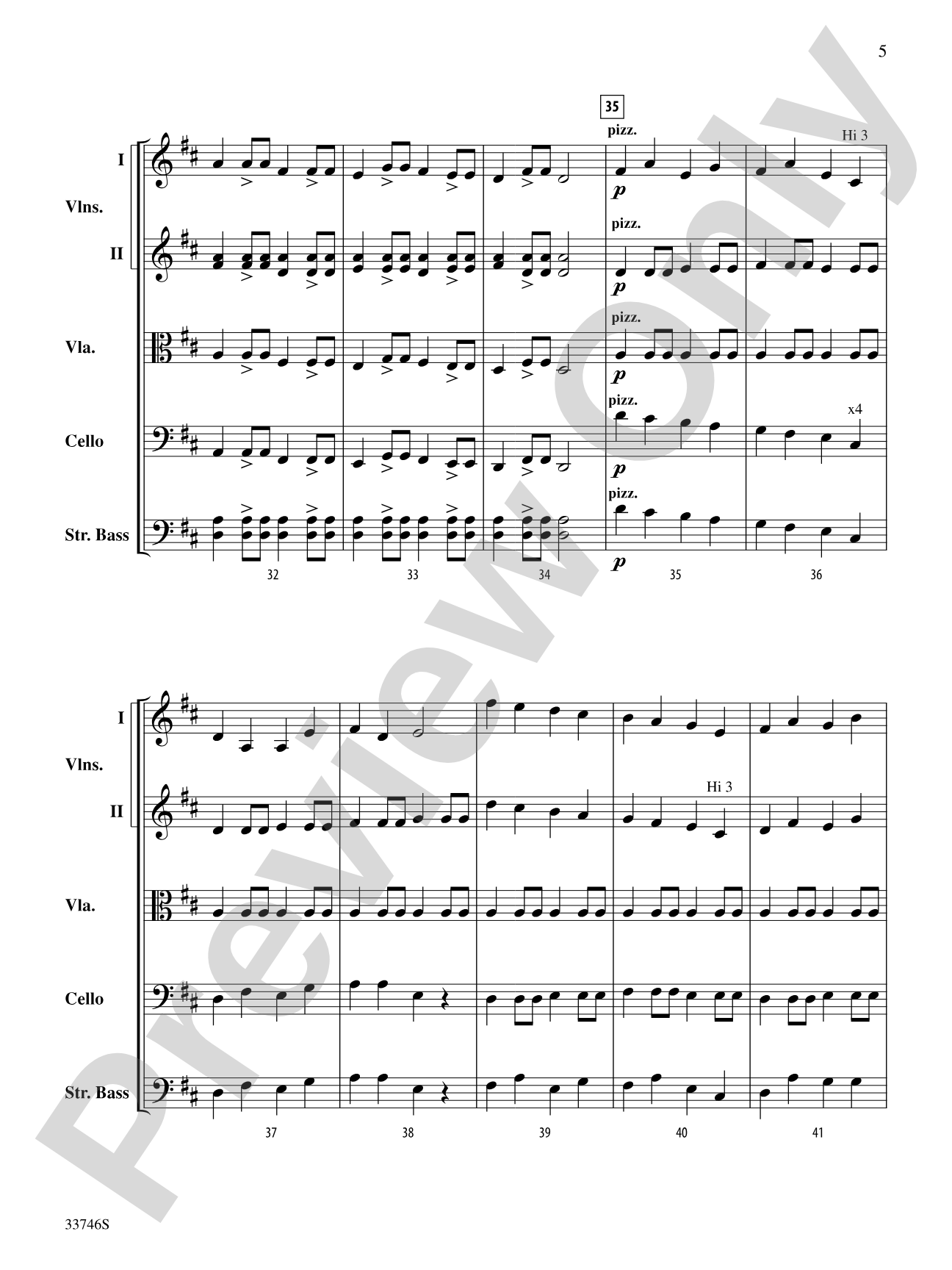
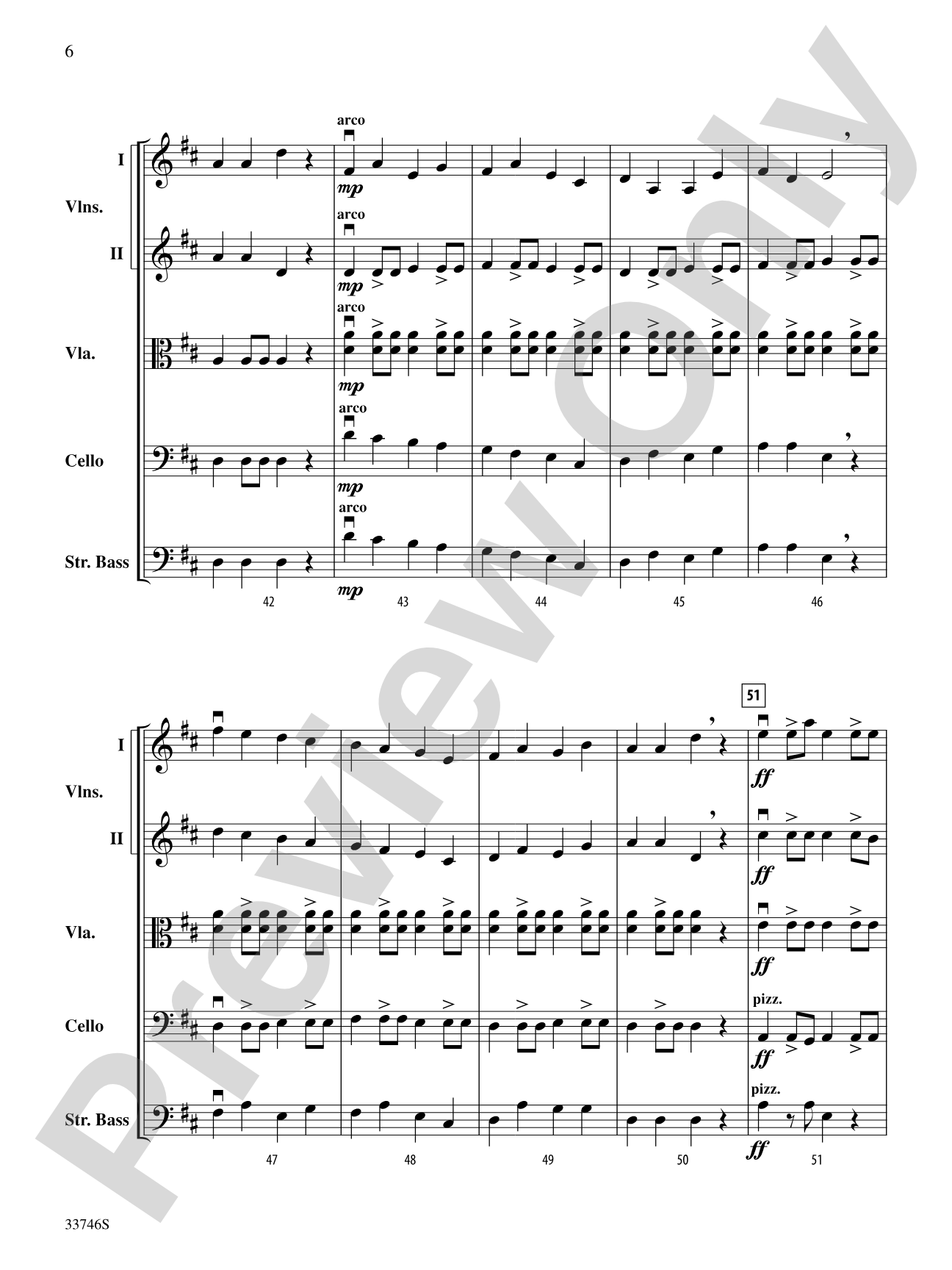
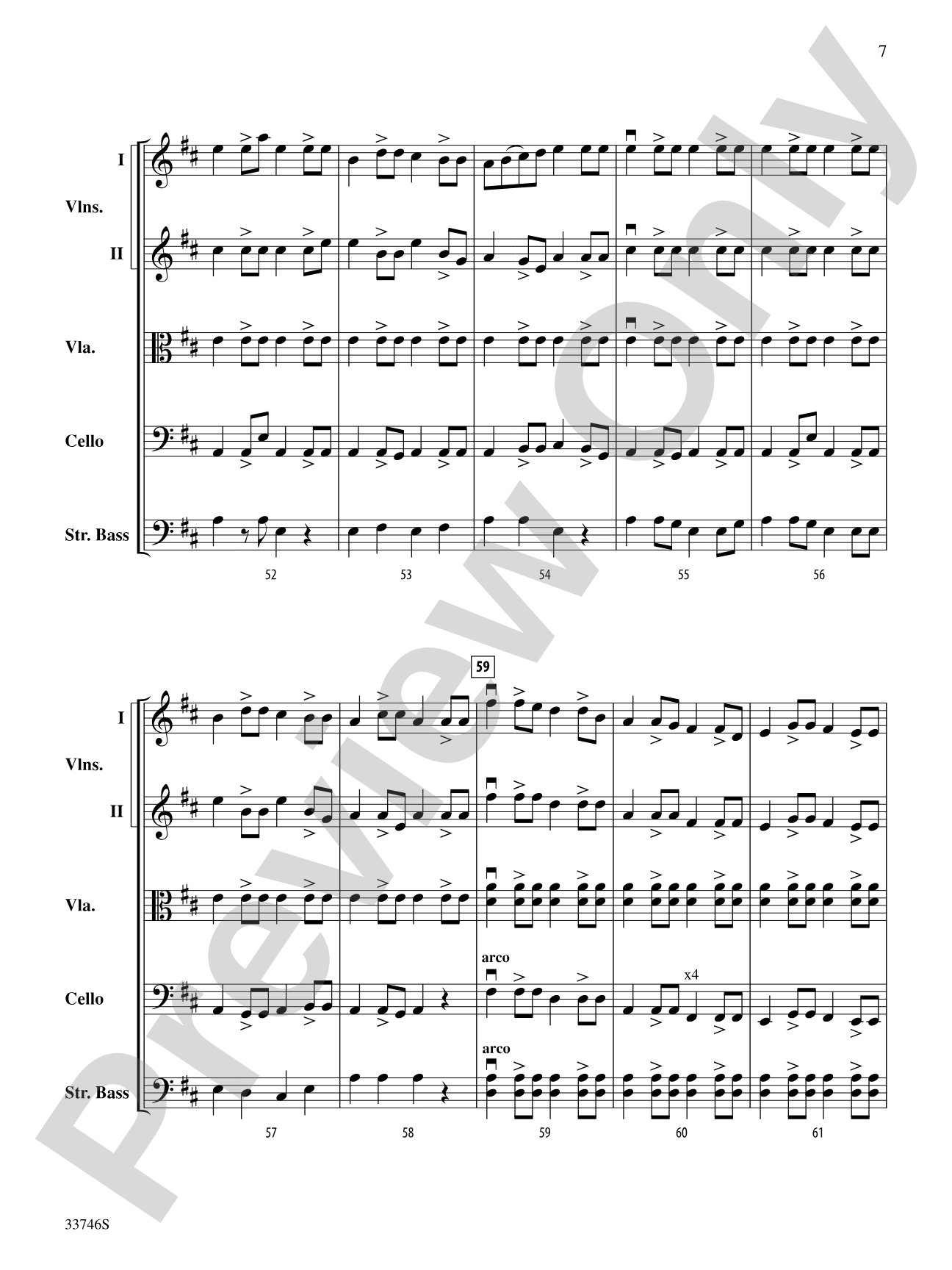
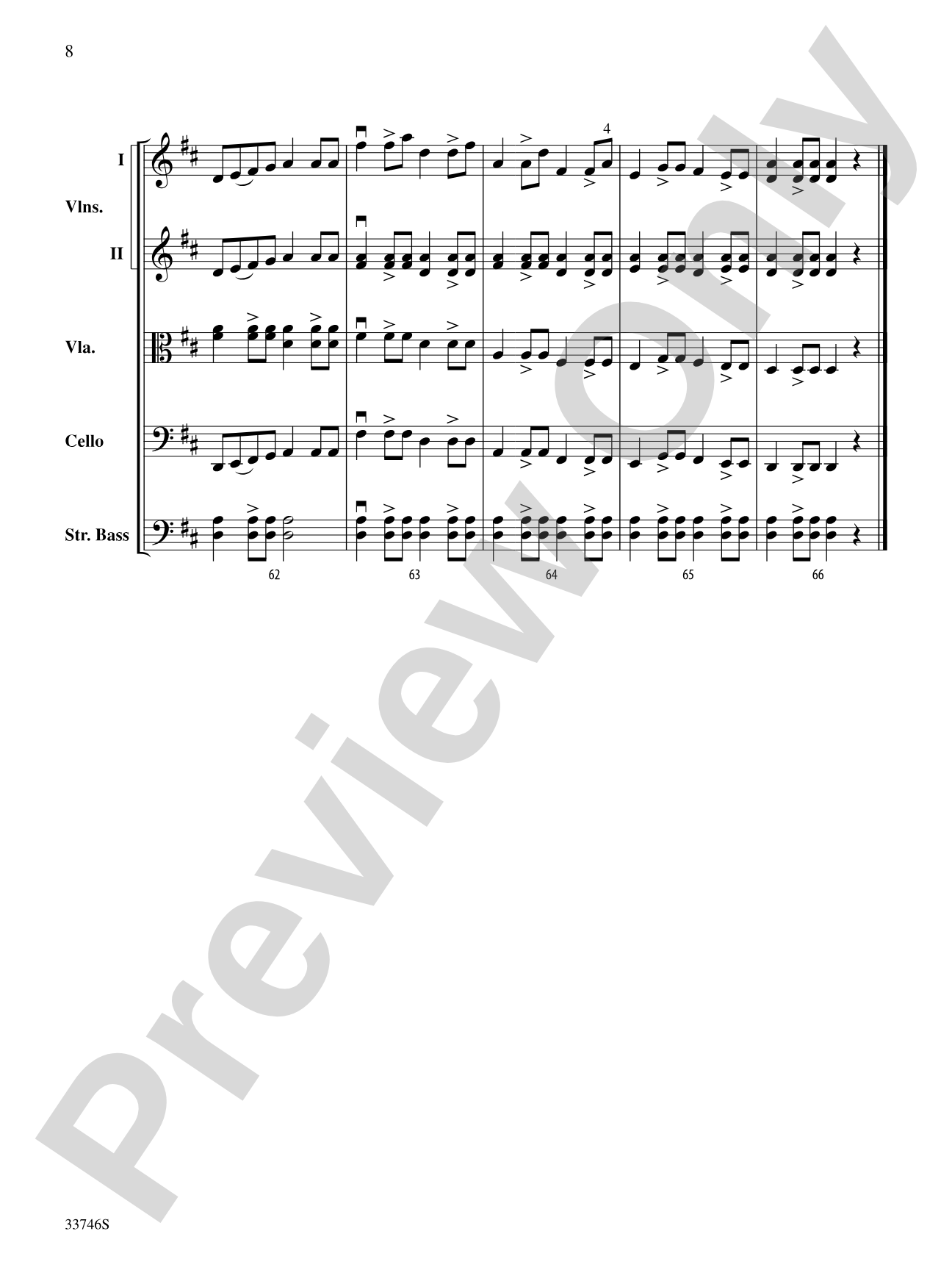

Flop Eared Mule: Score
Traditional / arr. Julie Lyonn Lieberman
Grade: 2
Item: 00-PR-0002849
$7.00
Pickup currently not available
Description
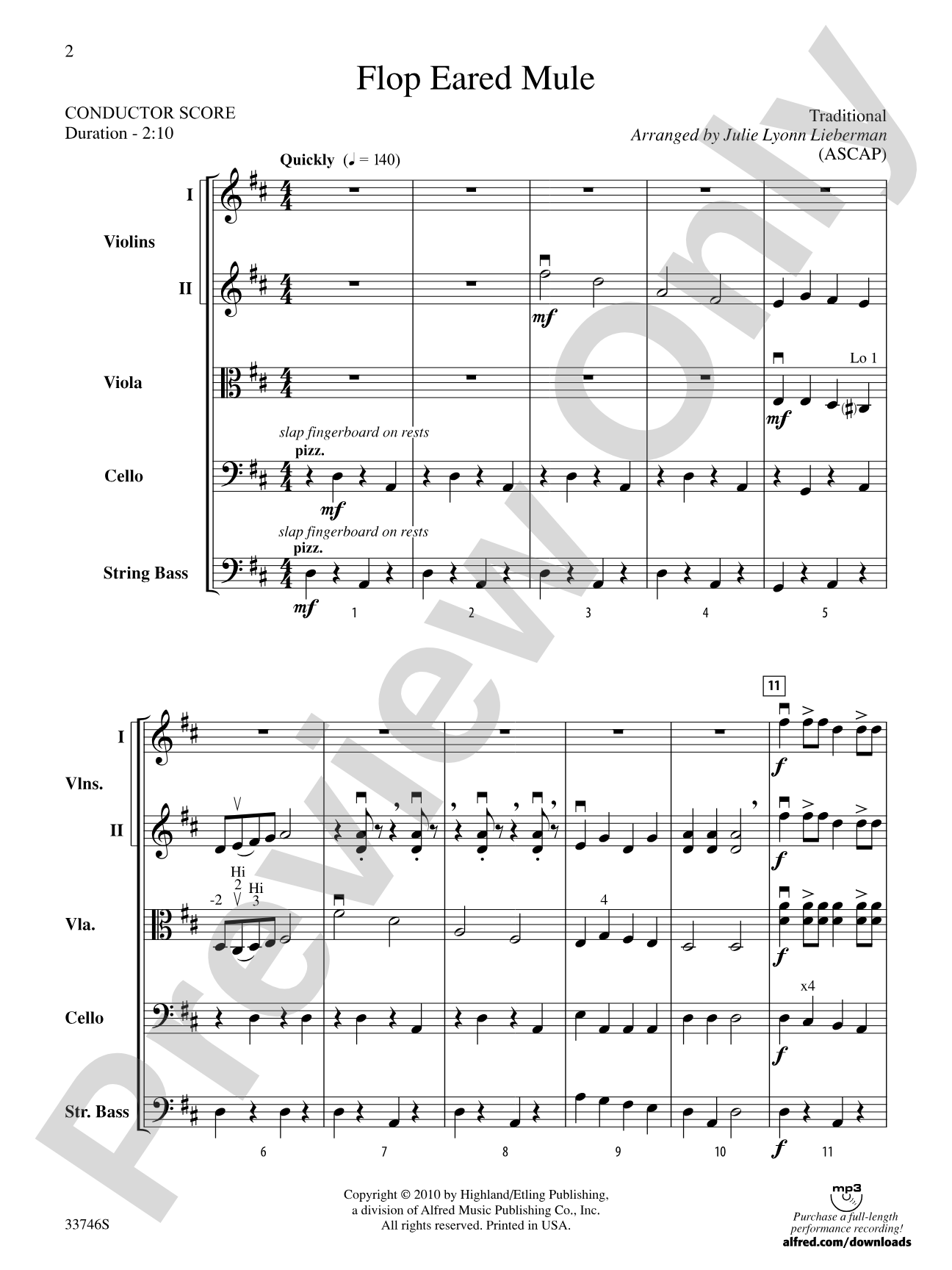
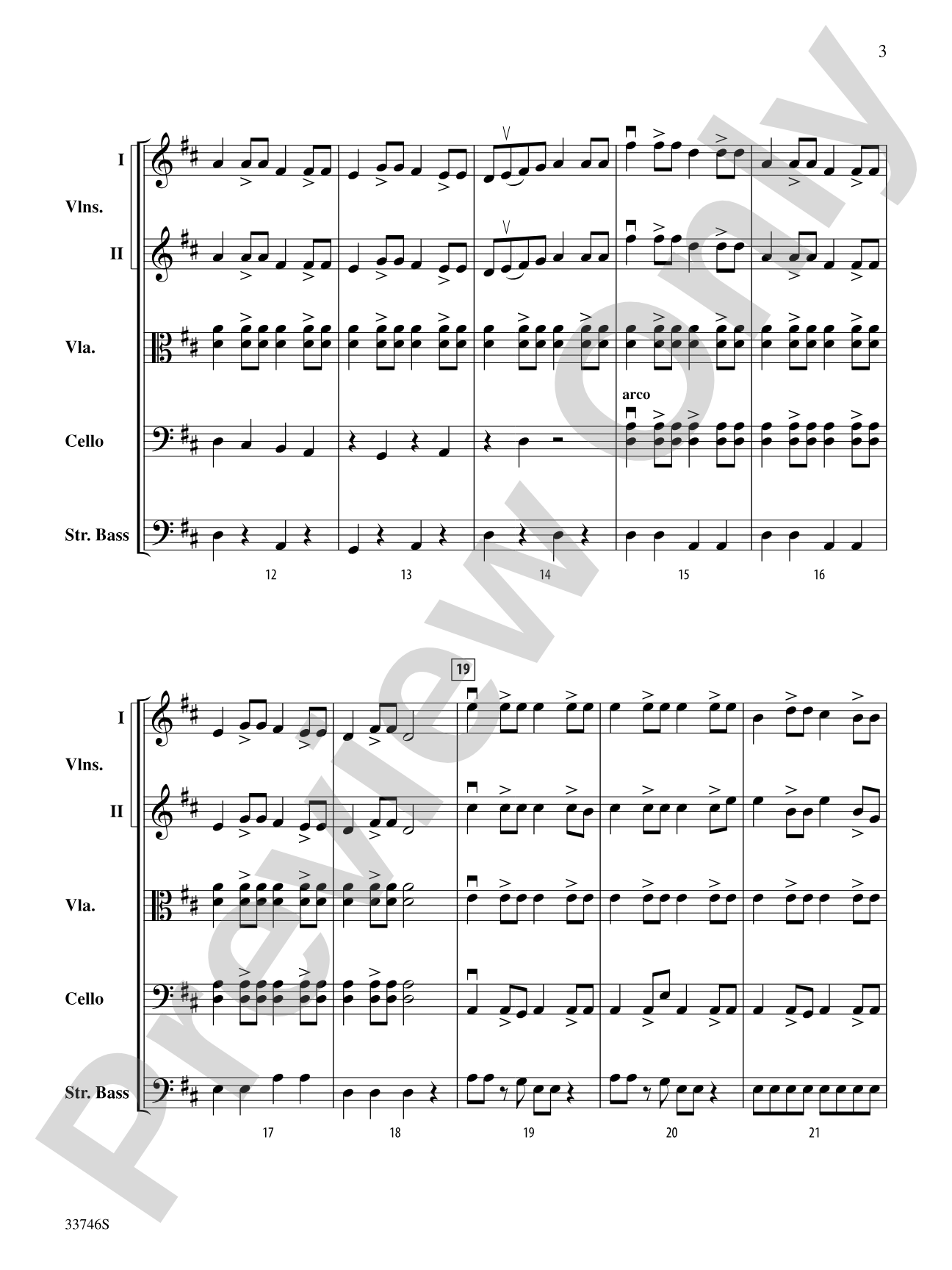
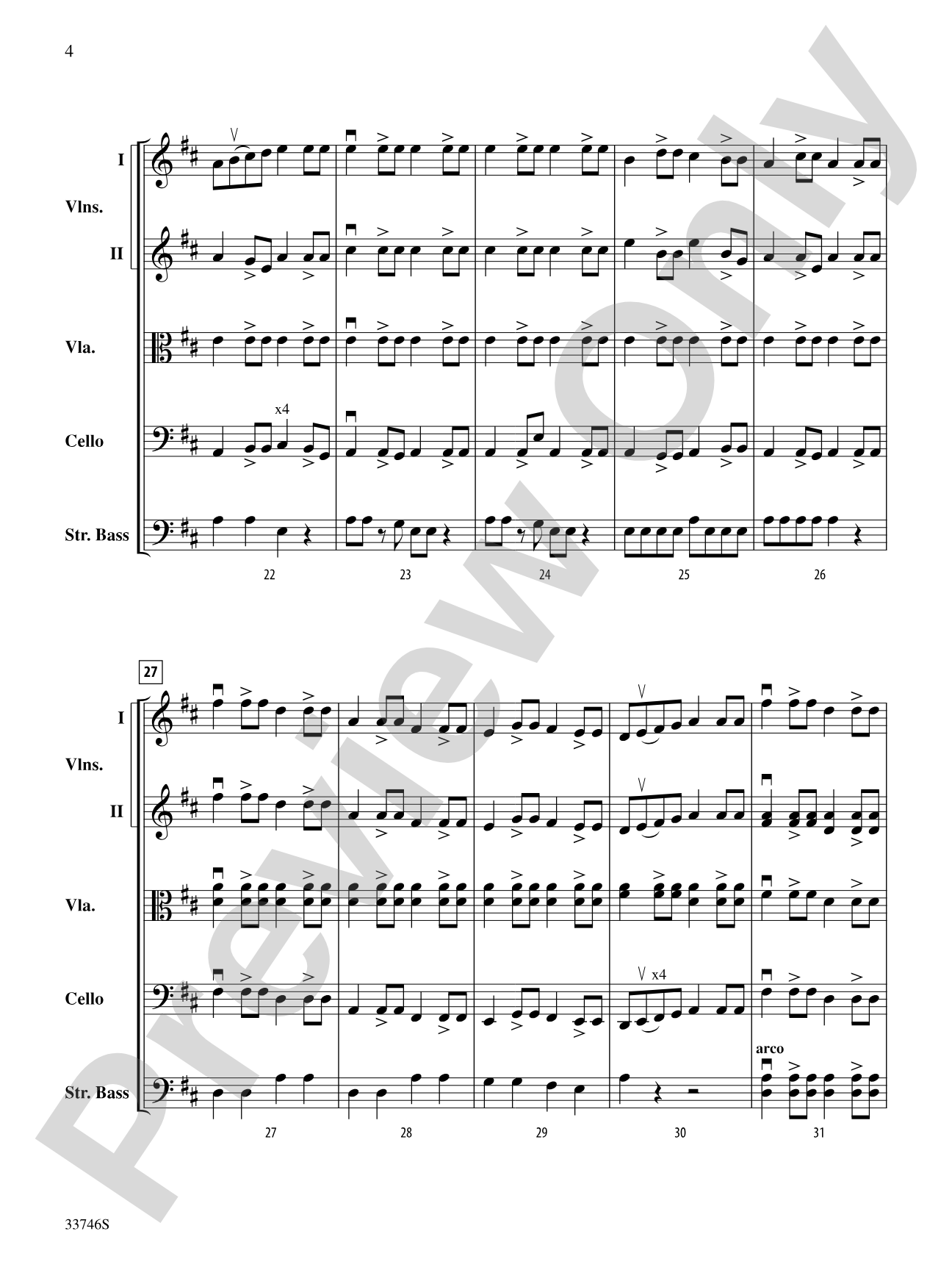
An upbeat, foot-stompin' arrangement of a classic old time fiddle tune that's been passed down for generations. Originally performed at barn raisings, square dances, and other community events throughout Southern Appalachia, it is part of every fiddle player's repertoire. In the key of D, this tune features the primary old time bow technique, the shuffle stroke, as well as a backbeat on two and four. A perfect fiddle tune for younger players!


Don't just read it, hear it, play along with it, and watch your students grow with it. In MakeMusic Cloud, Flop Eared Mule: Score comes alive with professional accompaniment, adjustable tempo, and built-in practice tools that turn solo practice into real progress.
Open in the Player
Jump straight in and assign it today.
Start Your Free Trial
Open this title and explore the full library in minutes.
Sample Audio
1
Audio File
--:--
0:00
0:00
Sample Video
No sample videos found.
Additional Details
Series:
Highland/Etling String Alternatives
Publisher:
Alfred Music
Page Count:
62
SKU:
00-PR-0002849
More about this title
About the Arranger: Julie Lyonn Lieberman
Julie Lyonn Lieberman is a composer, arranger, and educator who has spent decades documenting and celebrating American folk traditions. Her work honors the roots of fiddling and string playing across regional styles, making these living traditions accessible to young ensembles.
Lieberman's arrangements reflect deep knowledge of both folk idiom and pedagogical development. She understands how to translate the energy and authenticity of traditional music into parts that younger players can execute with confidence while maintaining the character that makes these tunes unforgettable.
Why we love this
This arrangement brings genuine fiddle tradition into the string orchestra classroom without watering down the character. The shuffle stroke and backbeat create rhythmic authenticity that engages players while remaining manageable at Grade 2, and the foot-stomping energy almost guarantees an audience response that reminds everyone why folk music endures.
What to expect
You're in a barn, the fiddles are calling, and everyone's tapping their feet in unison. The shuffle stroke gives the melody a loose, dancing quality while the steady backbeat keeps everything grounded and driving. It's the sound of community and celebration translated into orchestral terms.
Who it's for
Grade 2 string orchestras with players ready to encounter folk idiom and traditional bowing techniques. This works equally well for ensembles building foundational skills and for those seeking repertoire that connects classical training to American musical roots.
How to get the most out of it
- Establish the shuffle bow stroke in sectionals before full rehearsal. Have violins and violas work the pattern slowly, emphasizing the bounce and lift that gives old time music its swagger.
- Lock the backbeat between violas and cellos on beats two and four. This rhythmic anchor is what makes the tune drive, so isolate it and get it solid before adding violins.
- Play with rhythmic freedom in the melodic passages while keeping the pulse steady underneath. Fiddle tunes thrive on the tension between laid-back phrasing and a grounded beat.
- Bring out dynamics naturally based on the melody's contour rather than following every marking literally. Folk music lives in the spaces between the notes as much as in the notes themselves.
How to use it
Pair this with other Americana or folk-based selections to build a cohesive concert theme, or program it as a high-energy second half opener that shifts the mood from formal to joyful. It also serves as a bridge moment for audiences who might not typically connect with orchestral music, reminding them that strings and folk traditions belong together.
Skills your students will build
- Shuffle bow stroke and old time bowing technique
- Syncopated rhythms and backbeat coordination
- Folk idiom phrasing and rhythmic flexibility within meter
- Cross-string articulation in a traditional style
- Ensemble rhythmic cohesion in dance-tempo material