
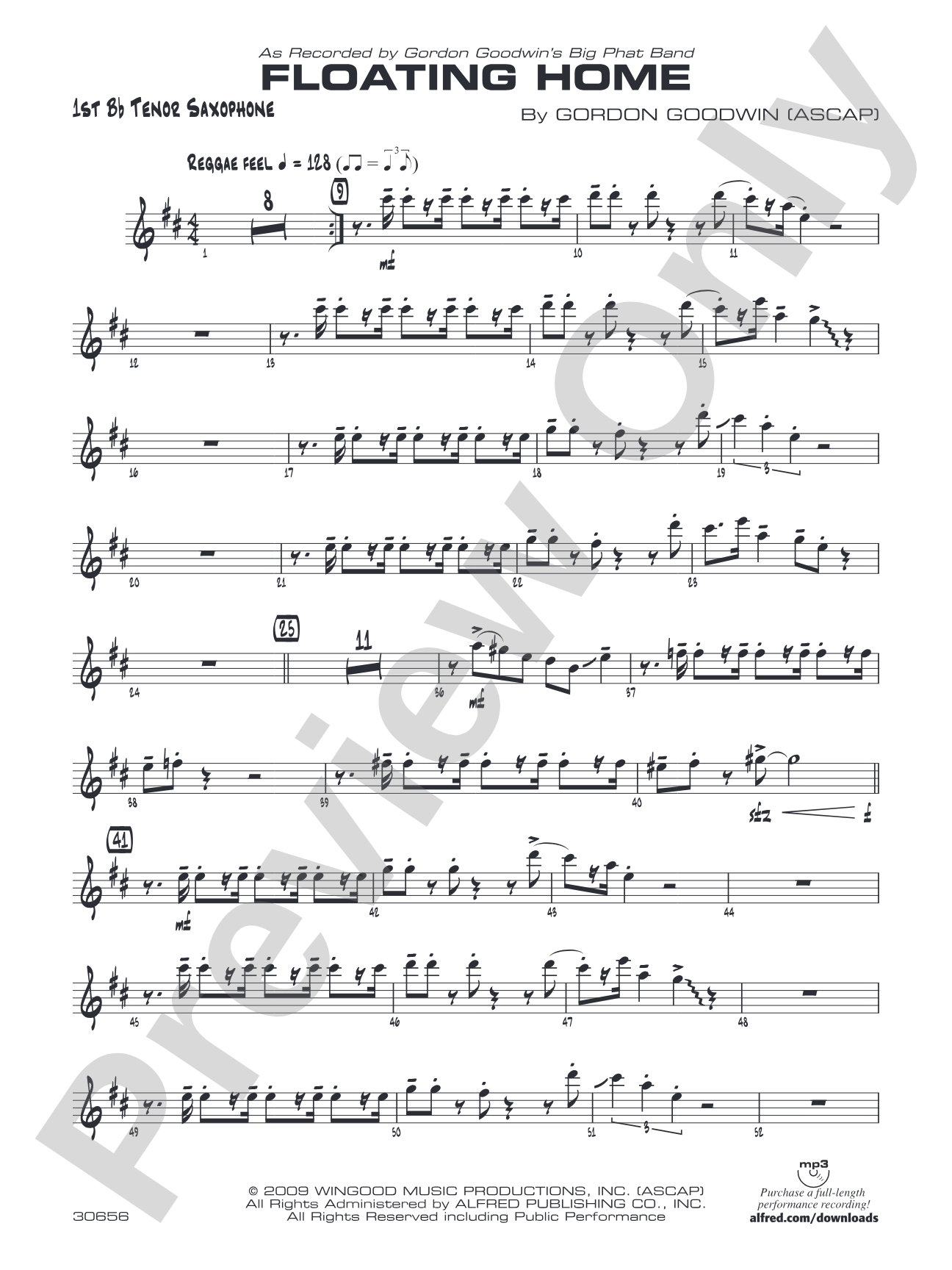

Floating Home: B-flat Tenor Saxophone
By Gordon Goodwin
Grade: 6 (Professional / Very Advanced)
Item: 00-PC-0017159_TX1
$3.00
Pickup currently not available
Description
It's a jazz-reggae groove composed and arranged by Gordon Goodwin for the Big Phat Band. Lead alto sax is written for soprano sax, and solos are available for soprano, alto, tenor, trumpet and trombone. Floating Home is not technically difficult but the lead trumpet range is a challenge, as you would expect with Gordon's charts. This is a somewhat mellow chart but has energy and punches. As performed by the Big Phat Band. (1:27)


Don't just read it, hear it, play along with it, and watch your students grow with it. In MakeMusic Cloud, Floating Home: B-flat Tenor Saxophone comes alive with professional accompaniment, adjustable tempo, and built-in practice tools that turn solo practice into real progress.
Open in the Player
Jump straight in and assign it today.
Start Your Free Trial
Open this title and explore the full library in minutes.
Sample Audio
1
Audio File
--:--
0:00
0:00
Sample Video
No sample videos found.
Additional Details
Series:
Gordon Goodwin Series
Publisher:
Alfred Music
Page Count:
92
SKU:
00-PC-0017159_TX1
More about this title
About the Composer: Gordon Goodwin

Gordon Goodwin began composing full works at an extraordinarily young age, writing complete pieces rather than fragments by the time he was five years old. His first big band arrangement, Hang Loose, arrived when he was just 13, announcing a rare talent that would soon catch the attention of Hollywood's top music supervisors and producers. Over decades in film and television, Goodwin has earned three Emmy Awards and multiple Grammy nominations for his orchestrations and scores, with his cinematic work appearing in Bad Boys II, Con Air, Remember the Titans, Star Trek: Nemesis, and numerous other major productions.
Beyond his screen work, Goodwin has composed and arranged for some of the music industry's most celebrated artists, including Christina Aguilera, Quincy Jones, Ray Charles, and Sarah Vaughn. He has guest-conducted major symphony orchestras across North America and Europe. Since founding Gordon Goodwin's Big Phat Band in 2000, he has established himself as a bandleader and composer for large jazz ensembles, earning additional Grammy recognition for the band's albums Swingin' for the Fences and XXL.
Why we love this
Goodwin knows how to write for the jazz ensemble without pretension. Floating Home sits in that sweet spot where the chart demands serious musicianship and range capability from your lead trumpet, yet remains within reach for a well-prepared high school or college ensemble. The groove is infectious enough to keep audiences engaged while the solo opportunities let your section leaders shine.
What to expect
Floating Home blends the laid-back, island-inflected groove of reggae with the harmonic sophistication and swing sensibility of jazz. The arrangement breathes with mellow confidence at first, then gathers energy through the solo section, creating a sense of movement and momentum without rushing.
Who it's for
Jazz ensembles at the college level or advanced high school programs with experienced soloists and a secure rhythm section. Directors should have players capable of handling the lead trumpet's upper register demands and improvisers ready to contribute meaningful solos without extensive transcription prep.
How to get the most out of it
- Establish the reggae-inflected feel early in sectional rehearsals; the rhythm section must lock the groove before the ensemble layers in the melody and countermelody.
- Balance the lead trumpet's exposed passages by ensuring the alto and tenor sax solos are fully supported by the rhythm section, especially in the lower register.
- Pay attention to Goodwin's dynamic markings around the solo section breaks; the chart punches as written, but clarity comes from respecting the marked articulations rather than playing harder.
- The soprano sax on the lead line benefits from a focused, warm tone that sits slightly behind the ensemble in the introductory section, then steps forward once solos begin.
How to use it
Program this as a closer on a jazz concert where you want to send audiences out with a smile and a grooving sensibility. It works equally well as the opening number on a concert featuring multiple Gordon Goodwin pieces, establishing his compositional voice immediately.
Skills your students will build
- Maintaining jazz groove and feel under changing textures and dynamic levels
- Executing soprano and alto saxophone melodic lines with independence and clarity
- Phrasing through chord changes with authentic jazz articulation and swing eighth notes
- Balancing written ensemble sections with featured solo moments
- Managing extended upper register demands on lead trumpet while maintaining tone quality
- Responding to arrangement dynamics and punctuation cues that define the chart's shape