
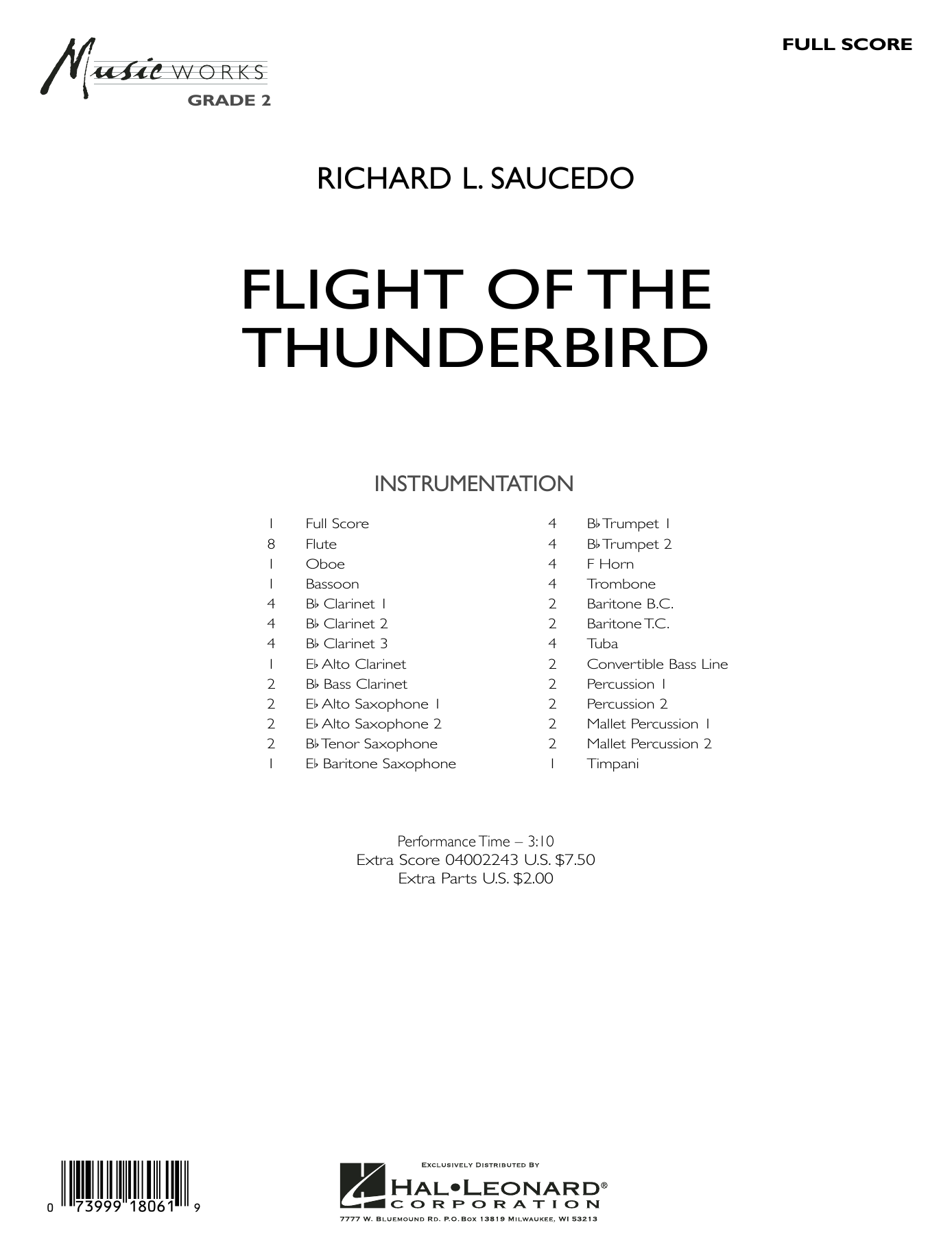

Flight Of The Thunderbird: Concert Band Conductor Score & Parts
By Richard L. Saucedo
Grade: 2
Item: 35-PK01202868
$65.00
Pickup currently not available
Buy Extra Parts (Digital PDF Download)
Parts Added to Cart!
Description
MusicWorks - Grade 2. This energetic work makes an impressive statement for young bands. Written in a single tempo throughout, you'll be amazed at the amount of excitement that can be generated with limited technical demands. Richard uses active percussion figures (augmented with optional additional mallet parts) along with powerful brass statements and layers of woodwind lines to create a wonderful overall effect. (3:10)


Flight Of The Thunderbird: Concert Band Conductor Score & Parts isn't in MakeMusic Cloud just yet...but it could be. Let us know you'd like to see it, and you'll help shape what comes next. In the meantime, start a free trial and dive into thousands of interactive titles your students can play along with today.
Request This Title
Tell us you want it.
Start Your Free Trial
Explore everything that's ready to play right now.
Sample Audio
No sample audio found.
Sample Video
No sample videos found.
Additional Details
Publisher:
Hal Leonard
SKU:
35-PK01202868
More about this title
About the Composer: Richard L. Saucedo

Richard L. Saucedo shaped Indiana's band program landscape over three decades as Director of Bands and Performing Arts Chairman at Carmel High School. His tenure produced remarkable results: the Wind Symphony I earned three appearances at the Music for All National Concert Band Festival and claimed the Indiana State Championship in 2013, while the Marching Greyhounds consistently ranked in the national top ten and captured BOA National Championships in 2005 and 2012.
Beyond his classroom legacy, Saucedo has established himself as a sought-after arranger and composer across multiple ensembles. He served as Brass Arranger and Composer for the Cavaliers Drum and Bugle Corps, contributing to five DCI world titles, and currently coordinates music ensembles for the Blue Devils. His recognition includes induction into both the Music for All Hall of Fame (2015) and the Drum Corps International Hall of Fame (2022), along with election to the American Bandmasters Association. Saucedo remains active as a Senior Educational Consultant for Music for All and Chief Judge Team Leader for Bands of America.
Why we love this
Saucedo proves that Grade 2 doesn't mean musically thin. The percussion writing alone carries real sophistication with its active figures and optional mallet parts, giving young players something genuinely interesting to execute rather than just holding whole notes. A single tempo sustained throughout the work eliminates the rehearsal headaches of tempo transitions while building genuine forward momentum through orchestration and layering instead.
What to expect
Propulsive and bold. The orchestration builds layers of sound that create genuine excitement even within modest technical boundaries. You feel the forward drive from measure one, powered by active rhythm section work and brass declarations that feel purposeful rather than tentative.
Who it's for
Grade 2 concert bands ready to program something that impresses audiences without overwhelming students. Works equally well for festival submissions or concert openers where you want to grab attention immediately.
How to get the most out of it
- Balance the woodwind layers carefully; they support rather than compete with the brass statements, so resist the urge to push them into the foreground.
- Activate the percussion section from the first downbeat. The rhythmic foundation matters more here than the technical execution of any single wind part.
- Let the optional mallet parts enhance what you already have rather than feeling obligatory. Use them strategically for the moments where you want maximum color and resonance.
How to use it
Open a concert with this to establish energy and set expectations high from the start. It also functions beautifully as a festival selection where you want the judges to hear intentional orchestration and musicianship from a young ensemble, not just technical facility.
Skills your students will build
- Sustaining ensemble balance across multiple articulated parts
- Responding to active percussion rhythm figures without rushing
- Differentiating between supporting and feature roles within the woodwind section
- Executing powerful, cohesive brass statements with precision