
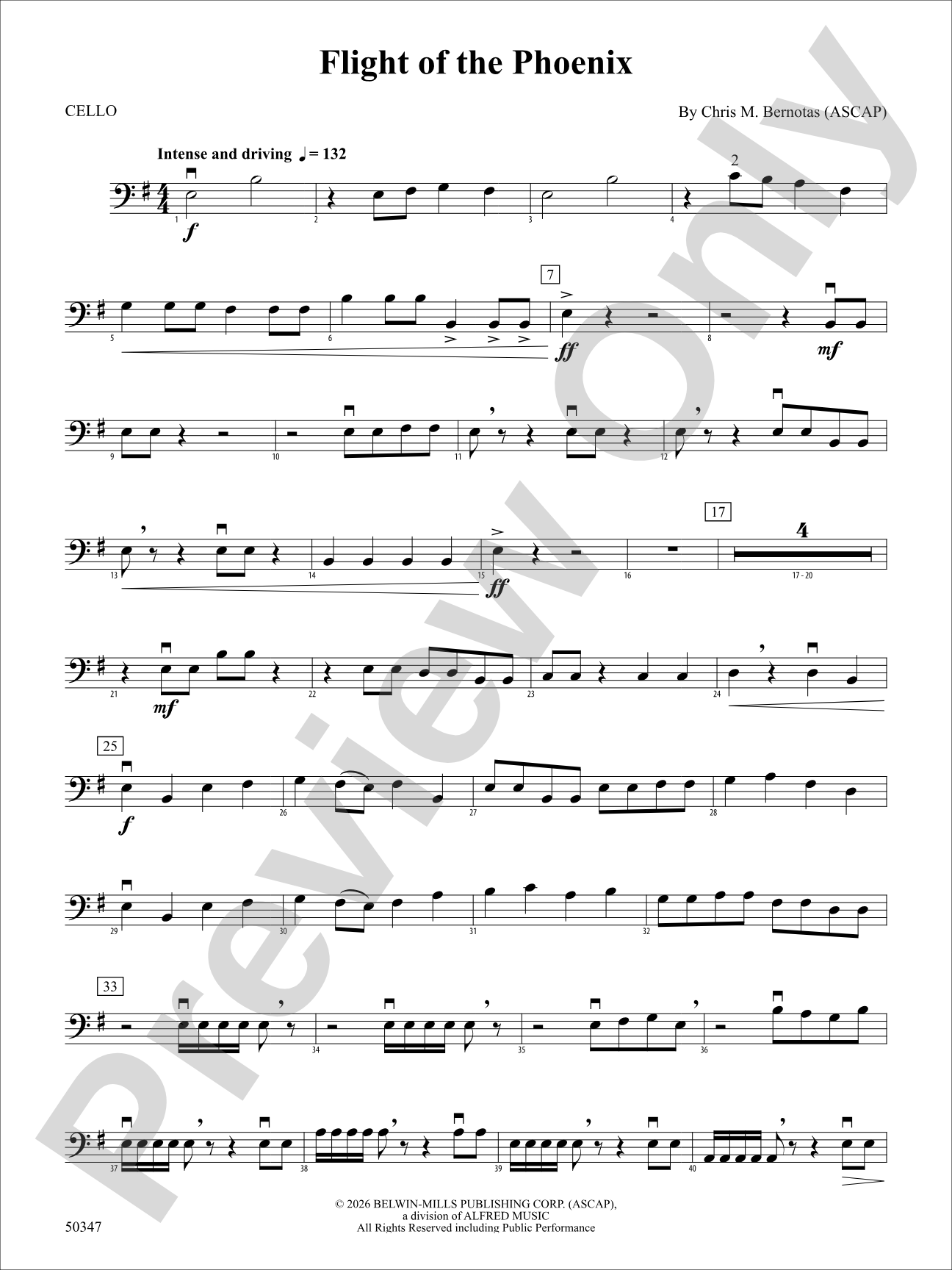

Flight of the Phoenix: Cello
By Chris M. Bernotas
Grade: 1.5
Item: 00-PC-0019823_VC1
$3.00
Pickup currently not available
Description
Take flight with this fantastic work, Flight of the Phoenix, by Chris M. Bernotas, for young string orchestra! Every section features melodic content, with violins practicing G string and low 2 fingerings. All parts (except bass) stay in first position. It offers ample opportunity to develop dynamic contrasts, rhythmic control, and style changes, all at an accessible level. Exciting and fun!


Flight of the Phoenix: Cello isn't in MakeMusic Cloud just yet...but it could be. Let us know you'd like to see it, and you'll help shape what comes next. In the meantime, start a free trial and dive into thousands of interactive titles your students can play along with today.
Request This Title
Tell us you want it.
Start Your Free Trial
Explore everything that's ready to play right now.
Sample Audio
1
Audio File
--:--
0:00
0:00
Sample Video
Additional Details
Series:
Belwin Beginning String Orchestra
Publisher:
Alfred Music
SKU:
00-PC-0019823_VC1
More about this title
About the Composer: Chris M. Bernotas

Chris M. Bernotas brings over 25 years of music education experience to his work as a composer, conductor, and educator. As Director of Instrumental Publications for Alfred Music, he shapes educational materials used by ensembles worldwide, drawing on deep classroom experience to understand what teachers and students actually need.
Bernotas is known for compositions that balance accessibility with genuine musicality. His pieces appear regularly on festival programs and in concert repertoire, performed by ensembles ranging from beginning orchestras to advanced groups. Beyond composing, he serves as a guest conductor and clinician, leading workshops and honor groups while continuing to advocate for innovative approaches to music education through presentations on conducting, composition, and pedagogy.
Why we love this
Flight of the Phoenix delivers exactly what young orchestras need at this level: transparent scoring that gives every player a musical moment, combined with genuine teaching opportunities. The deliberate focus on G string technique and low 2 fingerings on violin makes this an ideal choice for orchestras developing left-hand facility without requiring position shifts. The contrasts in dynamics, rhythm, and character mean students are building interpretive skills from day one, not just reading notes.
What to expect
Flight of the Phoenix captures the energy and forward motion of its title. The piece soars with enthusiasm, building through contrasting rhythmic and dynamic sections that give it momentum and character. Despite its technical simplicity, the writing communicates real musical personality and keeps both players and audiences engaged.
Who it's for
Beginning string orchestras at the Grade 1.5 level benefit most from this work, particularly those developing basic left-hand technique and looking for pieces that offer genuine musical interest without overwhelming technical demands. It suits orchestras preparing for festival or contest settings where accessibility meets performance potential.
How to get the most out of it
- Balance the melodic content across sections so no single voice dominates; this orchestration invites students to listen across the ensemble, not just within their part.
- Establish clear visual cues for the style changes and dynamic shifts. Young orchestras often need conductor support through transitions, so rehearse these moments deliberately.
- Emphasize the G string work on violins during sectionals. Consistent bow placement and intonation on the lower string set the tone for the entire piece.
- Shape phrases even at this accessible level. The parts stay simple technically, which frees students to focus on where they breathe and how they connect from note to note.
How to use it
Program this early in the year as part of a concert alongside one or two other Grade 1.5 pieces; its accessibility and exciting character make it an ideal anchor for building ensemble confidence. It also works well as a festival selection where judges appreciate hearing young orchestras tackle genuine musicianship rather than just technical exercises.
Skills your students will build
- G string technique and intonation on the lower string
- Low 2 finger placement on violin without position shifts
- Dynamic contrast and shape within simple note patterns
- Rhythmic control across style and tempo changes
- Active listening and sectional balance in transparent orchestration