Flight of the Mourning Dove Sheet Music Preview

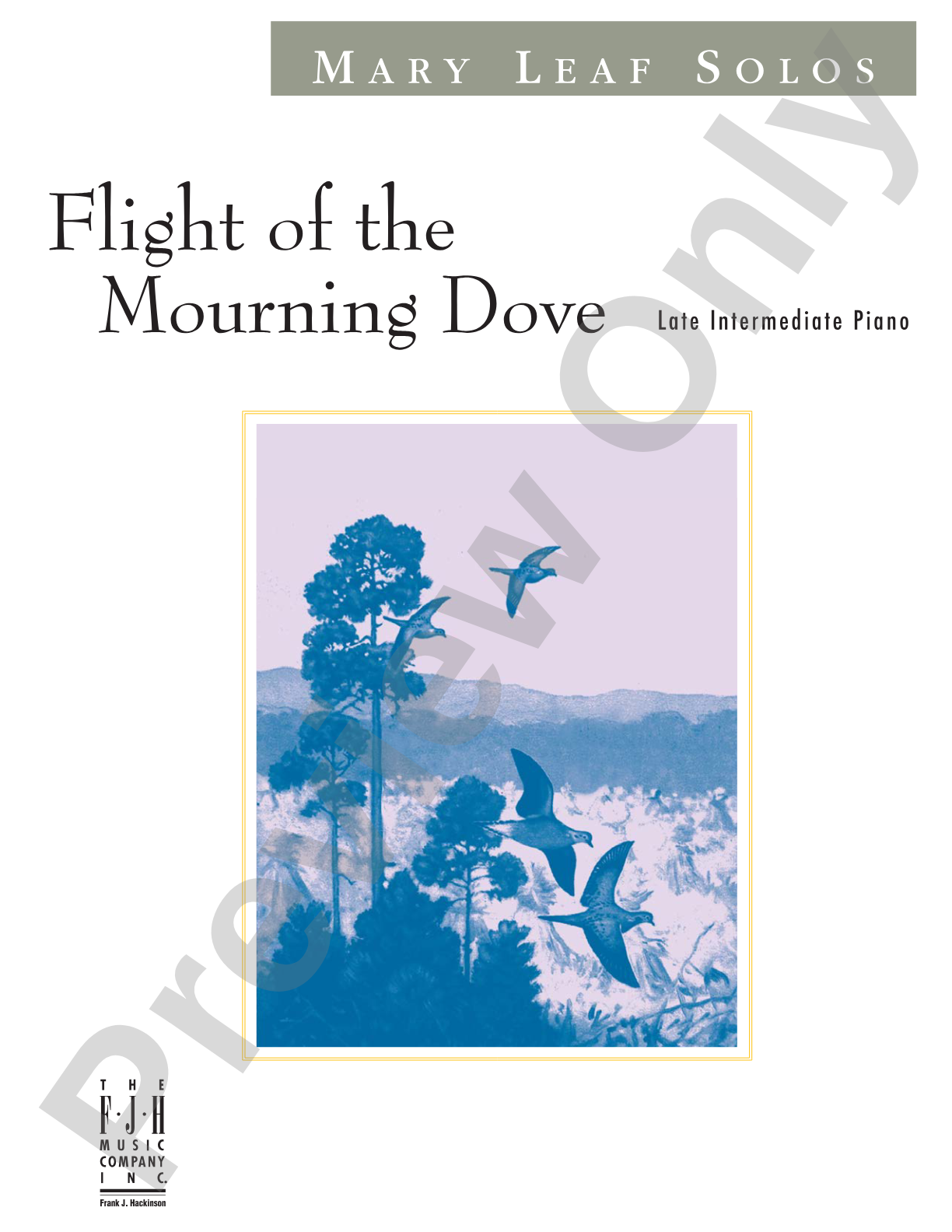
Flight of the Mourning Dove: Piano

By Mary Leaf

Item: 98-DW9317

Digital Download
$4.50
Description
This piece contains a poignant melody in A minor and offers several artistic and technical challenges for the late intermediate student. Throughout sections of this piece, the pianist is provided with material that develops through tempo and texture changes. The middle section offers an exceptionally artistic texture utilizing thirds.

Flight of the Mourning Dove: Piano isn't in MakeMusic Cloud just yet...but it could be. Let us know you'd like to see it, and you'll help shape what comes next. In the meantime, start a free trial and dive into thousands of interactive titles your students can play along with today.

Sample Audio
No sample audio found.
Sample Video
Additional Details
Series: Written For You
Publisher: The FJH Music Company, Inc.
SKU: 98-DW9317

More about this title

Why we love this

Mary Leaf crafts this piece with real attention to the late intermediate pianist's growth. The combination of a memorable A minor melody with deliberate challenges in tempo and texture variation means students aren't just playing notes—they're making real artistic choices about pacing and sound.

What to expect

A somber journey marked by the gentle, reflective quality of its A minor tonality. The melodic material evokes quiet introspection, while the tempo and texture variations prevent the piece from settling into sadness; instead, they create moments of shifting perspective and subtle emotional movement.

Who it's for

Late intermediate pianists ready to work with both structural and interpretive demands. This solo suits students who have solid technique but are beginning to think about how musical choices communicate emotion and intent.

How to get the most out of it

  • Shape the A minor melody with careful attention to phrase contours rather than playing it mechanically. Let the poignant quality emerge through sensitive dynamic control.
  • Prepare the middle section's thirds passage by practicing hands separately first, focusing on evenness and consistency before combining them at tempo.
  • Use the tempo changes as structural signposts. Mark your score clearly so transitions feel intentional rather than uncertain during performance.
  • Experiment with the textural shifts to discover how they reshape the overall character. Small changes in touch and pedaling can amplify the artistic impact of each section.

How to use it

Program this on a student recital to showcase artistic maturity and technical control in a compact format. It works equally well as a showcase piece for intermediate-level competitions or as a recital opener that establishes an introspective mood before lighter selections.

Skills your students will build

  • Sustaining a coherent melodic line in minor tonality
  • Executing tempo changes with musicality and structural clarity
  • Managing texture shifts, particularly passage work in thirds
  • Voice independence and balance between hands
  • Interpretive phrasing and dynamic shaping in a contemplative context

You May Also Like