
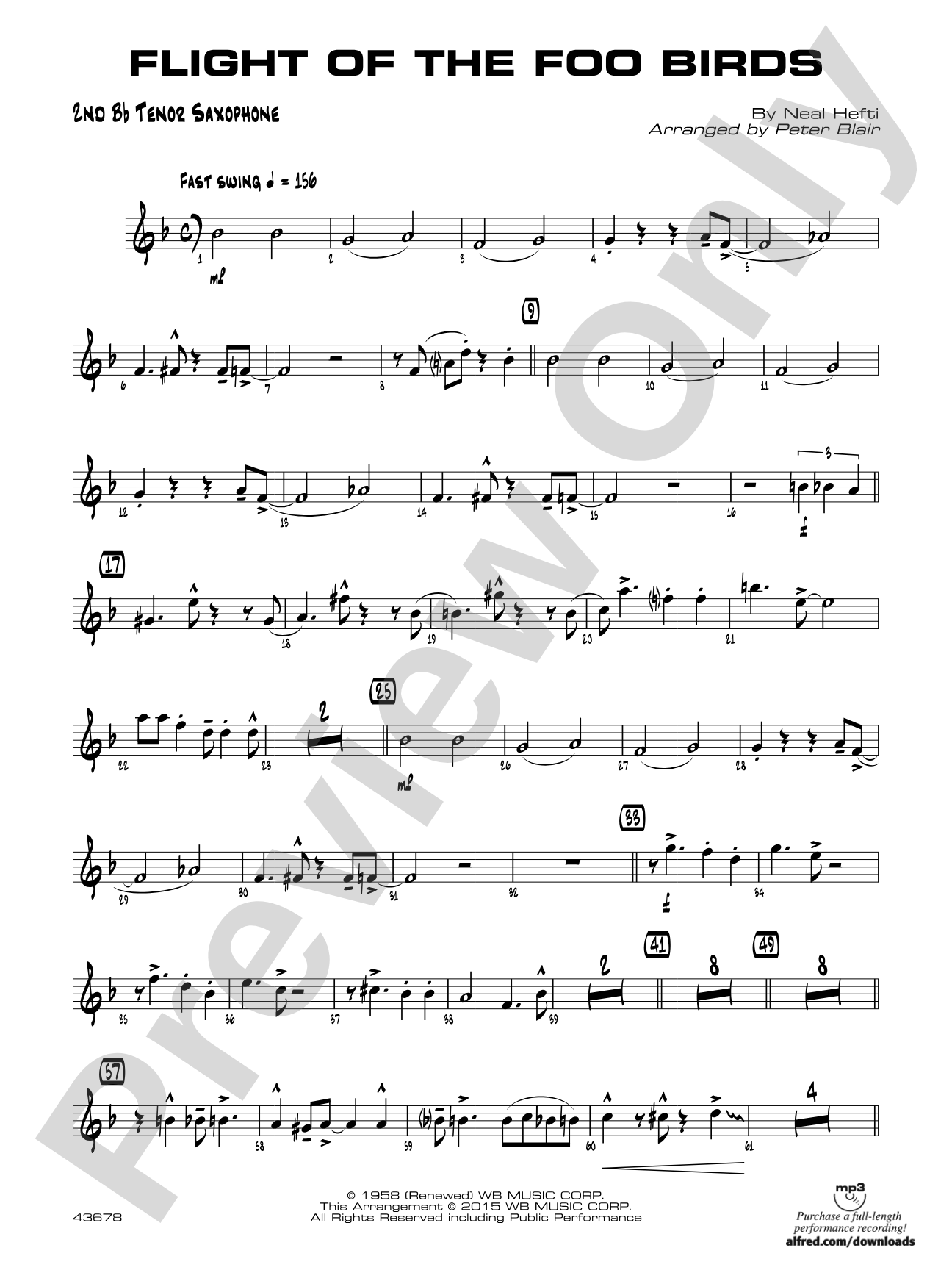

Flight of the Foo Birds: 2nd B-flat Tenor Saxophone
By Neal Hefti / arr. Peter Blair
Grade: 2 (Medium Easy)
Item: 00-PC-0016817_TX2
$3.00
Pickup currently not available
Description
A Basie band classic by Neal Hefti, Flight of the Foo Birds, arranged by Peter Blair, is a swinger played at 156 BPM. It features a written trumpet 2 solo, nice section solis, and the trumpet 1 range is up to written G on top of the staff. Ideal for the young band, check this one out. (3:15)


Don't just read it, hear it, play along with it, and watch your students grow with it. In MakeMusic Cloud, Flight of the Foo Birds: 2nd B-flat Tenor Saxophone comes alive with professional accompaniment, adjustable tempo, and built-in practice tools that turn solo practice into real progress.
Open in the Player
Jump straight in and assign it today.
Start Your Free Trial
Open this title and explore the full library in minutes.
Sample Audio
1
Audio File
--:--
0:00
0:00
Sample Video
Additional Details
Series:
Young Jazz Ensemble
Publisher:
Alfred Music
Page Count:
98
SKU:
00-PC-0016817_TX2
More about this title
About the Composer: Neal Hefti
Neal Hefti (1922-2008) was a composer, arranger, and bandleader who became one of the most prolific and respected voices in the Basie orchestra sound. His collaborations with Count Basie produced some of the most enduring big band charts of the 1950s and beyond, including standards like "Cute" and "Li'l Darling." Hefti's gift for crafting accessible yet sophisticated ensemble writing made his work a staple in jazz education and professional contexts alike.
Beyond the Basie legacy, Hefti's arrangements and compositions appeared in countless contexts, from film scores to studio sessions. His music consistently balanced clarity and swing, making complex harmonic and rhythmic ideas feel inevitable rather than forced. For student ensembles, his charts offer direct exposure to the language and style that defined the Count Basie orchestra at its peak.
Why we love this
This arrangement captures everything that makes a Hefti chart memorable: clean section writing, genuine swing character, and perfectly calibrated solo opportunities that give every section a moment to shine. The trumpet 1 writing stays well within reach for young players (up to written G) while the full band texture and brisk tempo (156 BPM) demand solid ensemble discipline and communication. It's exactly the kind of straightforward, musically rewarding choice that works equally well at a festival or a concert, and students leave rehearsal knowing they've played something real.
What to expect
Bright, energetic, and grounded in the swing pocket. The tune moves with a natural lift and forward momentum, driven by clean ensemble voicings and the ease of a band that knows the idiom. There's joy in the sheer musicality of the writing—nothing feels awkward or forced, just genuine big band groove.
Who it's for
Young jazz ensembles ready for a Grade 2 chart that sounds and feels like legitimate big band music. Directors seeking accessible repertoire that doesn't sacrifice authenticity or musicality will find exactly what they need here. The manageable ranges and straightforward section writing free players to focus on swing style and blend.
How to get the most out of it
- Lock the rhythm section into a confident swing feel early; the soloists will feed off that steady, grooving foundation, and everything else falls into place.
- Balance the section solis carefully so each one cuts through the ensemble without the full band sitting back. These moments should feel like conversations, not interruptions.
- Shape the trumpet 2 solo as a featured voice. Give it breathing room and let the player find the swing phrasing rather than forcing strict time.
- Nail the section attacks and releases during the ensemble passages. Hefti's writing relies on crisp articulation to maintain energy and clarity at this tempo.
How to use it
Program this as a centerpiece in a jazz-focused concert or as your festival entry in the jazz ensemble category. Its length (3:15) and balanced energy make it a strong pairing alongside vocal standards or a blues tune. The combination of ensemble section work and clear solo opportunities also makes it an excellent choice for a concert that celebrates section leadership and individual voices.
Skills your students will build
- Swinging eighth-note feel and jazz interpretation at a steady tempo
- Section ensemble balance and clean attacks in voicings
- Solo phrasing and call-and-response ensemble playing
- Reading jazz chord changes and responding to rhythmic cues from the rhythm section
- Range management in trumpet writing (understanding the practical ceiling for young players)