
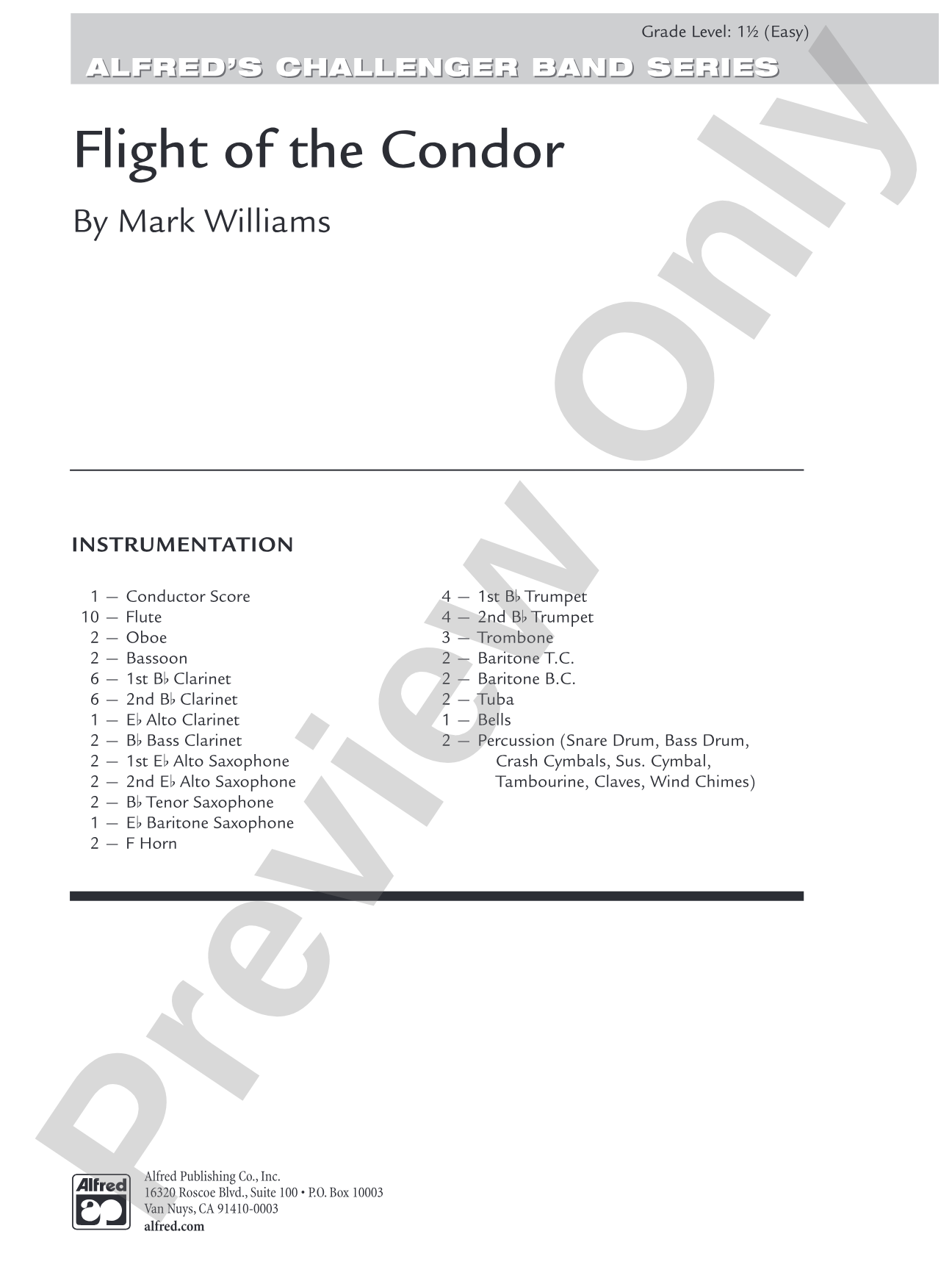

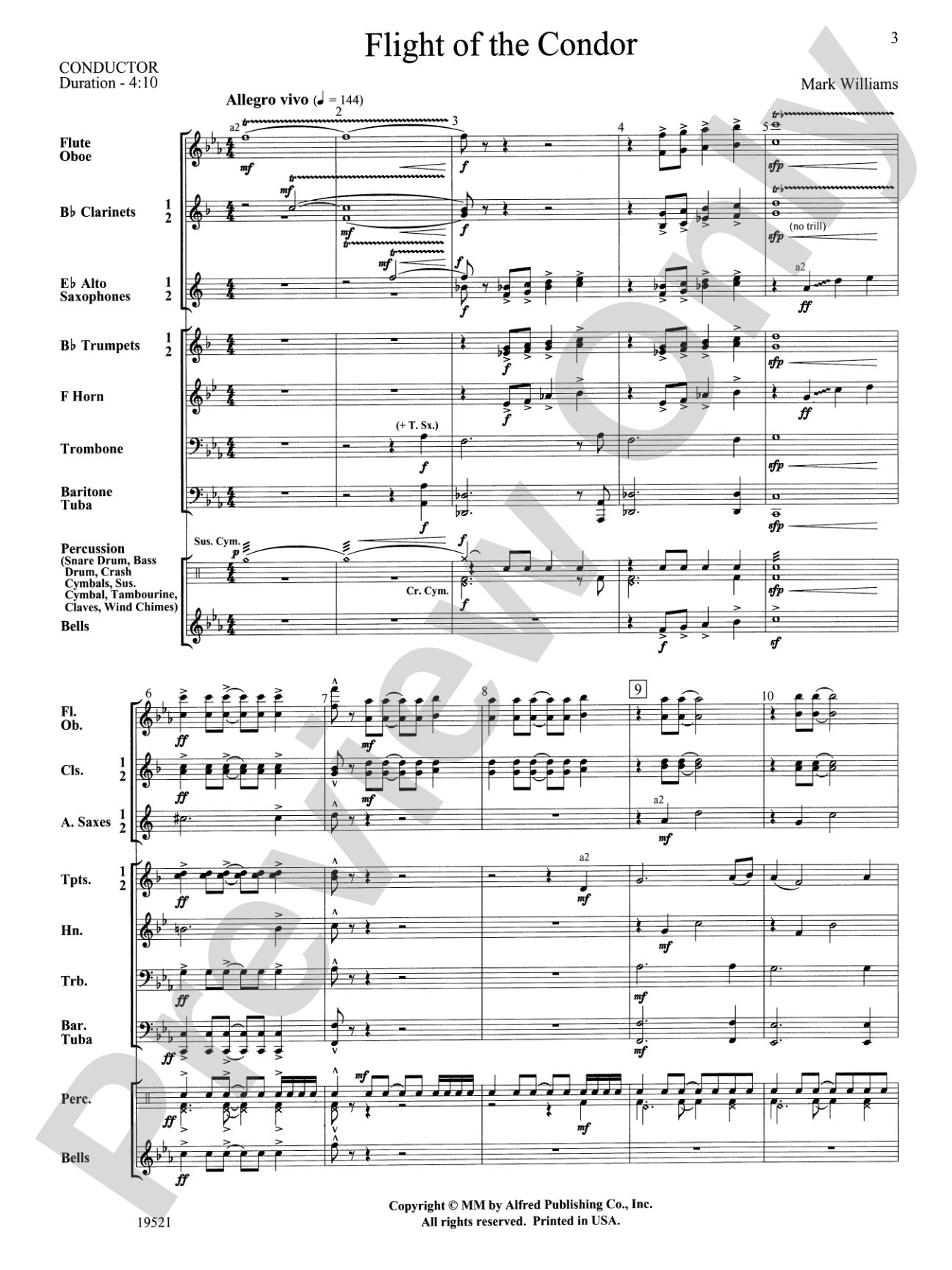
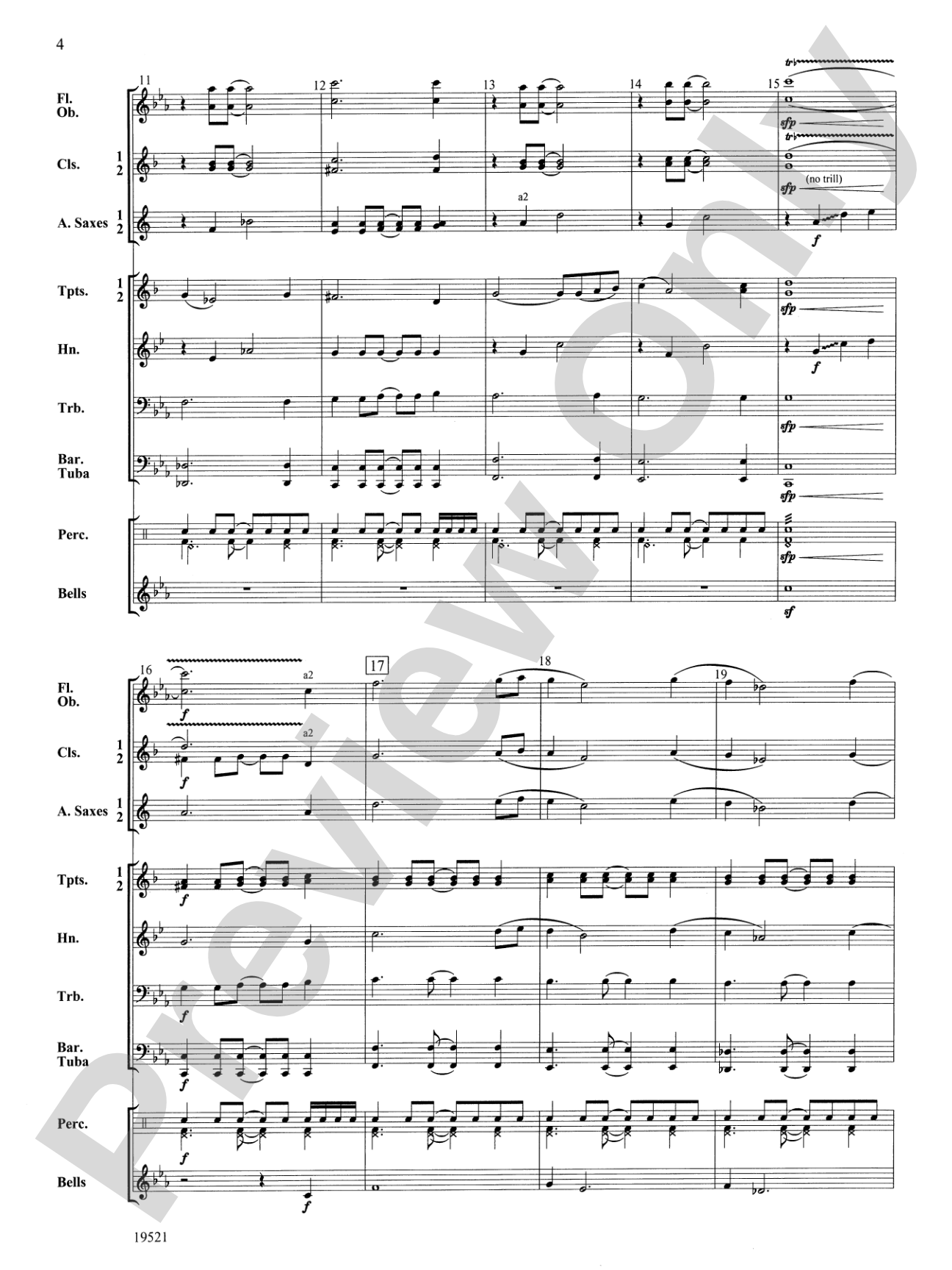
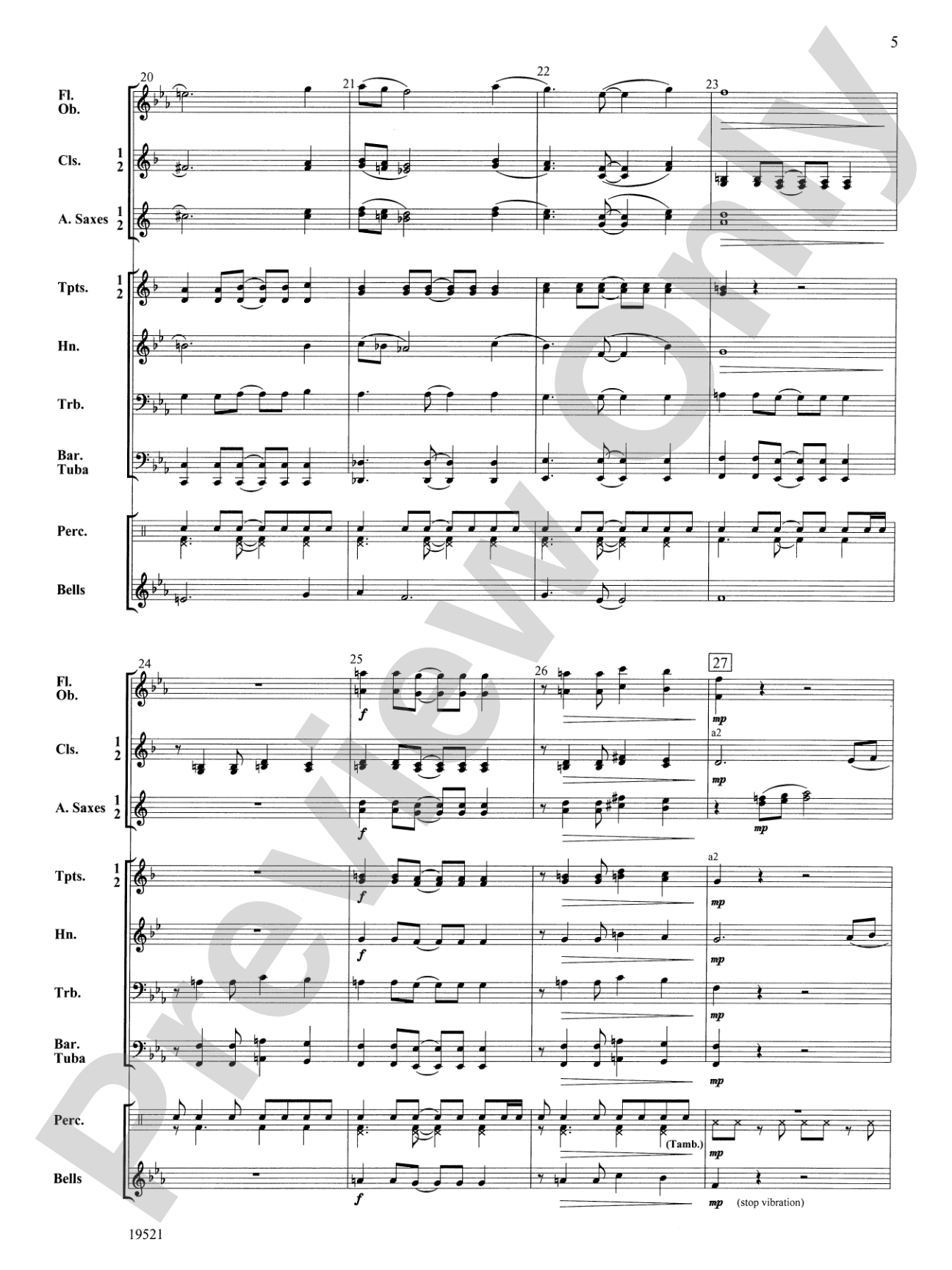
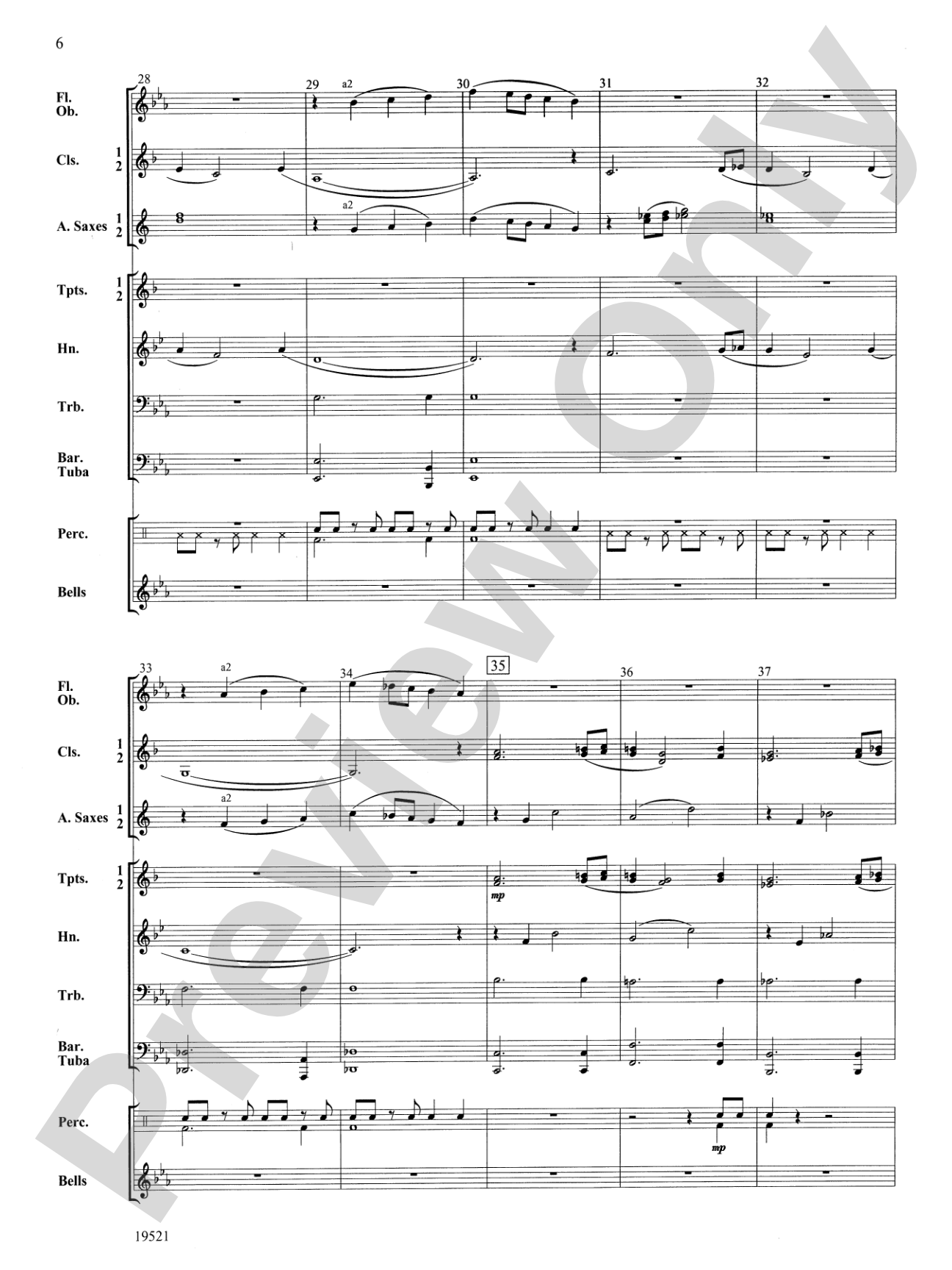
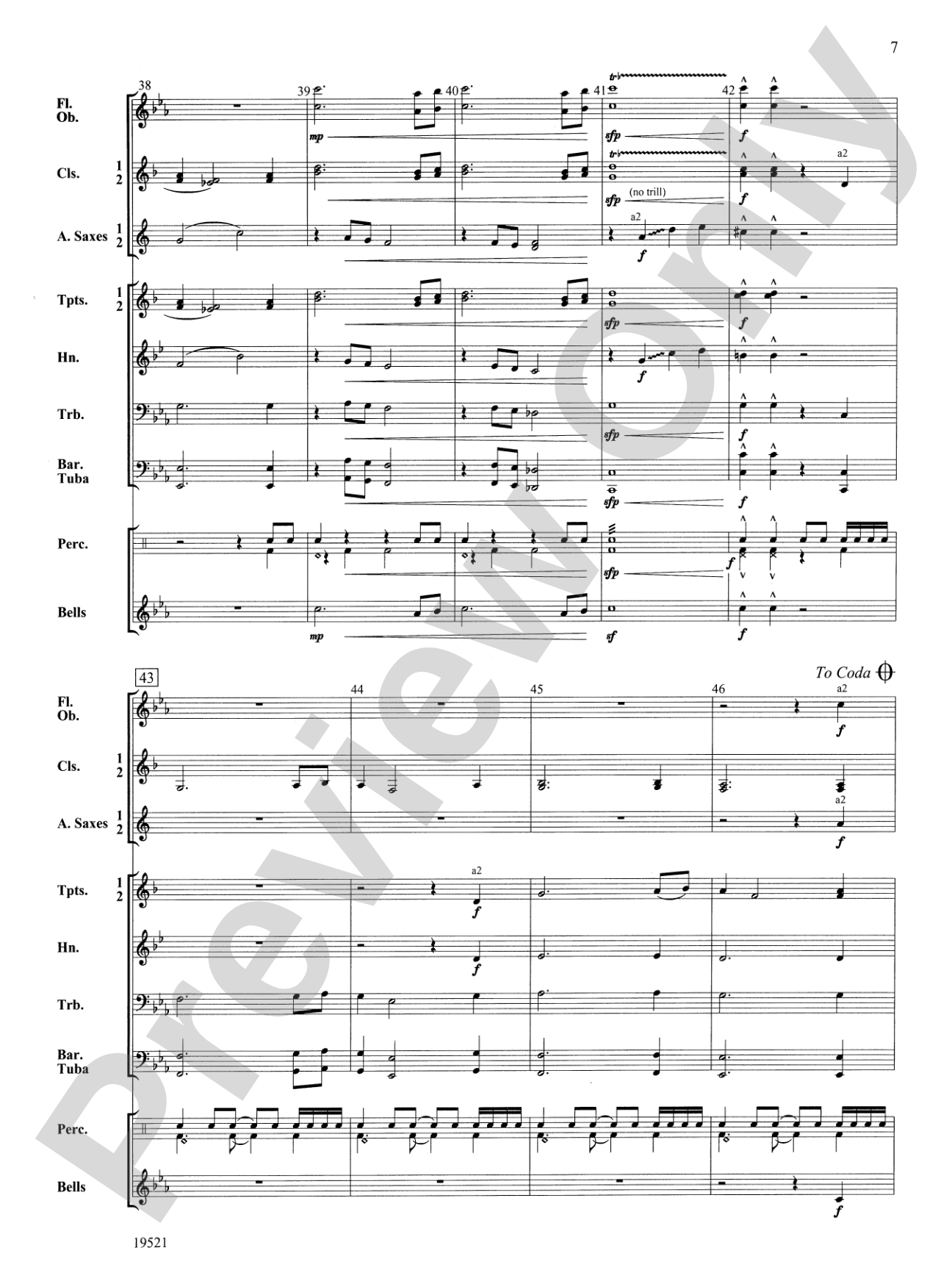
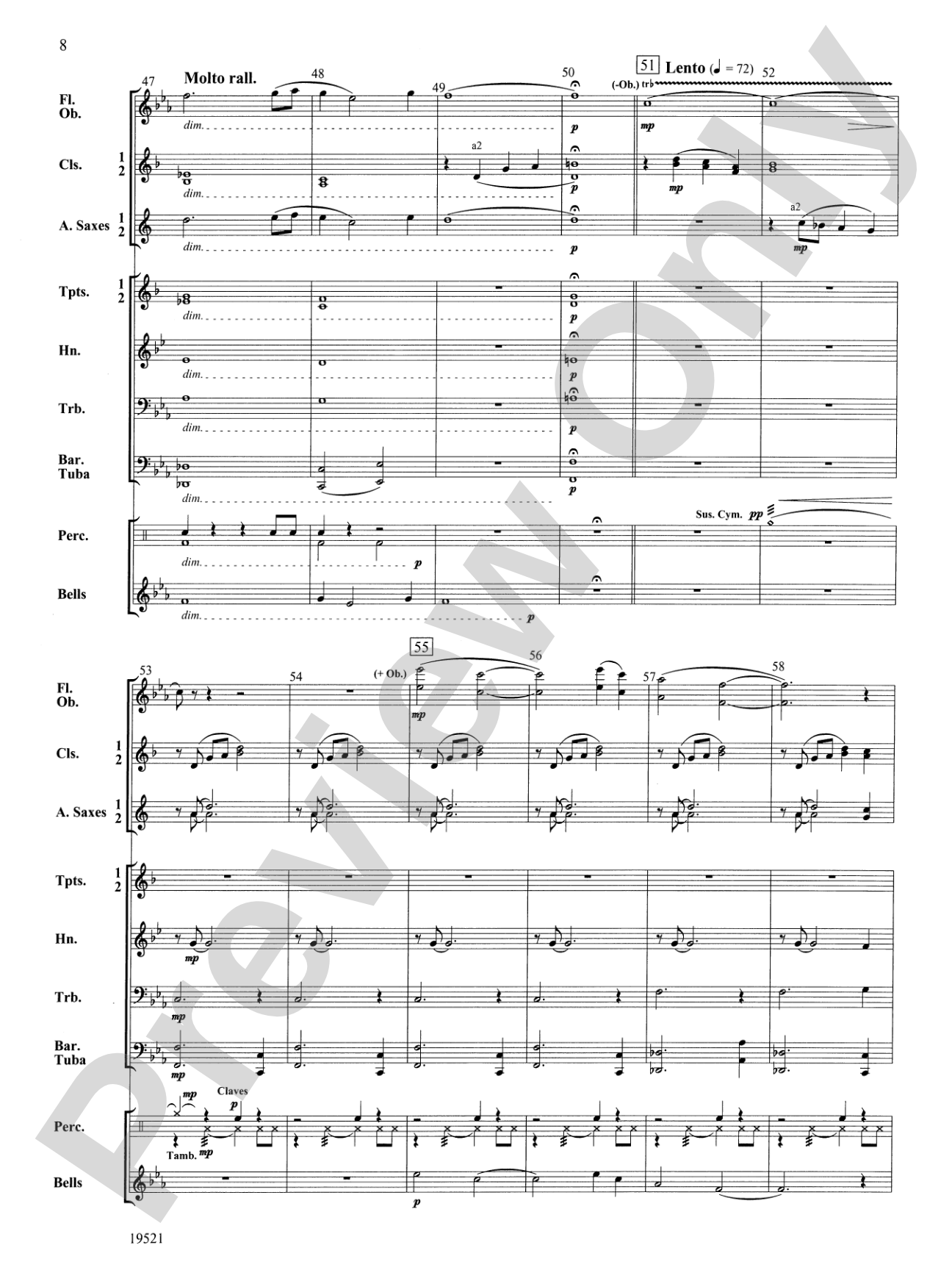
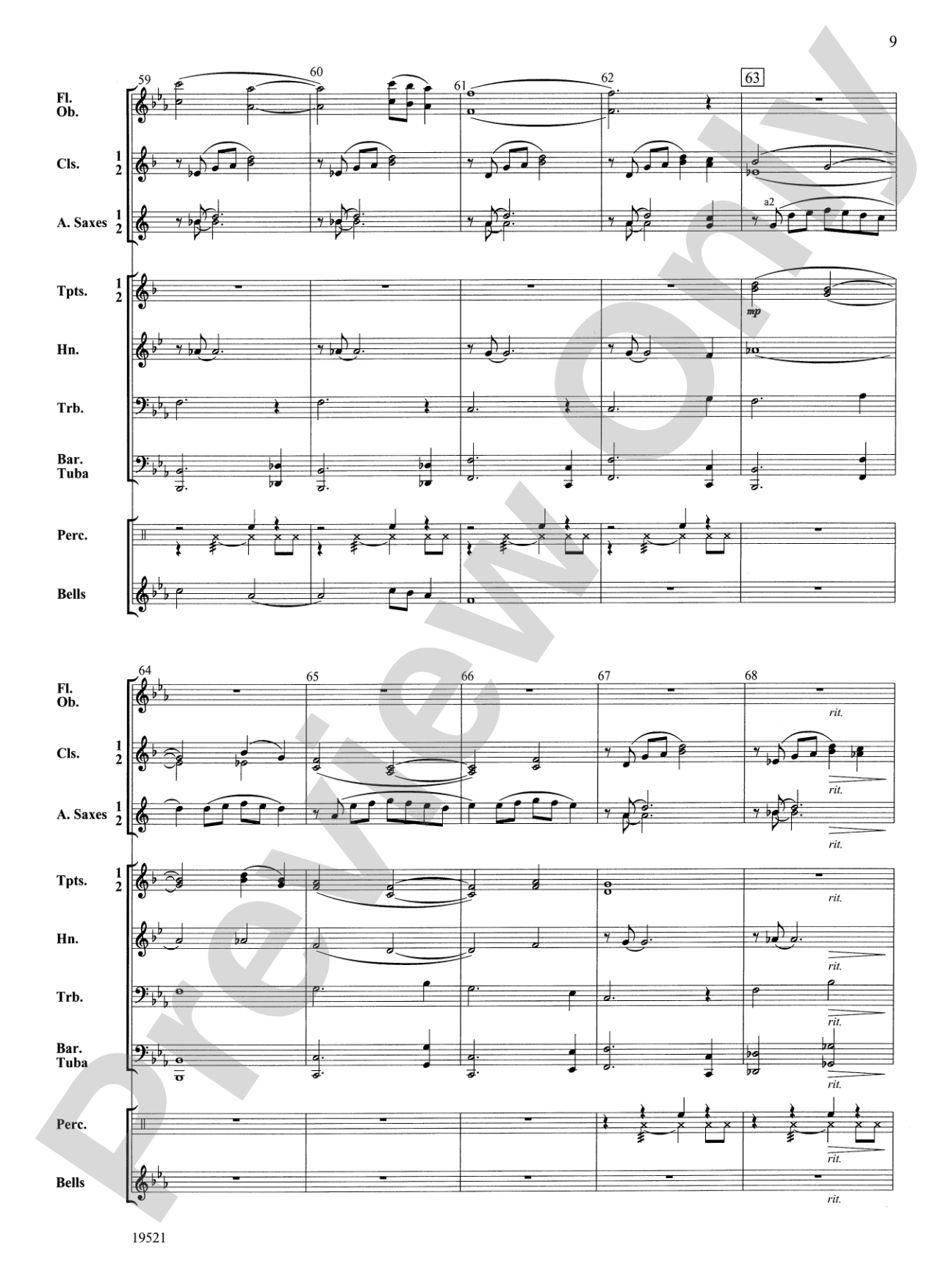
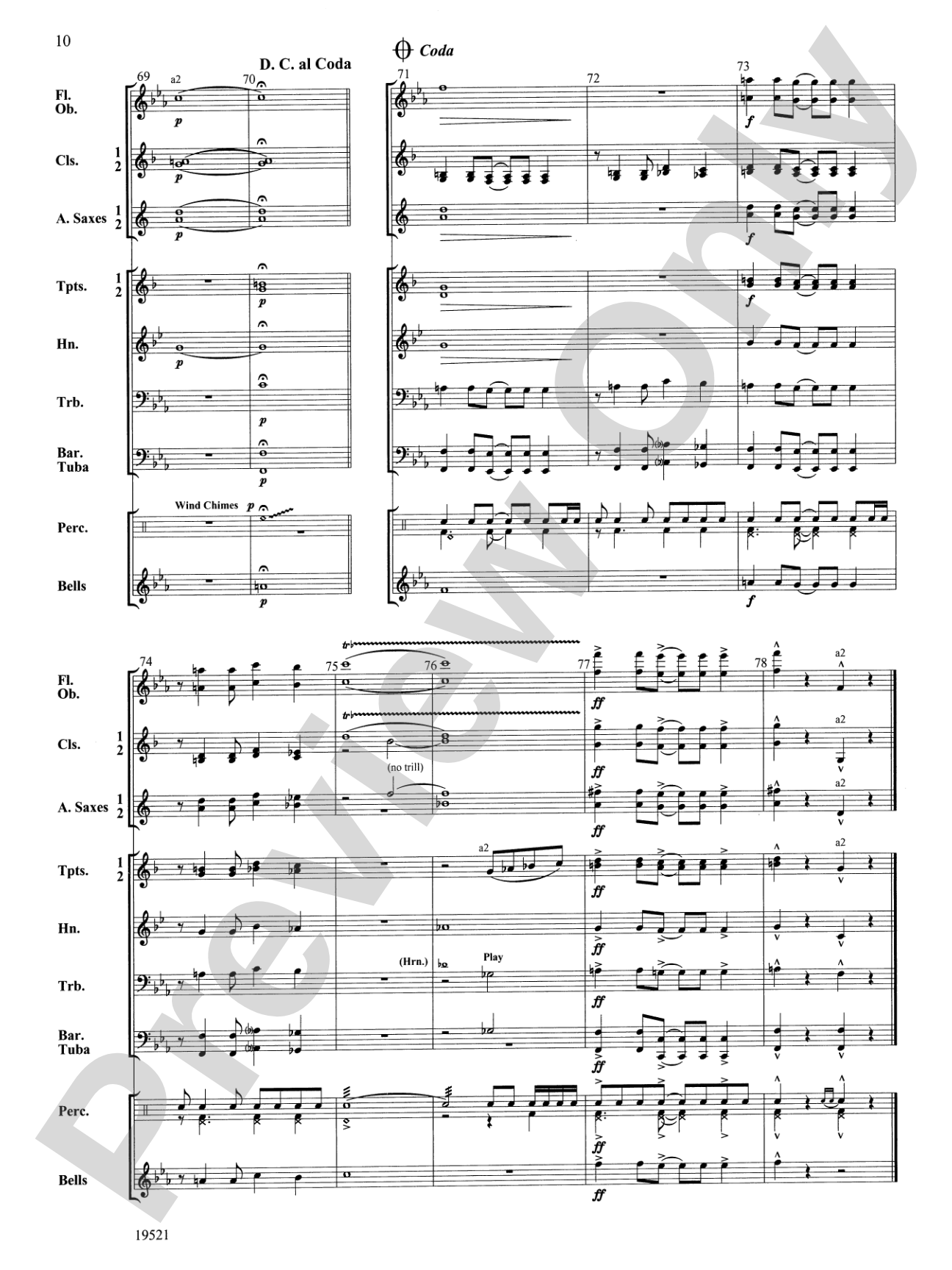



Flight of the Condor: Score
By Mark Williams
Grade: 1.5 (Easy)
Item: 00-PR-0000321
$7.00
Pickup currently not available
Description
This driving original by Mark Williams depicts the flight of the majestic condor along the rugged Pacific coast. Once common, but now endangered, this bird's lonely travels are reflected in the minor tone of this exciting work for young band. Cast in ABA form, a brief slow middle section is followed by a return to the brilliant "Allegro vivo" of the opening. Punctuated by strong horn/sax lines and syncopated percussion figures, this selection is destined to become a favorite of students and audiences.


Don't just read it, hear it, play along with it, and watch your students grow with it. In MakeMusic Cloud, Flight of the Condor: Score comes alive with professional accompaniment, adjustable tempo, and built-in practice tools that turn solo practice into real progress.
Open in the Player
Jump straight in and assign it today.
Start Your Free Trial
Open this title and explore the full library in minutes.
Sample Audio
1
Audio File
--:--
0:00
0:00
Sample Video
No sample videos found.
Additional Details
Series:
Challenger Band Series
Publisher:
Alfred Music
Page Count:
62
SKU:
00-PR-0000321
More about this title
About the Composer: Mark Williams

Mark Williams composed over 200 works for school bands, orchestras, and choirs during a prolific career dedicated to music education. He co-authored the Accent on Achievement Band Method and earned recognition through the Western International Band Clinic's Gralia Competition and multiple ASCAP Special Awards. Williams spent years teaching elementary band in Washington state and guest conducted across 34 U.S. states, five Canadian provinces, and Australia. He holds degrees from Eastern Washington University and served as woodwind performer and arranger for the 560th Air Force Band.
Beyond composition, Williams was an active bassoon performer and led the Spokane British Brass Band as conductor and artistic director. His work reflects deep understanding of young musicians' capabilities and the power of accessible, engaging repertoire to inspire both players and audiences.
Why we love this
This score balances musical substance with genuine accessibility. The ABA architecture gives young musicians a formal framework to understand, while the contrasting middle section builds interpretive depth without overwhelming Grade 1.5 players. The bird-of-prey narrative lifts what could be routine writing into something students genuinely care about performing.
What to expect
The opening surges with restless energy—soaring lines and urgent rhythms evoke the condor's powerful flight along dramatic cliffs and open sky. The minor tonality adds contemplative weight, reflecting both the bird's solitary nature and its endangered status. When the middle section softens, you hear the vulnerability beneath that strength; the return to the brilliant opening feels like triumph reclaimed.
Who it's for
Young concert bands at the beginning of their technical development. The Grade 1.5 level suits ensembles still mastering fundamental articulation, intonation, and balance but ready for structured, multi-section works. This piece works equally well in middle school or early high school settings where engagement with thematic content matters.
How to get the most out of it
- Shape the opening Allegro vivo with consistent forward momentum; the driving rhythm should feel urgent but controlled, reflecting the condor's powerful wing beats rather than frantic energy.
- Feature the horn and saxophone lines prominently in both A sections. These voices carry the character work, so encourage young brass and reed players to own their melodic responsibility.
- Use the slow middle section to contrast texture and dynamic. After the brightness of the opening, this quieter passage should feel contemplative, allowing the band to reset before the final return.
- Balance the syncopated percussion figures so they punctuate without overwhelming the ensemble. Young percussionists often rush through complex rhythms; lock the rhythm section early and isolate those hits in rehearsal.
How to use it
Program this as an opener or second piece on a concert where you want to establish energy and capture attention immediately. The thematic clarity and accessible writing also make it an excellent choice for band festivals or competitions where young ensembles benefit from contemporary, engaging literature that still reflects core concert band values.
Skills your students will build
- Executing ABA form and formal transitions between contrasting sections
- Balancing featured horn and saxophone lines with ensemble texture
- Performing syncopated rhythmic figures with precision and clarity
- Sustaining minor tonality and expressing character through dynamic contrast
- Responding to program music and using narrative to shape musical interpretation