
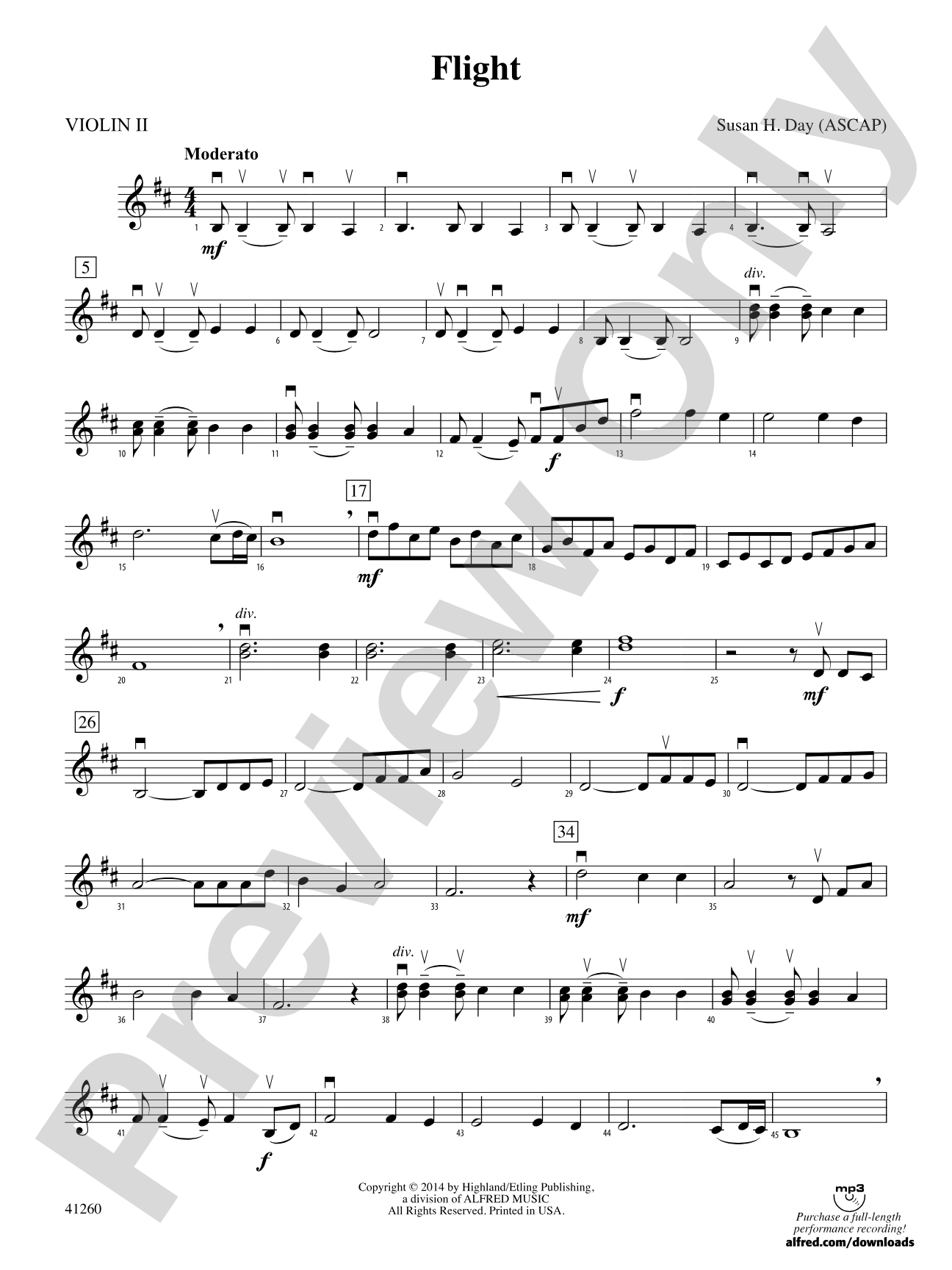

Flight: 2nd Violin
By Susan H. Day
Grade: 3
Item: 00-PC-0016377_VN2
$5.99
Pickup currently not available
Description
Capture the thrill and excitement of soaring high above in this dramatic work! Written in the keys of B minor and E minor, in 4/4 time, with a steady driving tempo throughout, key elements are rich chordal textures, pleasing melody lines, and the use of arpeggios and divisi. Each player's part contributes equally to the power and energy of this piece, creating a musically satisfying experience for both performers and audience. (3:30) This title is available in MakeMusic Cloud.


Don't just read it, hear it, play along with it, and watch your students grow with it. In MakeMusic Cloud, Flight: 2nd Violin comes alive with professional accompaniment, adjustable tempo, and built-in practice tools that turn solo practice into real progress.
Open in the Player
Jump straight in and assign it today.
Start Your Free Trial
Open this title and explore the full library in minutes.
Sample Audio
1
Audio File
--:--
0:00
0:00
Sample Video
Additional Details
Series:
Highland/Etling String Orchestra
Publisher:
Alfred Music
Page Count:
124
SKU:
00-PC-0016377_VN2
More about this title
Why we love this
Susan H. Day writes for string orchestras with real understanding of what Grade 3 players can achieve without condescension. The part writing distributes the musical load evenly across the section, so no one player carries the piece alone; every stand matters. The programmatic hook is genuine enough to engage young musicians in storytelling through sound, and the technical demands stay within reach while still feeling exciting.
What to expect
Exhilaration and momentum define this piece. Rich harmonic textures create depth and sophistication, while driving rhythms propel the music forward. The interplay of soaring melodic lines and shimmering arpeggios captures the physical sensation of flight, with each phrase lifting higher than the last.
Who it's for
String orchestras at the Grade 3 level looking for a piece that combines accessible technical writing with genuine dramatic content. This works equally well for concert performance and festival competition, appealing to conductors who want their players to feel the thrill of a work that sounds more ambitious than its difficulty level.
How to get the most out of it
- Establish the driving tempo early in rehearsal and hold it steady throughout; this piece relies on forward motion to sustain its energy, and fluctuations will diffuse the dramatic effect.
- Balance the divisi passages carefully so that the divided voices blend rather than fight. Have players in the same part lock in with each other first before balancing against other sections.
- Shape the arpeggios as musical gestures, not just mechanical runs. Encourage players to hear them as part of the melody's arc, rising or falling with intention.
- Use the MakeMusic Cloud files to communicate changes quickly across all parts; consistency across the ensemble is essential for maintaining the unified power this piece demands.
How to use it
Program this as a centerpiece concert opener to establish energy and engagement from the first notes, or place it strategically mid-program to refresh audience attention. Its three and a half minute span fits efficiently into festival competitions where time slots are tight, and the programmatic title gives younger musicians a concrete emotional anchor during both rehearsal and performance.
Skills your students will build
- Maintaining steady tempo under dynamic changes
- Balancing divisi passages and independent lines
- Shaping arpeggios as musical phrases rather than technical passages
- Blending rich chordal textures across multiple voice parts
- Responding to programmatic intent through articulation and phrasing