Flash Point!: E-flat Alto Saxophone Sheet Music Preview

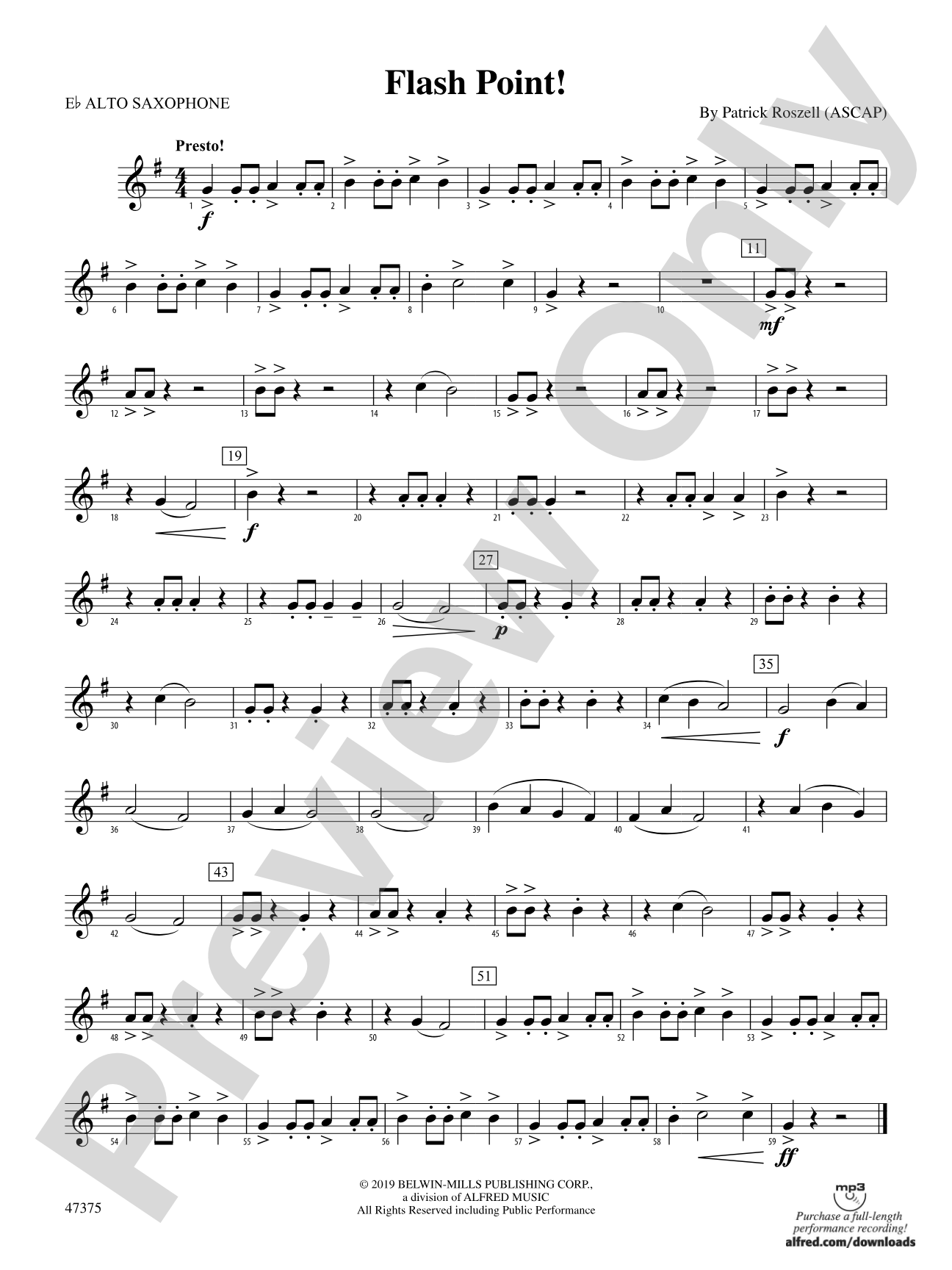
Flash Point!: E-flat Alto Saxophone

By Patrick Roszell

Grade: 0.5 (Very Easy)

Item: 00-PC-0017909_AX1

Digital Download
$3.00
Description
A flash point is described as a point at which someone or something bursts suddenly into action or being. Introducing accented, staccato, and legato articulations, all instruments get an opportunity to play one of the contrasting themes. With a variety of teaching opportunities, this exciting and punctuated composition is a welcome addition to any program. (1:45)

Don't just read it, hear it, play along with it, and watch your students grow with it. In MakeMusic Cloud, Flash Point!: E-flat Alto Saxophone comes alive with professional accompaniment, adjustable tempo, and built-in practice tools that turn solo practice into real progress.

Sample Audio
0:00
0:00
Sample Video
Additional Details
Series: Belwin Very Beginning Band
Publisher: Alfred Music
Page Count: 134
SKU: 00-PC-0017909_AX1

More about this title

Why we love this

Roszell has written a piece that frontloads the teaching without feeling like a lesson. Every section gets a moment with one of the three contrasting themes, and the articulation work naturally unfolds through musical context rather than isolated drills. For a Very Easy band still building foundational skills, this kind of writing keeps everyone engaged while you address articulation clarity.

What to expect

Energy and intention. The piece captures the burst of action its title promises, moving between sharp accents and clipped staccato with moments of singing lyricism. At just under two minutes, it maintains momentum and focus while giving the band room to explore different ways of attacking the same musical phrase.

Who it's for

Beginning concert bands working with a Very Easy score that introduces essential articulation concepts without overwhelming young players. This works well for groups navigating their first year of ensemble playing who need focused, musical exposure to contrasting articulation styles.

How to get the most out of it

  • Shape the accented articulations with consistent weight across the ensemble; they should sound intentional, not aggressive. Mark a consistent dynamic target for these moments in rehearsal.
  • Let the staccato passages breathe. Young players often rush short notes, so isolate the staccato sections and practice them at a tempo where they land cleanly without losing precision.
  • Balance the legato theme carefully so it reads as lyrical rather than drooping. The contrast between themes will sharpen if legato playing stays engaged and shaped.

How to use it

Open a concert with this to demonstrate how far your beginning band has progressed with articulation technique. The clear, short structure also works well in festival or contest settings where time is limited and you want a piece that showcases fundamentals without requiring extensive stage time.

Skills your students will build

  • Distinguishing and executing accented, staccato, and legato articulations
  • Playing ensemble themes in multiple instrument voices
  • Responding to contrasting rhythmic and dynamic shapes
  • Maintaining clarity at the Very Easy level while adding expressive intent

You May Also Like