Flash Flood: E-flat Alto Saxophone Sheet Music Preview

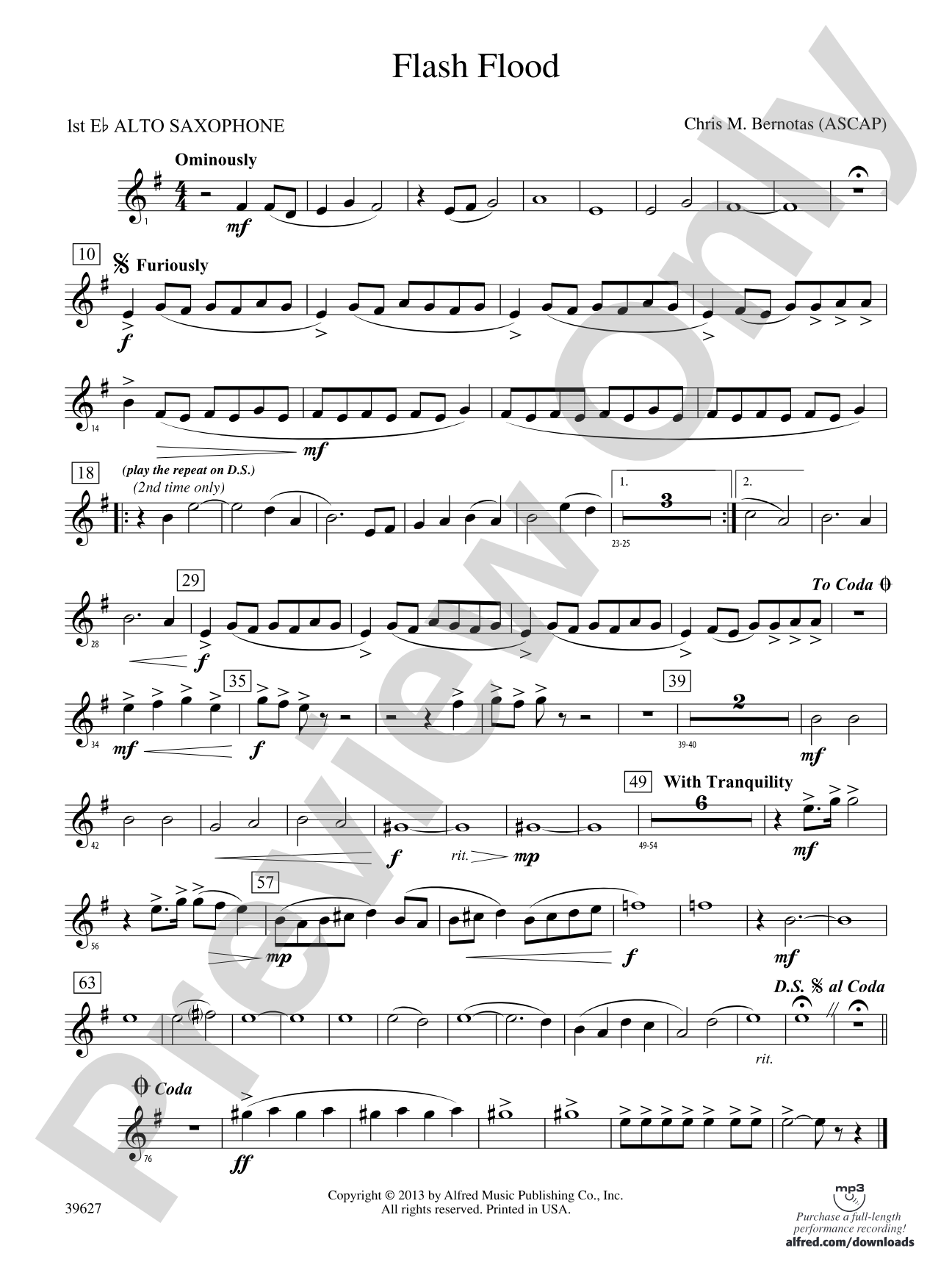
Flash Flood: E-flat Alto Saxophone

By Chris M. Bernotas

Grade: 2 (Medium Easy)

Item: 00-PC-0015901_AX1

Digital Download
$3.00
Description
This powerful and engaging piece was inspired by the floods brought upon by Hurricane Irene, and pays homage to the innate human ability to rise from disaster and persevere with strength and pride. (4:00) This title is available in MakeMusic Cloud.

Don't just read it, hear it, play along with it, and watch your students grow with it. In MakeMusic Cloud, Flash Flood: E-flat Alto Saxophone comes alive with professional accompaniment, adjustable tempo, and built-in practice tools that turn solo practice into real progress.

Sample Audio
0:00
0:00
Sample Video
Additional Details
Series: Young Symphonic
Publisher: Alfred Music
Page Count: 136
SKU: 00-PC-0015901_AX1

More about this title

About the Composer: Chris M. Bernotas

Chris M. Bernotas

Chris M. Bernotas brings over 25 years of classroom and professional experience to his work as a composer and conductor. As Director of Instrumental Publications for Alfred Music, he shapes band and orchestra curricula used in schools across the country, drawing on deep knowledge of what students at every level need to grow musically.

Bernotas writes from the teacher's perspective. His time in the classroom taught him how to balance accessibility with genuine artistic substance, and that insight runs through every score he creates. He appears regularly as a guest conductor and clinician, working with honor groups and leading workshops where he shares fresh approaches to rehearsal and musicianship. His published works, including the Sound Innovations and Sound Artistry series, reflect his commitment to building both technical skill and musical confidence in young players.

Why we love this

Flash Flood captures something rarely easy to pull off at Grade 2: genuine emotional weight without complexity. The piece lets your band tell a story of resilience in language they can actually speak. Bernotas uses accessible ranges and rhythms to build real musical momentum, so students feel the power of their own playing rather than fighting the page.

What to expect

The piece unfolds like a narrative. Early sections establish a sense of gravity and reflection, building toward passages of determined forward motion that feel earned rather than imposed. By the finale, the band has traveled from vulnerability to strength, and players feel the arc they've just completed.

Who it's for

Grade 2 concert bands ready to program something with real artistic substance. This piece works for ensembles that want to tackle a contemporary work tied to a meaningful story without getting bogged down in technical hurdles. It's equally suited to concert settings and festival competition.

How to get the most out of it

  • Shape the opening carefully to establish atmosphere and draw listeners in immediately; resist rushing, even though the instrumentation is simple.
  • Build cumulative energy through the middle section by tightening articulation and intonation rather than adding volume; dynamics matter more than decibels at this level.
  • Let the coda breathe and settle; this ending rewards patience and allows the ensemble to land the message with dignity.
  • Balance your bass line and low woodwinds prominently; they carry the piece's foundation and emotional anchor throughout.

How to use it

Program this as the centerpiece of a concert exploring human resilience, pairing it with contrasting lighter works to frame the emotional arc. At festivals, it stands out because Grade 2 pieces rarely show this much thematic coherence and maturity. It also works well mid-season when your group has developed enough control to handle the exposed moments without stumbling.

Skills your students will build

  • Sustaining melodic line across phrase boundaries without losing shape
  • Balancing independent bass line voices with upper-register figures
  • Managing dynamic contrast within a narrower range (crucial for Grade 2 balance)
  • Responding to thematic material and tracking how motifs recur and develop
  • Maintaining ensemble integrity through exposures and solo passages

You May Also Like