
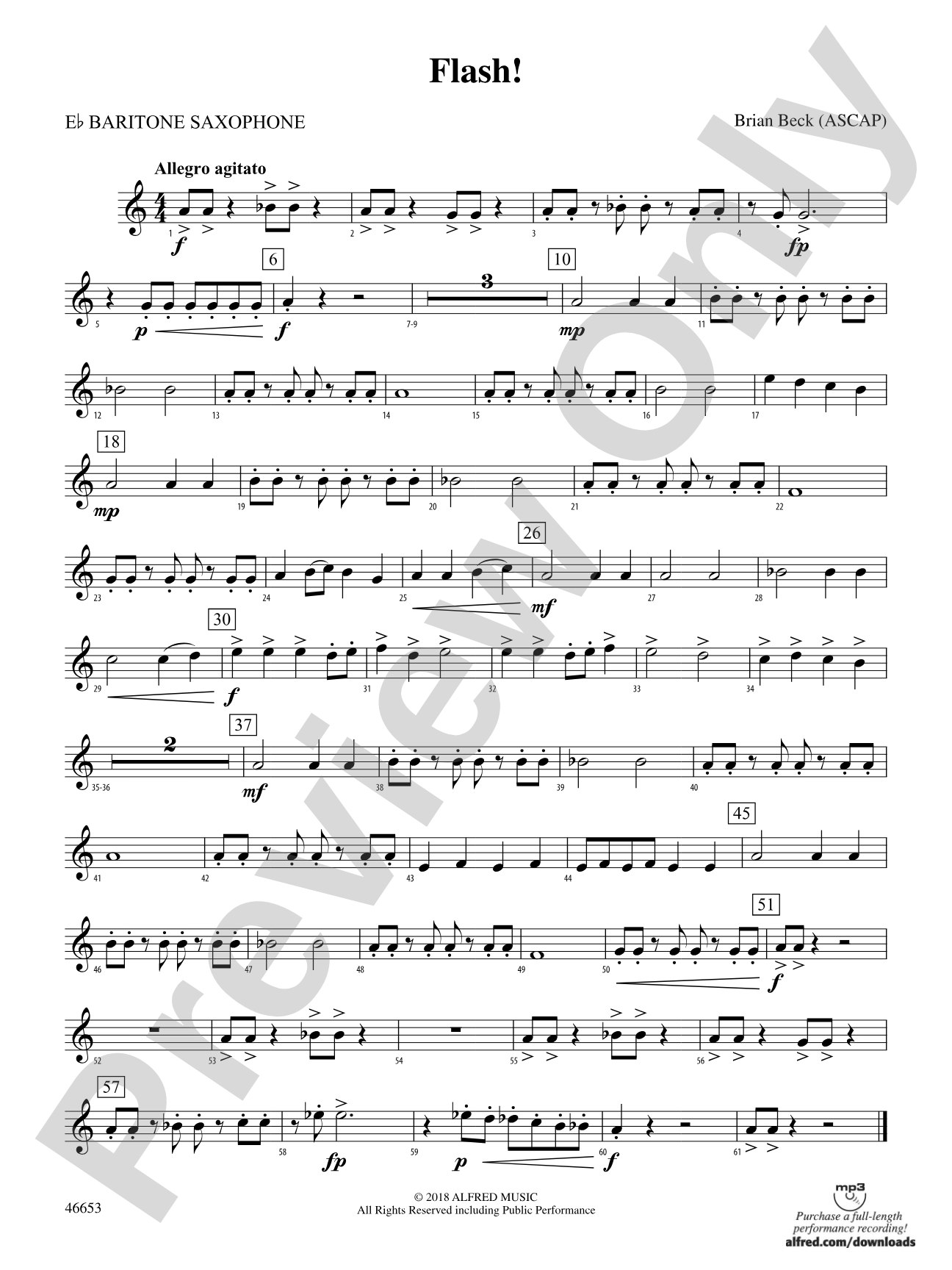

Flash!: E-flat Baritone Saxophone
By Brian Beck
Grade: 1.5 (Easy)
Item: 00-PC-0018083_BTX
$3.00
Pickup currently not available
Description
Start your next concert with a flash!. . . of notes and rhythms. "Flash!" introduces different styles, accidentals, and harmonies not common in younger band literature.


Don't just read it, hear it, play along with it, and watch your students grow with it. In MakeMusic Cloud, Flash!: E-flat Baritone Saxophone comes alive with professional accompaniment, adjustable tempo, and built-in practice tools that turn solo practice into real progress.
Open in the Player
Jump straight in and assign it today.
Start Your Free Trial
Open this title and explore the full library in minutes.
Sample Audio
1
Audio File
--:--
0:00
0:00
Sample Video
Additional Details
Series:
Alfred Debut Series
Publisher:
Alfred Music
Page Count:
134
SKU:
00-PC-0018083_BTX
More about this title
About the Composer: Brian Beck

Brian Beck is a composer and arranger whose band and choral works have earned recognition across regional and national platforms. His pieces have received "Reviewer's Choice" honors from The Instrumentalist and J. W. Pepper, been featured in Teaching Music Through Performance In Band, and appear on prescribed music lists used by state UIL organizations, the Birch Bay Band Title List, and the Florida Bandmasters Association.
Beck holds degrees in Music Education from Texas A&M University-Commerce (Bachelor's) and the University of Houston (Master's). He has directed bands at both the middle and high school levels in Texas, leading ensembles to consistent Superior ratings at UIL contests and "Best in Class" awards at regional festivals. His work as an educator, clinician, and adjudicator reflects a deep commitment to building strong foundational skills in younger musicians.
Why we love this
Beck writes with a keen sense of what early concert bands need to hear. "Flash!" introduces harmonic and stylistic ideas beyond the typical Grade 1.5 vocabulary without overwhelming players, making it a smart programming choice for building listening sophistication while students are still mastering fundamental techniques. The variety of textures and rhythmic patterns keeps the ensemble engaged and gives your younger players something genuinely interesting to prepare.
What to expect
"Flash!" sparkles with rhythmic vitality and harmonic color. The introduction of unexpected accidentals and varied harmonic movement creates moments of genuine musical interest, while the straightforward technical demands keep the focus on musical expression rather than difficulty. It feels like a piece designed specifically for that moment when a young band is ready to sound more like musicians and less like students working through exercises.
Who it's for
"Flash!" serves young concert bands ready to move beyond unison-heavy writing and experience genuine harmonic complexity. Directors preparing Grade 1.5 ensembles for fall concerts or festivals will find a piece that challenges musicianship without requiring virtuosic technique, making it ideal for developing readers and intermediate-level programs.
How to get the most out of it
- Mark entrances clearly during rehearsal, especially where different sections take the melody. This ensures everyone hears and anticipates their role in the harmonic landscape.
- Emphasize the accidentals that appear; they're pedagogically intentional and become clearer when players understand they're shaping the harmonic color, not just reading a flat or sharp.
- Balance the different styles intentionally. As tempos and characters shift, adjust dynamics and articulation so transitions feel deliberate rather than abrupt.
- Record a rehearsal playback so students can hear how the parts fit together. This is especially valuable for developing their ear for the harmonic movement Beck introduces at this level.
How to use it
Open a concert with "Flash!" to set an energetic tone and immediately signal to the audience that this band plays with musical sophistication. It also pairs well in a program with similarly accessible but stylistically varied literature, giving a concert coherence while showcasing your ensemble's range. This is equally effective as a contest selection or festival reading piece, where its combination of accessibility and musical substance will impress adjudicators.
Skills your students will build
- Reading and interpreting accidentals outside standard key signatures
- Playing in varied harmonic contexts and hearing their voice within chords
- Navigating rhythmic patterns and style shifts with musical intent
- Balancing parts and adjusting phrasing as melody and accompaniment roles change