Flamingo Road: 1st Trombone Sheet Music Preview

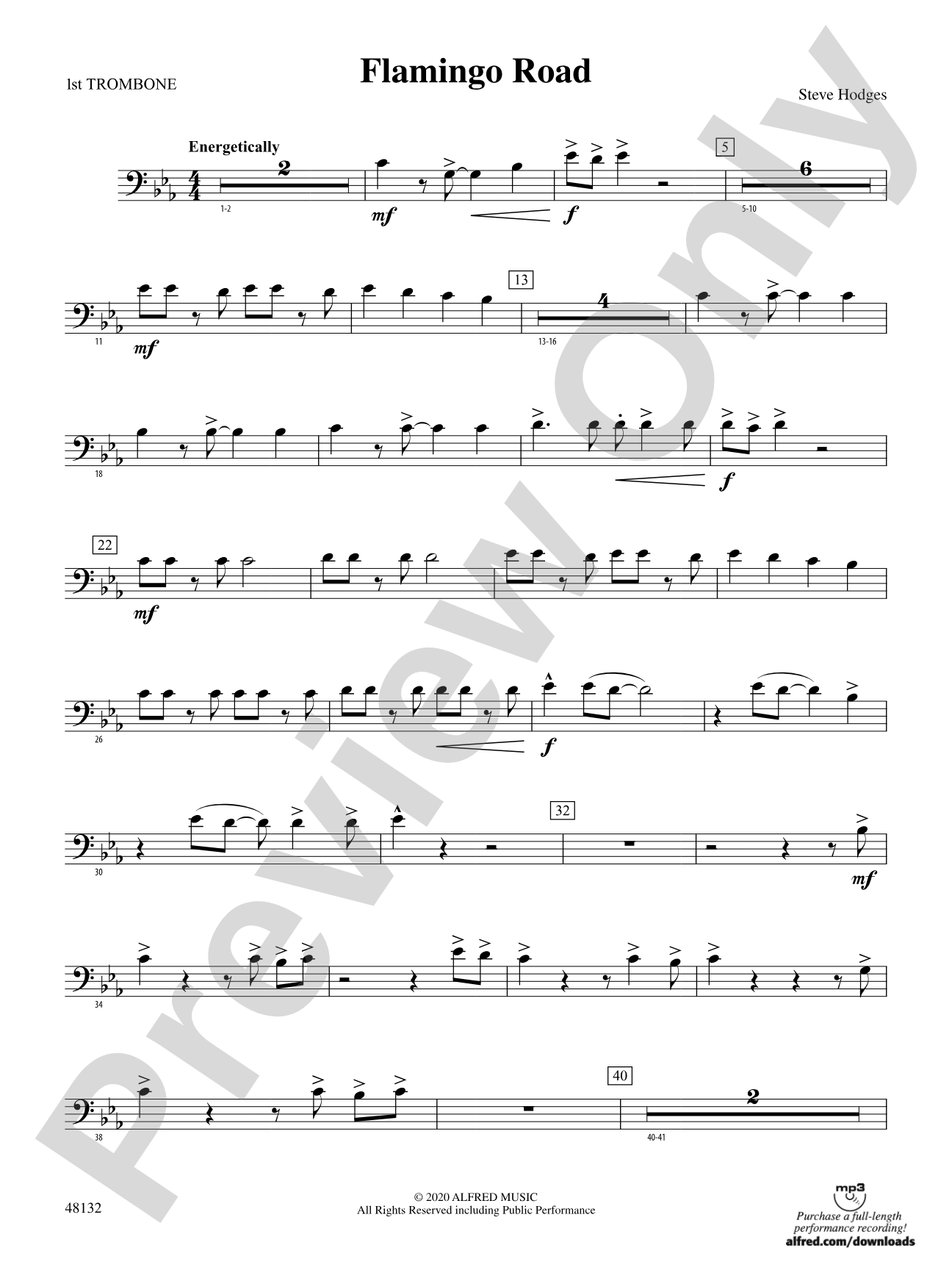
Flamingo Road: 1st Trombone

By Steve Hodges

Grade: 2.5 (Medium Easy)

Item: 00-PC-0018443_TN1

Digital Download
$3.00
Description
Flamingo Road by Steve Hodges is a Latin-inspired piece that starts in the fast lane and never lets up! Featuring an active percussion section and some catchy themes, each section of the band will take a turn in the driver's seat. Stay in your lane! (2:20)

Don't just read it, hear it, play along with it, and watch your students grow with it. In MakeMusic Cloud, Flamingo Road: 1st Trombone comes alive with professional accompaniment, adjustable tempo, and built-in practice tools that turn solo practice into real progress.

Sample Audio
0:00
0:00
Sample Video
Additional Details
Series: Young Symphonic
Publisher: Alfred Music
Page Count: 252
SKU: 00-PC-0018443_TN1

More about this title

About the Composer: Steve Hodges

Steve Hodges

Steve Hodges studied music education at Western Oregon University and Central Washington University, earning degrees that shaped four decades of teaching in public school bands, choirs, and ensembles. Since 1986, he has composed over 120 concert band works published by Alfred Music, with additional choral arrangements through Staff Music and Shawnee Press.

Hodges's music reaches far beyond the classroom. His compositions appear regularly at state conventions and international festivals, and his commissioned works have been performed by honor bands across Virginia, Iowa, British Columbia, Washington, Oregon, and North Carolina. His pieces have even found their way into television broadcasts via TBS and ESPN. A member of ASCAP, Hodges now lives in The Dalles, Oregon, where he continues to engage with community music and takes particular delight in hearing his grandchildren perform his works in their own school bands.

Why we love this

Hodges understands what energizes a middle-level band: memorable themes that invite each section into the spotlight, a Latin groove that drives forward without demanding advanced technique, and percussion parts that stay engaging without overwhelming younger players. The constant forward motion means rehearsals feel productive and concerts land with impact.

What to expect

A vibrant cruise down a sun-soaked boulevard where the rhythm never pauses and every player gets a moment of recognition. The Latin energy pulses constantly, creating an infectious momentum that feels both playful and assured.

Who it's for

Band directors working with Grade 2-3 ensembles who want a confident opener or closer that feels sophisticated without requiring extreme technical demands. Students benefit from the clear solo opportunities and the rhythmic certainty that comes from Latin feel, making this accessible for developing musicians who still need musical wins.

How to get the most out of it

  • Lock the rhythm section (bass drum, snare, timpani, and low reeds) into a tight clave pattern before rehearsing soloists; the Latin pocket depends on everyone feeling the same pulse.
  • Balance the active percussion writing by having players assigned to unpitched instruments practice their rhythmic entrances separately, then gradually integrate them with the full section.
  • Maintain consistent tempo throughout the piece despite the "fast lane" energy; use a metronome in sectionals to prevent accelerating during ensemble moments.
  • Highlight the thematic passes among sections by asking each group to play their featured melody with deliberate voicing clarity before adding surrounding parts.

How to use it

Open a concert with this piece to set an upbeat tone immediately, or use it as a bridge between a classical opener and something slower. The 2:20 duration and high engagement factor make it ideal for spring concerts or festival programs where you need something that demonstrates musicality without eating into programming time.

Skills your students will build

  • Latin rhythmic feels and clave patterns
  • Balancing active percussion within ensemble texture
  • Solo line execution within group context
  • Maintaining consistent tempo under rhythmic complexity
  • Section-specific melodic independence

You May Also Like