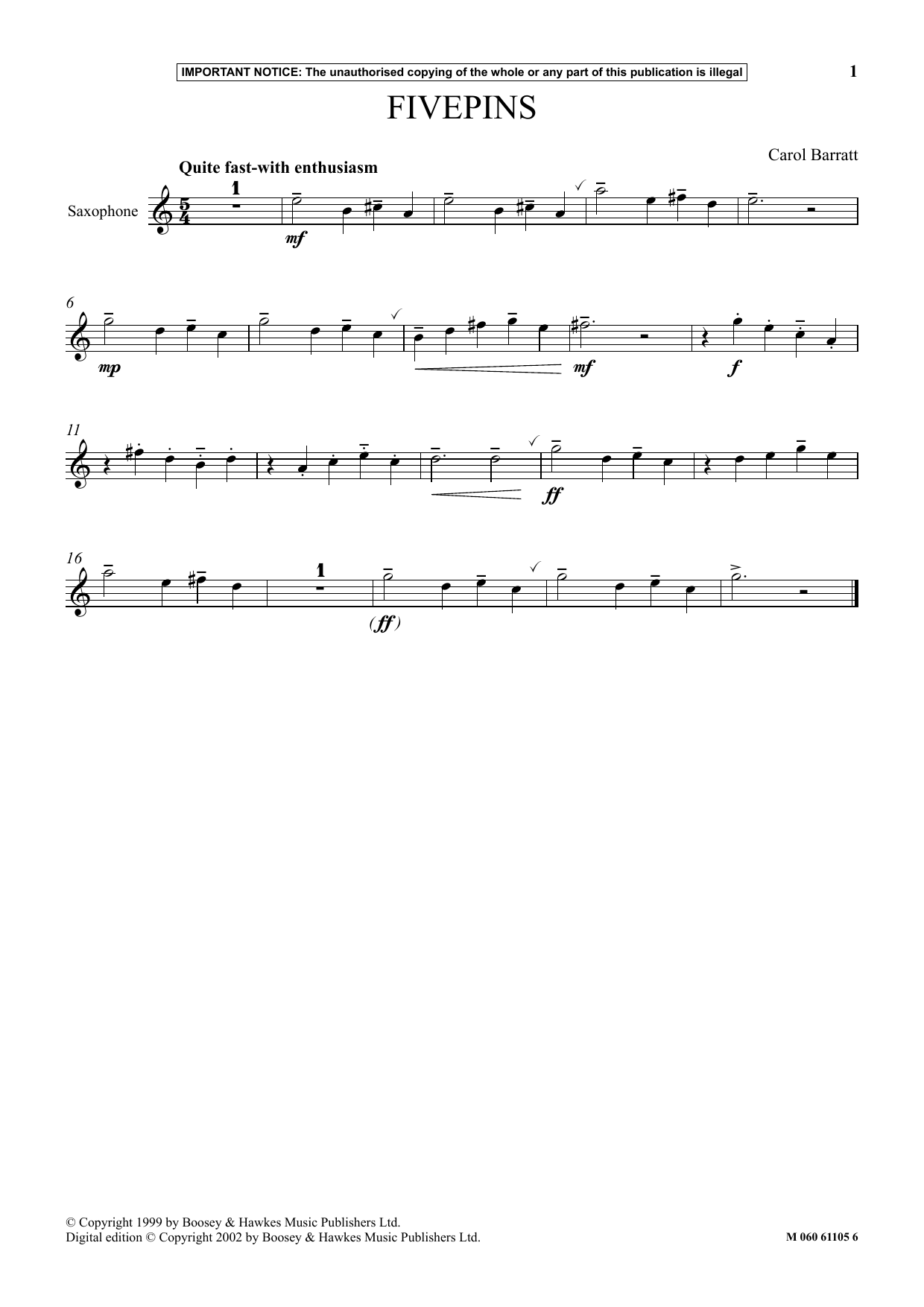
Barratt writes with a composer's ear for what works at the keyboard. The piece respects the player's developing technique while offering genuine musical satisfaction; you're not dealing with a hollow etude dressed up as art.
What to expect
Fivepins carries the kind of intellectual clarity that characterizes much of Barratt's output. It's neither sentimental nor arid; instead it pursues a structural idea with the quiet precision of a composer working through a genuine musical problem.
Who it's for
This works for pianists building fluency at the upper intermediate level, particularly those ready to engage with contemporary classical writing. It suits students who have solid technique but need practice thinking musically beyond mechanics.
How to get the most out of it
Pay attention to harmonic rhythm. The way chords change will guide your phrasing naturally if you listen for it rather than relying on the printed bar lines alone.
Shape the melodic contour deliberately. Many pianists rush through technical passages and flatten the line; resist that instinct and let the melody sing through the figuration.
Balance texture between hands. A common mistake is letting the left hand dominate during accompaniment patterns; draw back slightly and let the right hand breathe.
How to use it
Include this on a student recital where you want to showcase contemporary British writing without overwhelming the audience or the performer. It pairs well alongside traditional classical works, proving that modern composition can inhabit the same concert frame with dignity.
Skills your students will build
Voice leading in contemporary harmonic language
Maintaining independence between hands while managing textural balance
Reading and executing articulation markings that shape phrasing
Sustaining musical intention through technical passages
You May Also Like
Scan to Complete Your Purchase
Use your phone's camera to scan the code below
You'll log in on your phone and the order will be added to your account