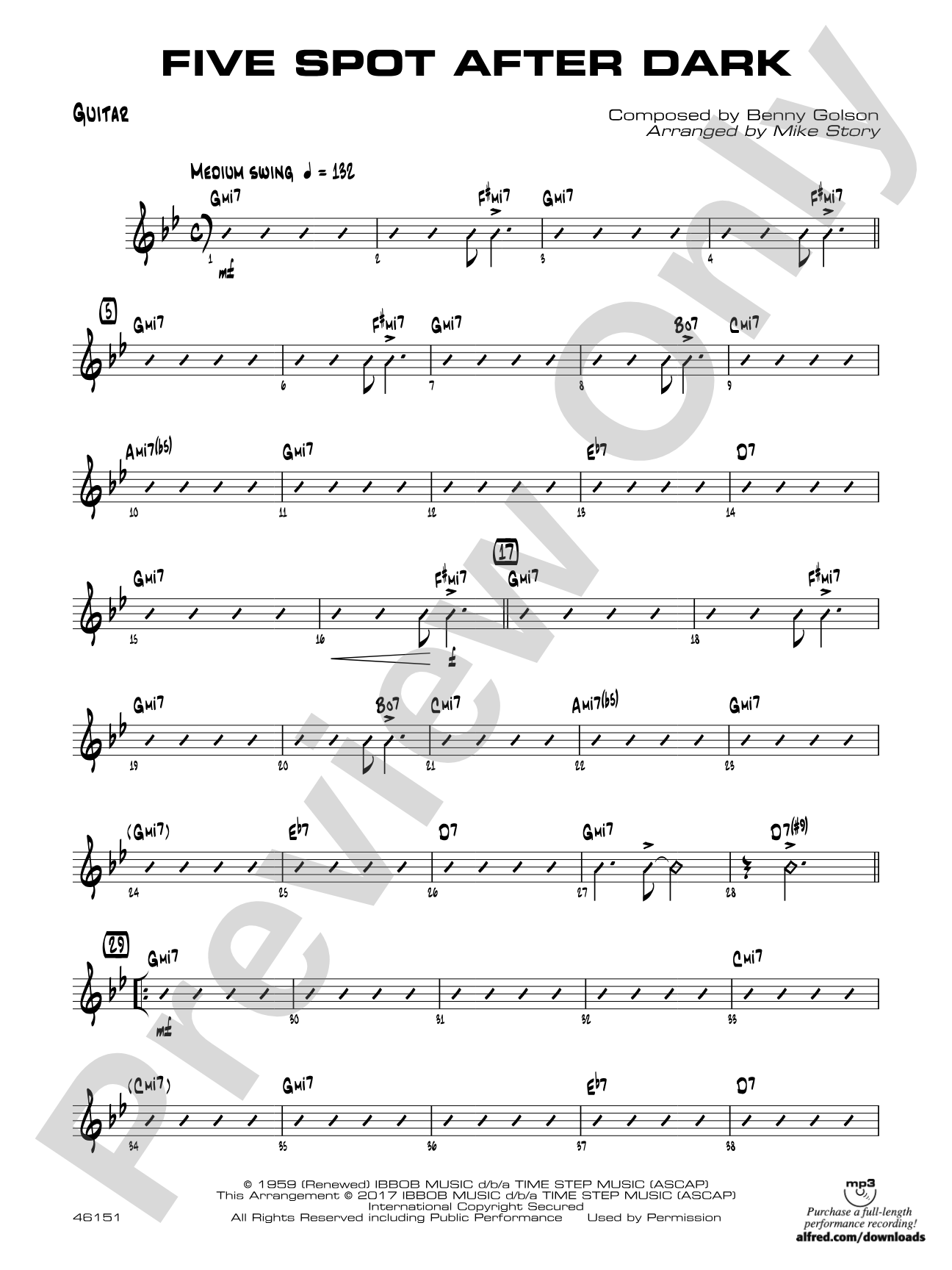
Five Spot After Dark: Guitar Sheet Music Preview

Five Spot After Dark: Guitar

By Benny Golson / arr. Mike Story

Grade: 1 (Easy)

Item: 00-PC-0017743_G

Digital Download
$3.00
Description
A jazz standard played by all the greats, this swing chart is ideal for every young band. Played around 132 BPM, all the ingredients are here: easy tempo, easy ranges, written solos for tenor and trumpet, shout chorus, clear rhythm parts, and plenty of optional parts to include vibes. This one hits the spot! (2:45)

Five Spot After Dark: Guitar isn't in MakeMusic Cloud just yet...but it could be. Let us know you'd like to see it, and you'll help shape what comes next. In the meantime, start a free trial and dive into thousands of interactive titles your students can play along with today.

Sample Audio
0:00
0:00
Sample Video
Additional Details
Series: First Year Charts for Jazz Ensemble
Publisher: Alfred Music
Page Count: 66
SKU: 00-PC-0017743_G

More about this title

About the Composer: Benny Golson

Benny Golson stands among the most prolific composers and arrangers in modern jazz. Active as both a saxophonist and writer from the 1950s onward, he authored standards that have become foundational to the jazz repertoire, including "Tenor Madness," "Along Came Betty," and "Five Spot After Dark." His melodies balance sophistication with accessibility, making them ideal for educational settings.

Golson's gift for orchestration extends across small group and big band contexts. His work demonstrates how jazz composition can honor the tradition while remaining approachable for young ensemble players. Educators value his charts for their clarity and musicality.

Why we love this

This arrangement by Mike Story preserves the swagger of Golson's original while removing the technical barriers that stop young ensembles from playing real jazz. The written solos give beginning improvisers a scaffolded entry into soloing, and the shout chorus energizes both players and audiences. It's the rare Grade 1 chart that sounds genuinely hip rather than simplified.

What to expect

Relaxed confidence and late-night cool. The swing groove sits easy, the melody floats over steady comping, and everything lands with the understated groove that makes jazz feel effortless. For a young ensemble, playing this well is genuinely satisfying: you sound like a real band.

Who it's for

Young jazz ensembles making their first steps into authentic swing repertoire. This works for first-year jazz bands, middle school ensembles stepping up to real jazz, or any group ready to leave behind "educational jazz" and play something that sounds like jazz. The Grade 1 range keeps ranges and rhythms accessible while the material itself commands respect.

How to get the most out of it

  • Lock the tempo at 132 BPM using a click or metronome during all sectional rehearsals. Young rhythm sections need consistent time feel, and this tempo sits perfectly for teaching swing eighth-note subdivision without rushing.
  • Shape the written solos as stories. Have your tenor and trumpet soloists listen to the original recordings to understand the phrasing and attitude Golson and other masters brought to this tune.
  • Bring out the shout chorus by asking the ensemble to play with forward motion and slight dynamic swell. This moment is your biggest payoff; milk it for energy and precision.
  • Balance the optional vibes parts carefully. They add color and sophistication, but the core ensemble must sit solidly first before layering in extras.

How to use it

Open a winter or spring jazz concert with this to set the right tone immediately. It pairs well with slightly more challenging standards and original compositions, establishing that your ensemble can handle the idiom authentically. This also works as a contest or festival selection where authenticity and musical maturity matter more than technical difficulty.

Skills your students will build

  • Swing eighth-note feel and subdivision at a sustainable tempo
  • Written solo interpretation and phrasing in jazz context
  • Rhythm section function (comping, walking bass, time-keeping)
  • Balancing unison ensemble lines with soloist accompaniment
  • Reading jazz chord changes and articulation markings specific to the idiom

You May Also Like