
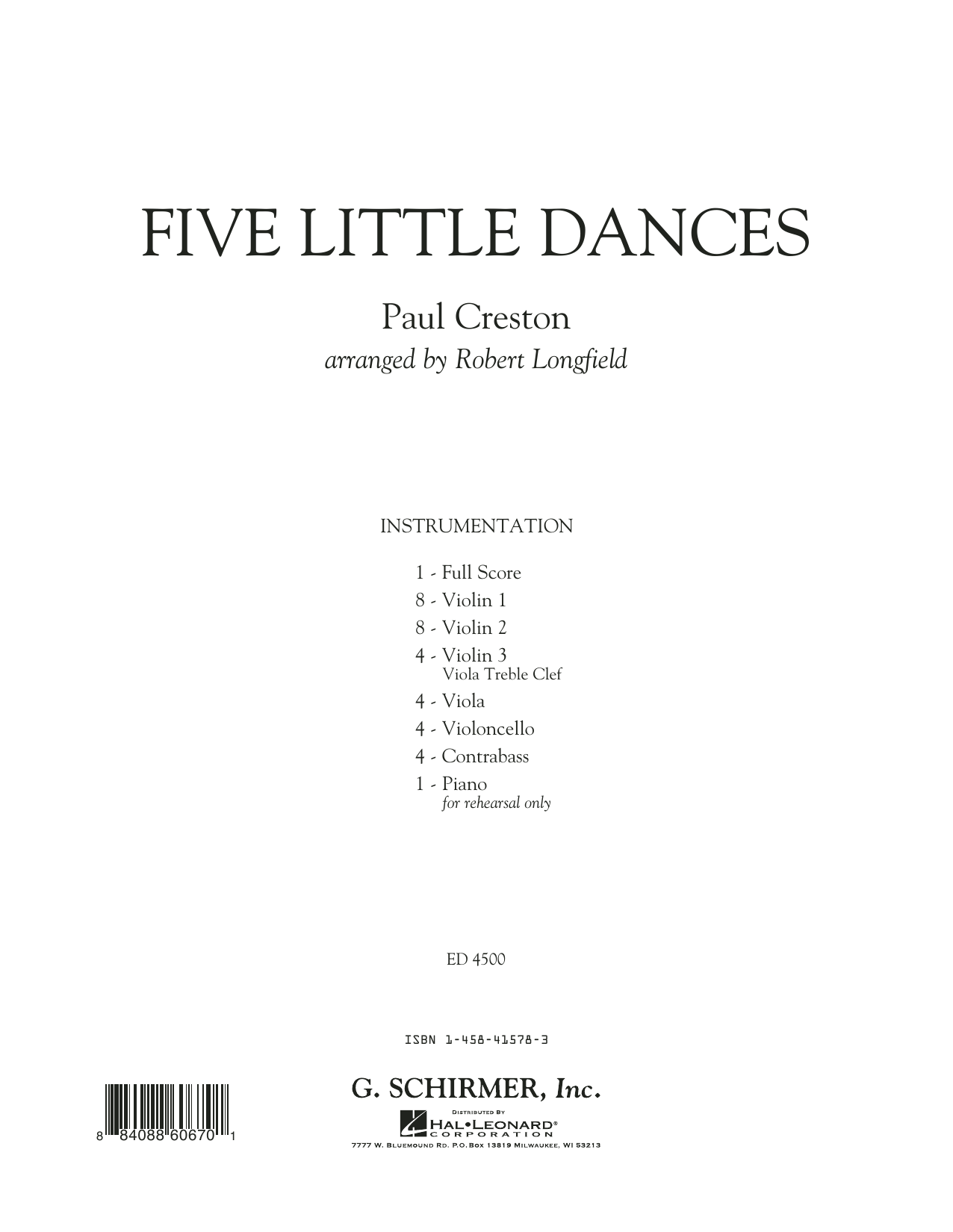

Five Little Dances (arr. Robert Longfield): String Orchestra Conductor Score & Parts
By Paul Creston / Arranged by Robert Longfield
Grade: 3-4
Item: 35-PK00420838
$60.00
Pickup currently not available
Buy Extra Parts (Digital PDF Download)
Parts Added to Cart!
Description
The contemporary music of Paul Creston continues to be important repertoire, particularly his famous concerti for marimba and saxophone. Robert has adapted Creston's only piano work, this delightfully musical suite of delightfully of dances. This edition to the serious string repertoire is certain to be a contest/festival list choice. 4:30


Five Little Dances (arr. Robert Longfield): String Orchestra Conductor Score & Parts isn't in MakeMusic Cloud just yet...but it could be. Let us know you'd like to see it, and you'll help shape what comes next. In the meantime, start a free trial and dive into thousands of interactive titles your students can play along with today.
Request This Title
Tell us you want it.
Start Your Free Trial
Explore everything that's ready to play right now.
Sample Audio
No sample audio found.
Sample Video
No sample videos found.
Additional Details
Publisher:
Hal Leonard
SKU:
35-PK00420838
More about this title
About the Composer: Paul Creston
Paul Creston (1906-1985) shaped American concert music through his prolific output and distinctive harmonic language. Though trained as an organist and pianist, he became known for orchestral works and concerti that balanced modern idiom with accessibility, earning him performances by major orchestras and soloists throughout his career.
Creston's gift for melody and his understanding of instrumental color made his music appealing to performers at all levels. His concerti for marimba and saxophone remain staples of percussion and wind repertoire, introducing countless students to contemporary classical music through works that engage without alienating.
Why we love this
Robert Longfield's arrangement opens Creston's keyboard suite to string ensembles, making this charming music available to programs that would otherwise never encounter it. The Grade 3-4 scoring preserves the character and harmonic interest of the original while remaining thoroughly playable, and the moderate length makes it an intelligent addition to concerts where you need substantial repertoire without overextending rehearsal time.
What to expect
Creston's dances sparkle with rhythmic vitality and colorful harmonic surprises. Each movement has its own personality, from sprightly to lyrical to playful, creating a suite that keeps audiences engaged through genuine musical content rather than spectacle.
Who it's for
String orchestras at the intermediate level looking for concert repertoire with real substance. This works equally well for festival programming, spring concerts, or as a centerpiece that pairs intelligently with lighter fare or more demanding contemporary works.
How to get the most out of it
- Treat each dance as a distinct character study. Even though they're short movements, they have genuine personalities; resist the temptation to rush or blend them into one generic sound.
- Balance the string sections carefully so inner voices contribute their harmonic movement rather than disappearing into texture. These dances lean on that secondary voice writing.
- Let the phrasing breathe naturally. Creston's melodies unfold with intent, so mark clear phrase arrivals and shape through dynamics rather than relying on tempo variation.
- Record a run-through early in rehearsals. Hearing the full arc of all five movements helps students understand how they connect and where the real contrasts live.
How to use it
Pair this with other mid-20th-century American works to create a thematic concert, or use it as a bridge between a classical period piece and something more adventurous. The moderate performance time and festival appeal make it ideal for competitions where you want programming that impresses adjudicators without demanding soloistic fireworks.
Skills your students will build
- Balancing ensemble sound while maintaining inner voice independence
- Sustaining rhythmic vitality across multiple short movements
- Shaping phrases through dynamic contour rather than tempo fluctuation
- Recognizing harmonic movement in mid-20th-century idiom