First Winter's Breath: Mallets Sheet Music Preview

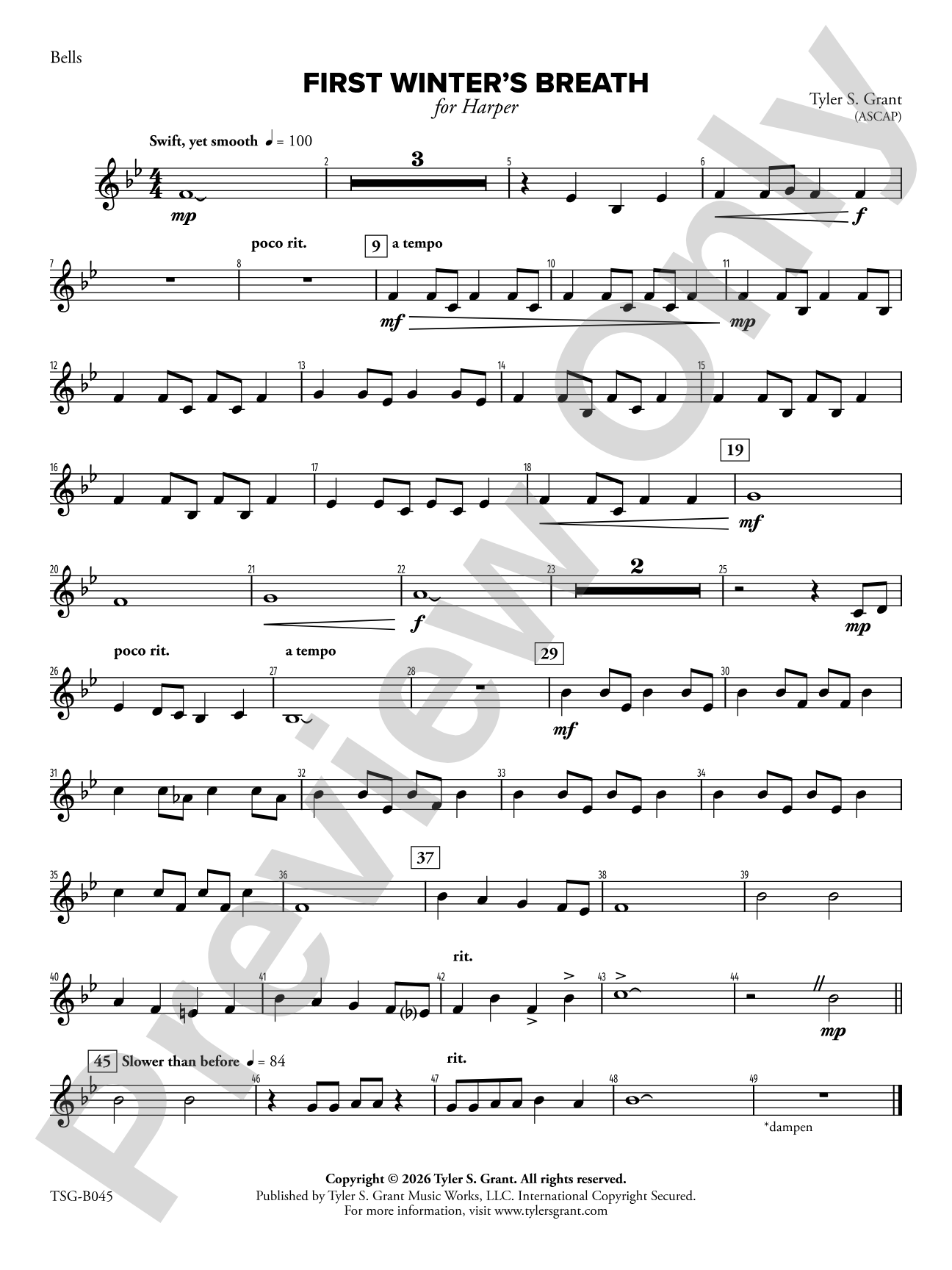
First Winter's Breath: Mallets

Tyler S. Grant

Item: 98-PC-0000070_M1

Digital Download
$3.00
Description
This stunning lyrical work captures the quiet wonder of the season's first cold air. Gentle melodies unfold over luscious harmonies, inviting students to develop expressive, lyrical playing. Brief moments of Lydian color add a lighthearted touch, drawing performers and audiences alike into the spirit of winter. Charming and reflective!

First Winter's Breath: Mallets isn't in MakeMusic Cloud just yet...but it could be. Let us know you'd like to see it, and you'll help shape what comes next. In the meantime, start a free trial and dive into thousands of interactive titles your students can play along with today.

Sample Audio
0:00
0:00
Sample Video
Additional Details
Publisher: Tyler S. Grant Music Works
SKU: 98-PC-0000070_M1
Instrumentation: Concert Band

More about this title

About the Composer: Tyler S. Grant

Tyler S. Grant

Tyler S. Grant has built a reputation as a composer and arranger whose works appear regularly on all-state and honor ensemble programs nationwide. His commissions have been performed at venues ranging from Carnegie Hall to the Macy's Thanksgiving Day Parade, and his compositions consistently earn recognition on editors' and publishers' choice lists. His winning entry in the Dallas Wind Symphony's 2014 fanfare competition launched works that now circulate through collegiate and professional ensembles across North America.

Beyond the composing desk, Grant actively engages with school programs as a clinician, bringing his expertise to over 100 instrumental music groups across the country. He studied conducting with Randall Coleman at the University of Alabama and credits mentor Brian Balmages as instrumental to his development as a composer. Grant's contributions extend to educational publications, including work with Alfred Music's Sound Innovations series, and his perspectives have appeared in School Band & Orchestra Magazine and The Instrumentalist.

Why we love this

Grant's gift for lyricism shines here in a work that asks students to sustain long lines with intention rather than sheer breath support. The Lydian moments arrive without fanfare, creating gentle surprise that rewires how ensembles approach tonal color without requiring technical pyrotechnics.

What to expect

The opening unfolds like watching frost gather on a windowpane: patient, crystalline, and gradually revealing complexity. Warm harmonies create a sense of contemplation, while brief flashes of Lydian brightness suggest the particular beauty of a season's turning point rather than its severity.

Who it's for

Concert bands seeking a thoughtful addition to festival or concert programming that develops expressive maturity without extreme technical demands. This works well for groups wanting to explore lyrical writing and harmonic sophistication at a manageable difficulty level.

How to get the most out of it

  • Shape the opening melody with a slight crescendo to the phrase midpoint, then release the tension gradually. This keeps the "quiet wonder" from becoming shapeless.
  • Balance the harmonic foundation carefully; the lush chord structures only land if inner voices aren't buried beneath the top line.
  • Approach the Lydian passages with a lighter articulation and slightly lifted dynamic to distinguish them from the surrounding material without rushing the tempo.
  • Allow for natural breath moments between phrases so players can reset their air support and maintain consistency in tone color throughout.

How to use it

Consider pairing this with other seasonal works in a winter concert, or use it as an opener that allows the ensemble to settle into a focused, expressive mindset before more demanding repertoire. Its moderate length and reflective character also make it suitable for festival competition where musical maturity carries weight.

Skills your students will build

  • Sustaining long melodic lines with shape and direction
  • Balancing chord voicings across a full ensemble texture
  • Distinguishing tonal color through articulation and dynamic contrast
  • Responding to harmonic context shifts (Lydian mode recognition and execution)
  • Phrase continuity across sustained passages

You May Also Like