
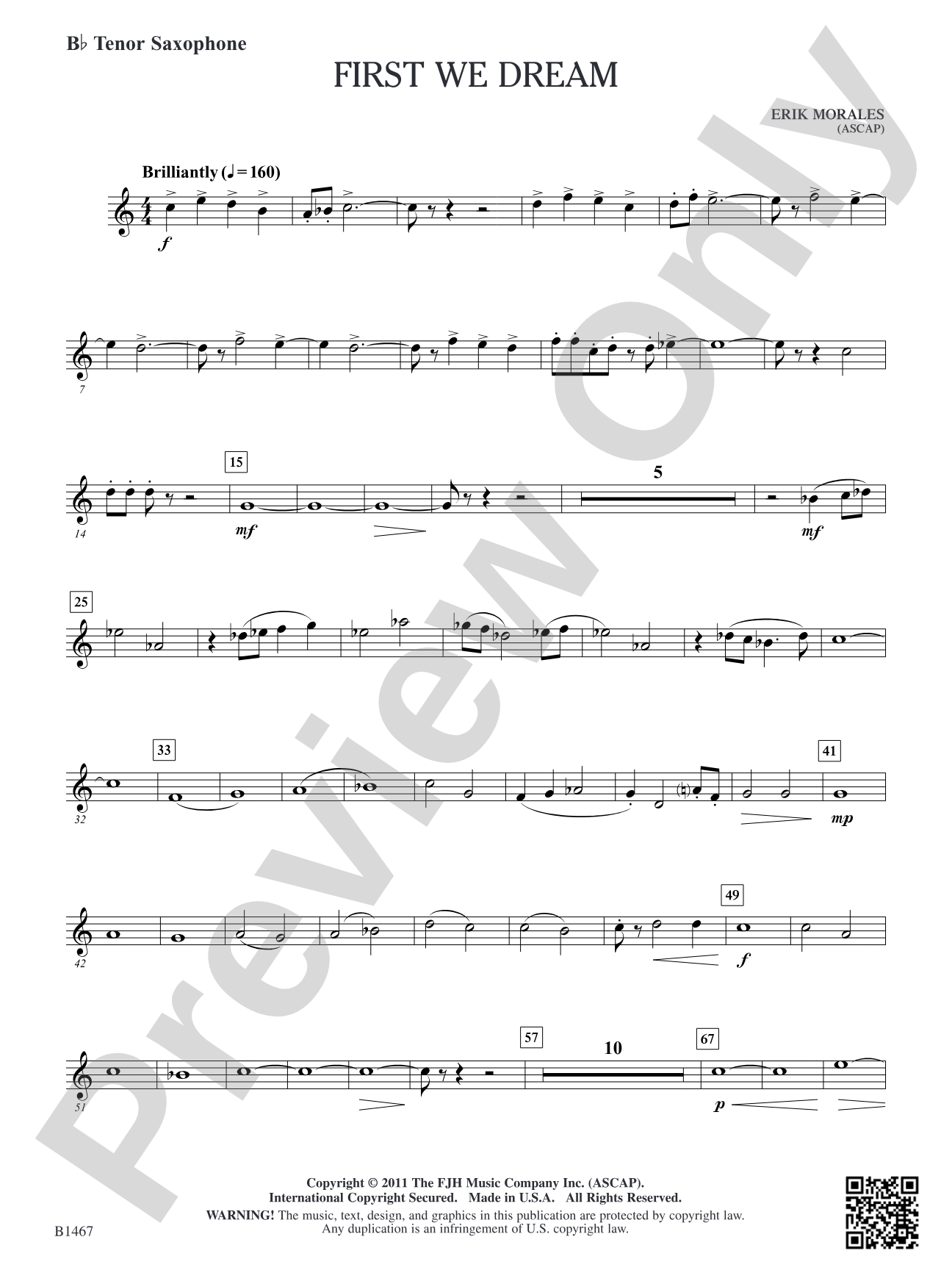

First We Dream: B-flat Tenor Saxophone
By Erik Morales
Grade: 3
Item: 98-PC-DB1467_TX1
$7.00
Pickup currently not available
Description
From the opening fanfare to the powerful rhythmic statement of the ending, this exuberant work will keep the audience on the edge of their seats! The large percussion section is featured extensively and provides the driving force behind the expansive themes. A clever combination of modern rhythms and elements of popular music.


First We Dream: B-flat Tenor Saxophone isn't in MakeMusic Cloud just yet...but it could be. Let us know you'd like to see it, and you'll help shape what comes next. In the meantime, start a free trial and dive into thousands of interactive titles your students can play along with today.
Request This Title
Tell us you want it.
Start Your Free Trial
Explore everything that's ready to play right now.
Sample Audio
1
Audio File
--:--
0:00
0:00
Sample Video
No sample videos found.
Additional Details
Series:
FJH Concert Band
Publisher:
The FJH Music Company, Inc.
SKU:
98-PC-DB1467_TX1
More about this title
About the Composer: Erik Morales

Erik Morales was born in New York City in 1966 and has developed a distinctive harmonic language that resonates across classical, jazz, and commercial idioms. His output exceeds 150 published works spanning wind ensembles, orchestras, jazz groups, and chamber settings, with commissions regularly arriving from schools and organizations across the country. He studied composition at Florida International University and earned his bachelor's degree from the University of Louisiana, Lafayette in 1989, launching his professional composing career in 1985 when a high school band director invited him to arrange for the marching program.
Trumpet is Morales' primary instrument, and he has substantially enriched the trumpet repertoire through ensemble works and solo concerti that have earned recognition at major competitions. His Concerto for Trumpet in C and Piano premiered at the 2009 International Trumpet Guild conference, while a consortium-commissioned Concerto for Two Trumpets premiered at the 2013 ITG conference in Grand Rapids. In 2016, he was inducted into the Louisiana Association for Jazz Education's Hall of Fame. Throughout his career, Morales has consistently pursued the intersection of artistic integrity and educational value, resulting in repertoire that challenges student musicians while remaining accessible.
Why we love this
This score captures the energy that Grade 3 bands crave without sacrificing musical substance. The substantial percussion writing transforms a potentially standard concert piece into one where your battery players feel genuinely featured rather than relegated to keeping time, and the fusion of contemporary rhythmic language with familiar melodic architecture makes it engaging for both players and audiences.
What to expect
From the moment the fanfare cuts through the air, this piece radiates forward momentum and excitement. The driving rhythmic figures and incorporation of contemporary grooves create an infectious energy that feels modern and accessible, while the expansive melodic sections remind listeners that substance still lives beneath the propulsive surface.
Who it's for
Grade 3 concert bands seeking a high-energy contest or festival selection that delivers audience appeal without oversimplifying the musical content. Directors who want their percussion section to play a starring role rather than a supporting one will find the extended battery writing particularly rewarding.
How to get the most out of it
- Balance the opening fanfare so each section contributes to the overall impact rather than allowing the brass to dominate; woodwinds and percussion are equal partners here.
- Lock the rhythmic figures between percussion and the lower wind sections during the driving sections; a unified pulse from these voices propels the entire ensemble.
- Shape the expansive themes with long-line phrasing even when articulation changes; maintain forward momentum through phrase markings rather than settling into a metronomic rhythm.
- Bring out the popular music idioms in rehearsal so students understand the stylistic context; this familiarity helps them commit to the groove with confidence.
How to use it
Program this as an opening number to set an energized tone for your concert, or place it strategically in the second half to break up heavier repertoire with something that showcases your band's rhythmic precision and percussion talent. The contest and festival designation makes it ideal for spring competitions where judges reward both musicality and technical execution.
Skills your students will build
- Executing contemporary rhythmic figures and syncopated patterns
- Balancing multiple independent rhythmic layers across the ensemble
- Maintaining ensemble cohesion in grooved, non-traditional meters
- Articulation clarity and consistency within driving percussion-led passages
- Dynamic control and phrasing across sectional transitions