First Finger March: Cello Sheet Music Preview

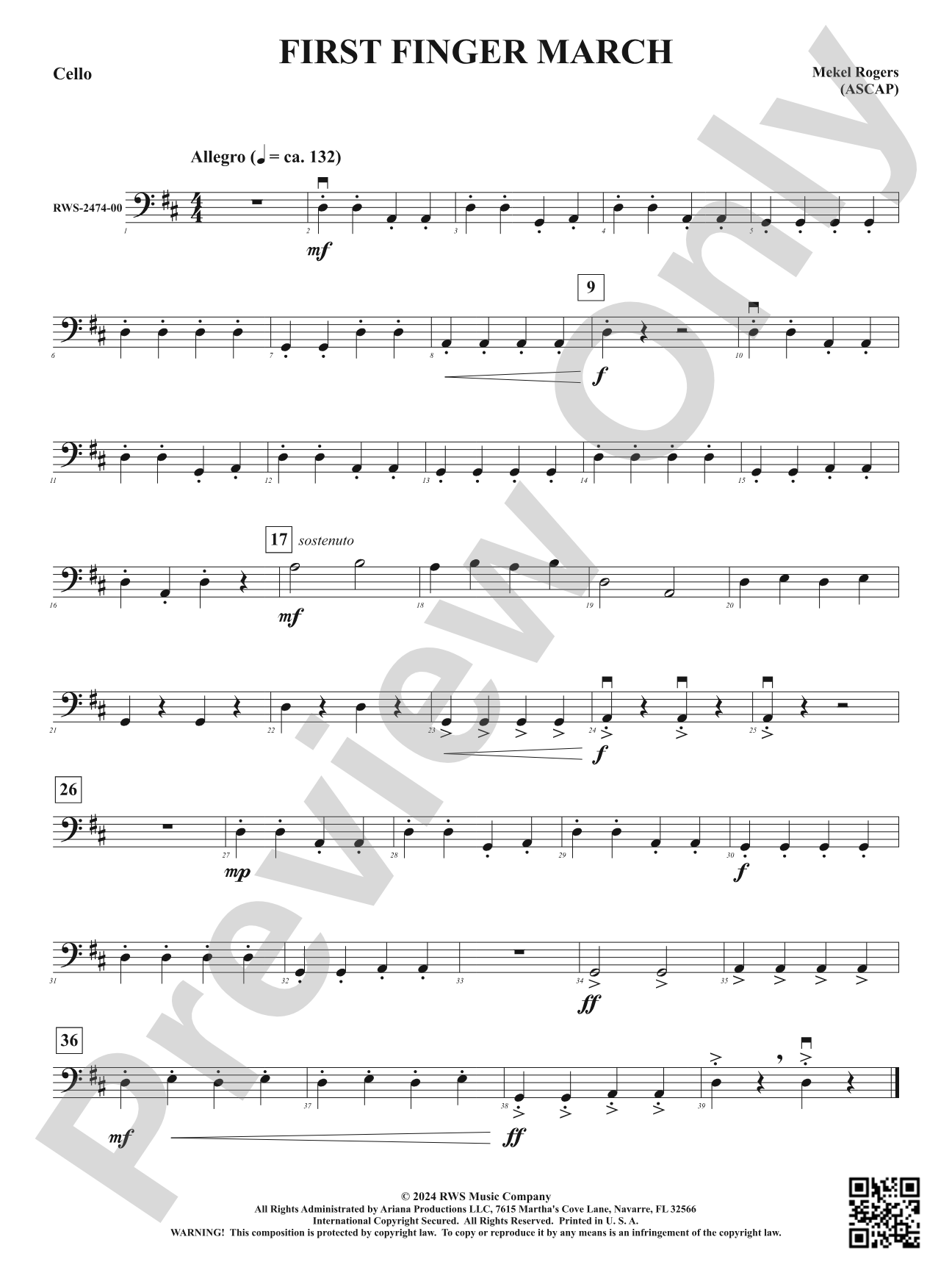
First Finger March: Cello

By Mekel Rogers

Grade: 1

Item: 98-PC-RWS2474_VC1

Digital Download
$5.99
Description
First Finger March by Mekel Rogers is a great choice for a first year concert! Written in a march style, every note is played as an open string or using only the first finger. Scored to accommodate string groups of any size or instrumentation, First Finger March is easy to teach, fun to play, and a great way for beginners to sound full and confident. (1:14)

First Finger March: Cello isn't in MakeMusic Cloud just yet...but it could be. Let us know you'd like to see it, and you'll help shape what comes next. In the meantime, start a free trial and dive into thousands of interactive titles your students can play along with today.

Sample Audio
0:00
0:00
Sample Video
Additional Details
Series: RWS - Beginning Strings
Publisher: RWS Music Company
SKU: 98-PC-RWS2474_VC1

More about this title

Why we love this

Rogers understands what first-year orchestras need: a piece that sounds polished without demanding complex fingerings or bow control. The march idiom gives students an immediate sense of ensemble purpose, and the open-string-plus-first-finger constraint means your whole group can play together confidently from the first rehearsal without anyone getting lost in positions.

What to expect

A crisp, military-style march with forward momentum and dignity. The march idiom gives the piece a ceremonial, purposeful character that feels genuine rather than toy-like, even when played entirely on open strings and first finger.

Who it's for

Beginning string orchestras in their first year or first few months of ensemble playing. This piece works for any group size or string instrumentation balance, making it ideal for schools with developing programs or uneven instrumentation.

How to get the most out of it

  • Establish a steady pulse with a clear beat pattern during the first reading. First-year players benefit from a conductor who commits fully to the tempo and doesn't vary it.
  • Balance the march rhythm across all sections. Open strings ring naturally, so watch that your lower voices don't overwhelm the melody line.
  • Keep vibrato minimal or absent in early rehearsals. Let the march articulation and rhythmic clarity carry the piece before adding expressive color.
  • Use the 1:14 runtime to build confidence about pacing. A march that moves with purpose feels twice as polished.

How to use it

Program this as an opening concert piece to build early ensemble morale and demonstrate that beginners can sound confident and full. It also works well in a school assembly context or as a festival entry where you want to showcase clean fundamentals and secure ensemble playing without relying on advanced techniques.

Skills your students will build

  • Open string accuracy and efficiency
  • First finger placement and intonation
  • Rhythmic precision in march idiom
  • Ensemble balance and listening across sections
  • Bow control and sustained tone on open strings
  • Reading string orchestra score from beginning conductor charts

You May Also Like