Fireworks Sheet Music Preview

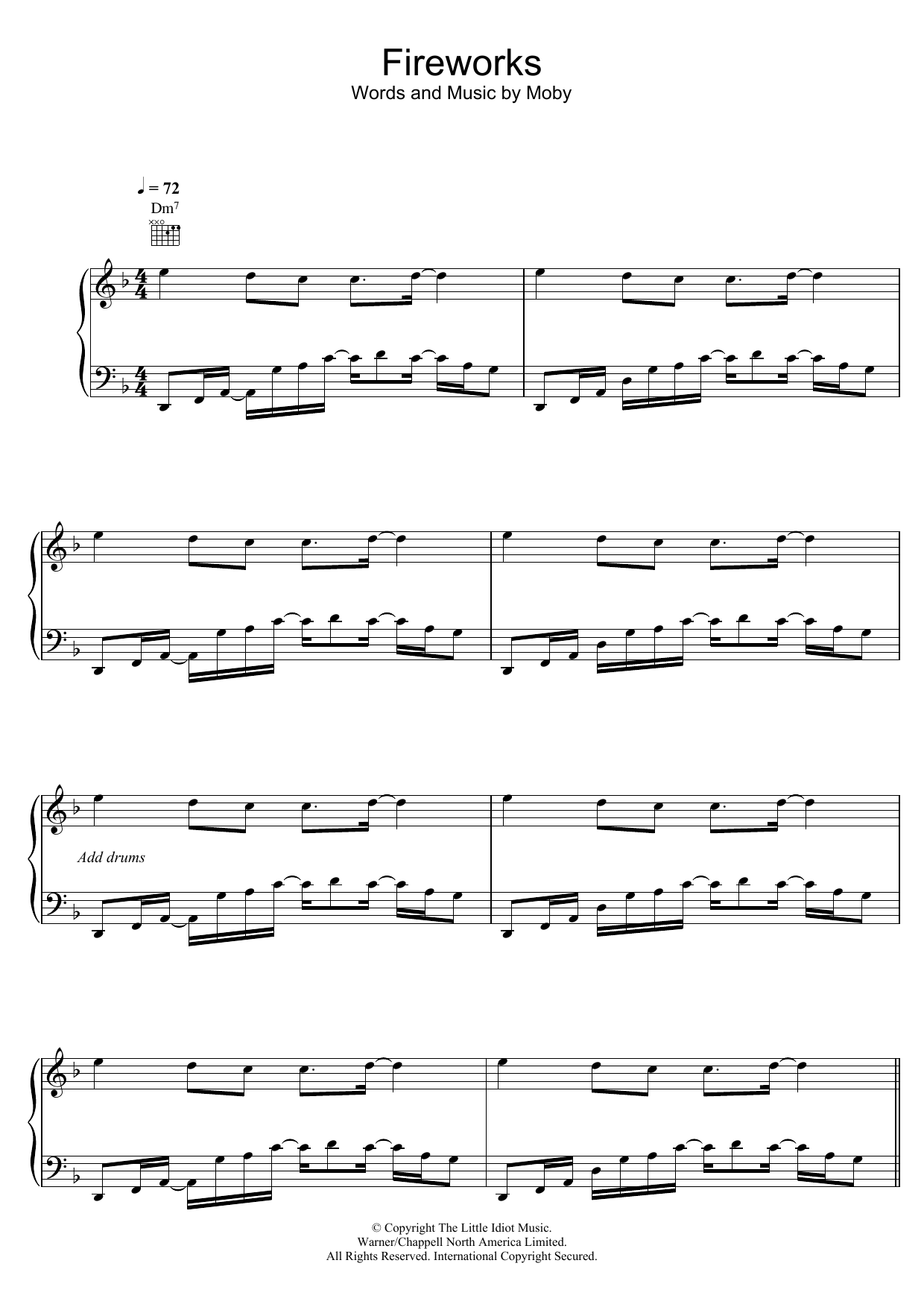
Fireworks: Piano Solo

As performed by Moby

Item: 35-DS00365777

Digital Download
$5.99

One moment…

One moment…

Description

Fireworks: Piano Solo isn't in MakeMusic Cloud just yet...but it could be. Let us know you'd like to see it, and you'll help shape what comes next. In the meantime, start a free trial and dive into thousands of interactive titles your students can play along with today.

Sample Audio
No sample audio found.
Sample Video
Additional Details
Publisher: Hal Leonard
Page Count: 4
SKU: 35-DS00365777

More about this title

About the Artist: Moby

Moby (Richard Melville Hall) built his career on genre fluidity, moving between ambient, electronic, dance, and pop with equal command. His work demonstrates how instrumental and electronic textures can anchor contemporary music, a principle that translates directly into the piano literature he's created for solo performers.

Why we love this

Moby's piano writing captures the propulsive energy of electronic music while remaining pianistically natural. The piece sits comfortably under intermediate hands but rewards attention to texture and dynamic control, making it engaging for students who might not otherwise connect with classical repertoire.

What to expect

Luminous and propulsive. The piece unfolds like a controlled explosion, building from minimal material through strategic layering and harmonic deepening. There's a meditative quality beneath the momentum, as if examining the architecture of excitement from inside.

Who it's for

Intermediate piano students who gravitate toward contemporary music and want to develop facility with repeated rhythmic figures and layered textures. This arrangement works equally well for recital performance or for pianists seeking repertoire that bridges classical training and modern listening habits.

How to get the most out of it

  • Sustain the pedal through longer harmonic progressions to create the atmospheric wash typical of Moby's production style, but release clearly between major section shifts to maintain clarity.
  • Lock into a steady internal pulse even when the surface rhythm feels free; electronic music relies on this metronomic backbone more than traditional acoustic music does.
  • Shape the crescendos gradually rather than suddenly. The piece builds intensity through accretion, so each dynamic shift should feel like a single wave rather than discrete jumps.

How to use it

Position this alongside other contemporary solo work to signal that your concert takes seriously the music students actually listen to. It works especially well as a lighter palate cleanser between heavier classical or romantic works, or as an opener to signal an unconventional program direction.

Skills your students will build

  • Pedal control and timing in ambient contexts
  • Maintaining rhythmic integrity through repetitive figures
  • Dynamic shaping of gradual crescendos across 4+ pages
  • Interpreting electronic music idioms on acoustic piano

You May Also Like