
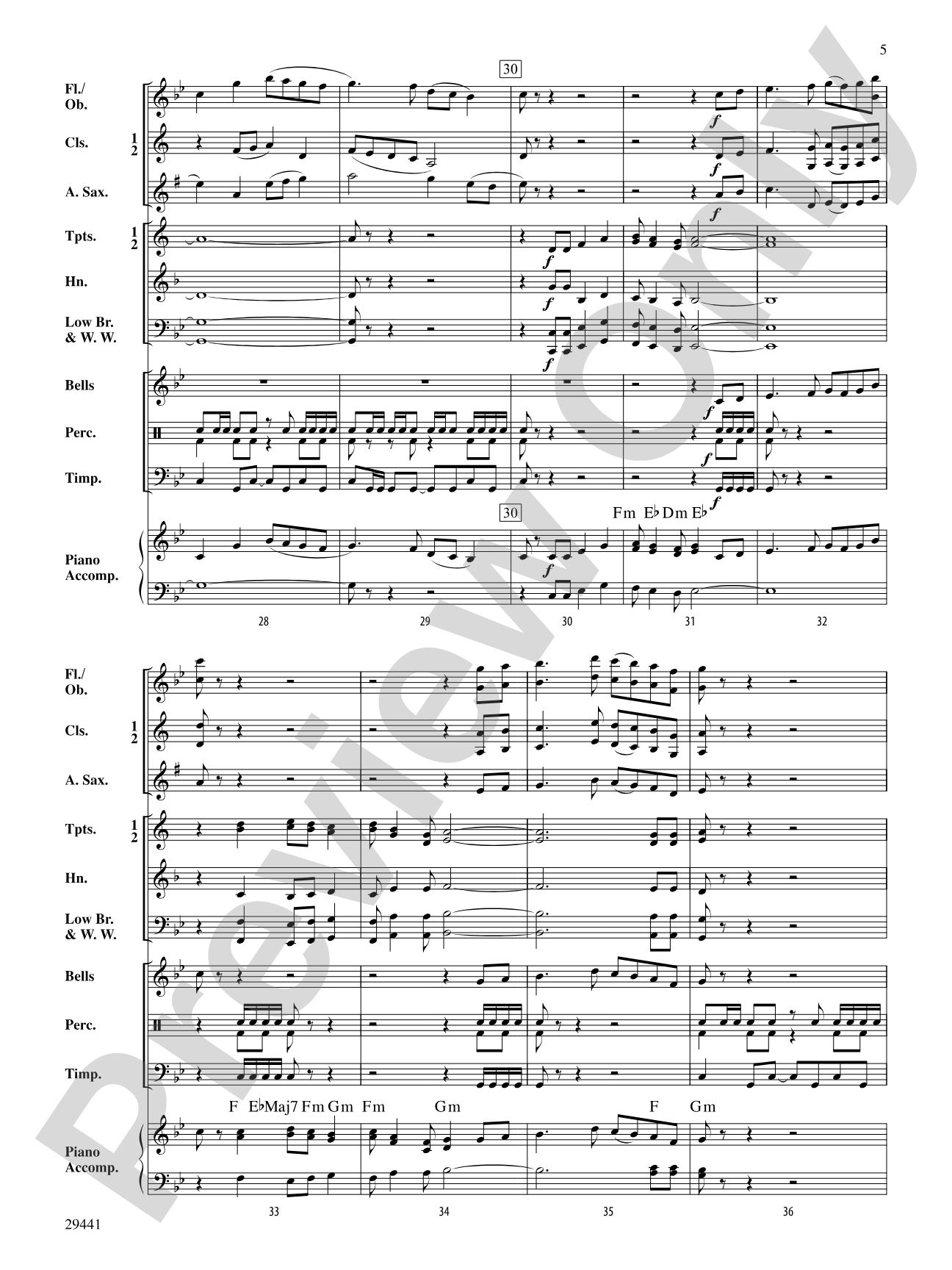
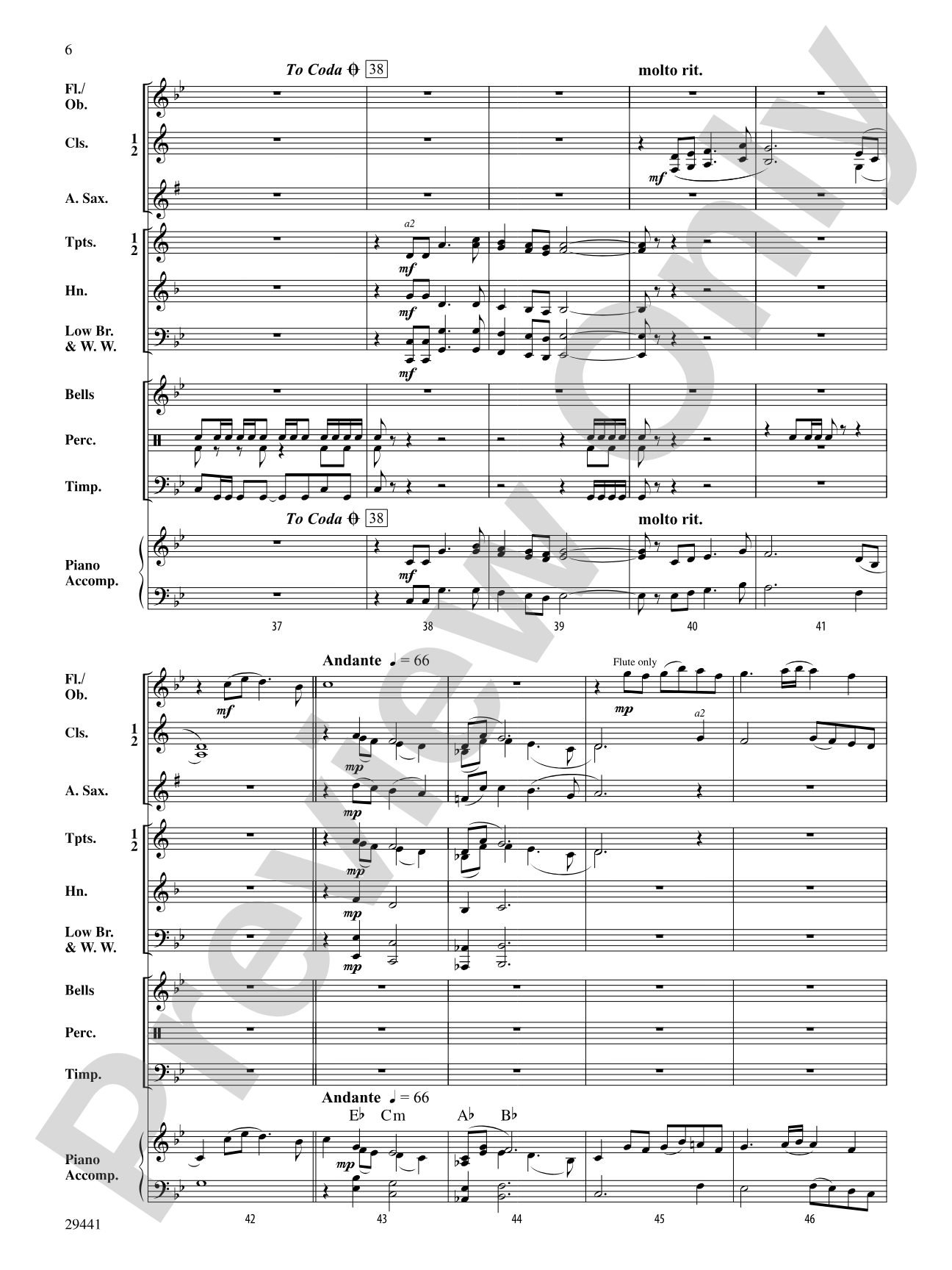
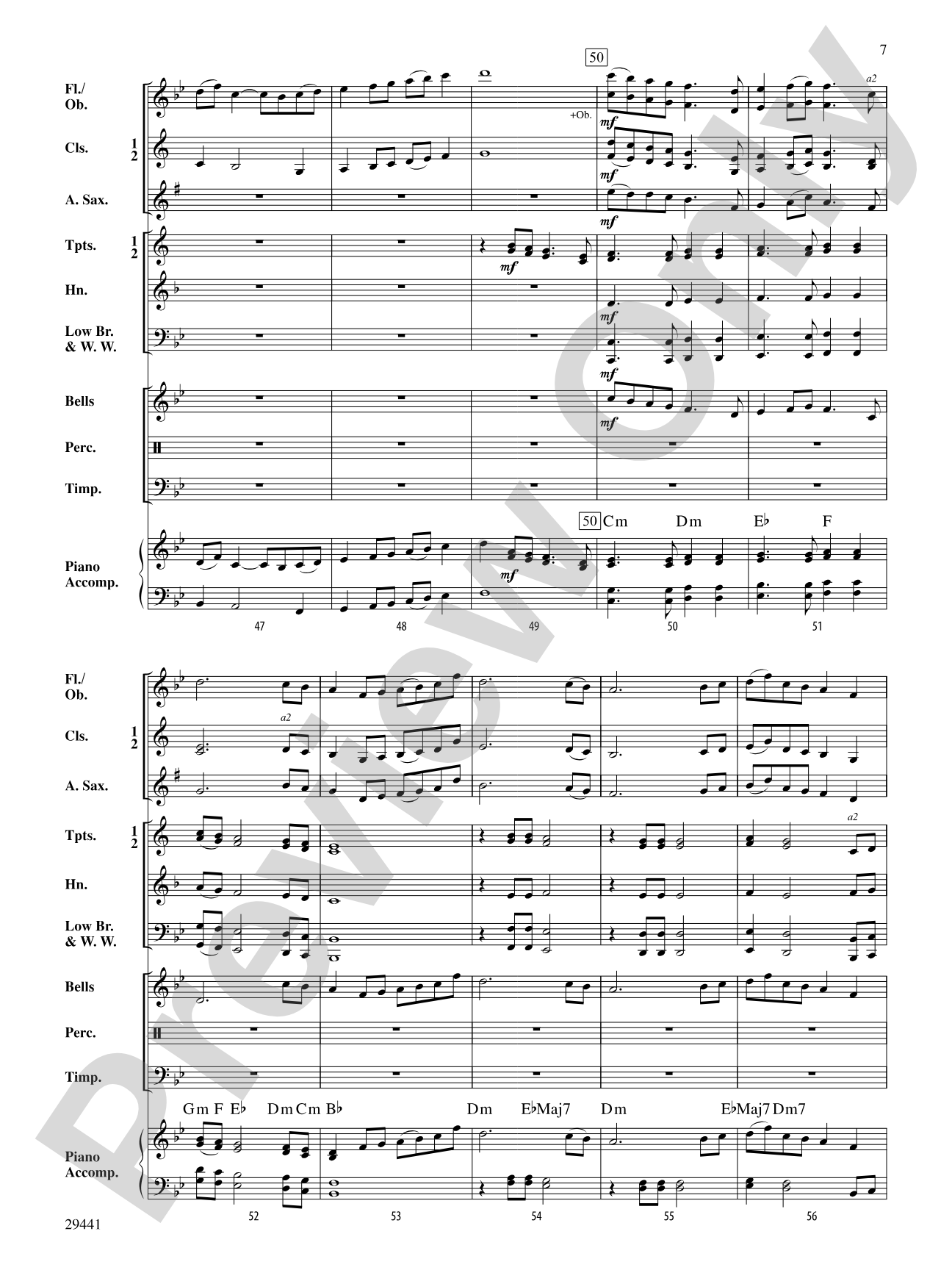
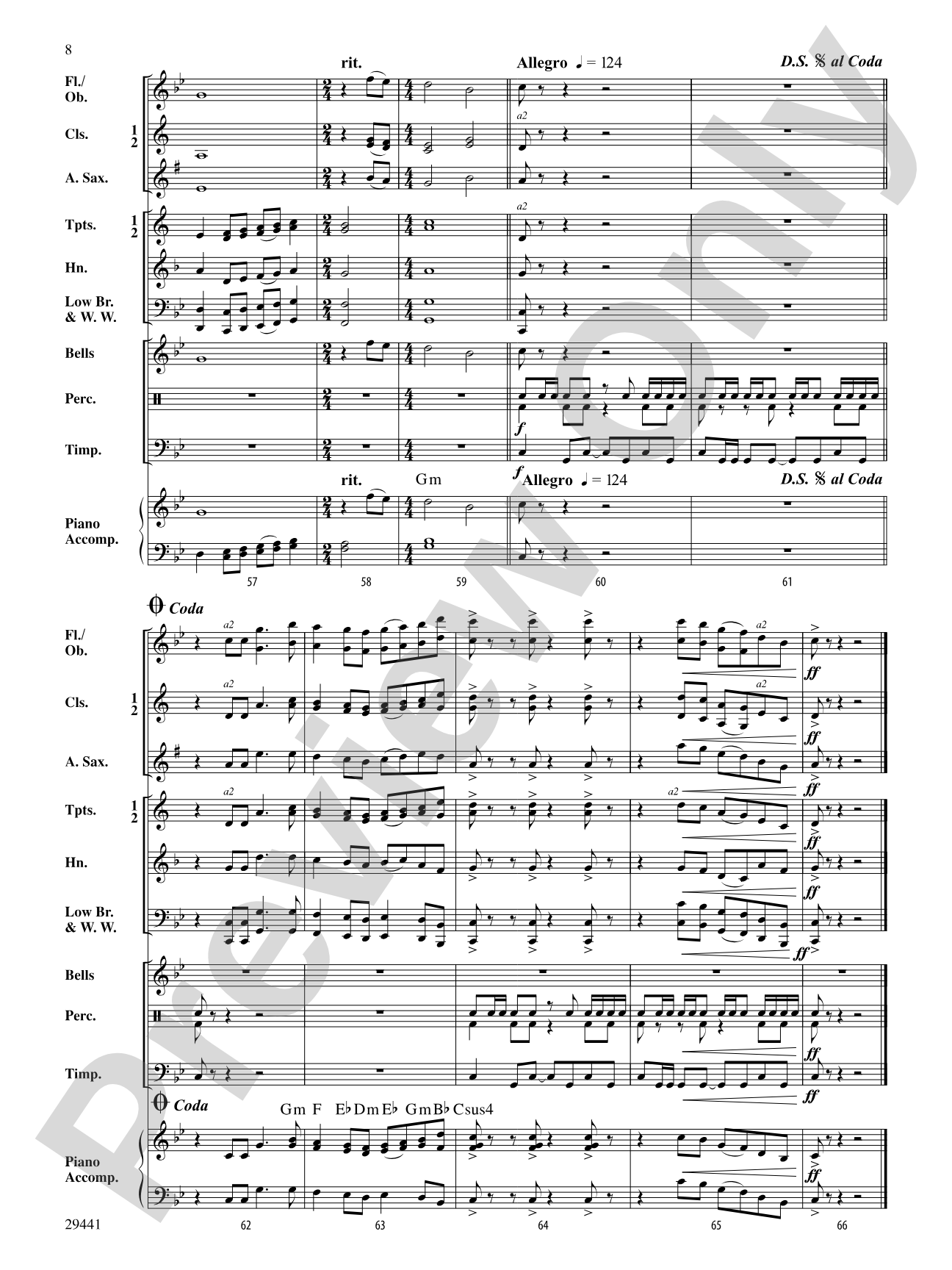

Firestorm: Score
By John O'Reilly
Grade: 1.5 (Easy)
Item: 00-PR-0001379
$6.00
Pickup currently not available
Description
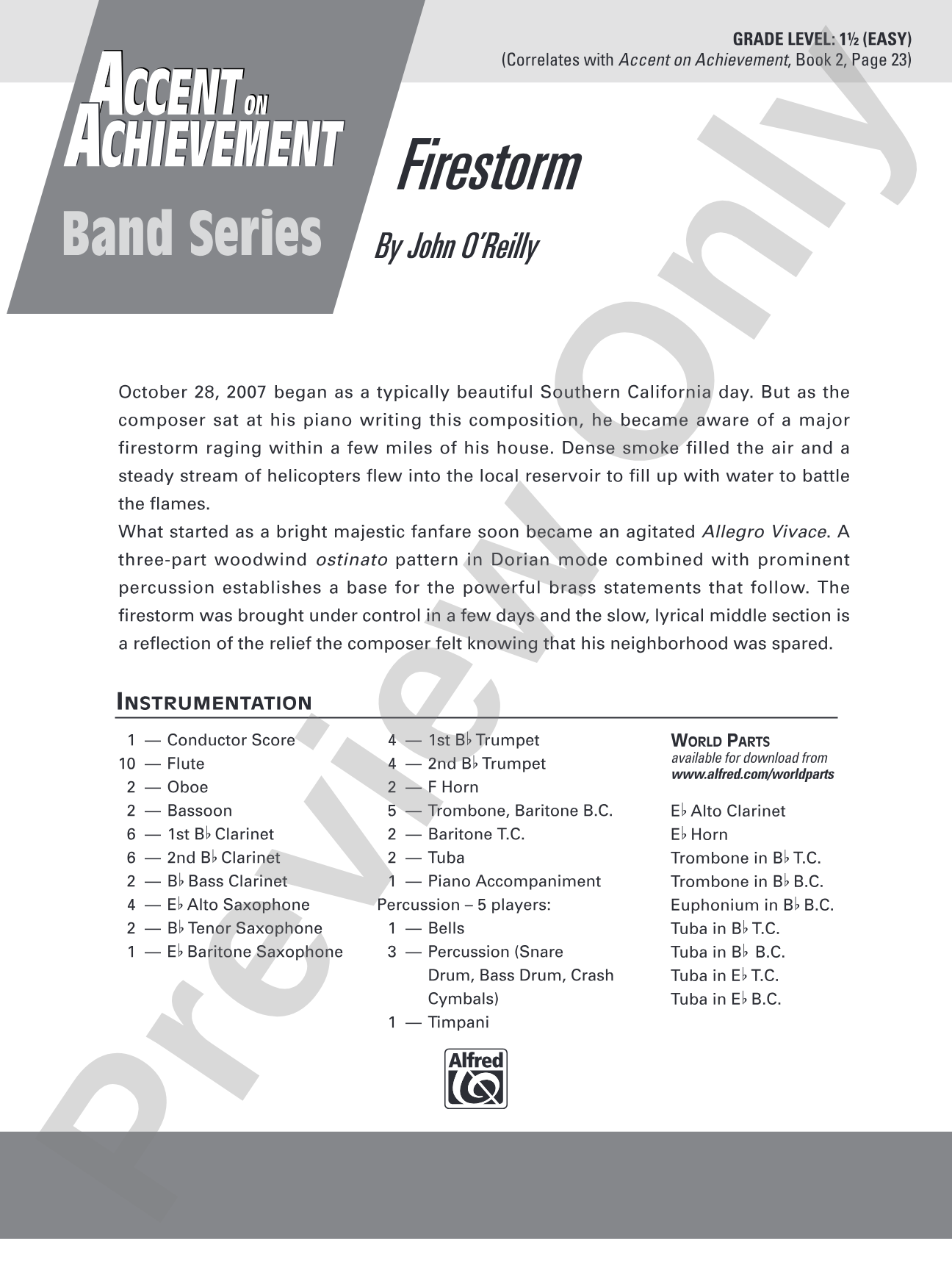
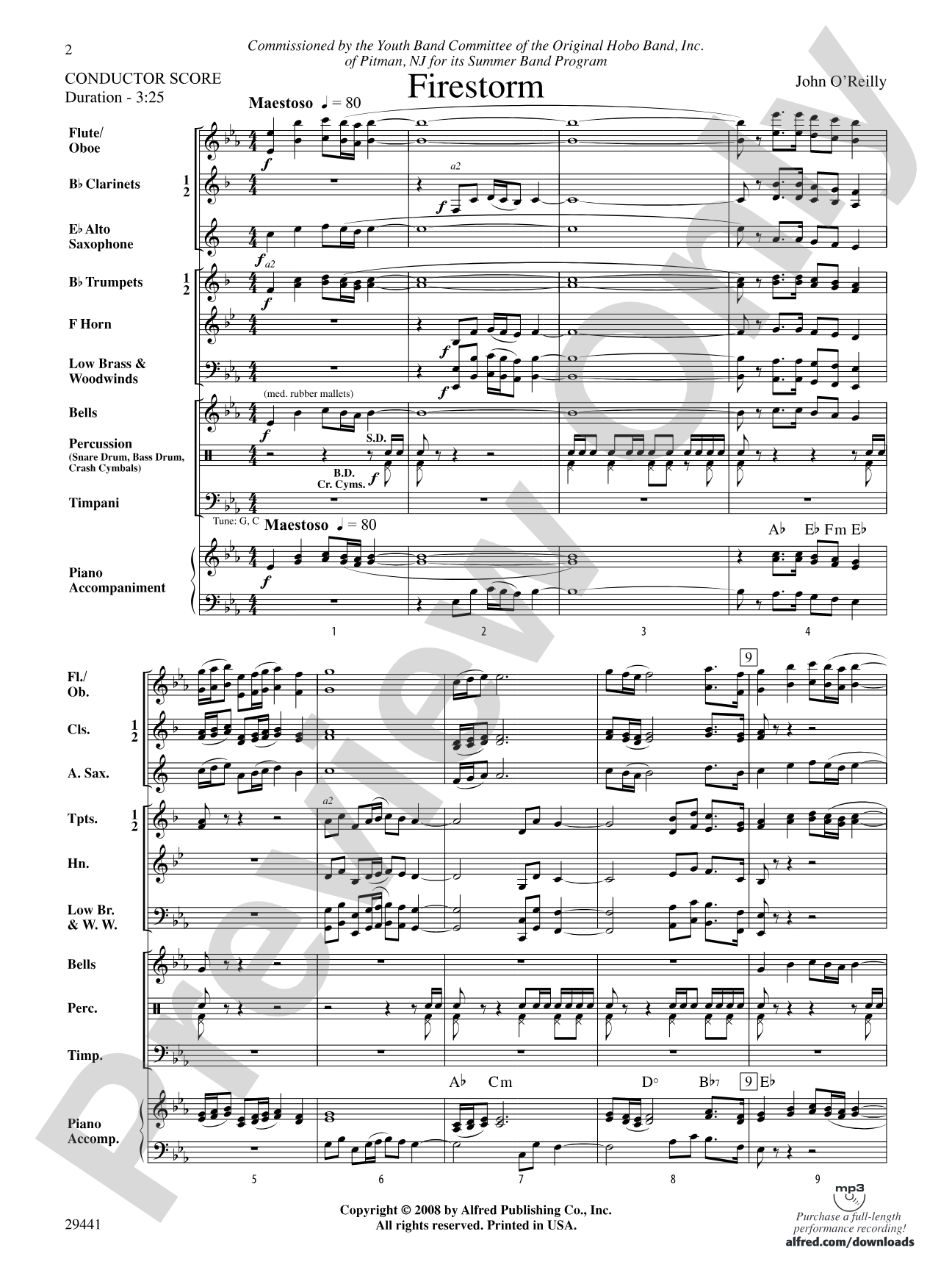
October 28, 2007 began as a typically beautiful Southern California day. But as the composer sat at his piano writing this composition, he became aware of a major firestorm raging within a few miles of his house. Dense smoke filled the air and a steady stream of helicopters flew into the local reservoir to fill up with water to battle the flames. John O'Reilly has crafted a remarkable piece that captures the drama of this event. (3:25)
Correlated with Accent on Achievement, Book 2, page 23.


Correlated with Accent on Achievement, Book 2, page 23.
Don't just read it, hear it, play along with it, and watch your students grow with it. In MakeMusic Cloud, Firestorm: Score comes alive with professional accompaniment, adjustable tempo, and built-in practice tools that turn solo practice into real progress.
Open in the Player
Jump straight in and assign it today.
Start Your Free Trial
Open this title and explore the full library in minutes.
Sample Audio
1
Audio File
--:--
0:00
0:00
Sample Video
Additional Details
Series:
Accent on Achievement
Publisher:
Alfred Music
Page Count:
124
SKU:
00-PR-0001379
More about this title
About the Composer: John O'Reilly
John O'Reilly is a prolific composer and arranger whose work appears extensively in the Accent on Achievement series, a foundational curriculum used by band directors across the country. His compositions balance accessibility with musical substance, making them reliable choices for building ensemble skills at early levels.
Why we love this
O'Reilly translates a real, harrowing event into music that feels urgent and visceral without sacrificing accessibility. At Grade 1.5, this piece proves that young musicians can handle genuine dramatic storytelling; the correlation to Accent on Achievement Book 2 makes it a natural fit for mid-year concert programming when your ensemble is ready for something beyond etude-style material.
What to expect
Firestorm captures both the chaos and the strange beauty of a natural disaster unfolding. There's urgency in the orchestration and a sense of mounting intensity, punctuated by moments where the fury seems to pause before surging forward again. The piece is kinetic without being frantic, dramatic without being melodramatic.
Who it's for
Young concert bands at the Grade 1.5 level who have developed solid fundamentals and are ready to tackle programmatic music with emotional weight. Directors seeking a piece that connects students to real events and demonstrates how composers process the world around them.
How to get the most out of it
- Balance the inner voices carefully during sustained passages; young bands often let accompaniment parts fade when they should maintain constant energy beneath the melody.
- Treat tempo fluctuations as structural markers rather than expressive indulgences. The piece has natural peaks and valleys that should feel inevitable, not arbitrary.
- Emphasize articulation precision in the faster sections. Clean tonguing will convey urgency far better than rushing the tempo.
How to use it
Program this as a centerpiece for a fall concert or as a contest selection where storytelling matters. The modest duration (3:25) pairs well with a lighter opener and a more lyrical contrasting piece, creating a varied program that showcases your ensemble's range. It also works effectively as a spring concert finale if you want to end on something contemporary and energetic.
Skills your students will build
- Managing sustained ensemble sound during longer passages
- Reading and executing dynamic contrast and sudden shifts in intensity
- Balancing independence within a unified whole (maintaining accompaniment while melody drives forward)
- Responding to program music and connecting instrumental writing to narrative or imagery