
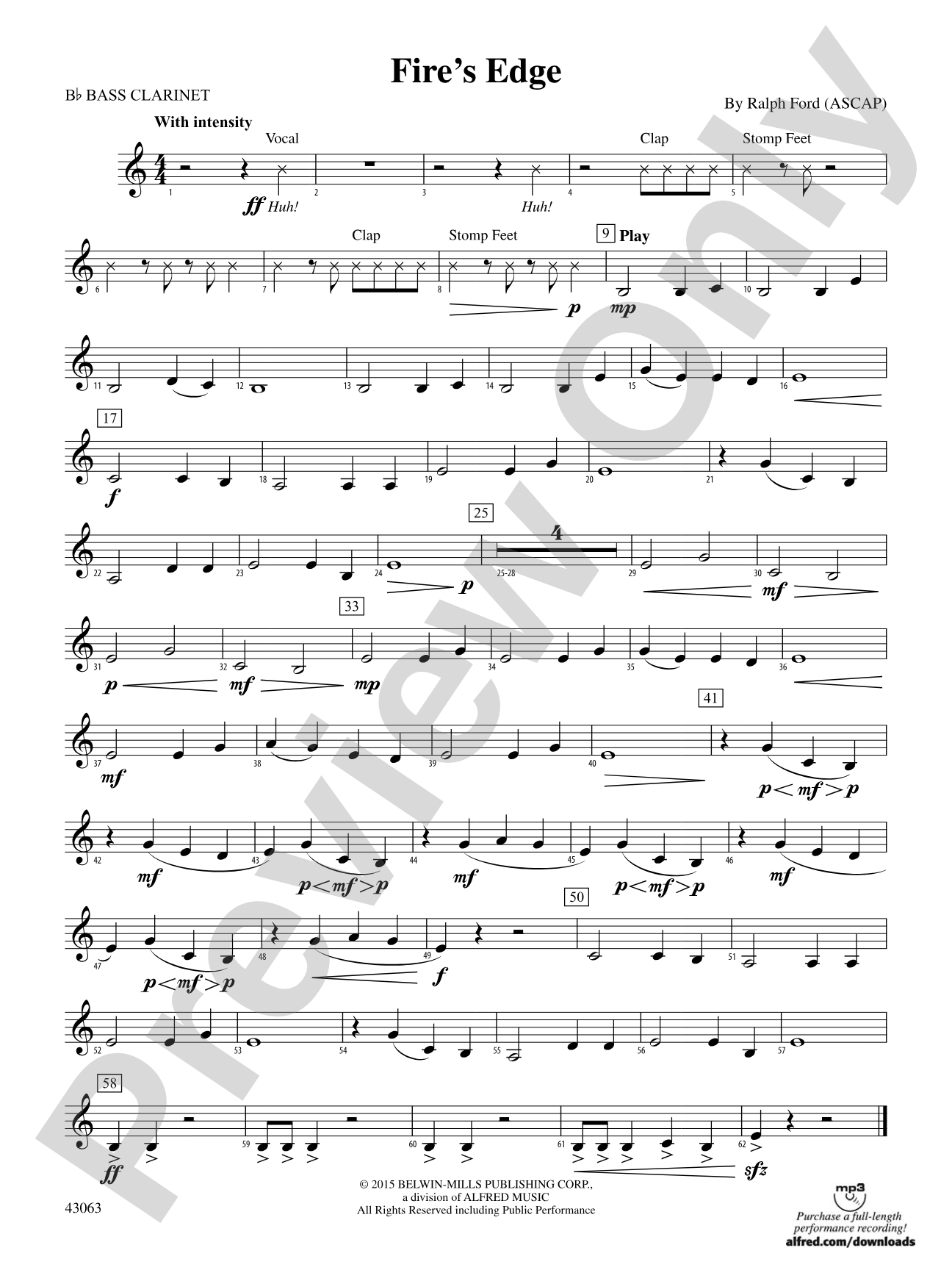

Fire's Edge: B-flat Bass Clarinet
By Ralph Ford
Grade: 0.5 (Very Easy)
Item: 00-PC-0016723_BC
$3.00
Pickup currently not available
Description
Musically depicting a meteor event that occurs in the Earth's atmosphere each day, this energetic composition provides the opportunity to teach dramatic playing. With very few notes and rhythms that are no more complex than quarter notes, eighth-note rhythms are introduced through clapping and stomping. The brighter the meteor, the more rare the event. (2:15) This title is available in MakeMusic Cloud.


Don't just read it, hear it, play along with it, and watch your students grow with it. In MakeMusic Cloud, Fire's Edge: B-flat Bass Clarinet comes alive with professional accompaniment, adjustable tempo, and built-in practice tools that turn solo practice into real progress.
Open in the Player
Jump straight in and assign it today.
Start Your Free Trial
Open this title and explore the full library in minutes.
Sample Audio
1
Audio File
--:--
0:00
0:00
Sample Video
Additional Details
Series:
Belwin Very Beginning Band
Publisher:
Alfred Music
Page Count:
144
SKU:
00-PC-0016723_BC
More about this title
About the Composer: Ralph Ford

Ralph Ford (b. 1963) brings together three decades of university teaching, prolific composition, and extensive work across media and broadcast industries. A staff composer and arranger for the Belwin division of Alfred Music, he has created over 250 published works for orchestra, concert band, jazz ensemble, and marching band, with commissions performed by university, military, professional, and school ensembles internationally.
Ford's career spans multiple roles: he directed the Jazz Ensemble at Troy State University as a sophomore and served as staff arranger for the university band program beginning in his senior year. After earning his Master of Science degree in 1988 while teaching full-time at Troy, he expanded into media production, creating jingles, news music packages for national network affiliates, and broadcast content. His compositional voice reflects this hybrid background, blending accessibility with theatrical intent.
Why we love this
Ford crafts a composition that works brilliantly at the very beginning level without sacrificing musical character. The meteor concept gives conductors a vivid narrative hook to shape dramatic interpretation, while the deliberate rhythmic simplicity (no more complex than eighth notes) makes it an ideal vehicle for teaching dynamics, ensemble precision, and the difference between playing notes and playing musically.
What to expect
A brief, vivid snapshot of celestial drama unfolding above the Earth. The piece captures the energy and visual spectacle of a meteor's passage, building tension and wonder through its sparse, clean orchestration and rhythmic clarity. It feels contemporary and accessible, yet genuinely theatrical.
Who it's for
Conductors of first-year and early-intermediate band programs seeking a showstopper that doesn't demand technical facility. This is ideal for elementary and middle school bands ready to explore dramatic storytelling through orchestration and dynamics rather than virtuosity.
How to get the most out of it
- Shape the dynamic arc by thinking of the meteor's trajectory: where does it brightest before it fades? Let the ensemble hear your physical conducting gesture travel through space.
- Establish the clapping and stomping patterns before adding pitched instruments. Lock these foundational rhythms as a unit, then layer the band sound on top.
- Encourage students to listen for the sonic contrast between sparse and fuller textures. Very beginning players often rush when fewer notes are written; use this piece to build patience and intentional spacing.
How to use it
Program this as an opener or closer on a concert where you want to establish that young musicians can create real drama and excitement. It pairs well alongside other Belwin Very Beginning Band titles to demonstrate range of character within accessible literature. At 2:15, it's substantial enough to anchor a set without overwhelming a young ensemble's rehearsal schedule.
Skills your students will build
- Reading and maintaining steady eighth-note rhythms through ensemble coordination
- Responding to dynamic and textural contrast with focused ensemble playing
- Connecting visual imagery (meteor event) to musical decision-making in phrasing and balance
- Building rhythmic independence through clapping and stomping before adding pitched instruments