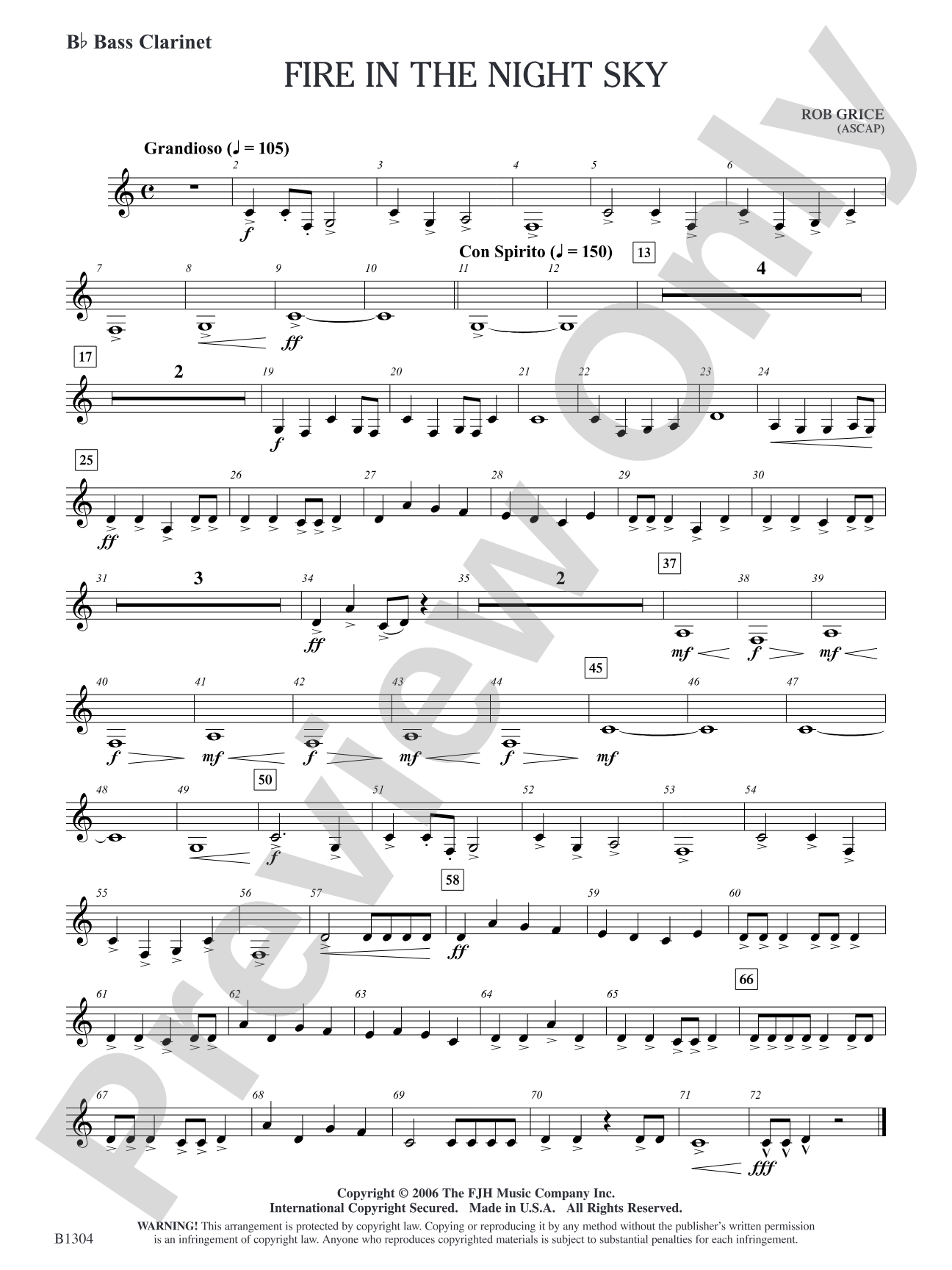
Experience a landmark moment from the War of 1812 when the British tried to destroy Fort McHenry in the Baltimore harbor. Heavy percussion writing helps simulate the sound of cannons from that very night. Powerful statements in the winds add to the energy of the work as the audience learns what it may have been like to witness the fire in the night sky!
Discover MakeMusic Cloud: thousands of interactive titles your students can play along with today.
Rob Grice's compositions reach audiences across the globe, from Australia and Canada to Europe and Japan. His works have appeared on state and national contest lists and been performed at prestigious venues including Carnegie Hall, the Midwest Clinic, and regional conferences. His career as an educator at elementary, secondary, and community college levels shaped his distinctive ability to write music that is both pedagogically sound and genuinely musical.
Grice earned recognition as Secondary Teacher of the Year in the Enterprise City School System and received WDHN-TV18's Golden Apple Award for his contributions to music education. He remains active as a guest conductor, clinician, and adjudicator, bringing his expertise to concert bands and percussion ensembles nationwide.
Why we love this
Grice captures a specific historical moment with musical clarity that young musicians can grasp immediately. The cannon simulation through percussion writing gives students a tangible reason to listen carefully to their own parts, while the wind scoring builds genuine drama without requiring advanced technical demands. This is the kind of piece that makes a concert memorable for audiences unfamiliar with band music.
What to expect
The opening establishes tension through orchestration and rhythm, building until the percussion erupts. Once the cannons sound, winds carry the melodic narrative forward with energy and purpose, creating the sensation of witnessing something urgent and significant unfolding.
Who it's for
Developing bands ready for Grade 1.5 material that tells a story without abandoning musicality. Directors programming concert repertoire who want pieces with historical substance and audience appeal at this level.
How to get the most out of it
Balance the percussion accents so they enhance rather than overshadow the melody. Young players often hit cannons harder than necessary; remind them that precision in the dynamic shapes matters more than volume.
Layer in the wind statements gradually during rehearsal. Start with the melody line alone, then add harmony, so students understand the harmonic progression before the full texture arrives.
Establish a steady tempo early and hold it through the entire work. The dramatic effect depends on unbroken momentum, which your middle band will find satisfying to maintain.
Let the ending breathe. Resist rushing the final moments; the resolution lands harder when you give it space.
How to use it
This works especially well in a concert exploring American history or patriotic themes, where it can anchor the second half with dramatic contrast to lighter opening selections. It also fits naturally into spring festival season when bands are looking for accessible contest pieces with real character.
Skills your students will build
Reading and executing dynamic contrasts within phrase shapes
Balancing independent percussion parts with melodic lines
Sustaining tone and intonation under rhythmic pressure
Responding to conductor cues that shape the dramatic arc
You May Also Like
Scan to Complete Your Purchase
Use your phone's camera to scan the code below
You'll log in on your phone and the order will be added to your account