
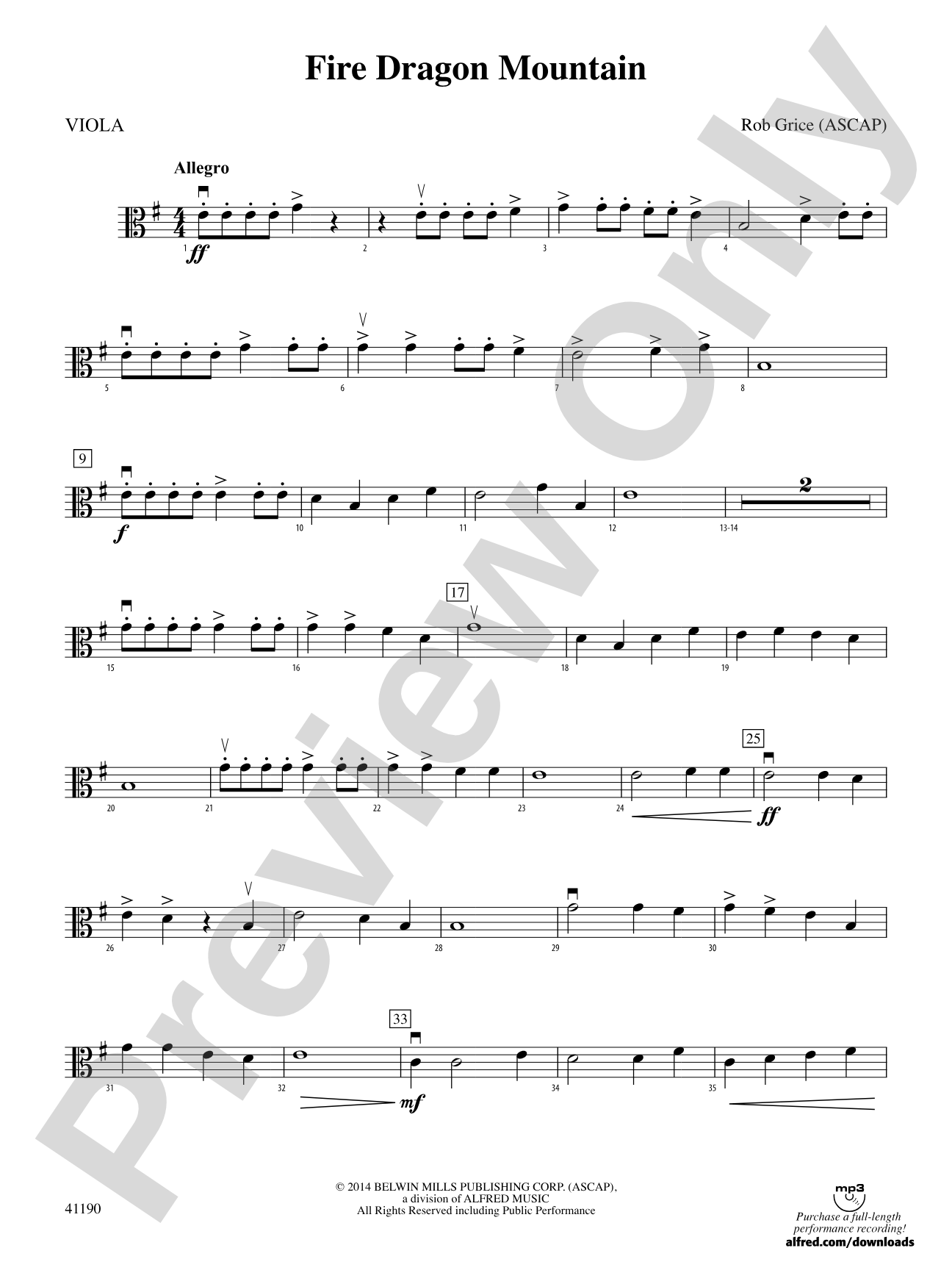

Fire Dragon Mountain: Viola
By Rob Grice
Grade: 1
Item: 00-PC-0016318_VA1
$5.99
Pickup currently not available
Description
With driving rhythms and powerful harmonies, you can almost see the ferocious fire-breathing dragons roaming the mountain in this dramatic work! From the first note, this epic piece will grab the attention of the performers as well as the audience and not let go until the last note! Every effort has been made to give young players the experience of performing a mature-sounding composition with minimal technical demands. This composition is designed to help teachers reinforce many musical concepts that are so important in the development of young string players. (2:30) This title is available in MakeMusic Cloud.


Don't just read it, hear it, play along with it, and watch your students grow with it. In MakeMusic Cloud, Fire Dragon Mountain: Viola comes alive with professional accompaniment, adjustable tempo, and built-in practice tools that turn solo practice into real progress.
Open in the Player
Jump straight in and assign it today.
Start Your Free Trial
Open this title and explore the full library in minutes.
Sample Audio
1
Audio File
--:--
0:00
0:00
Sample Video
No sample videos found.
Additional Details
Series:
Belwin Beginning String Orchestra
Publisher:
Alfred Music
Page Count:
148
SKU:
00-PC-0016318_VA1
More about this title
About the Composer: Rob Grice

Rob Grice's compositions and arrangements have earned performances across the United States and internationally, with works heard at Carnegie Hall, the Midwest Clinic, and numerous state and regional festivals. His music has consistently appeared on contest lists at the state, national, and international levels, reflecting his deep understanding of what resonates with both musicians and audiences.
Grice brings the perspective of an experienced educator who has taught at elementary, secondary, and community college levels. His recognition as Secondary Teacher of the Year in the Enterprise City School System and his WDHN-TV18 Golden Apple Award reflect his commitment to music education. He remains active as a guest conductor, clinician, and adjudicator, bringing that classroom experience directly into his compositional voice.
Why we love this
This piece balances narrative excitement with genuine pedagogical restraint. Young orchestras get to play music that sounds mature and confident without wrestling with advanced technical passages, which means rehearsal time stays focused on musicality rather than mechanics. The dramatic arc and vivid imagery keep students engaged and motivated across the full 2:30 runtime.
What to expect
Powerful and cinematic, with driving rhythms that propel the music forward and vivid harmonic colors that paint the image of fire and flight. The piece captures the energy and majesty of its programmatic subject without ever losing its structural clarity or musical directness.
Who it's for
Beginning string orchestras and Grade 1 ensembles looking for a concert piece with genuine dramatic presence. Directors will appreciate how Grice has engineered the writing to sound substantial while respecting the technical realities of young players.
How to get the most out of it
- Shape the rhythmic momentum through consistent articulation. The driving rhythms that power this piece demand that every section nail the same rhythmic style to maintain the forward energy and create the dramatic intensity the music calls for.
- Balance the melody line against the harmonic foundation. When the main theme appears, ensure it projects above the accompaniment figures without losing the layered texture Grice has built into the score.
- Use dynamic contrast to build dramatic tension. Rather than playing at a single volume level, lean into the composer's dynamic markings to create peaks and valleys that mirror the story of the fire dragons.
How to use it
This works beautifully as a concert opener that grabs audience attention from the first note, or as a showcase piece mid-program that demonstrates your orchestra's growing confidence and musicality. The 2:30 duration makes it an efficient festival selection that leaves a strong impression.
Skills your students will build
- Sustaining ensemble rhythm through driving rhythmic patterns
- Balancing melody and accompaniment within a full orchestration
- Interpreting programmatic music through dynamic shaping and phrasing
- Managing harmonic texture across string choir sections