
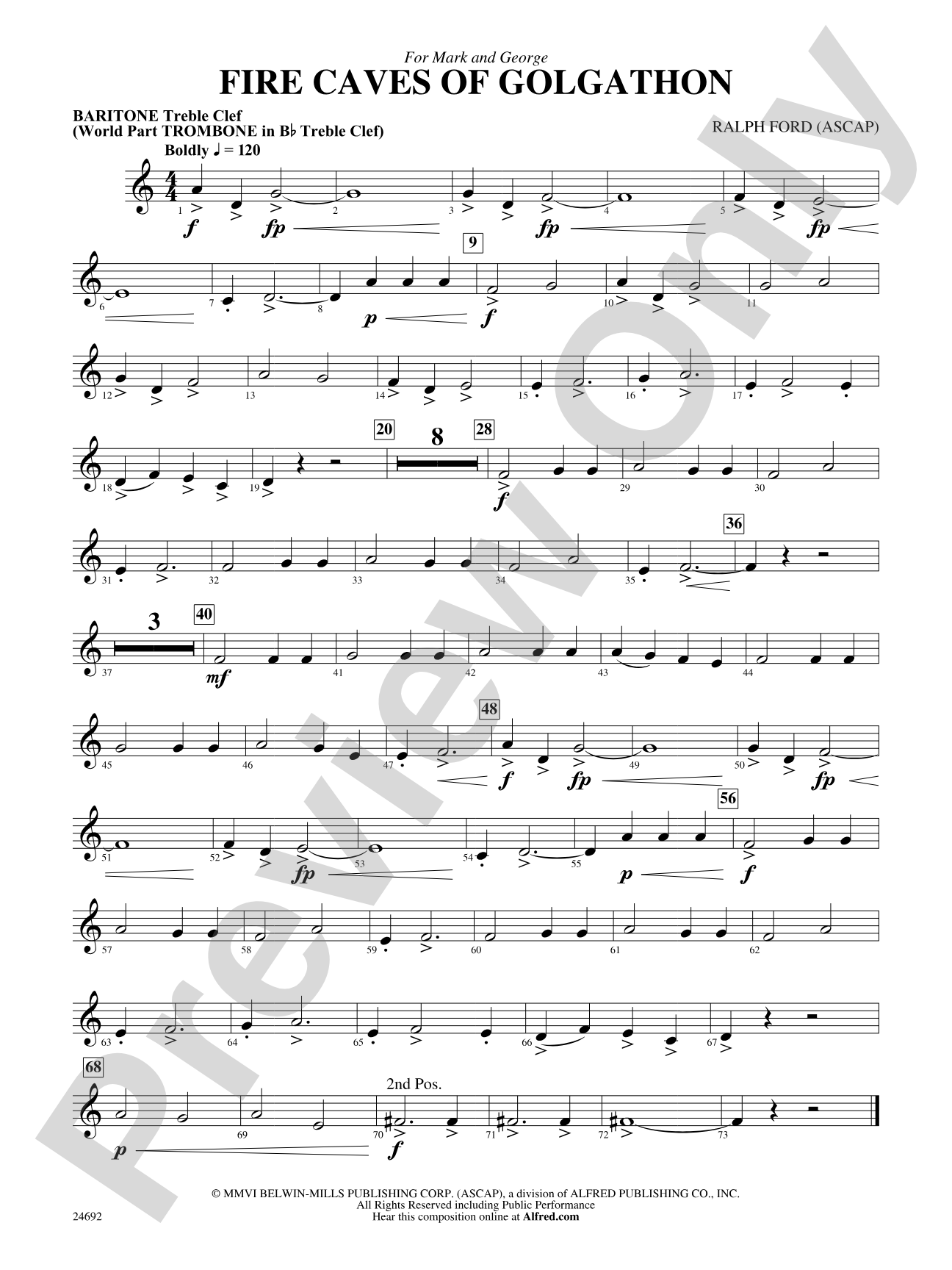

Fire Caves of Golgathon: Baritone T.C.
By Ralph Ford
Grade: 0.5 (Very Easy)
Item: 00-PC-0000854_BTC1
$3.00
Pickup currently not available
Description
Using only the first six notes of the B-flat Major scale, Ralph Ford has crafted a dynamic new chart for your beginners' first concert. With significant doubling throughout, by careful attention to the basic articulations and dynamics, Fire Caves of Golgathon is certain to make your group sound huge. (2:30)


Don't just read it, hear it, play along with it, and watch your students grow with it. In MakeMusic Cloud, Fire Caves of Golgathon: Baritone T.C. comes alive with professional accompaniment, adjustable tempo, and built-in practice tools that turn solo practice into real progress.
Open in the Player
Jump straight in and assign it today.
Start Your Free Trial
Open this title and explore the full library in minutes.
Sample Audio
1
Audio File
--:--
0:00
0:00
Sample Video
Additional Details
Series:
Belwin Very Beginning Band
Publisher:
Alfred Music
Page Count:
138
SKU:
00-PC-0000854_BTC1
More about this title
About the Composer: Ralph Ford

Ralph Ford brings three decades of composing and arranging experience to the concert band repertoire. Since 1999, he has worked exclusively as a composer and arranger for Belwin/Alfred Music, producing over 250 titles across orchestra, concert band, jazz ensemble, and marching band. His music has been premiered and performed by university, military, professional, and school ensembles worldwide, and he has received commissions from ensembles at all levels.
Before establishing himself as a full-time composer, Ford spent fifteen years on the music faculty at Troy State University, where he taught orchestration, arranging, theory, and applied brass while serving as staff arranger for the university band program. He earned his Master of Science degree in 1988 and has also worked extensively in media production, broadcast, and commercial composition. His background as both an educator and a working composer informs his approach to writing accessible, musically rewarding pieces for developing ensembles.
Why we love this
Ford understands exactly what a beginner band needs to sound polished and confident at their first concert. By building the entire piece from just six notes of the B-flat Major scale, he eliminates the technical barriers that typically frustrate young players while the smart doublings and clear articulation markings create a full, impressive sound that surprises audiences. Your students will feel like real musicians, not like they're reading an exercise.
What to expect
Fire Caves of Golgathon evokes drama and movement despite its technical simplicity. The title suggests adventure and intensity, and Ford's orchestration delivers that character through rhythmic drive, layered textures from the doublings, and dynamic shaping that gives the piece scope and direction. Your beginners will feel the music's narrative arc, not its training wheels.
Who it's for
This piece is designed for first-year concert bands and beginning ensembles performing their inaugural public concert. It works equally well for middle school bands in their opening weeks or for any ensemble seeking highly accessible, confidence-building repertoire that still delivers musical substance.
How to get the most out of it
- Shape the dynamics with intention. The score includes specific dynamic markings throughout; treat them as essential to the arrangement's impact, not optional embellishments. Even small crescendos and decrescendos in a beginner band can create dramatic effect.
- Align articulations across the ensemble. With significant doublings, clarity happens when all players on the same note use the same articulation. Spend rehearsal time unifying tonguing and note attacks within sections.
- Balance the doubled parts so no single line dominates. The doubling creates fullness, not thickness. Listen for blend across doubled sections rather than demanding volume.
- Use the 2:30 runtime as a pacing reference. At this level, students often rush or drag during first performances. Track rehearsals against timing to help students internalize the piece's natural flow.
How to use it
Open a first concert with this piece to establish confidence and momentum in your ensemble from the start. The short runtime (2:30) pairs well with one or two other Grade 0.5 or Grade 1 pieces to build a strong first-half program that feels substantive without overextending developing players. Its contest/festival designation also makes it a solid choice for early-season festivals where your band needs a polished but appropriate opening selection.
Skills your students will build
- Reading and responding to dynamic markings (pp to f) across full ensemble parts
- Unified articulation within sections (consistent tonguing and attack on doubled passages)
- Sustaining tone control in longer note values
- Listening for blend and balance in heavily doubled textures
- Interpreting rhythmic figures consistently across multiple parts