

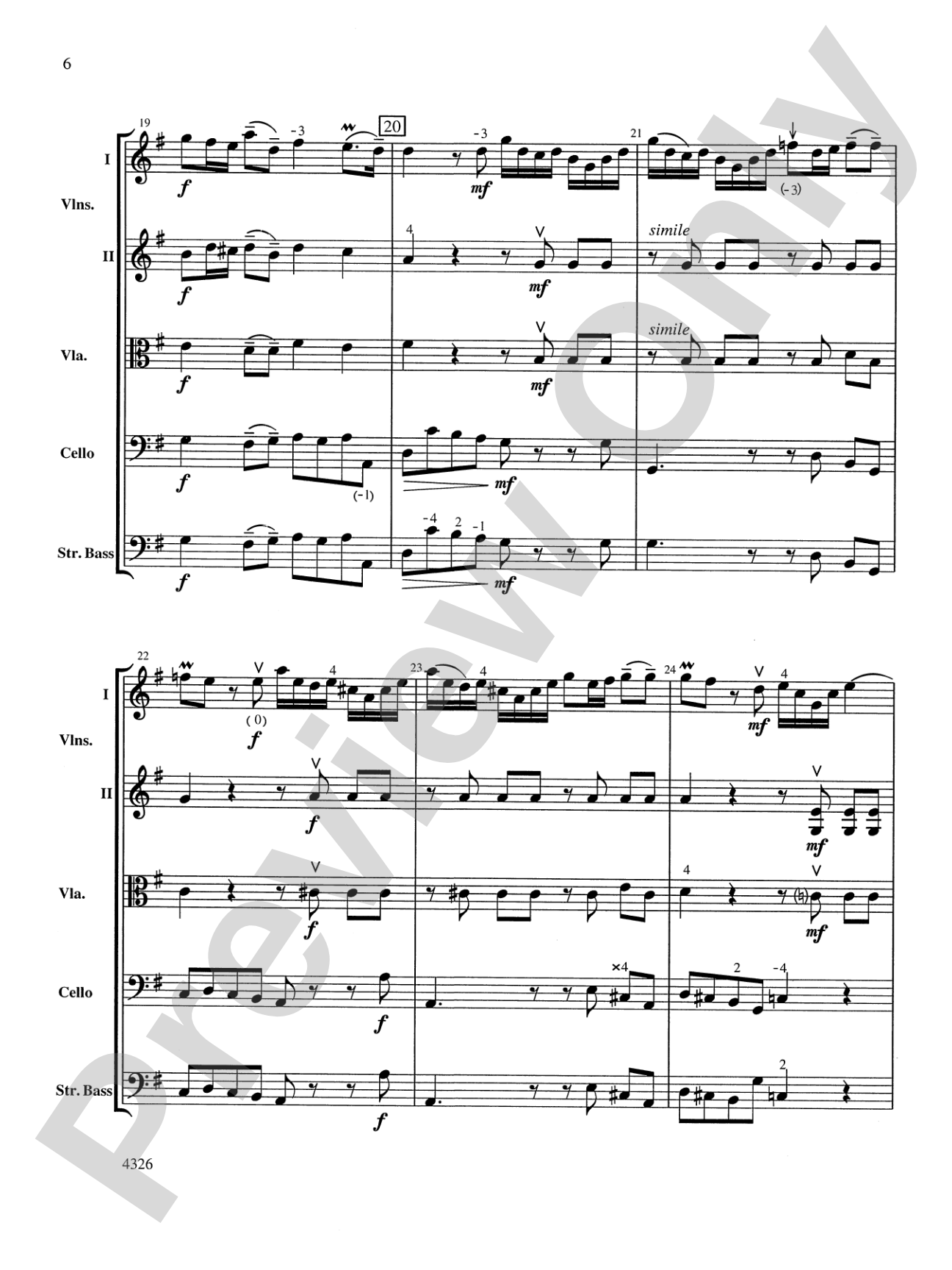
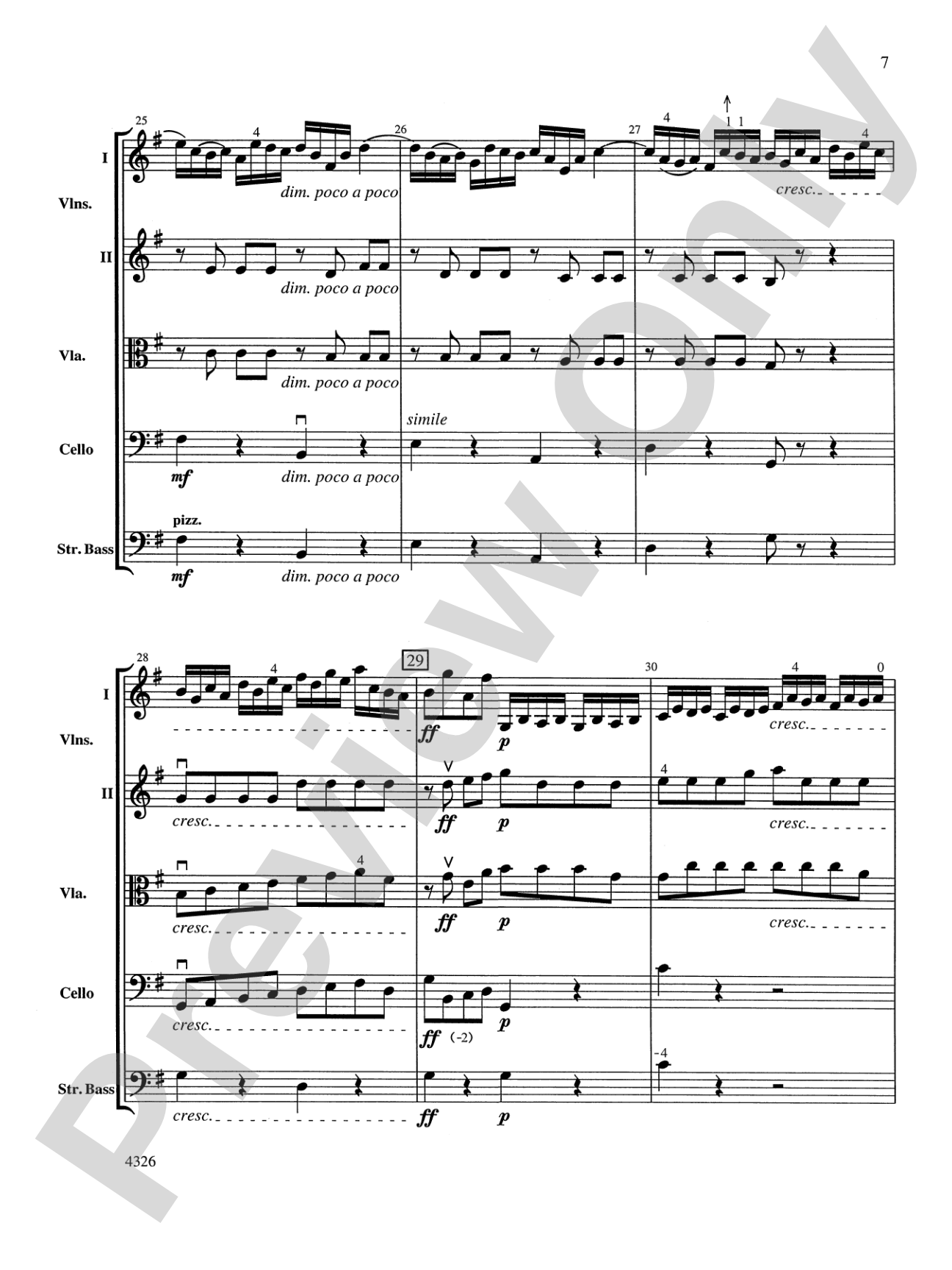
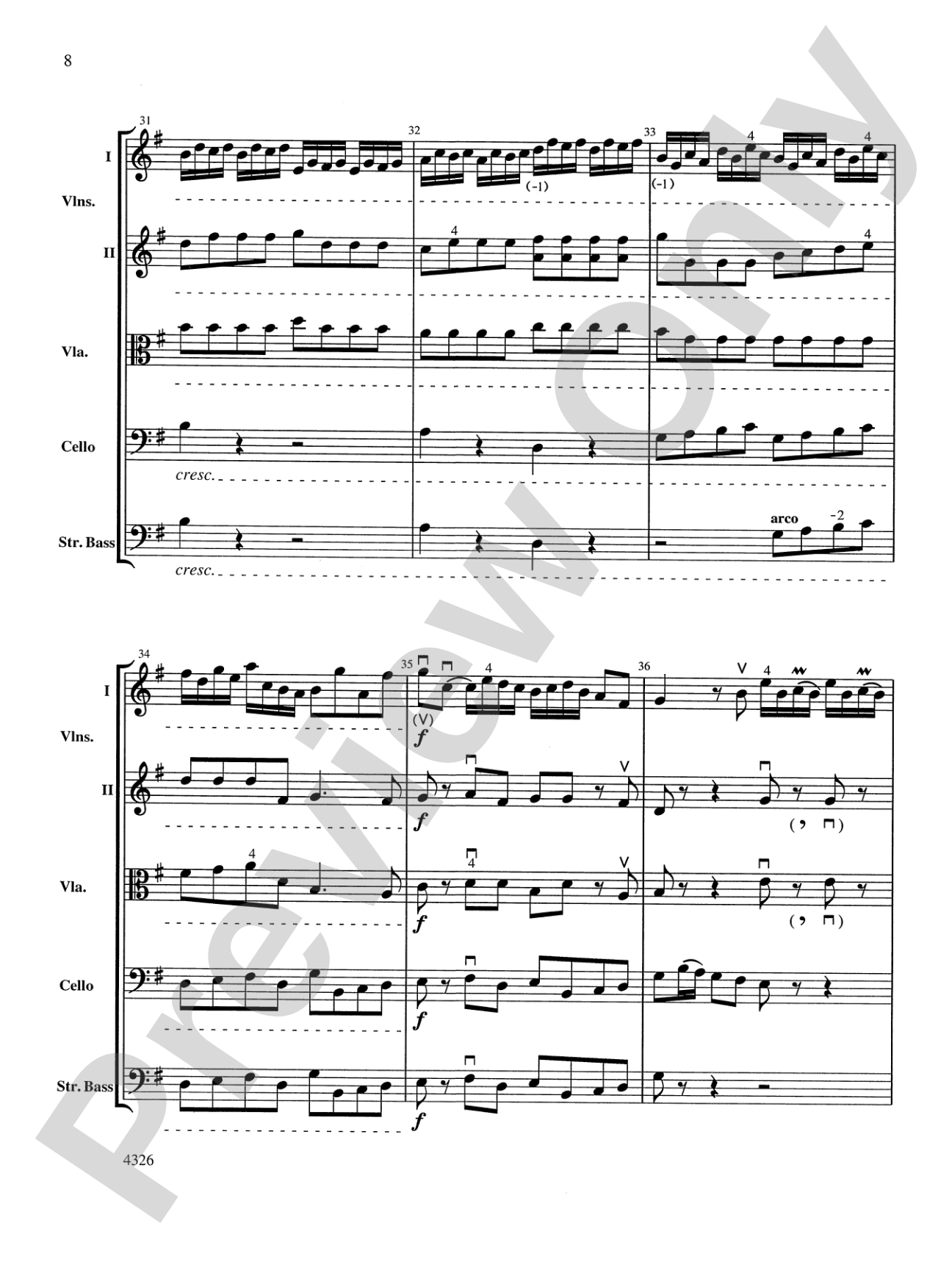
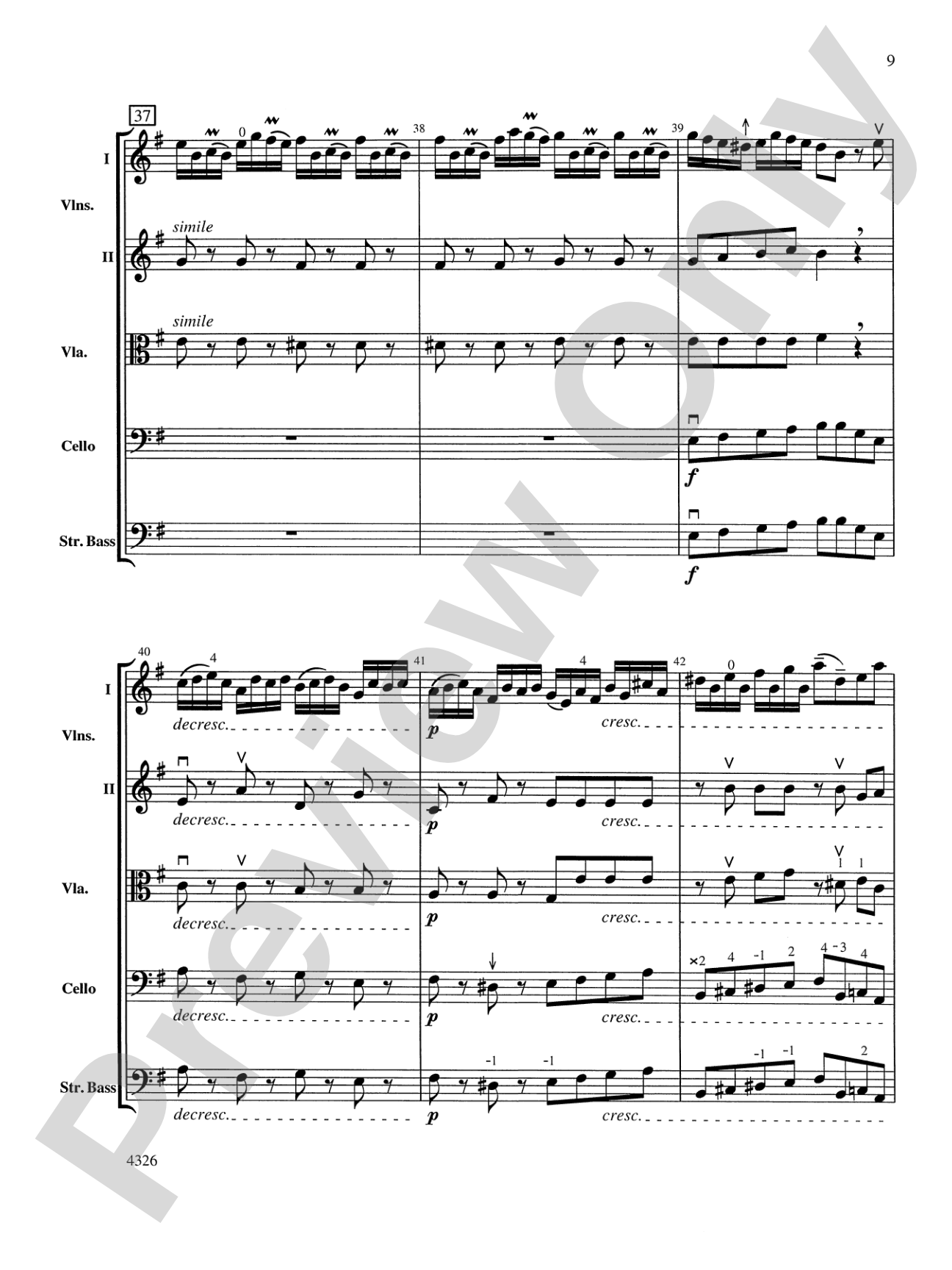
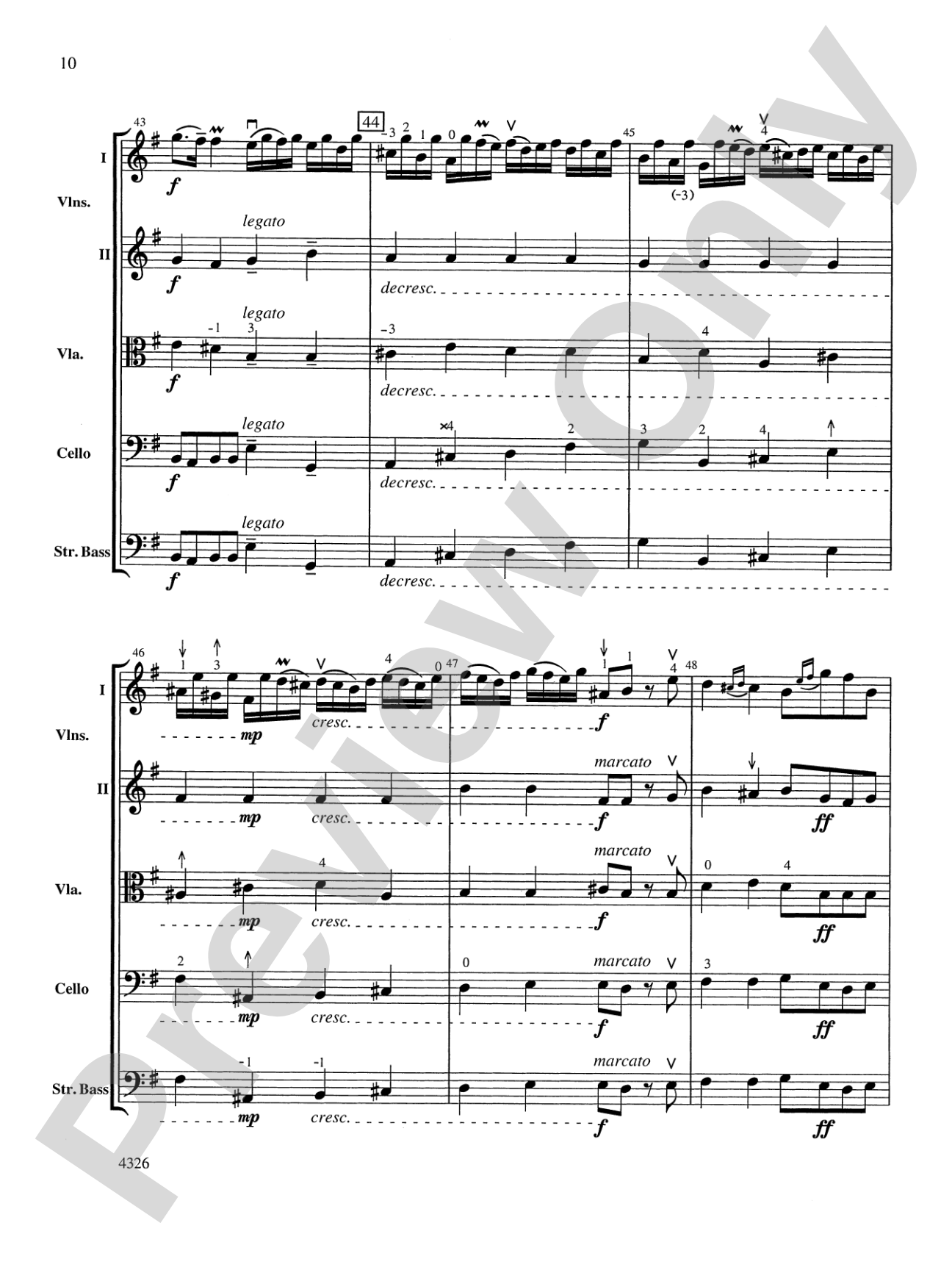
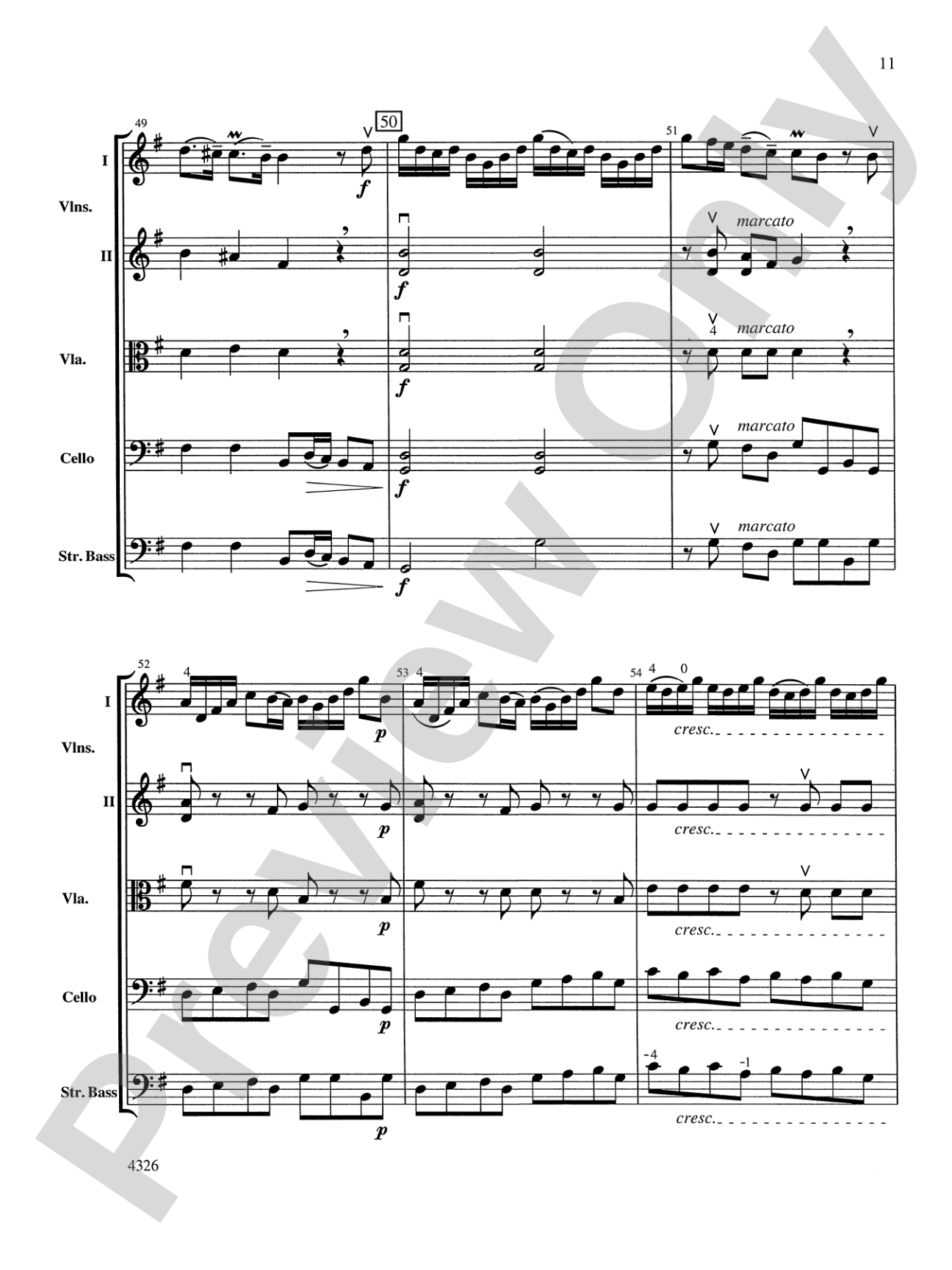
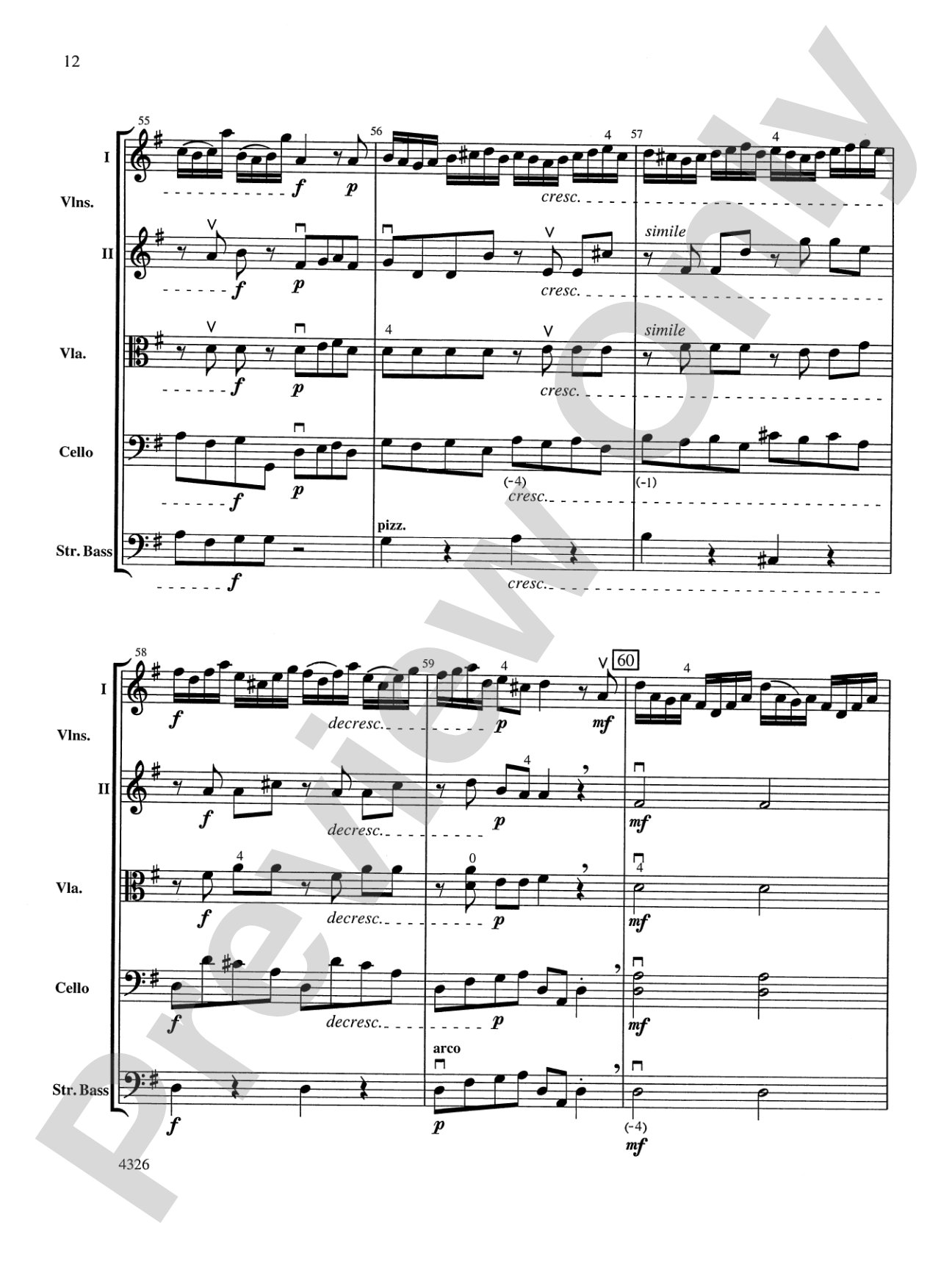
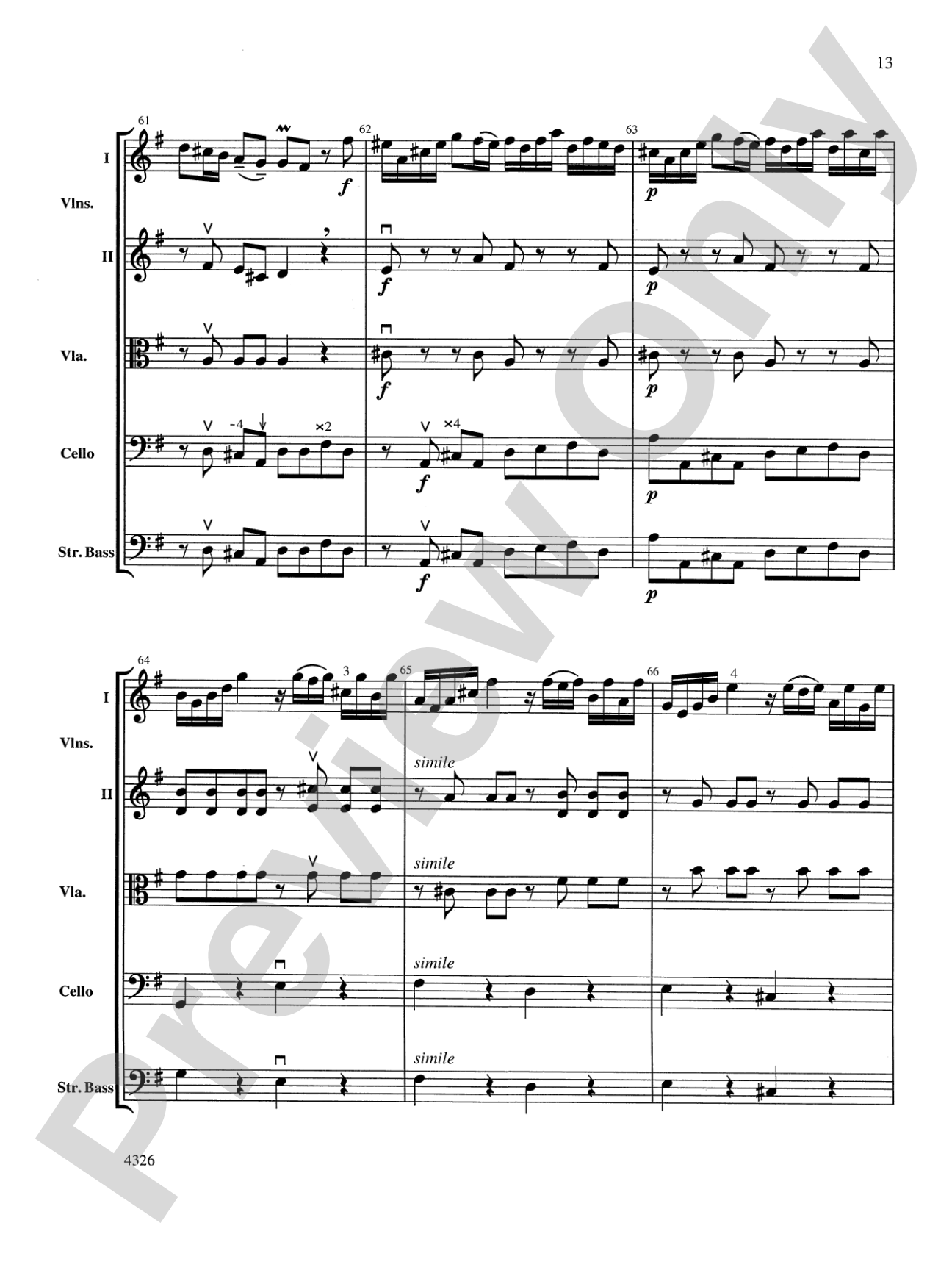
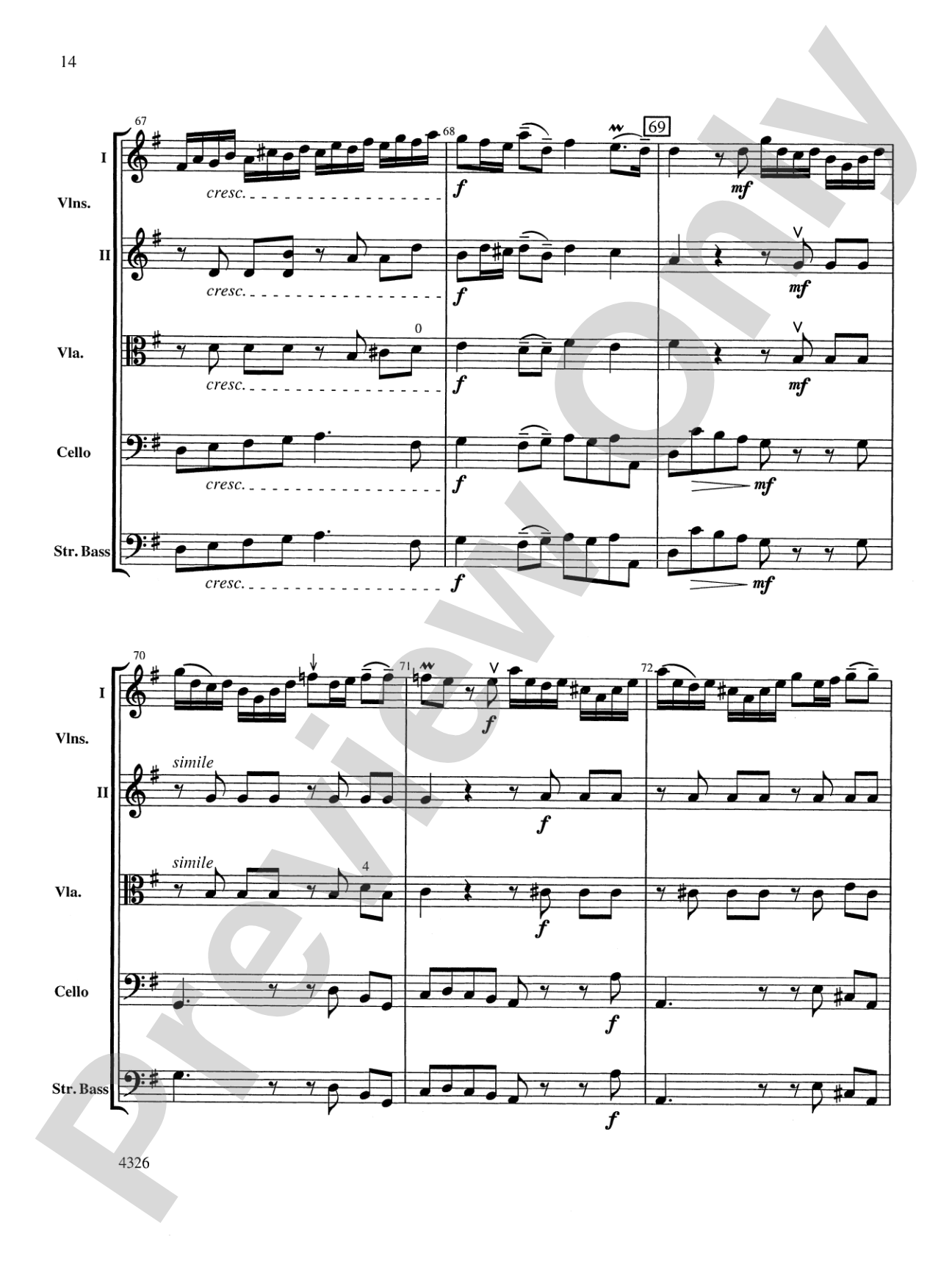
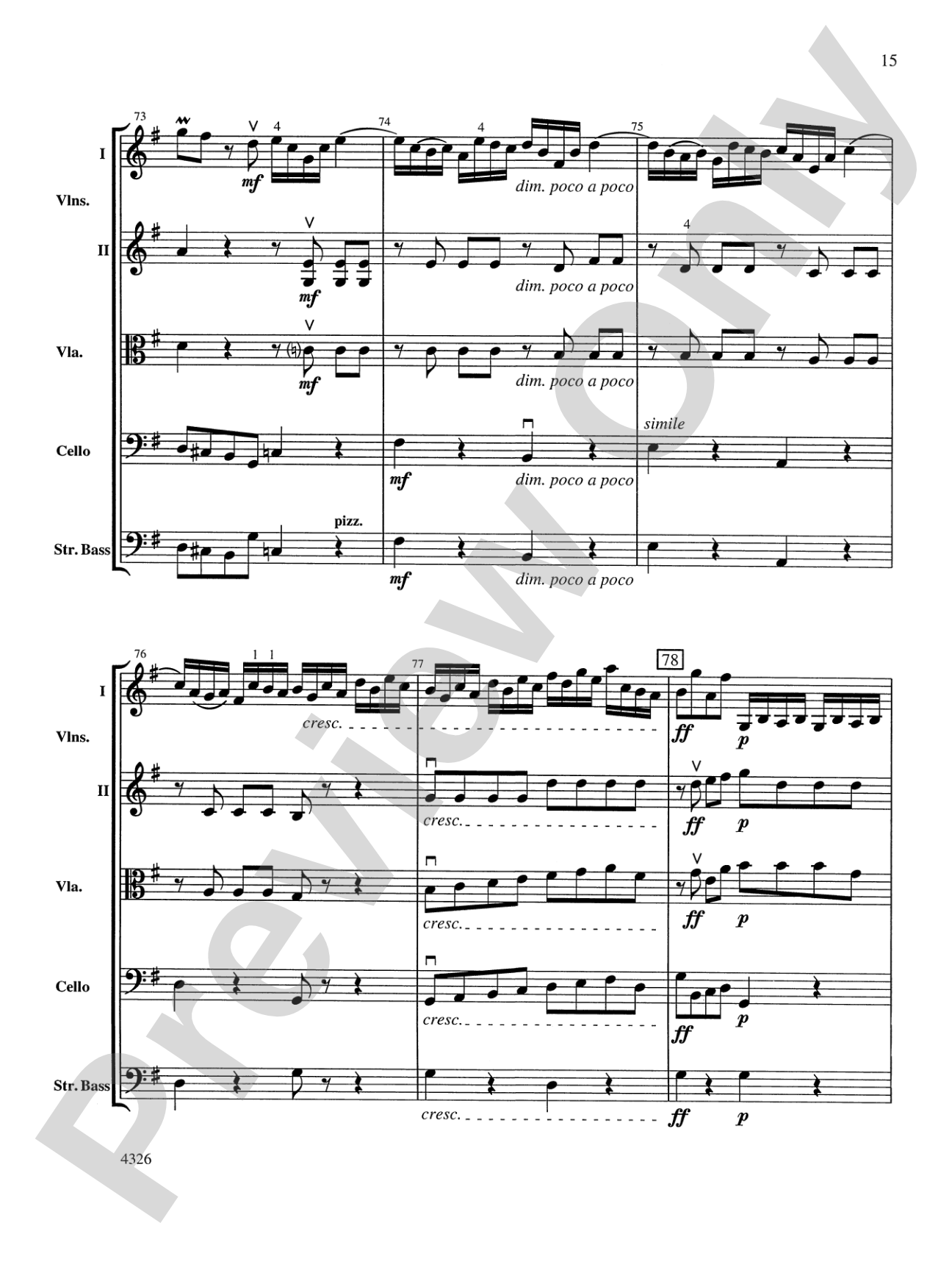
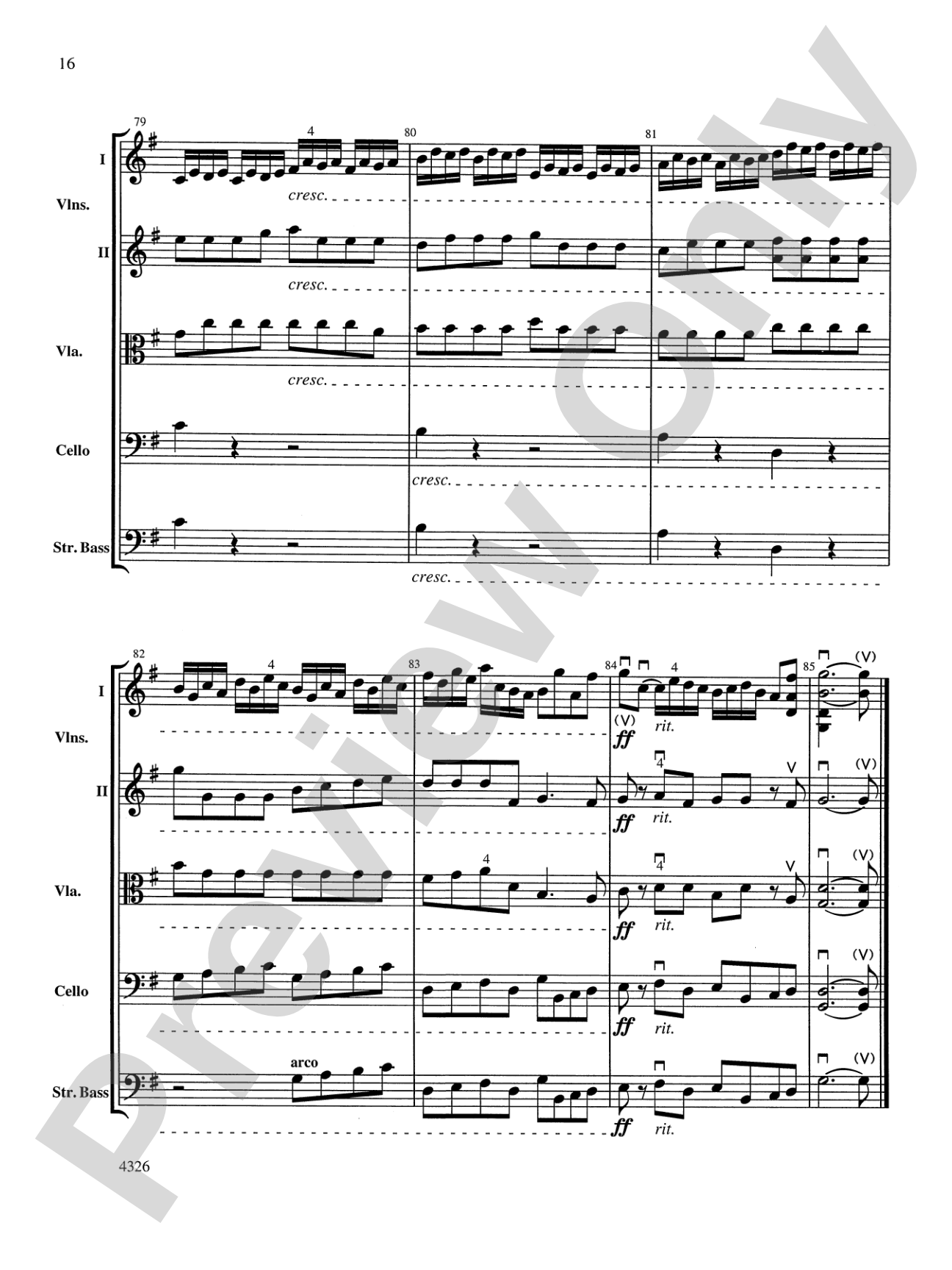

Fiocco Allegro: String Orchestra Conductor Score & Parts
By Joseph-Hector Fiocco / arr. Elliot Del Borgo
Grade: 3
Item: 00-PK-0001860

$60.00
Pickup currently not available
Buy Extra Parts (Digital PDF Download)
| Product | Price | Quantity |
|---|---|---|
| Fiocco Allegro: Score | $9.00 | |
| Fiocco Allegro: 1st Violin | $5.99 | |
| Fiocco Allegro: 2nd Violin | $5.99 | |
| Fiocco Allegro: 3rd Violin (Viola [TC]) | $5.99 | |
| Fiocco Allegro: Viola | $5.99 | |
| Fiocco Allegro: Cello | $5.99 | |
| Fiocco Allegro: String Bass | $5.99 |
Parts Added to Cart!
Description
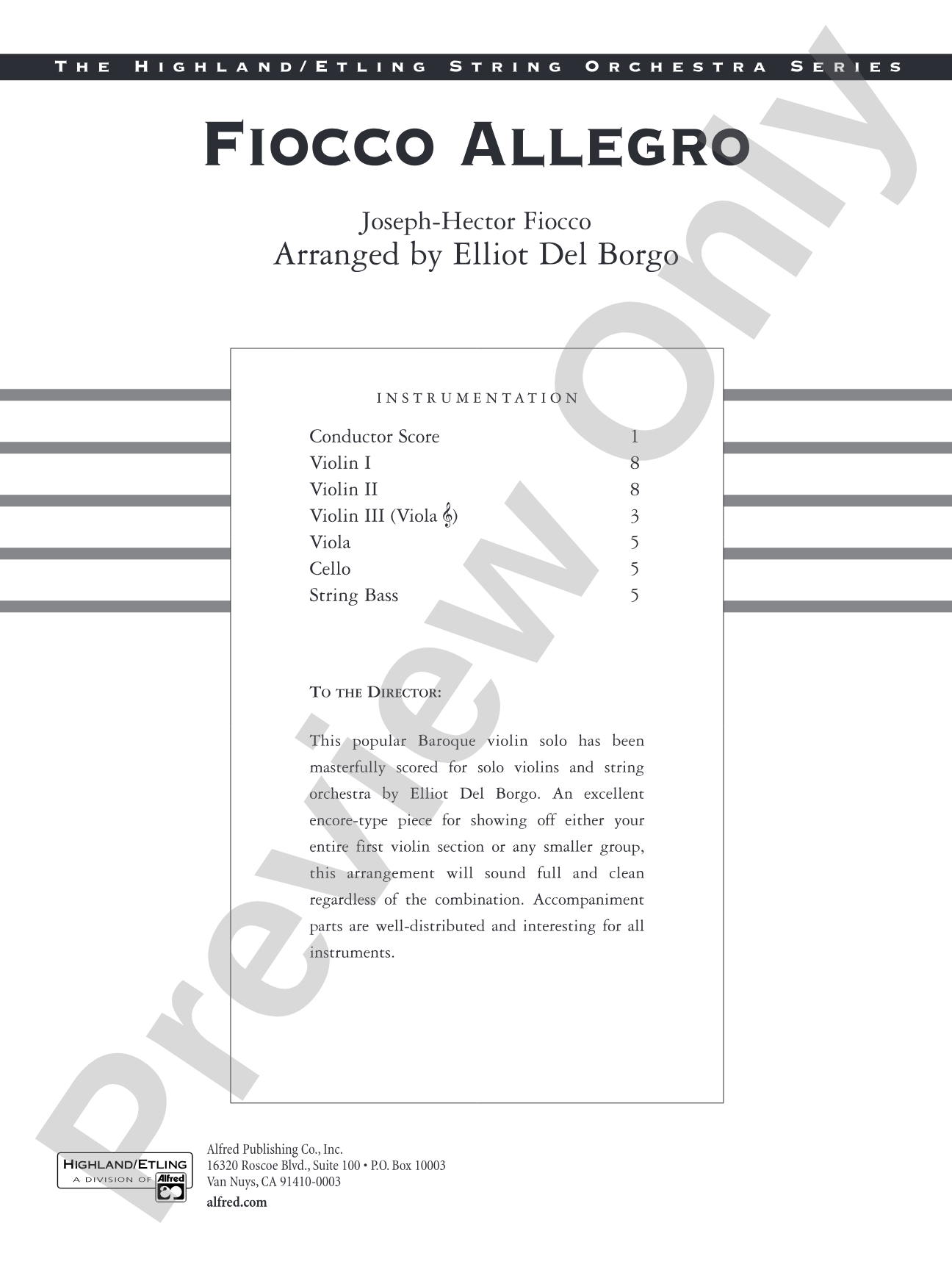
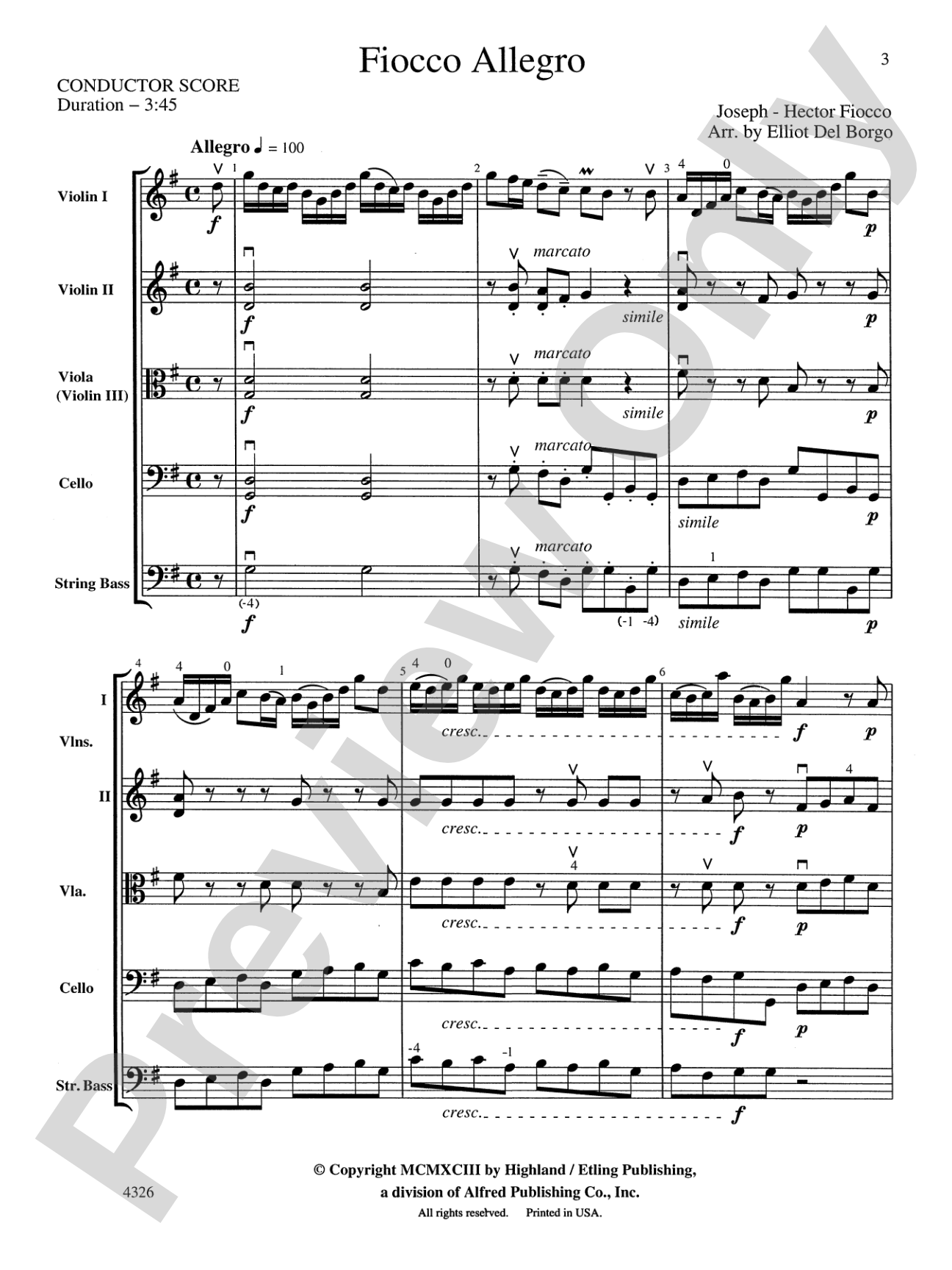
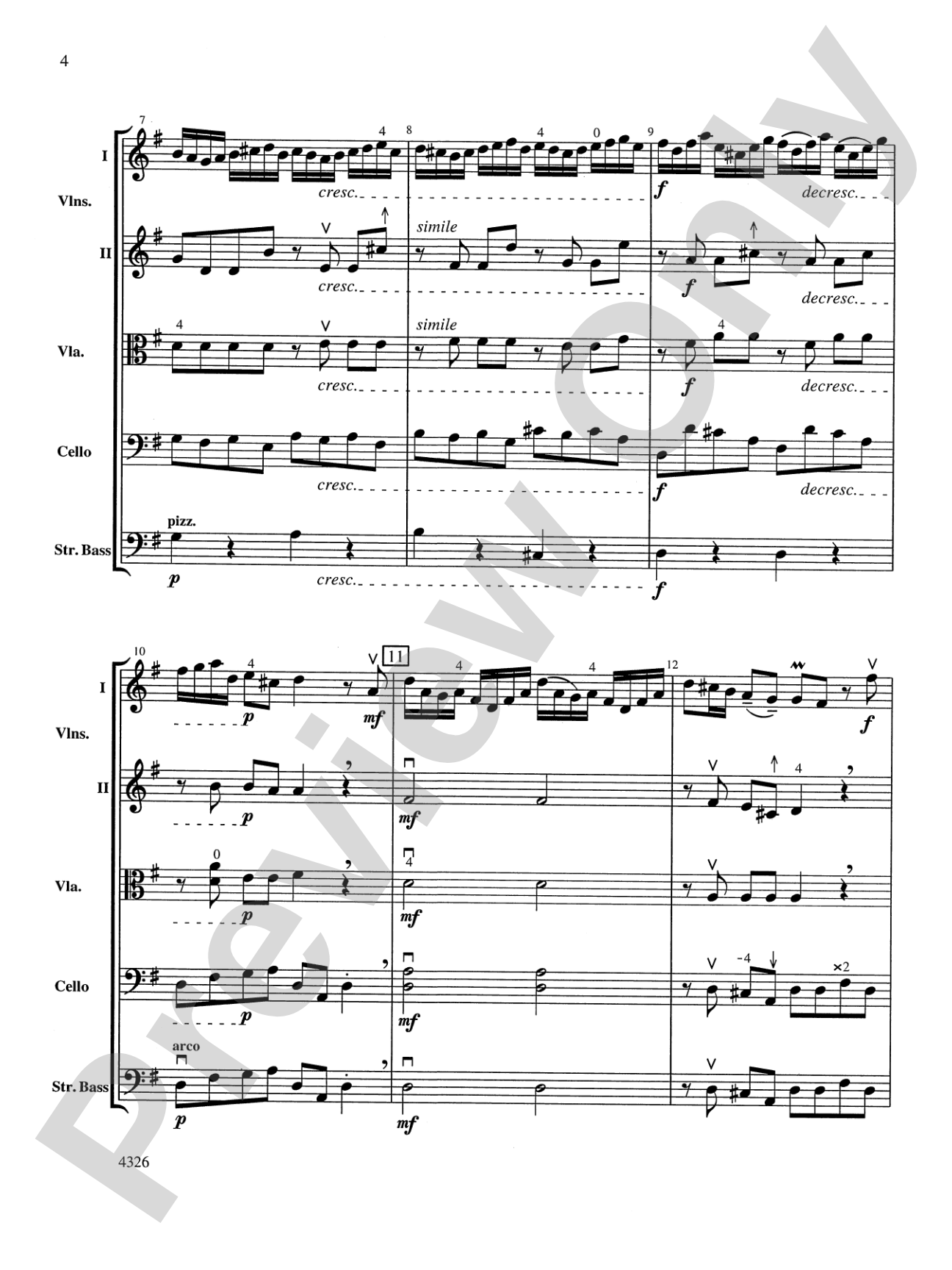
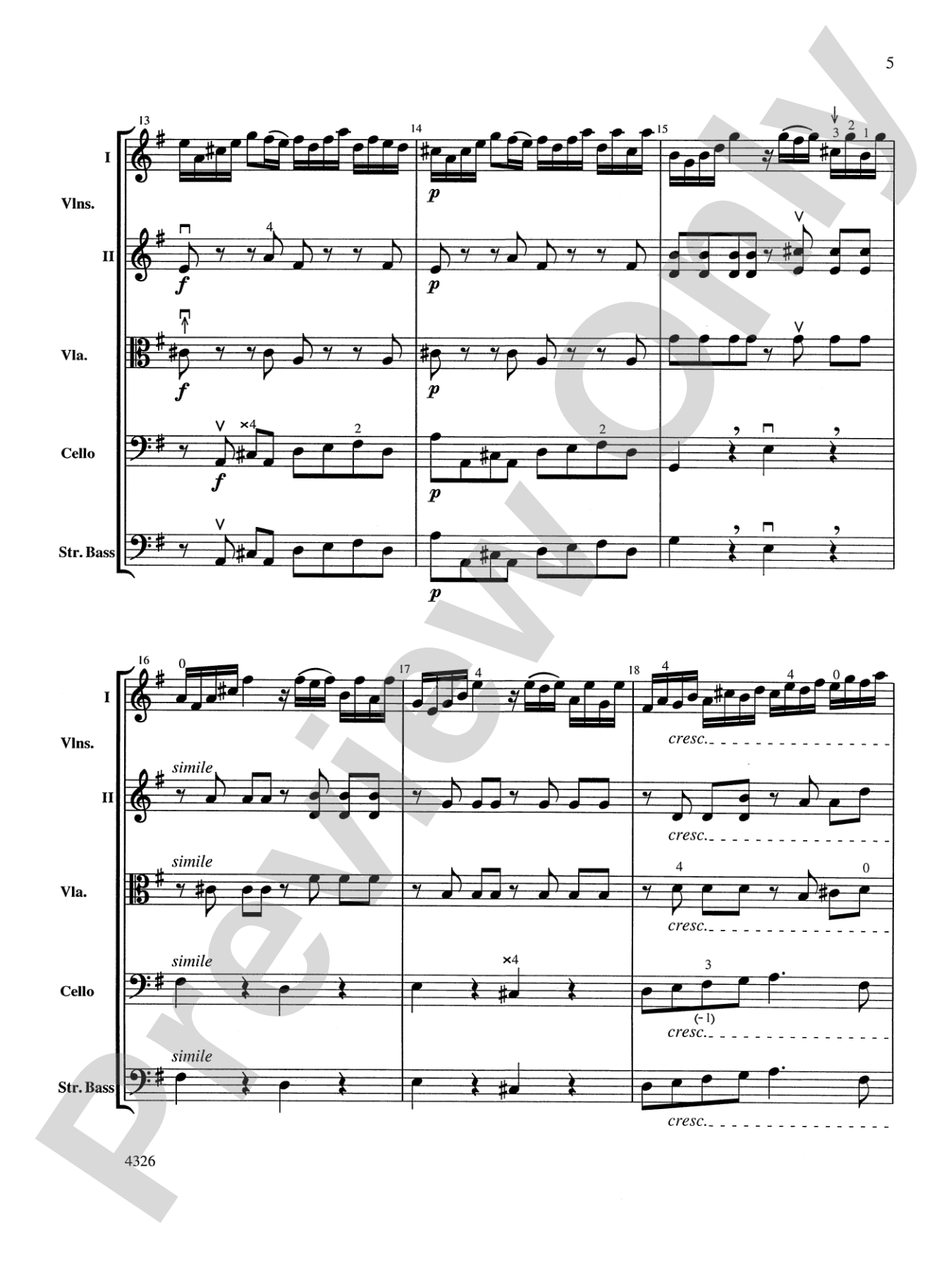
This popular Baroque violin solo has been masterfully scored for solo violin and string orchestra by Elliot Del Borgo. An excellent encore-type piece for showing off either your entire first violin section or any smaller group, this arrangement will sound full and clean regardless of the combination. Accompaniment parts are well-distributed and interesting for all instruments.


Don't just read it, hear it, play along with it, and watch your students grow with it. In MakeMusic Cloud, Fiocco Allegro: String Orchestra Conductor Score & Parts comes alive with professional accompaniment, adjustable tempo, and built-in practice tools that turn solo practice into real progress.
Open in the Player
Jump straight in and assign it today.
Start Your Free Trial
Open this title and explore the full library in minutes.
Sample Audio
1
Audio File
--:--
0:00
0:00
Sample Video
No sample videos found.
Additional Details
Series:
Highland/Etling String Orchestra
Publisher:
Alfred Music
Page Count:
136
SKU:
00-PK-0001860
More about this title
About the Composer: Joseph-Hector Fiocco
Joseph-Hector Fiocco (1703-1741) was a Flemish Baroque composer and violinist whose instrumental works became staples of the Baroque violin repertoire. Though his output was modest, his pieces for violin and keyboard found their way into teaching collections and concert programs across Europe, demonstrating the craftsmanship and melodic clarity that defined his compositional voice.
Fiocco's Allegro remains one of his best-known works, prized for its lyrical opening and driving rhythmic momentum. It has endured in music education precisely because it offers both technical challenge and genuine musical substance, rewarding players who bring style and clarity to its phrasing.
Why we love this
Del Borgo's orchestration feels inevitable rather than added. The solo line sings with original beauty while the string accompaniment engages every section with rhythmic vitality and genuine musical interest. At Grade 3, this arrangement gives your ensemble a substantial concert work that sounds polished and full, not simplified.
What to expect
Baroque elegance wrapped in orchestral warmth. The Allegro opens with a singing, lyrical quality that feels almost intimate, then propels forward with buoyant rhythmic energy that carries through the ensemble. There is a sense of refinement and control throughout, yet the piece never feels stiff or academic.
Who it's for
String orchestras at the Grade 3 level looking for a sophisticated encore that showcases ensemble sound and solo capability in equal measure. It works equally well as a vehicle for your concertmaster or as a moment where the first violin section shines collectively.
How to get the most out of it
- Shape the solo line with long-term phrasing rather than measure-to-measure articulation. The Allegro's power comes from sustained melodic momentum across longer phrases.
- Balance the solo violin against the full orchestra. In tutti sections, the solo part needs projection without the accompaniment fading into accompaniment; both should feel present.
- Approach the rhythmic figures in the accompaniment as active elements. Second violins and violas especially carry forward the piece's harmonic and rhythmic drive; rhythmic clarity from these parts lifts the entire texture.
- Establish a single, confident tempo before rehearsal and maintain it. The Baroque character asks for steady pulse and clean ensemble alignment rather than interpretive flexibility.
How to use it
Program this as an encore after a larger work, where its relative brevity and high energy give audiences a satisfying final impression. Alternatively, pair it with other Baroque orchestral arrangements to build a thematic concert block that demonstrates how string orchestration can honor period style while serving educational ensemble goals.
Skills your students will build
- Baroque articulation and phrasing conventions
- Balance between solo and ensemble voices
- Rhythmic precision in accompanying figures
- Reading in multiple clefs with confidence
- Sustained intonation through longer melodic phrases