Finlandia: Flute Sheet Music Preview

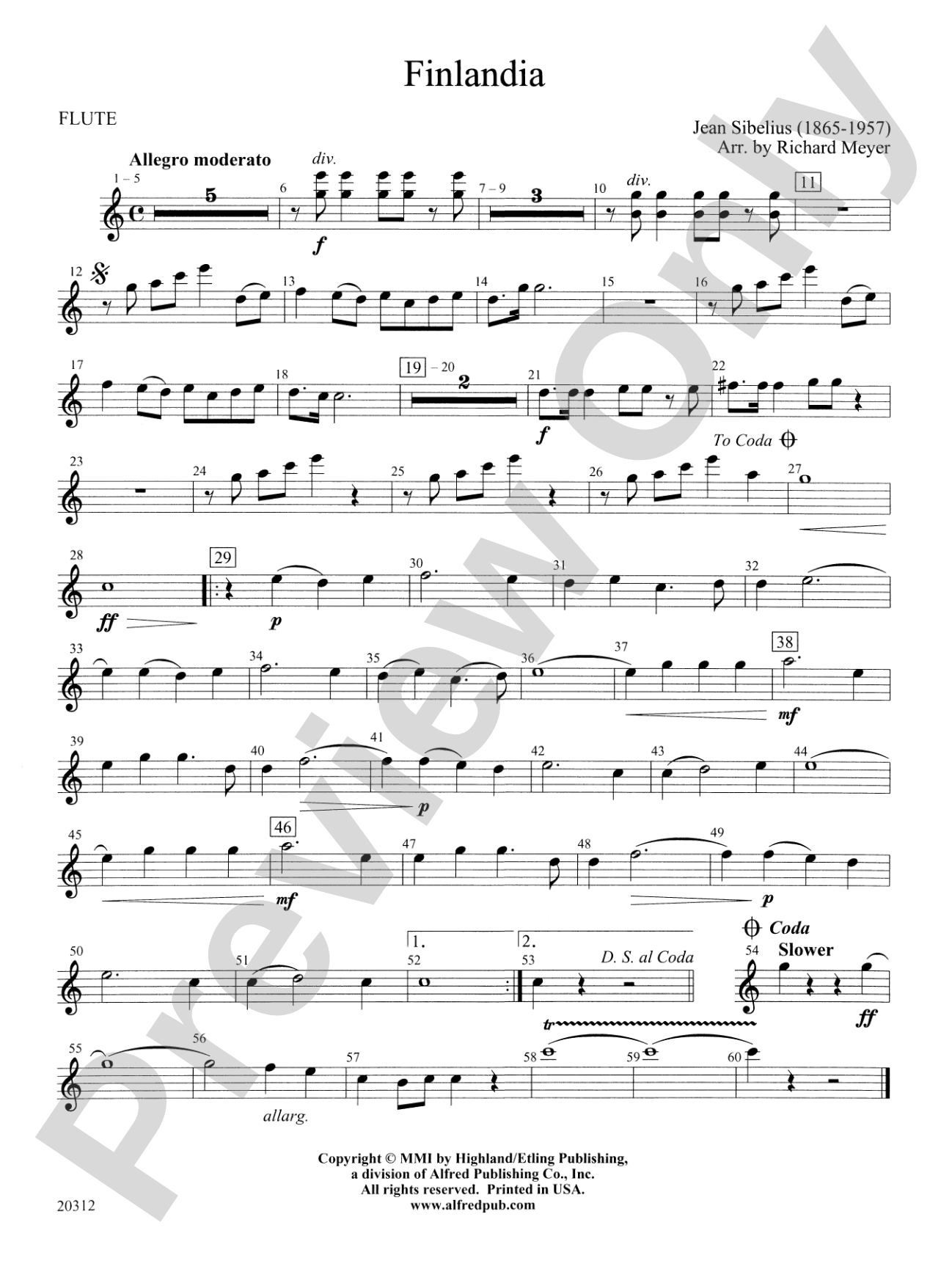
Finlandia: Flute

By Jean Sibelius / arr. Richard Meyer

Grade: 1

Item: 00-PC-0000389_F1

Digital Download
$3.00
Description
Expose your students to a wide variety of styles and moods, all within one powerful piece! After a stark, chromatic opening, a festive section based on a variety of fanfare-like motifs is heard. The energy eventually subsides, making way for what has become one of the most famous chorales in the orchestral repertoire. After its first statement by woodwinds, the entire orchestra soon picks up this pleading, patriotic melody, and a glorious coda brings the piece to an exciting end. This title is available in MakeMusic Cloud. A Federation Festivals 2020-2024 selection.

Don't just read it, hear it, play along with it, and watch your students grow with it. In MakeMusic Cloud, Finlandia: Flute comes alive with professional accompaniment, adjustable tempo, and built-in practice tools that turn solo practice into real progress.

Sample Audio
0:00
0:00
Sample Video
Additional Details
Series: Highland/Etling First Philharmonic
Publisher: Alfred Music
Page Count: 102
SKU: 00-PC-0000389_F1

More about this title

About the Composer: Jean Sibelius

Jean Sibelius (1865-1957) stands as Finland's most celebrated composer and a towering figure of late Romantic music. His orchestral works, particularly Finlandia, became powerful expressions of Finnish national identity during a period of political tension with Russia. Sibelius mastered the symphony and tone poem, bringing symphonic rigor to nationalist themes while maintaining a distinctive voice rooted in Nordic landscape and culture.

Why we love this

Richard Meyer's Grade 1 arrangement opens Sibelius's monumental tone poem to young orchestras without sacrificing the emotional arc that makes Finlandia unforgettable. The piece moves through distinct sections (chromatic opening, fanfare-driven middle, hymn-like chorale, triumphant coda) giving students multiple musical landscapes to explore in a single rehearsal. It's the kind of repertoire that reminds students why they play in orchestra.

What to expect

The journey moves from unease through celebration toward something deeply moving and ultimately triumphant. The famous chorale carries an almost hymn-like solemnity that contrasts sharply with the energetic fanfare writing earlier, creating a piece that teaches students the power of contrast and dynamic range.

Who it's for

Young orchestras (high school and advanced middle school) ready to tackle emotionally mature repertoire without extreme technical demands. Students who have experience balancing multiple voices and responding to subtle conducting cues will gain the most from this arrangement.

How to get the most out of it

  • Shape the stark opening with clear dynamic control; the chromatic writing should feel unsettling, not muddy. Invest rehearsal time in intonation here, as students will instinctively rush through discomfort.
  • Treat the fanfare section as a conversation between sections rather than a blur of activity. Balance brass and woodwinds so the motifs stay audible as they pass around the orchestra.
  • Let the chorale breathe and sing. This is the heart of the piece; pull back the tempo slightly and ask every section to play as if supporting a vocal line, even on sustained notes.
  • Build the final coda with patience. The excitement comes from accumulated energy and clarity, not from simply playing faster or louder.

How to use it

This works beautifully as a concert opener or closer, particularly on programs celebrating cultural heritage or nationalism in music. It also pairs well with other 20th century orchestral works, offering students a bridge between Romantic sensibilities and modern orchestration.

Skills your students will build

  • Balancing multiple melodic lines across different instrumental families
  • Responding to subtle tempo and dynamic changes within large forms
  • Playing sustained harmonic passages with blend and intonation
  • Understanding the relationship between orchestration and musical mood
  • Maintaining rhythmic precision through contrasting sections (fanfare rhythms, sustained chorale, driving coda)

You May Also Like