Finlandia: Bassoon Sheet Music Preview

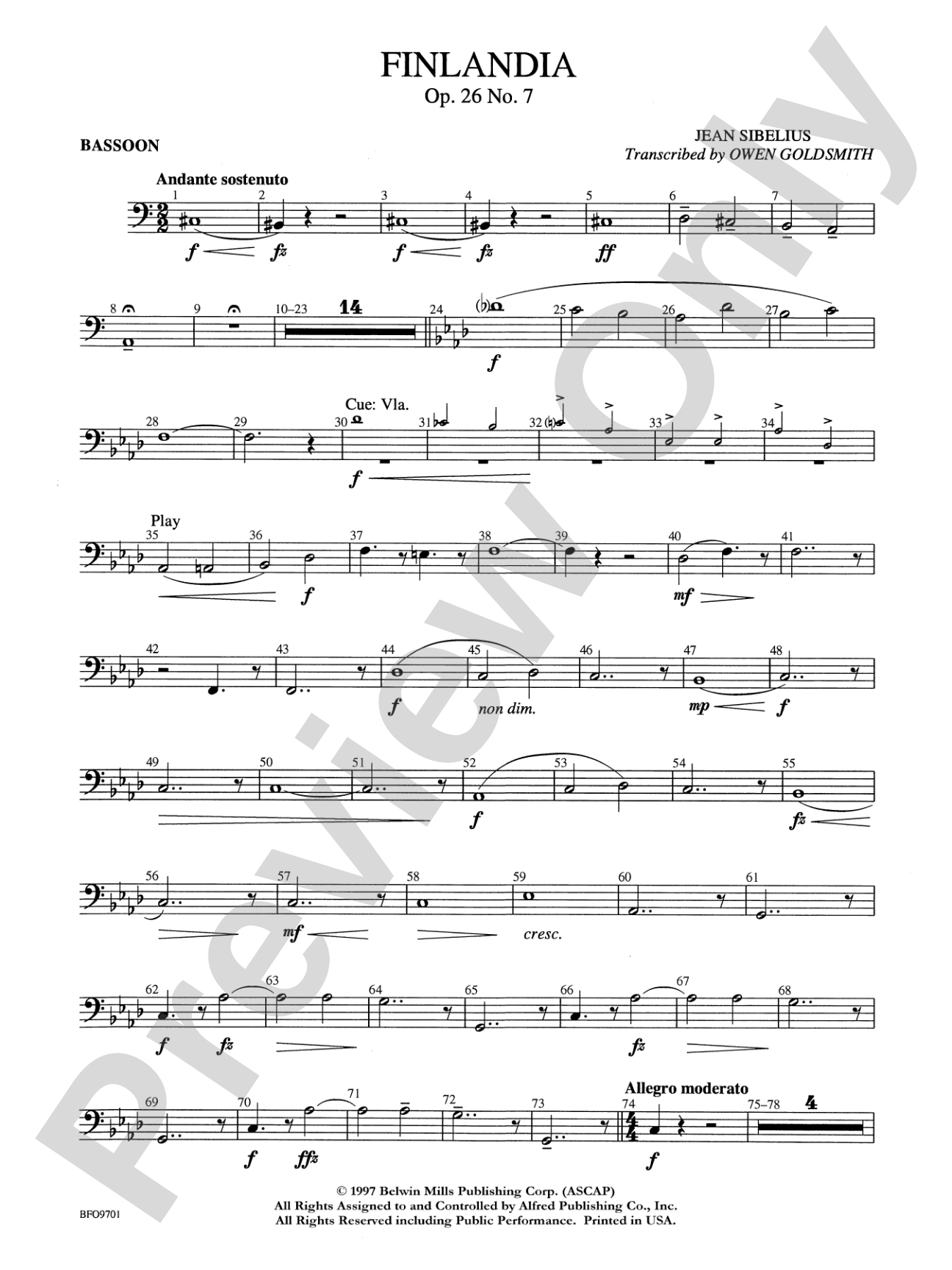
Finlandia: Bassoon

By Jean Sibelius / transcr. Owen Goldsmith

Grade: 3.5

Item: 00-PC-0002209_B1

Digital Download
$3.00
Description
This Sibelius masterwork is now intelligently transcribed for today's orchestra. Vital brass entrances have preparation to assure secure attack. Careful doubling, cuing, and more, will allow the work to succeed with large groups as well as smaller ensembles or orchestras with unbalanced instrumentation. Audiences will respond, and your musicians will experience the joy of performing culturally time-tested, great music. (6:11) A Federation Festivals 2020-2024 selection.

Don't just read it, hear it, play along with it, and watch your students grow with it. In MakeMusic Cloud, Finlandia: Bassoon comes alive with professional accompaniment, adjustable tempo, and built-in practice tools that turn solo practice into real progress.

Sample Audio
No sample audio found.
Sample Video
Additional Details
Series: Belwin Concert Full Orchestra
Publisher: Alfred Music
Page Count: 352
SKU: 00-PC-0002209_B1

More about this title

About the Composer: Jean Sibelius

Jean Sibelius (1865-1957) stands as Finland's most celebrated composer and a central figure in late Romantic nationalism. His orchestral works, particularly Finlandia, became symbols of Finnish cultural identity during the nation's movement toward independence. Sibelius's gift for sweeping melodic lines, innovative orchestration, and symphonic architecture influenced generations of composers and remains central to concert repertoire worldwide.

Why we love this

Owen Goldsmith's transcription preserves everything that makes Finlandia transcendent while solving the real problem of uneven orchestrations and missing parts in many school orchestras. The intelligent cuing and brass preparation throughout mean your section leaders can breathe together and younger musicians won't wait in silence for pages, keeping energy alive across a full rehearsal. This arrangement lets orchestras of any size claim a masterwork that audiences recognize and respect.

What to expect

Finlandia opens with quiet dignity and spiritual resolve, a chorale that feels both intimate and inevitable. As the piece unfolds, it builds toward a triumphant, anthemic climax that stirs something elemental in both performers and listeners—a sense of unity, strength, and cultural pride that transcends the concert hall.

Who it's for

Orchestra directors working with Grade 3.5 ensembles who want to program a culturally significant, audience-engaging work without struggling against poor orchestrations or missing parts. This arrangement suits mixed-ability orchestras, schools with incomplete instrumentation, and any program that needs a piece students will feel proud to perform and audiences will recognize immediately.

How to get the most out of it

  • Honor the hymnic opening with a singing, supported tone in the upper woodwinds and strings; this melody carries the whole piece and needs space to breathe before the brass arrives.
  • Use the prepared brass cues as landmarks for ensemble alignment; the arranger has done the work of making entrances secure, so trust those guideposts during rehearsal.
  • Shape the dynamic arc across the entire work rather than playing individual phrases in isolation; Finlandia's power comes from the cumulative sweep from opening chorale through triumphant climax.
  • Balance the lower brass and timpani in the energetic middle sections so the accompaniment sits behind the melodic lines; let the harmonic support serve the tune.

How to use it

Program this as a festival or concert closer that leaves audiences moved and energized; its reputation precedes it, so audiences come ready to listen deeply. It also serves beautifully on a concert that explores nationalism in music or celebrates cultural heritage, paired thoughtfully with works from other traditions. The 6+ minute runtime makes it a centerpiece, not filler, so give it the rehearsal time and programming prominence it deserves.

Skills your students will build

  • Sustaining long, singing lines with consistent tone and support
  • Ensemble cohesion across large mixed instrumentation
  • Responding to expressive, large-scale dynamic shaping
  • Secure entrance timing with prepared cues
  • Balancing melody and accompaniment in a thick orchestral texture

You May Also Like