Fingal's Cave Overture Sheet Music Preview

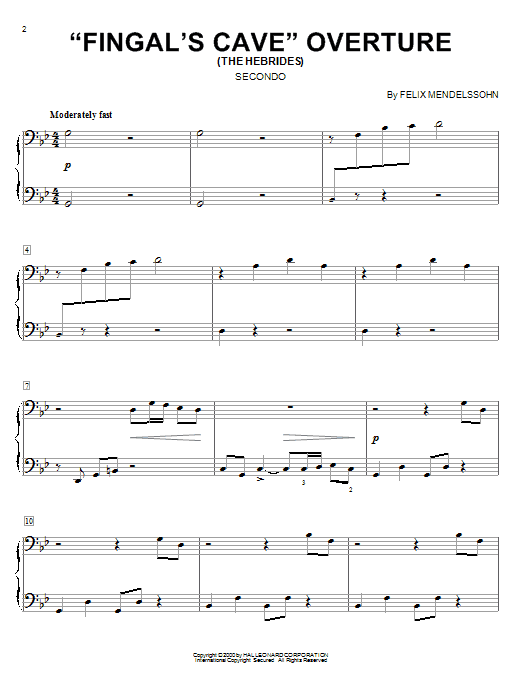
Fingal's Cave Overture: Piano Duet

As performed by Felix Mendelssohn

Item: 35-DS00034312

Digital Download
$5.99
Description

Discover MakeMusic Cloud: thousands of interactive titles your students can play along with today.

Sample Audio
No sample audio found.
Sample Video
Additional Details
Publisher: Hal Leonard
Page Count: 8
SKU: 35-DS00034312

More about this title

About the Artist: Felix Mendelssohn

Felix Mendelssohn (1809–1847) shaped Romantic music through his gift for orchestral color and structural clarity. A virtuoso conductor and pianist as well as composer, he bridged the worlds of Bach's contrapuntal rigor and the emotional immediacy of his own era, influencing how orchestras sounded and what audiences expected from concert halls.

Mendelssohn's overtures remain foundational to music education because they demonstrate how a composer can sustain dramatic momentum across a substantial form without sacrificing accessibility. His ability to craft memorable themes, develop them logically, and orchestrate with precision made his concert works blueprints for composers and teaching models for generations of conductors.

Why we love this

This arrangement captures the Romantic allure that made Mendelssohn's concert works staples of the repertoire. The harmonic language and orchestral gestures translate remarkably well to piano, allowing students and accompanists to engage with the overture's architecture and sweep without the demands of a full ensemble score.

What to expect

There's a restless energy here, maritime and searching, as though the piano itself is navigating dark waters. Mendelssohn's themes emerge with lyrical nobility, then shift into urgent figuration that propels you forward.

Who it's for

Pianists and accompanists preparing for competitions, recitals, or collaborative performance will find this arrangement opens access to Mendelssohn's dramatic language. It also serves intermediate to advanced students exploring Romantic orchestral writing through keyboard reductions.

How to get the most out of it

  • Balance the melody against flowing accompaniment figures; the accompaniment should recede enough to let the theme sing but remain present enough to maintain harmonic direction.
  • Observe the dynamic shapes across longer phrases rather than treating each measure independently; this prevents the piece from feeling choppy and honors Mendelssohn's gift for melody.
  • Pay attention to the tempo relationships between contrasting sections; subtle adjustments in elasticity help clarify the form without resorting to obvious ritardandi.

How to use it

Pair this with other Romantic piano literature to contextualize how composers adapted orchestral thinking for the keyboard. It works equally well as a recital centerpiece or as a bridge between Classical and late Romantic repertoire in a teaching sequence.

Skills your students will build

  • Sustaining long-line melody over active accompaniment texture
  • Navigating harmonic movement in Romantic syntax
  • Managing tempo flexibility within formal design
  • Translating orchestral color concepts to keyboard technique

You May Also Like