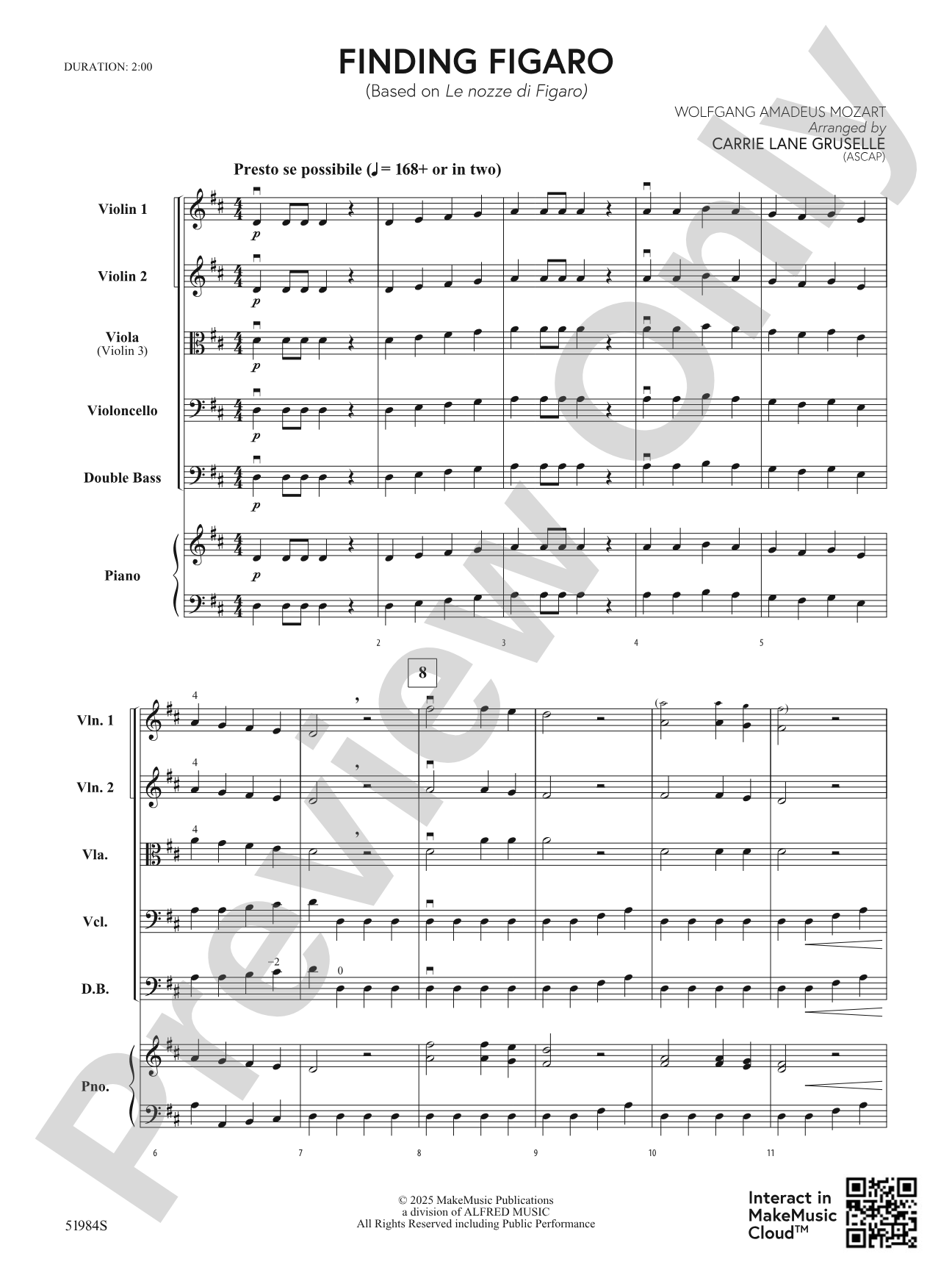
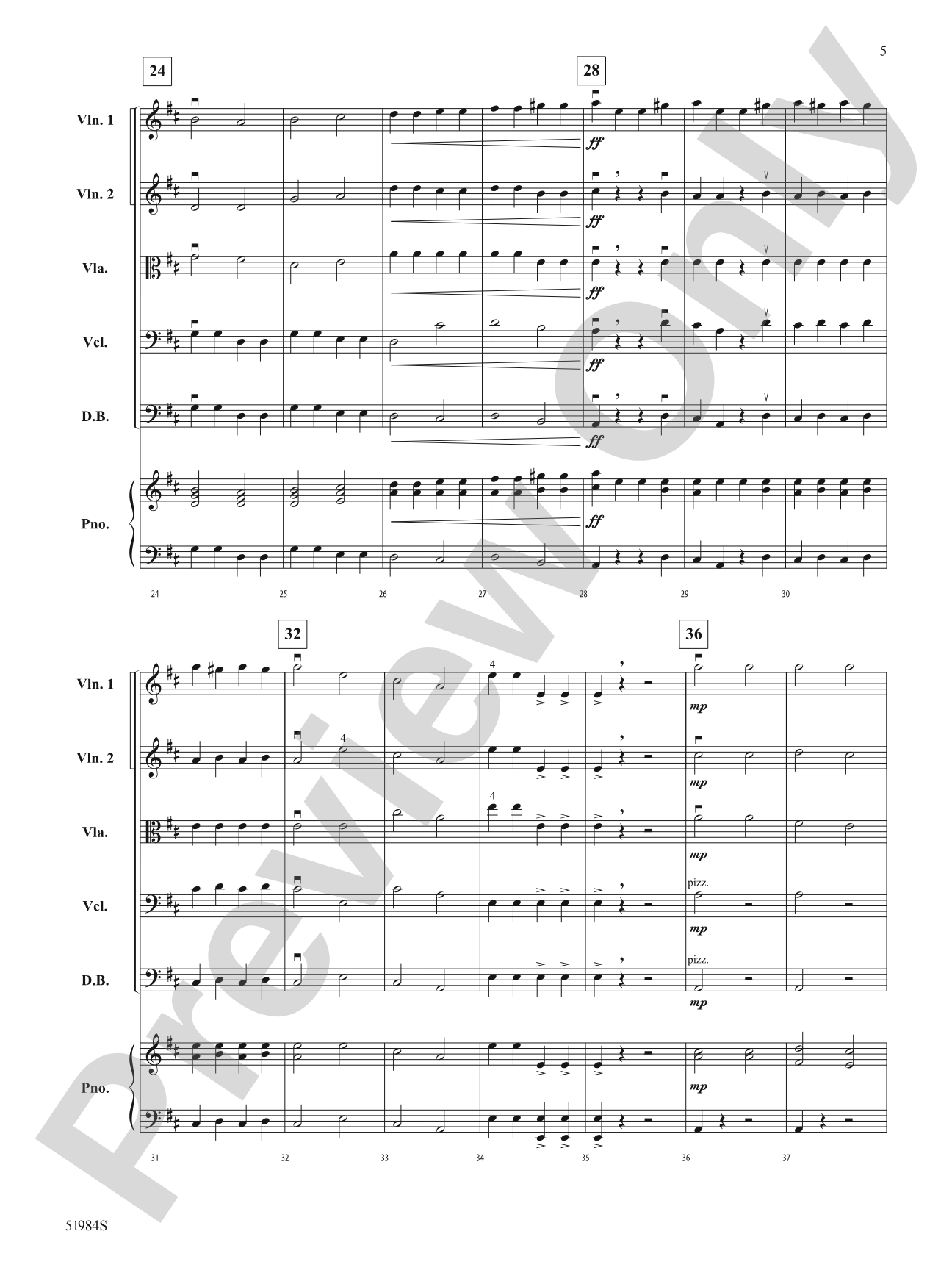
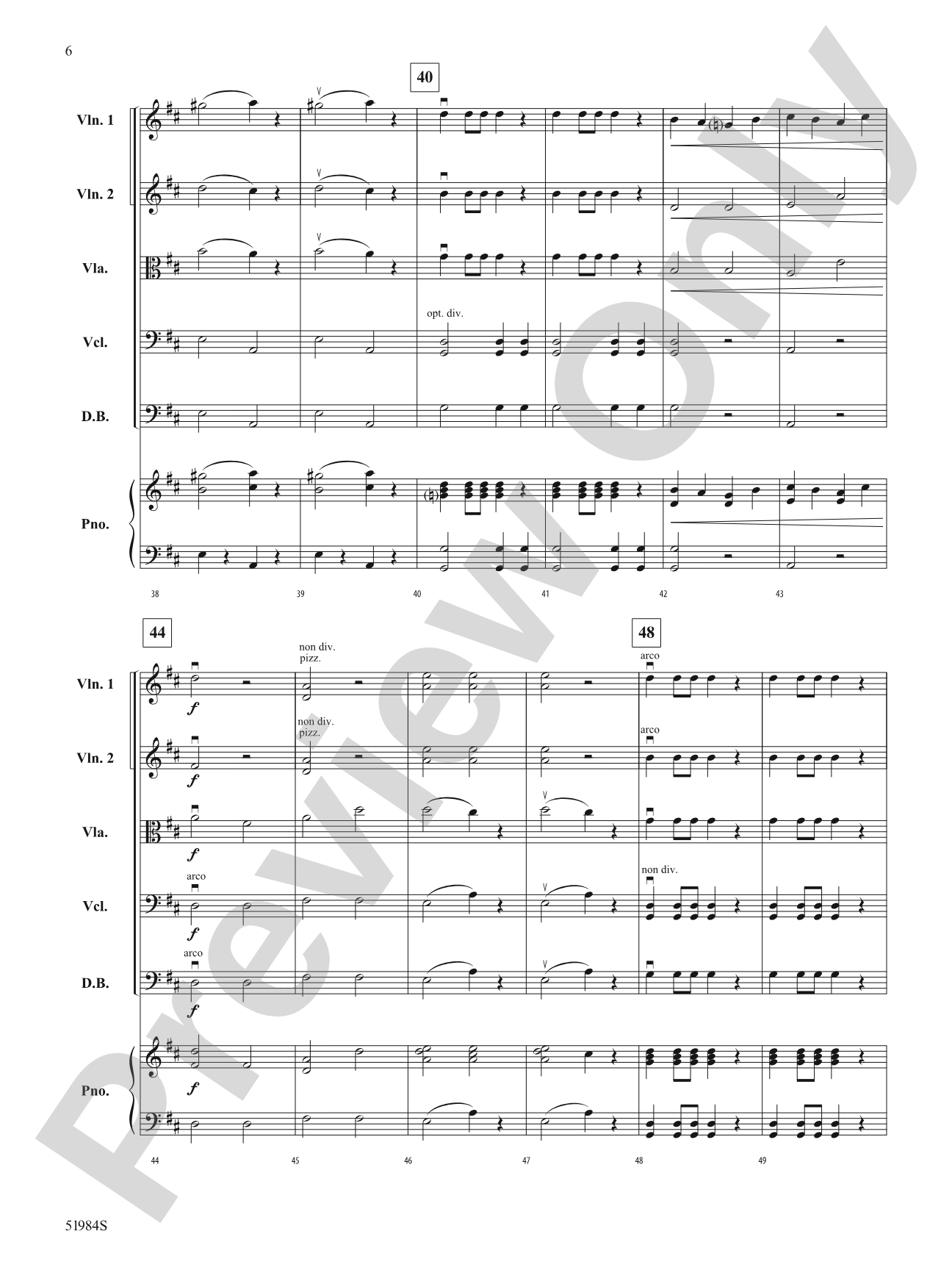
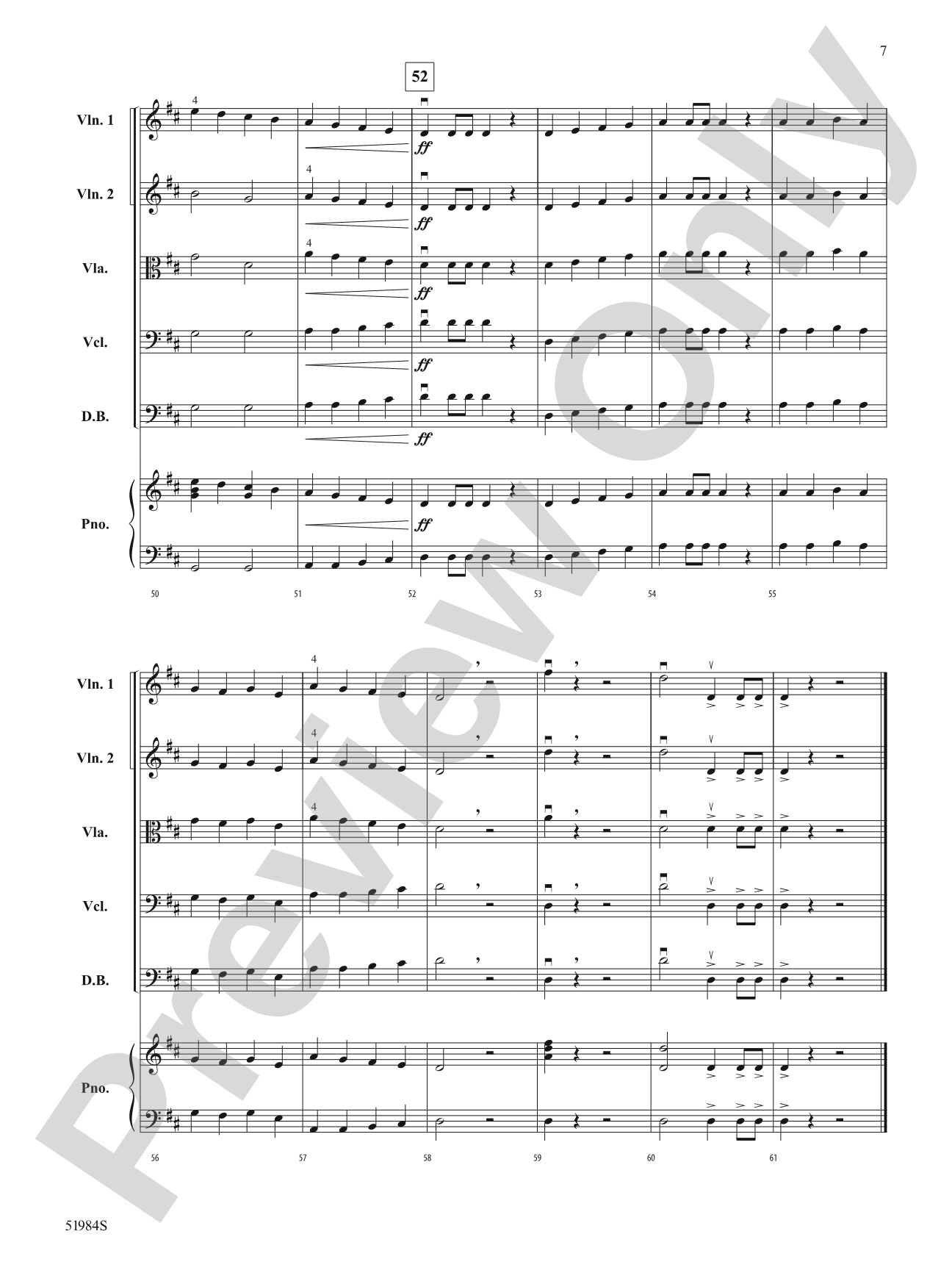
Finding Figaro: Score
(Based on Le nozze di Figaro)
By Wolfgang Amadeus Mozart / arr. Carrie Lane Gruselle
Grade: 1
Item: 00-PR-0007770
Pickup currently not available
Description
Don't just read it, hear it, play along with it, and watch your students grow with it. In MakeMusic Cloud, Finding Figaro: Score comes alive with professional accompaniment, adjustable tempo, and built-in practice tools that turn solo practice into real progress.
Jump straight in and assign it today.
Open this title and explore the full library in minutes.
Sample Audio
Sample Video
Additional Details
More about this title
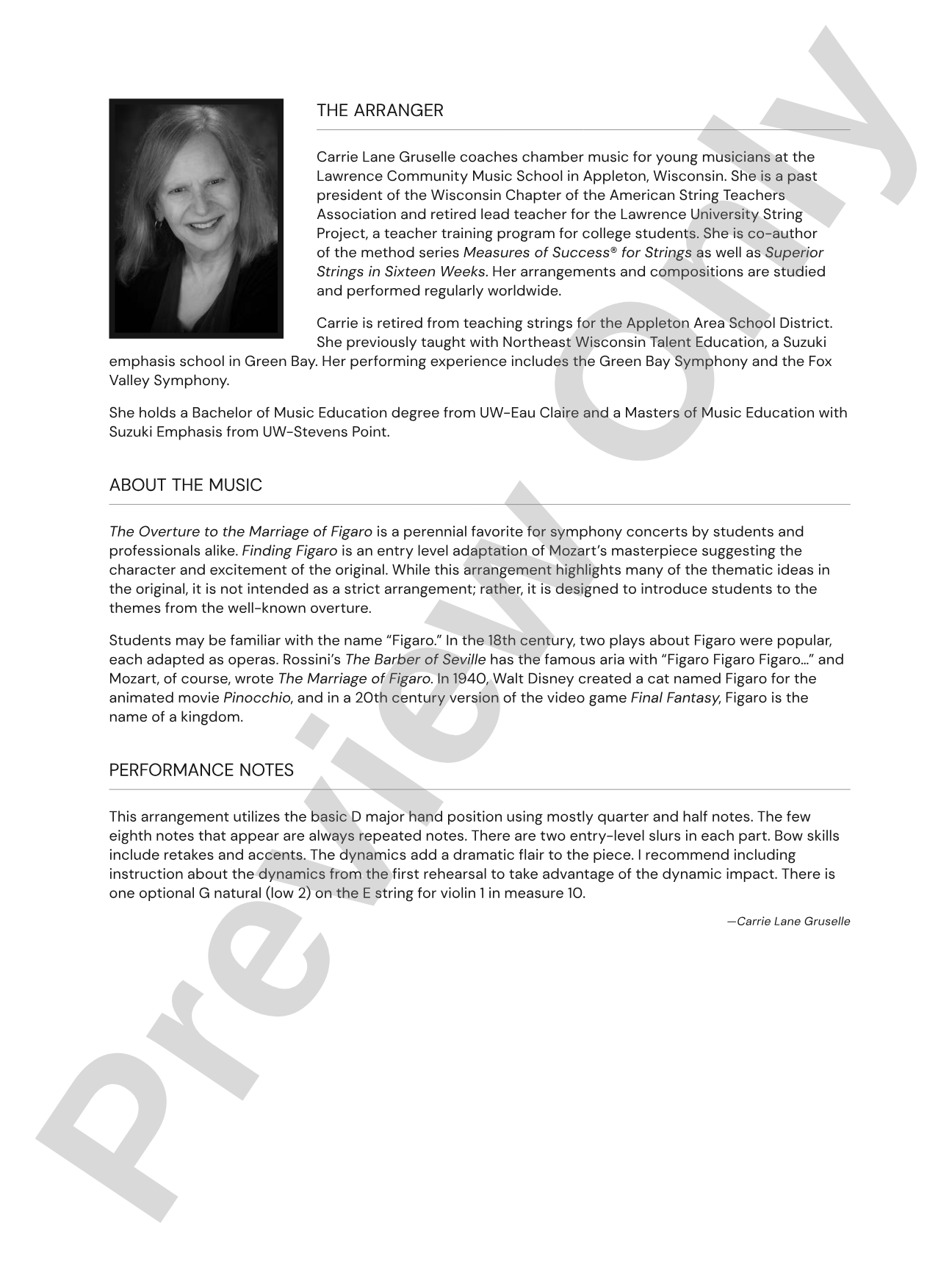
About the Composer: Wolfgang Amadeus Mozart
Wolfgang Amadeus Mozart (1756-1791) composed some of the most enduring music in the Western canon during his tragically short life. His operas, symphonies, and chamber works remain cornerstones of music education because they combine melodic brilliance with structural clarity, making them ideal models for student musicians learning how professional composers develop ideas.
Why we love this
Carrie Lane Gruselle's arrangement strips away the vocal complexity of the original overture while preserving its infectious energy and recognizable themes, making this genuinely playable for beginning string orchestras without sacrificing the sparkle students expect from Mozart. At Grade 1, this still demands accurate rhythmic precision and articulation control, giving players a real sense of accomplishment when they execute the quick passages cleanly. The two-minute duration and contest/festival designation mean you get a satisfying performance experience that works as a concert opener or a festival entry.
What to expect
Bright, witty, and propulsive. The energy is unmistakably Mozart: lean, clear textures that dance rather than plod, with melodies that sparkle and a harmonic foundation that stays transparent. Players feel the theatrical humor and forward motion even at this entry level.
Who it's for
String orchestra directors building repertoire for Grade 1 ensembles who want their students to experience a genuine masterwork without oversimplification. This works equally well for teachers preparing contest entries or building confidence through recognizable material that audiences already love.
How to get the most out of it
- Establish a steady tempo early in rehearsals and use a metronome to lock the string section's rhythmic precision, especially in the faster scalar passages where young players tend to rush.
- Isolate the main melodic themes by section, letting different stands trade the famous opening figure so everyone understands exactly where the melody lives and can support it with appropriate weight.
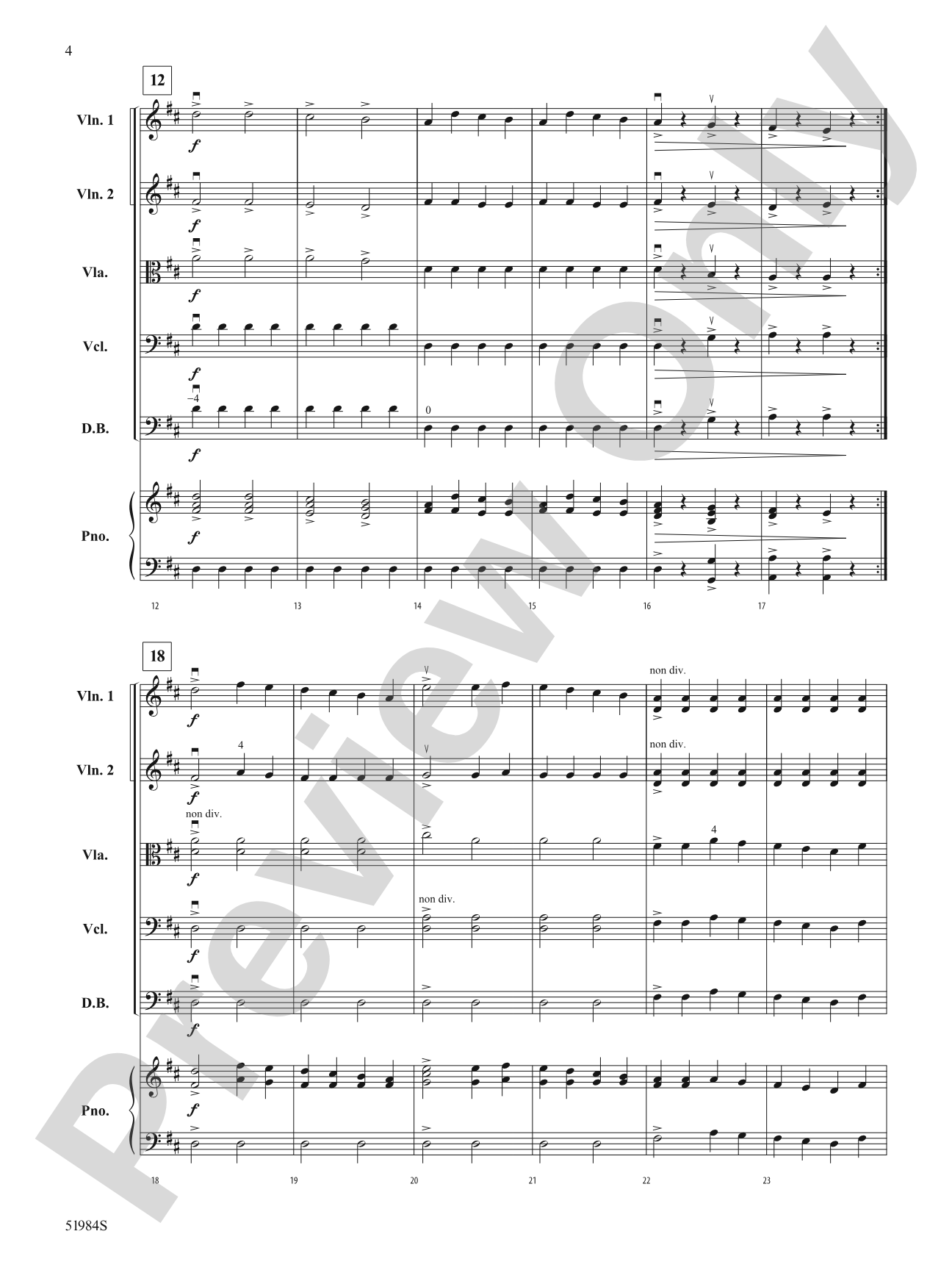
- Attend to the articulation patterns carefully; the character of this piece depends on crisp detaching where indicated and sustained tone where the line breathes, which separates a polished performance from a mechanical one.
- Balance the parts so the primary theme always projects clearly even when multiple sections play simultaneously, reminding students that supporting accompaniment figures must never overwhelm the conversation.
How to use it
Open a concert with this to establish an energetic tone and immediately connect with your audience through familiar material, or use it as a festival entry that showcases both ensemble precision and student musicality without placing excessive technical demands on younger players. It pairs well alongside other arranged masterworks or lighter contemporary pieces in a concert that emphasizes clarity and tunefulness.
Skills your students will build
- Executing scalar passages with rhythmic precision and consistent tone
- Articulation control through crisp staccato and sustained legato playing
- Balancing melodic and accompaniment roles within an ensemble texture
- Tracking multiple simultaneous musical lines and understanding harmonic framework
- Performing recognizable thematic material with stylistic clarity appropriate to Mozart's idiom