Finale (from Symphony No. 5): Viola Sheet Music Preview

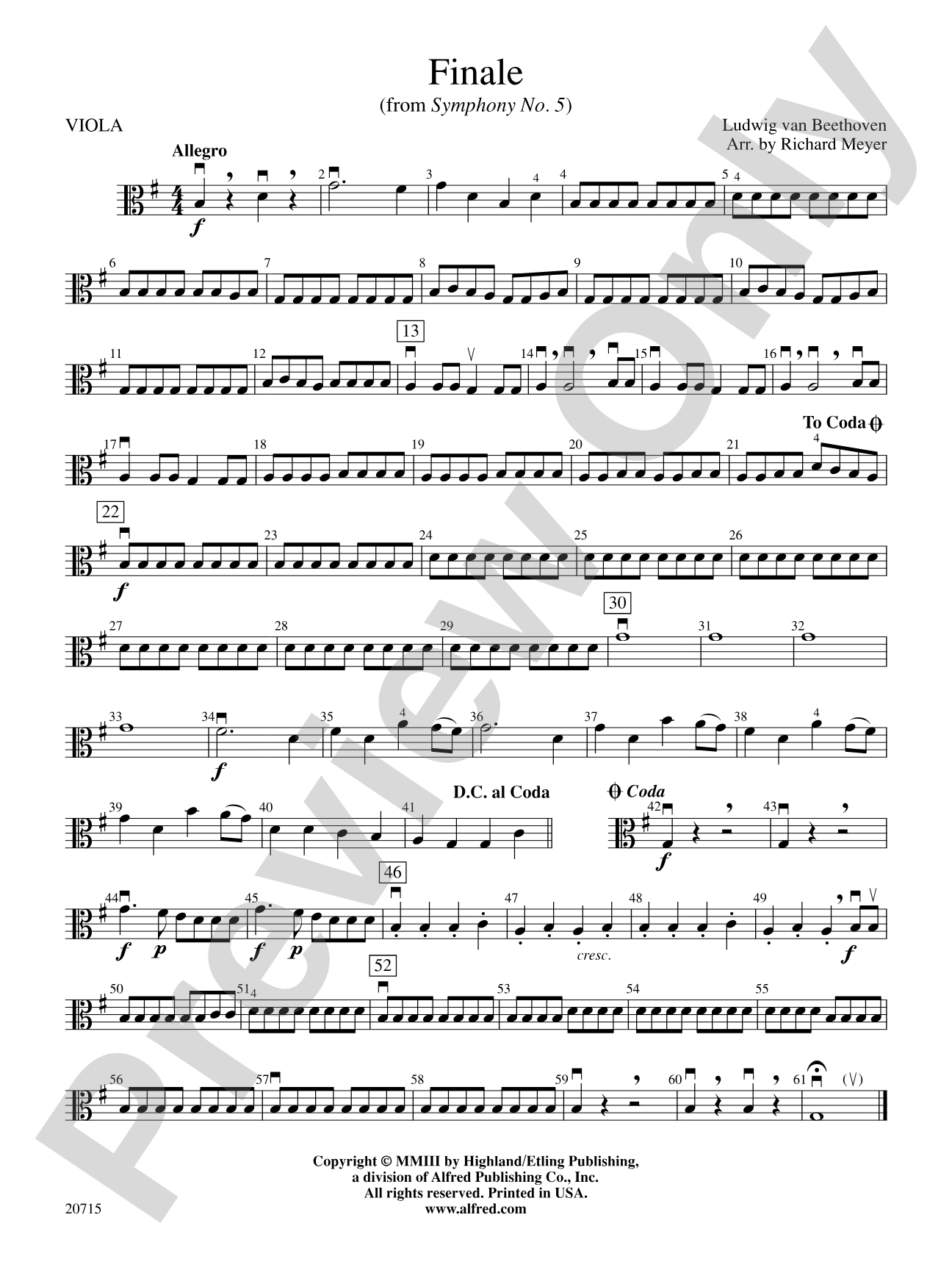
Finale (from Symphony No. 5): Viola

(from Symphony No. 5)

By Ludwig van Beethoven / arr. Richard Meyer

Grade: 2

Item: 00-PC-0000448_VA1

Digital Download
$5.99
Description
This grade two arrangement of the finale from Beethoven's fifth symphony features the heroic opening theme as well as the lyrical secondary theme. While the key has been changed to G major and the rhythms simplified, the excitement and energy of the original remain. Every section is given melodic material throughout, making this a great selection to help your students learn about balance of melody and accompaniment. All parts are in first position, with a divisi first violin part that will offer an extra challenge to some of your more advanced players. A great festival selection or concert closer. This title is available in MakeMusic Cloud. A Federation Festivals 2020-2024 selection.

Don't just read it, hear it, play along with it, and watch your students grow with it. In MakeMusic Cloud, Finale (from Symphony No. 5): Viola comes alive with professional accompaniment, adjustable tempo, and built-in practice tools that turn solo practice into real progress.

Sample Audio
0:00
0:00
Sample Video
Additional Details
Series: Highland/Etling String Explorer
Publisher: Alfred Music
Page Count: 72
SKU: 00-PC-0000448_VA1

More about this title

About the Composer: Ludwig van Beethoven

Ludwig van Beethoven (1770-1827) bridged the Classical and Romantic eras, expanding the symphony into a vehicle for profound emotional expression and structural innovation. His Fifth Symphony stands among the most recognizable and influential works in the Western canon, celebrated for its dramatic arc and the famous "fate knocking at the door" motif that opens the first movement.

Why we love this

Richard Meyer's arrangement preserves the heroic sweep of Beethoven's finale while making it genuinely playable for young ensembles. Every string section gets meaningful melodic responsibility, which means students experience the architecture of a masterwork rather than sitting through accompaniment patterns, and the divisi first violin part gives you a natural way to differentiate for your strongest players.

What to expect

You hear Beethoven's defiant optimism channeled through young musicians discovering what it means to play with orchestral weight and unity. The lyrical passages breathe with warmth, then the heroic theme returns with reinvigorated purpose, building to a finish that lands with genuine conviction.

Who it's for

This arrangement serves Grade 2 string orchestras ready to engage with real symphonic literature. It works equally well for ensembles preparing for festival competition or those seeking a substantial closer for a concert program.

How to get the most out of it

  • Balance the heroic opening theme against the lyrical secondary theme by adjusting dynamic markings slightly; the contrast between these characters is central to the piece's drama.
  • Bring out the divisi first violin lines carefully so they enhance rather than muddy the texture; consider having your most secure players on the upper divisi part.
  • Lock rhythmic precision in unison passages to project confidence and energy; sloppy ensemble work in the famous opening theme will undermine the whole arrangement.
  • Shape the melodic lines in every section with thoughtful phrasing so accompaniment figures don't flatten into mere rhythmic filler.

How to use it

Program this as a festival selection or concert finale where it can anchor a program with compositional substance without requiring the technical demands of the original. It also fits well in a spring concert that traces the evolution of the symphony, paired with earlier Classical models or later Romantic works.

Skills your students will build

  • Balancing melody and accompaniment across multiple sections
  • Playing divisi passages with secure intonation and blend
  • Maintaining rhythmic precision in unison themes
  • Shaping Classical phrasing within a simplified harmonic framework
  • Understanding how masterworks can be adapted without losing their essential character

You May Also Like