
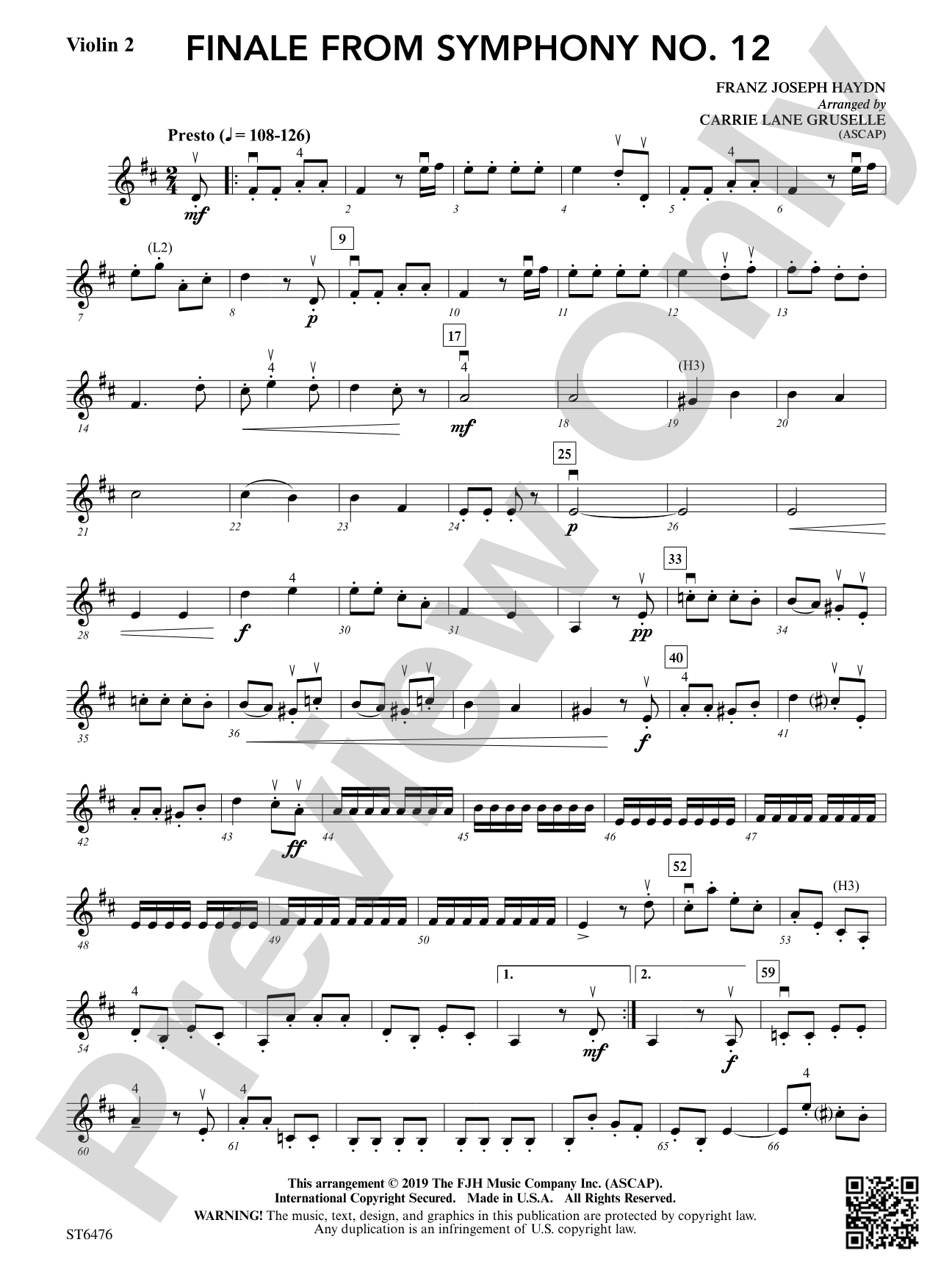

Finale from Symphony No 12: Violin 2
By Franz Joseph Haydn / arr. Carrie Lane Gruselle
Grade: 2.5
Item: 98-PC-DST6476_VN2
$7.00
Pickup currently not available
Description
Treat your students to this spectacular arrangement showcasing the "Father of the Symphony." This exquisitely orchestrated arrangement teaches a wealth of skills including off-the-string eighth notes, detaché, sixteenth notes, chromatic alterations, and includes abundant opportunities to practice up-beats at the frog. Engaging for every member of the orchestra!


Finale from Symphony No 12: Violin 2 isn't in MakeMusic Cloud just yet...but it could be. Let us know you'd like to see it, and you'll help shape what comes next. In the meantime, start a free trial and dive into thousands of interactive titles your students can play along with today.
Request This Title
Tell us you want it.
Start Your Free Trial
Explore everything that's ready to play right now.
Sample Audio
1
Audio File
--:--
0:00
0:00
Sample Video
Additional Details
Series:
FJH Developing Strings
Publisher:
The FJH Music Company, Inc.
SKU:
98-PC-DST6476_VN2
More about this title
About the Composer: Franz Joseph Haydn
Franz Joseph Haydn (1732-1809) earned the title "Father of the Symphony" by transforming the genre from a brief orchestral fanfare into a sophisticated four-movement form. Working for nearly three decades as Kapellmeister to the Esterházy court in Hungary, he composed 104 symphonies that established structural principles still taught today: clear thematic development, balanced phrase architecture, and the interplay between all instrumental voices.
Haydn's mastery of orchestration extended to writing idiomatically for strings, recognizing how bow technique and textural variety could sustain interest across entire movements. His symphonies became the blueprint for countless composers who followed, making him essential listening and studying for students building their understanding of orchestral literature.
Why we love this
Carrie Lane Gruselle has captured the Finale's propulsive energy while calibrating the technical demands for developing string players. The arrangement respects Haydn's architectural clarity, giving young musicians the experience of playing genuine symphonic material without overwhelming their current skill level. This is the kind of piece that reminds students why they chose to play strings in the first place.
What to expect
The Finale radiates forward momentum and Classical clarity. Haydn's straightforward melodies and rhythmic drive create an infectious energy, while the interplay between sections generates a sense of collaborative excitement. This is music that naturally invites vibrant, unified playing.
Who it's for
This arrangement is designed for developing string orchestras at the 2.5 grade level who are ready for genuine symphonic repertoire but still building bow control and rhythmic precision. It works equally well for orchestras new to Haydn or those preparing for festival performances. Every stand benefits from meaningful musical work.
How to get the most out of it
- Establish a consistent tempo before rehearsals begin. The eighth-note figures at this level benefit from a metronomic foundation, especially when introducing off-the-string bowing.
- Address the frog work early and often. Upbeat passages require controlled wrist height and consistent bow contact; isolate these figures in sectionals before attempting them at tempo.
- Balance the sixteenth-note passages across the ensemble. Mark potential trouble spots in early rehearsals and rotate them among sections so all players gain confidence with rapid figuration.
- Layer the chromatic alterations gradually. Introduce accidentals by key, then by section, before rehearsing all parts together to ensure accurate intonation.
How to use it
Program this as a concert opener to set a joyful, energetic tone, or pair it with other Classical-era works to build programming around the symphonic tradition. It also programs effectively on festival concerts where judging panels value both technical growth and musical maturity. Consider featuring it early enough in the rehearsal year that students can achieve genuine polish by performance date.
Skills your students will build
- Off-the-string eighth notes with controlled bow contact
- Detaché bowing technique
- Sixteenth-note passages at developing tempo
- Chromatic alterations and accidental reading
- Upbeat articulation at the frog with consistent weight
- Ensemble balance across multiple sections