
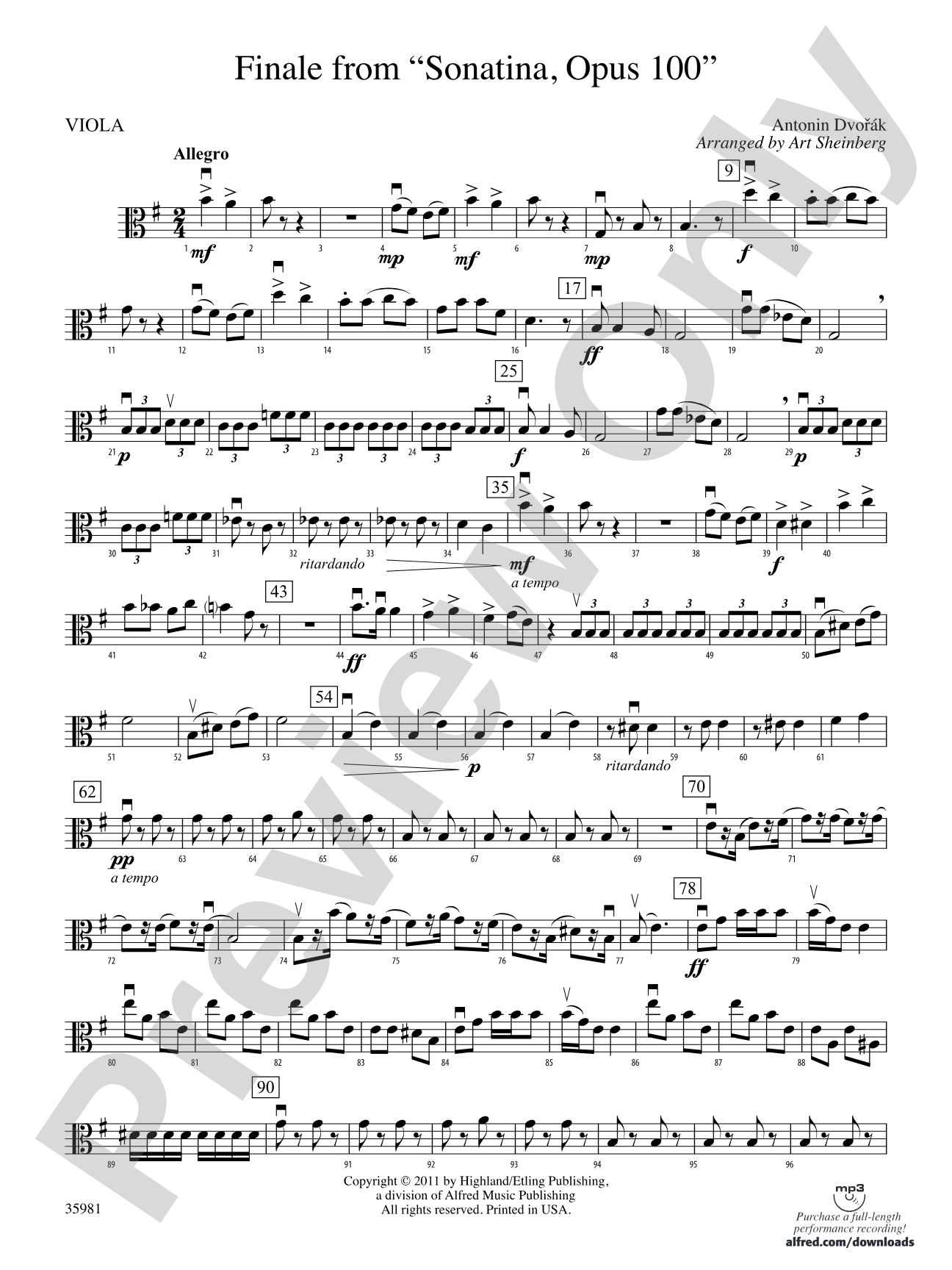

Finale from "Sonatina, Op. 100": Viola
By Antonín Dvorák / arr. Art Sheinberg
Grade: 3.5
Item: 00-PC-0015056_VA1
$5.99
Pickup currently not available
Description
Here is the perfect concert or festival piece for the high school string orchestra that is almost--but not quite--ready for the Dvorák "Serenade!" With much of the composer's signature use of folk idioms and lyricism, this piece offers great teaching possibilities, including a slow middle section in E Major with a bass solo. The exuberant accelerando ending will put an exclamation point to this certain favorite with your students and audiences.


Don't just read it, hear it, play along with it, and watch your students grow with it. In MakeMusic Cloud, Finale from "Sonatina, Op. 100": Viola comes alive with professional accompaniment, adjustable tempo, and built-in practice tools that turn solo practice into real progress.
Open in the Player
Jump straight in and assign it today.
Start Your Free Trial
Open this title and explore the full library in minutes.
Sample Audio
1
Audio File
--:--
0:00
0:00
Sample Video
No sample videos found.
Additional Details
Series:
Highland/Etling String Orchestra
Publisher:
Alfred Music
Page Count:
124
SKU:
00-PC-0015056_VA1
Instrumentation:
string
More about this title
About the Composer: Antonin Dvorák
Antonín Dvořák (1841-1904) composed at a time when European nationalism was reshaping classical music, and he became one of the foremost voices celebrating Czech folk traditions within the concert hall. His melodic gift was almost inexhaustible; he wrote symphonies, concertos, chamber works, and operas with equal mastery, yet always grounded his writing in the rhythms and colors of his homeland. For string orchestra conductors, Dvořák remains essential repertoire because his works balance accessibility with genuine sophistication—students can grasp the folk character immediately, while the harmonic language and structural craft reward deeper study.
This Finale from the Sonatina, Op. 100 exemplifies Dvořák's gift for writing music that sounds both intimate and grand. The piece demonstrates why he remains one of music education's most valuable composers: his melodies are unforgettable, his orchestration transparent enough for young players to hear their individual lines, and his formal sense never overwhelms the joy of music-making.
Why we love this
This sits in exactly the right pedagogical space for high school orchestras with solid fundamentals but not yet ready for full-length Dvořák serenades. Art Sheinberg's arrangement preserves the composer's melodic generosity and folk character while making the technical demands reasonable for Grade 3.5 players. The slow middle section in E Major with its bass solo gives your lower strings a moment to shine, and the accelerando finish energizes the entire ensemble and audience.
What to expect
The opening welcomes you with folk-tinged melodies that feel both earnest and elegant; Dvořák never sentimentalizes his materials. The slow middle section, bathed in E Major, becomes deeply introspective, with the bass line floating above sustained harmonies like a voice remembering something precious. Then the accelerando releases all that quiet reflection into pure forward motion, closing with infectious joy.
Who it's for
String orchestras at the high school level with secure rhythm section, confident principal chairs, and ensemble awareness but without the technical polish required for Dvořák's longer works. This is ideal for groups that have mastered basic intonation and can sustain lyrical phrases but need a concert piece that builds confidence and offers genuine musical substance.
How to get the most out of it
- Shape the folk themes as songs, not as technical passages. Let your concertmaster and principal viola sing their lines clearly during the opening sections; this draws the ensemble into Dvořák's lyrical world immediately.
- Give the bass soloist in the E Major middle section space to breathe and shape the line expressively. Rehearse this passage outside the full orchestra so your bass players understand they're the featured voice, not accompaniment.
- Build the accelerando gradually so it feels inevitable rather than mechanical. Mark your score with specific tempo increments (perhaps in 5-10 bpm steps) and rehearse it in chunks so players can feel the momentum building.
- Balance the exuberant ending: the outer voices (first violins and basses) should define the character, but keep inner parts clear so the texture remains transparent even at tempo.
How to use it
Program this as a strong mid-concert piece that showcases your ensemble's musicality without demanding the virtuosity of a concerto. It works beautifully on festivals where you want to program recognizable, high-quality repertoire that judges and audiences respond to immediately, or pair it with contrasting 20th-century string orchestra music to highlight the Romantic tradition.
Skills your students will build
- Shaping long, singing melodic lines with consistent vibrato and tone
- Balancing folk idioms (syncopation and rhythmic flexibility) within a classical structure
- Dynamic control during accelerando passages and sustained slow sections
- Listening to and supporting featured soloists (especially bass players)
- Transparent ensemble balance when multiple voices carry thematic material simultaneously