
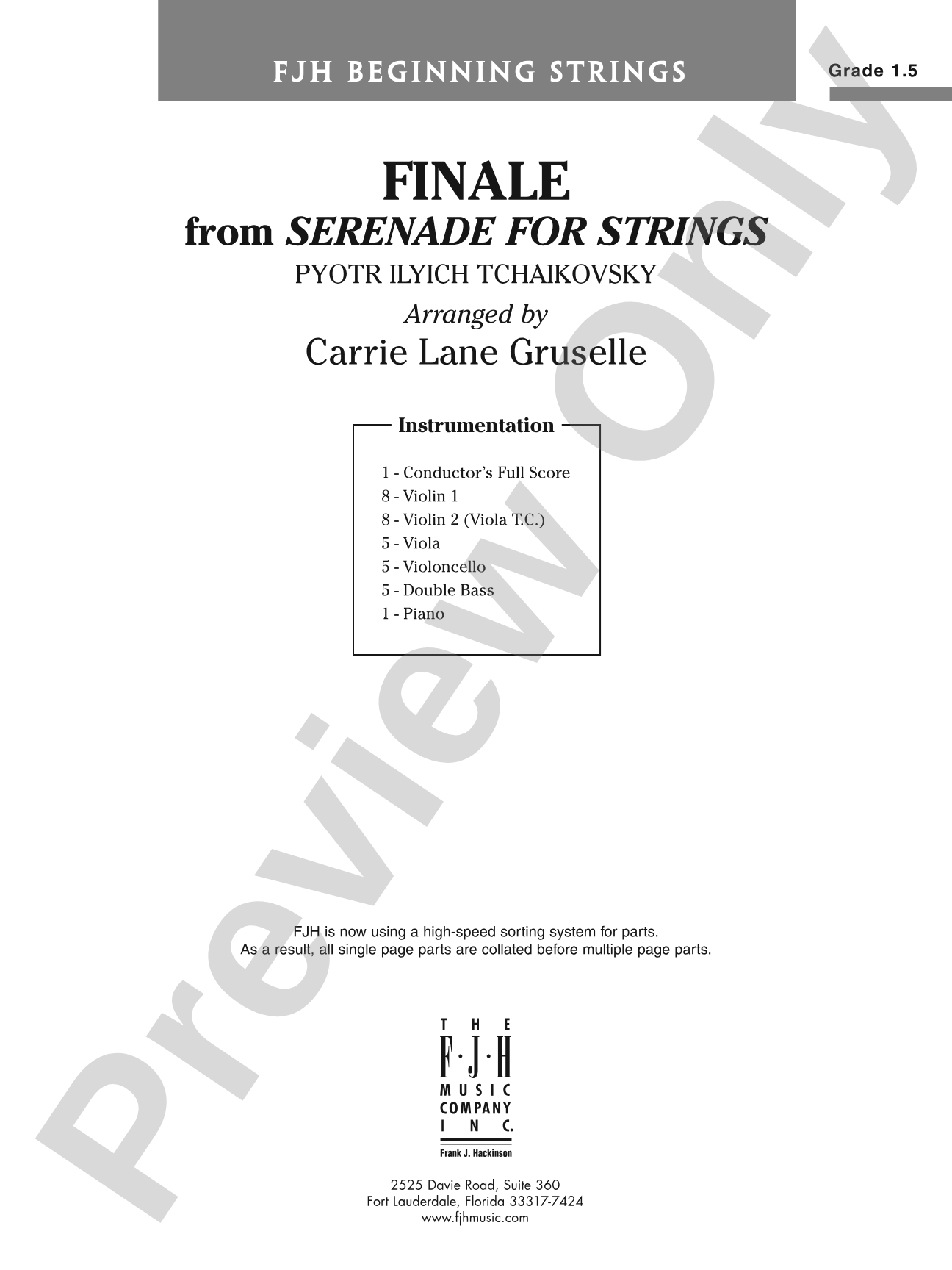
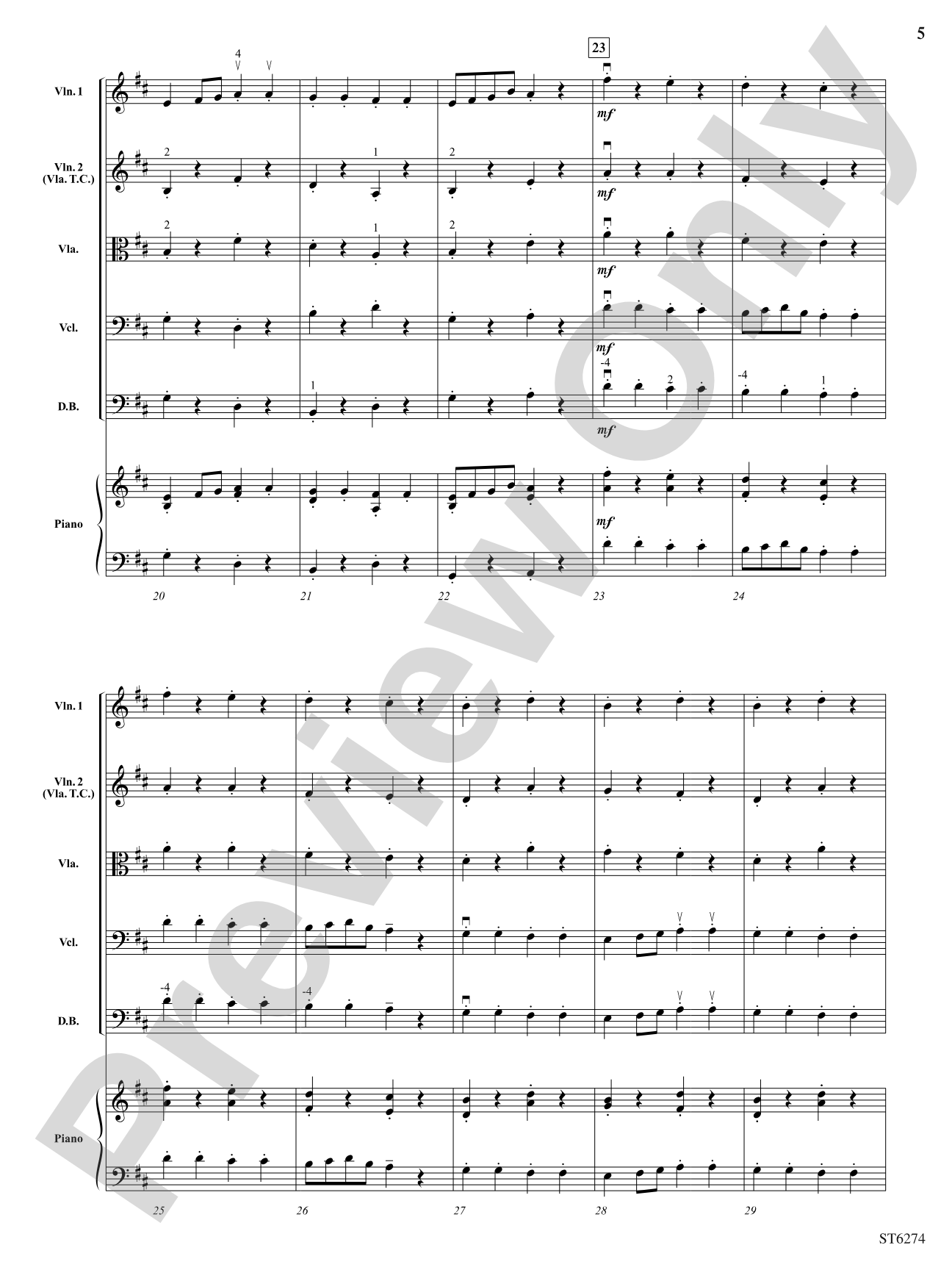
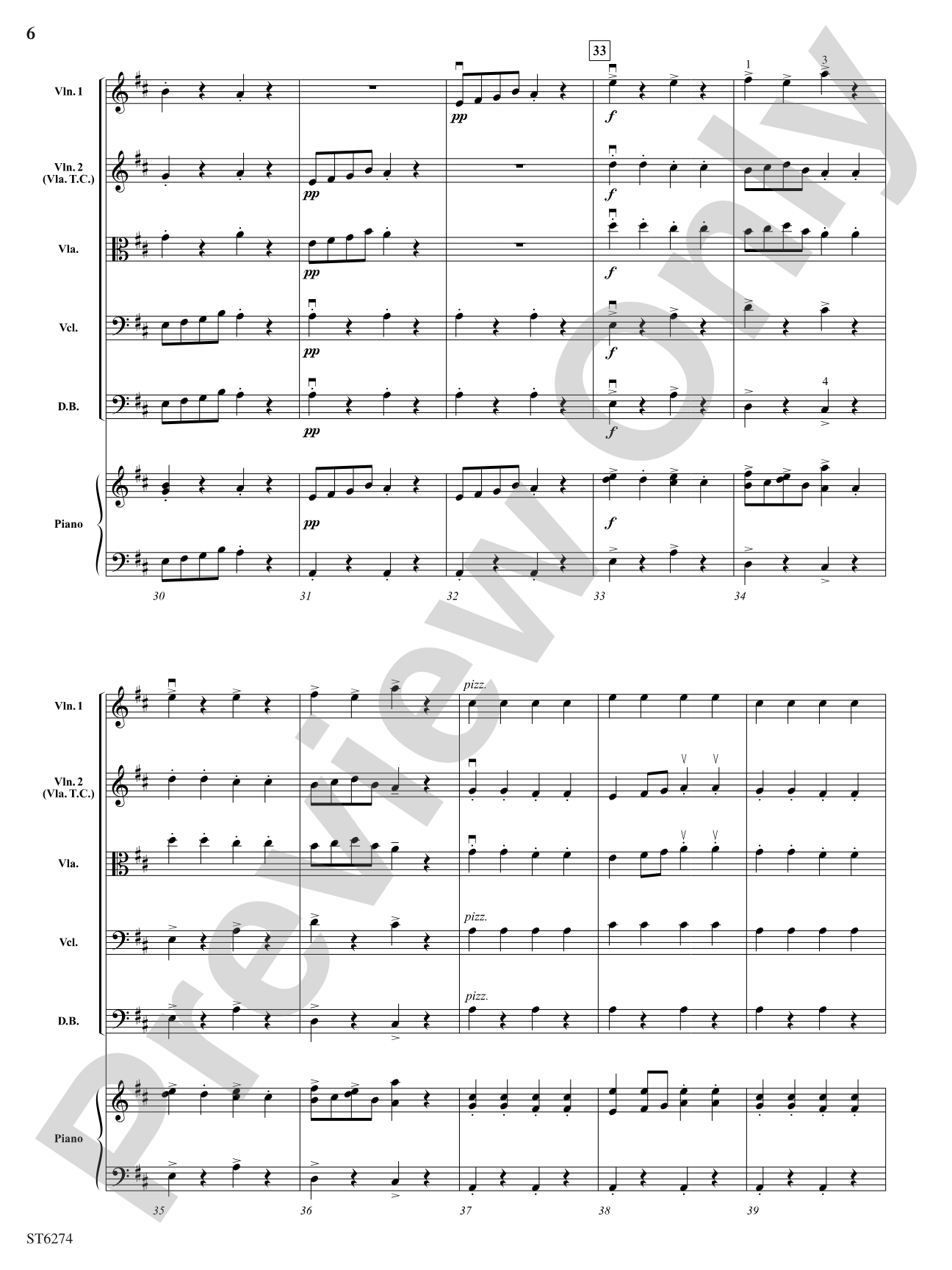
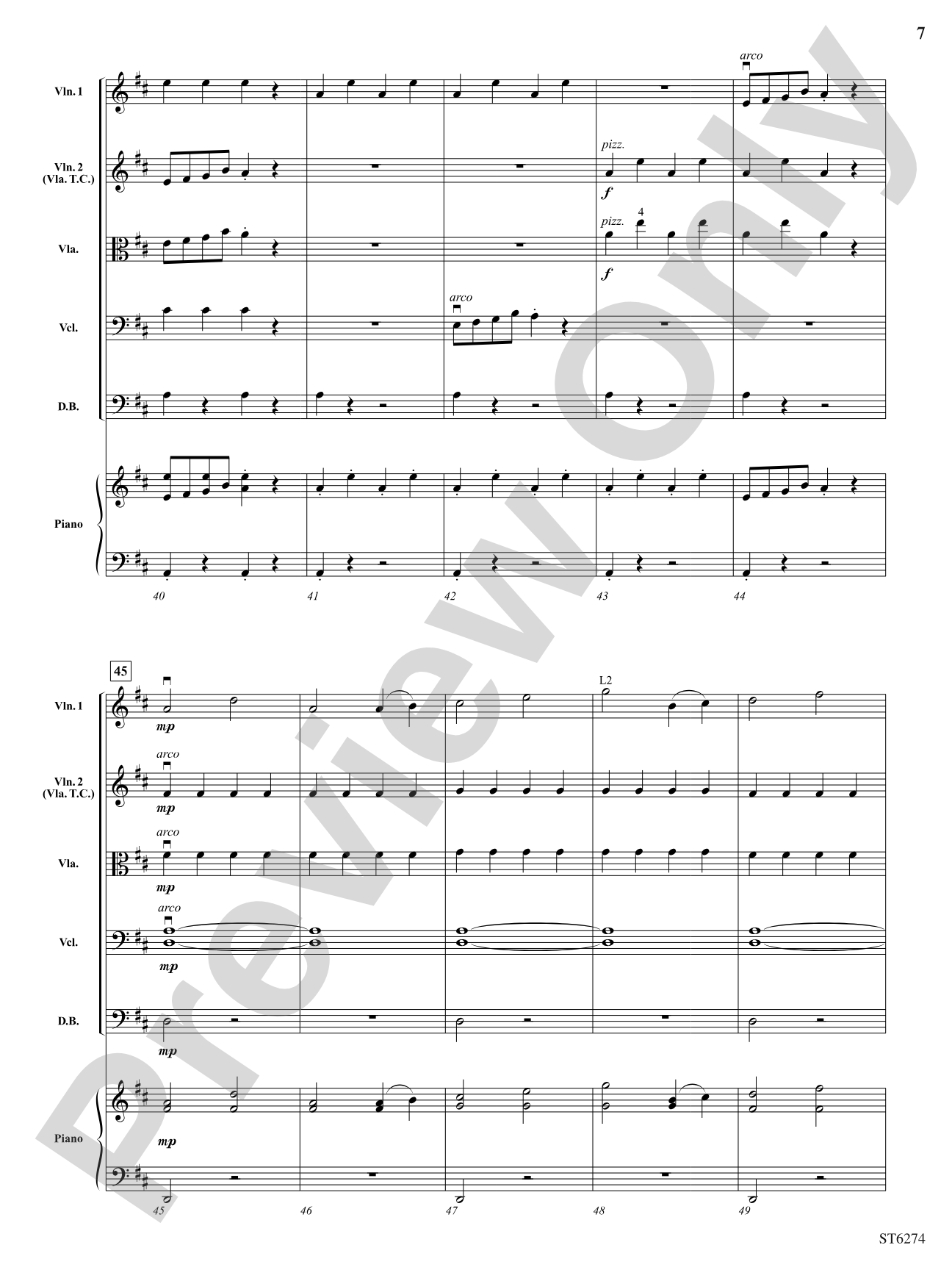
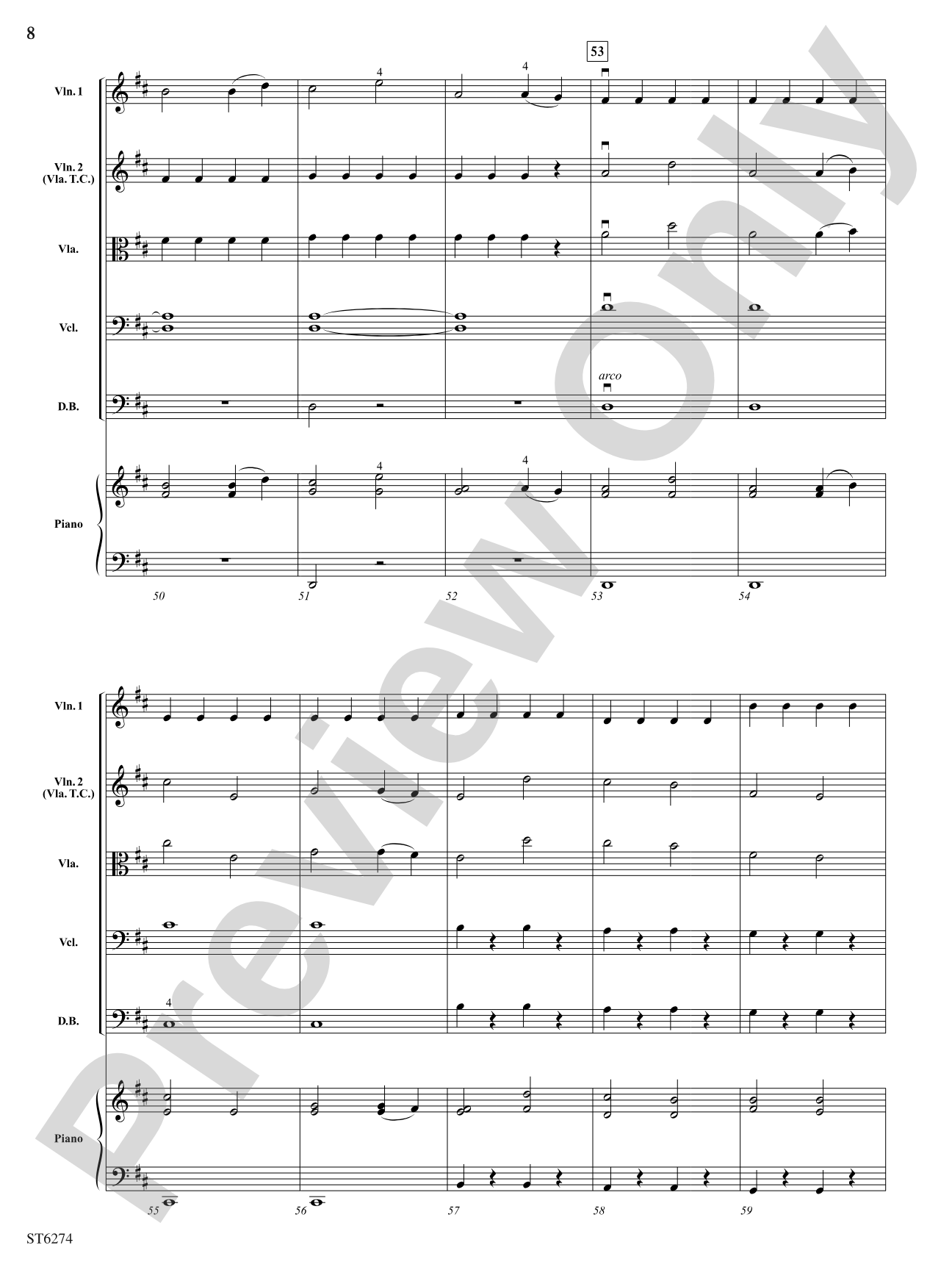
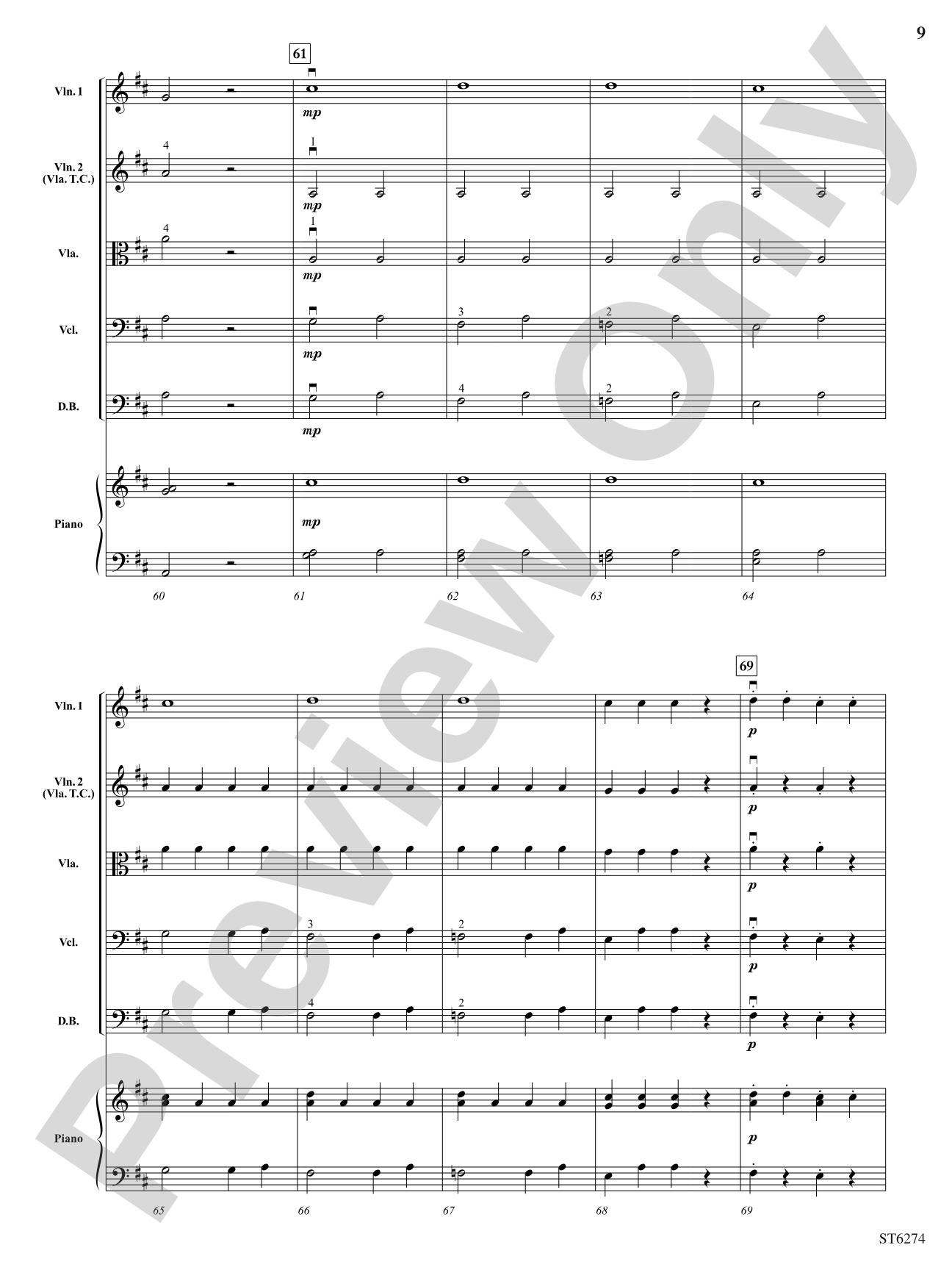
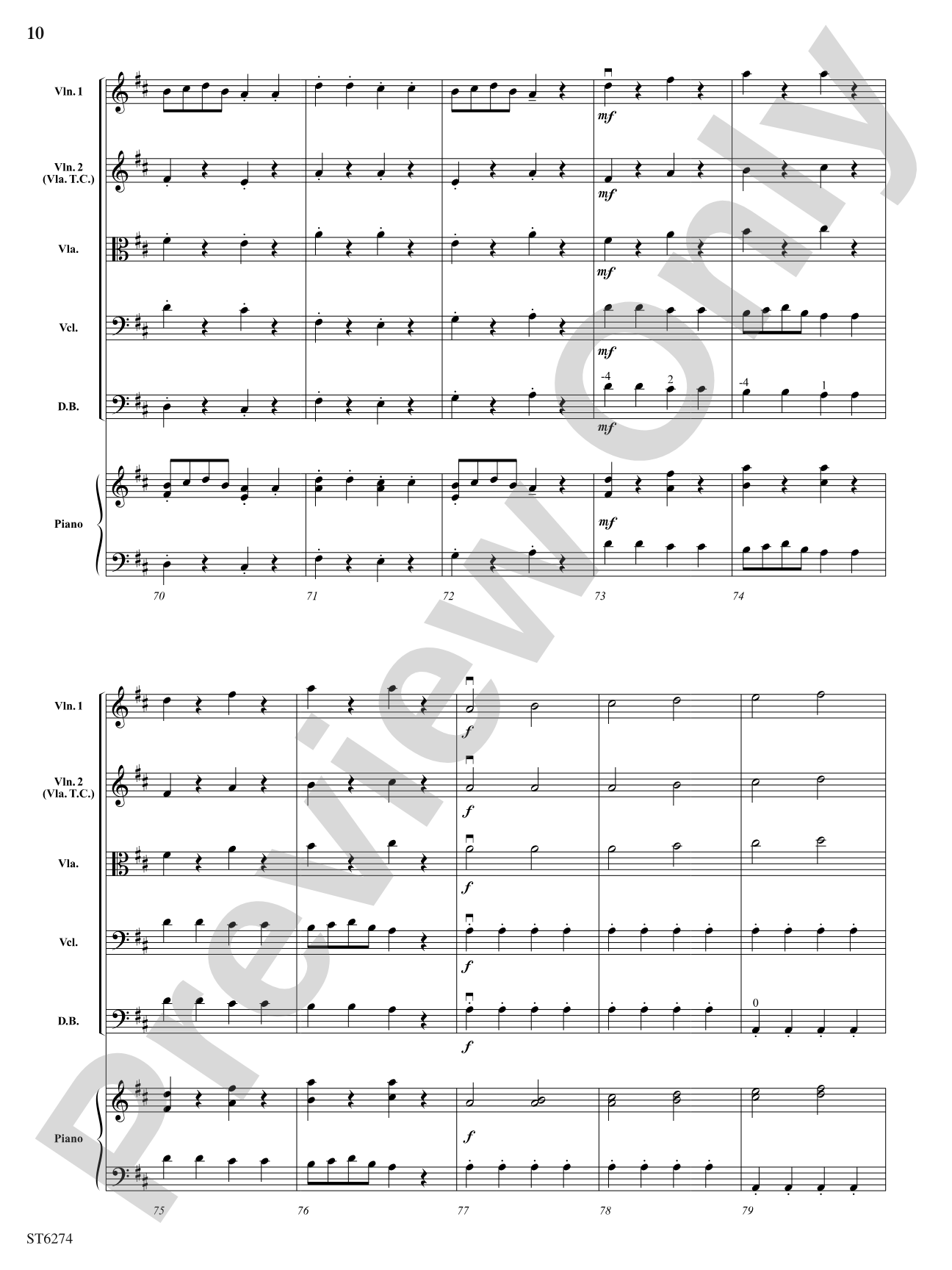
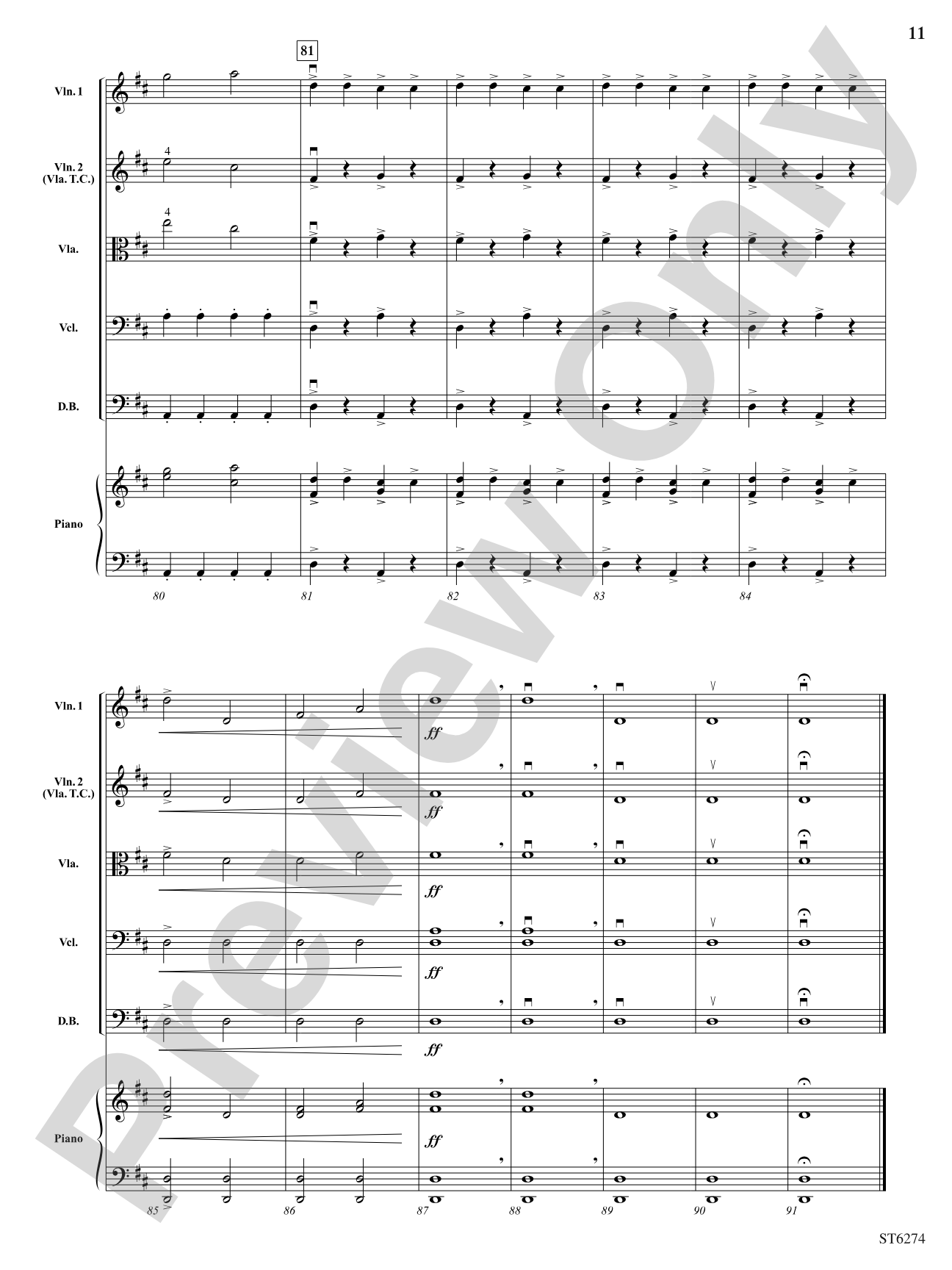

Finale from Serenade for Strings: String Orchestra Conductor Score & Parts
Arranged by Carrie Lane Gruselle
Grade: 1.5
Item: 98-DST6274

$55.00
Pickup currently not available
Buy Extra Parts (Digital PDF Download)
Parts Added to Cart!
Description
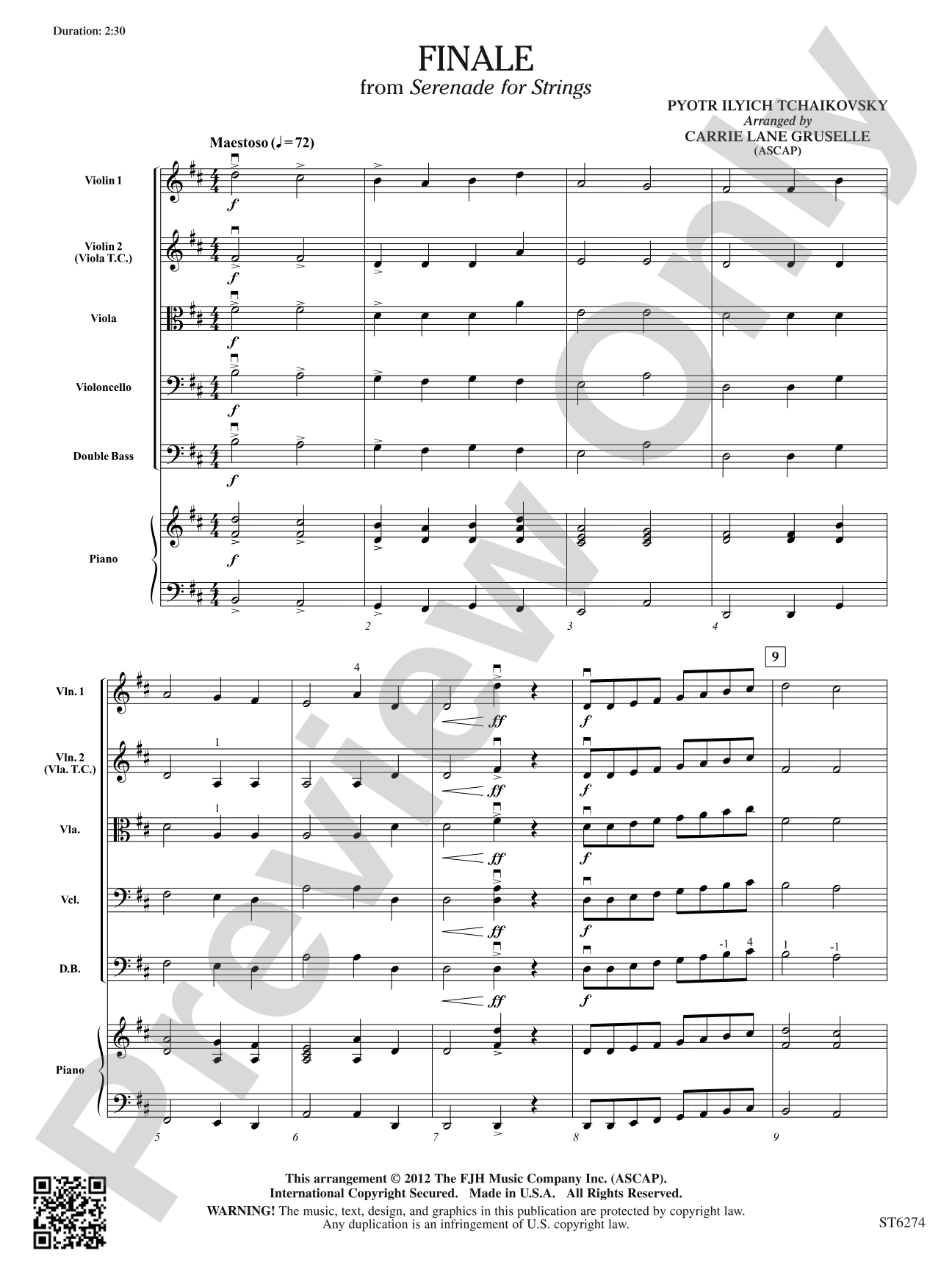
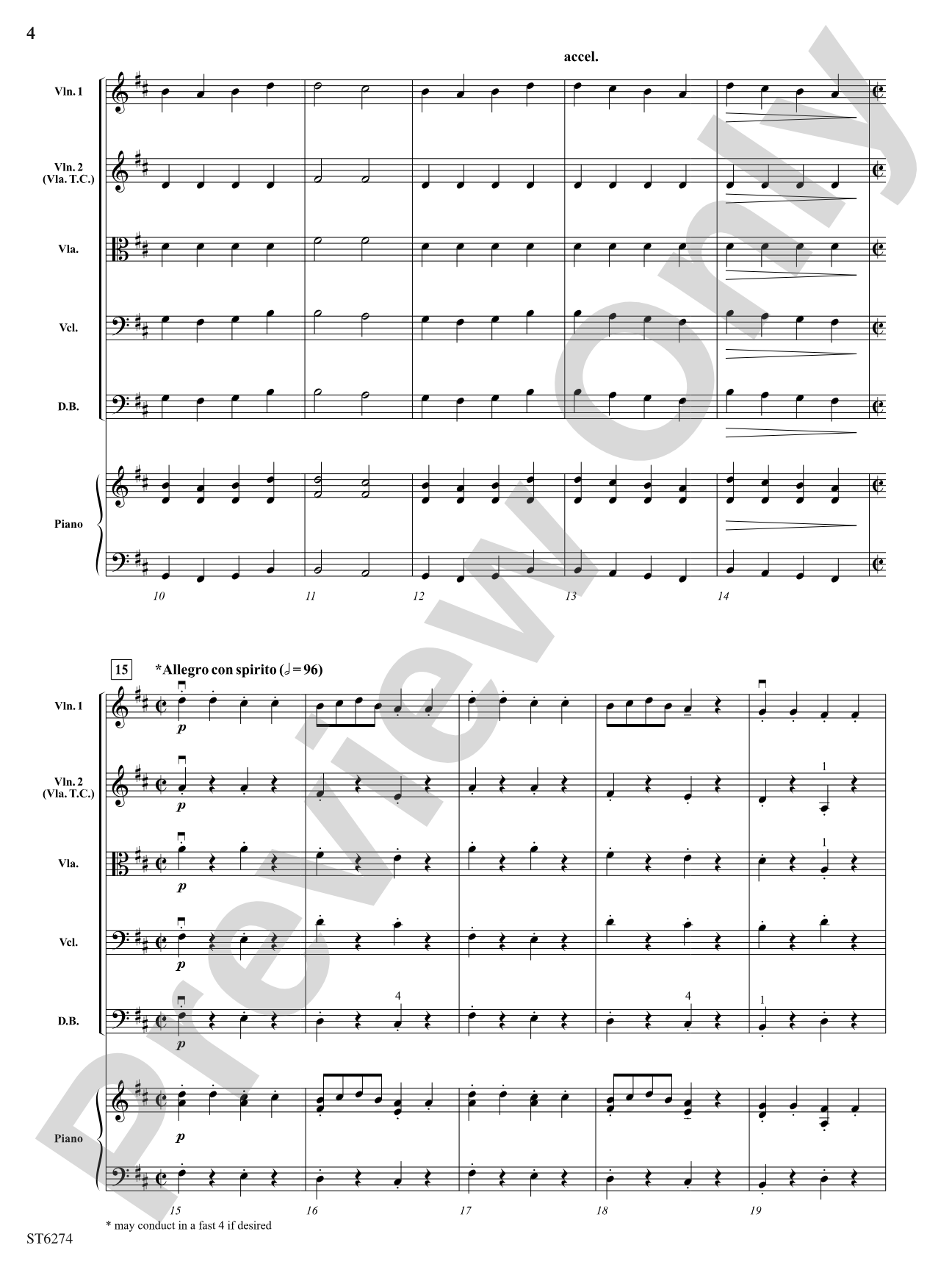
This stunning arrangement truly captures the essence of Tchaikovsky's Serenade for Strings. Featuring the last movement, the work begins with a grand and legato Maestoso, which is then followed by the light and energized Allegro con spirito. Directors can use this as an introduction to cut-time or stay in a quick 4/4 depending on student ability. Fabulous!


Don't just read it, hear it, play along with it, and watch your students grow with it. In MakeMusic Cloud, Finale from Serenade for Strings: String Orchestra Conductor Score & Parts comes alive with professional accompaniment, adjustable tempo, and built-in practice tools that turn solo practice into real progress.
Open in the Player
Jump straight in and assign it today.
Start Your Free Trial
Open this title and explore the full library in minutes.
Sample Audio
1
Audio File
--:--
0:00
0:00
Sample Video
No sample videos found.
Additional Details
Series:
FJH Beginning Strings
Publisher:
The FJH Music Company, Inc.
SKU:
98-DST6274
More about this title
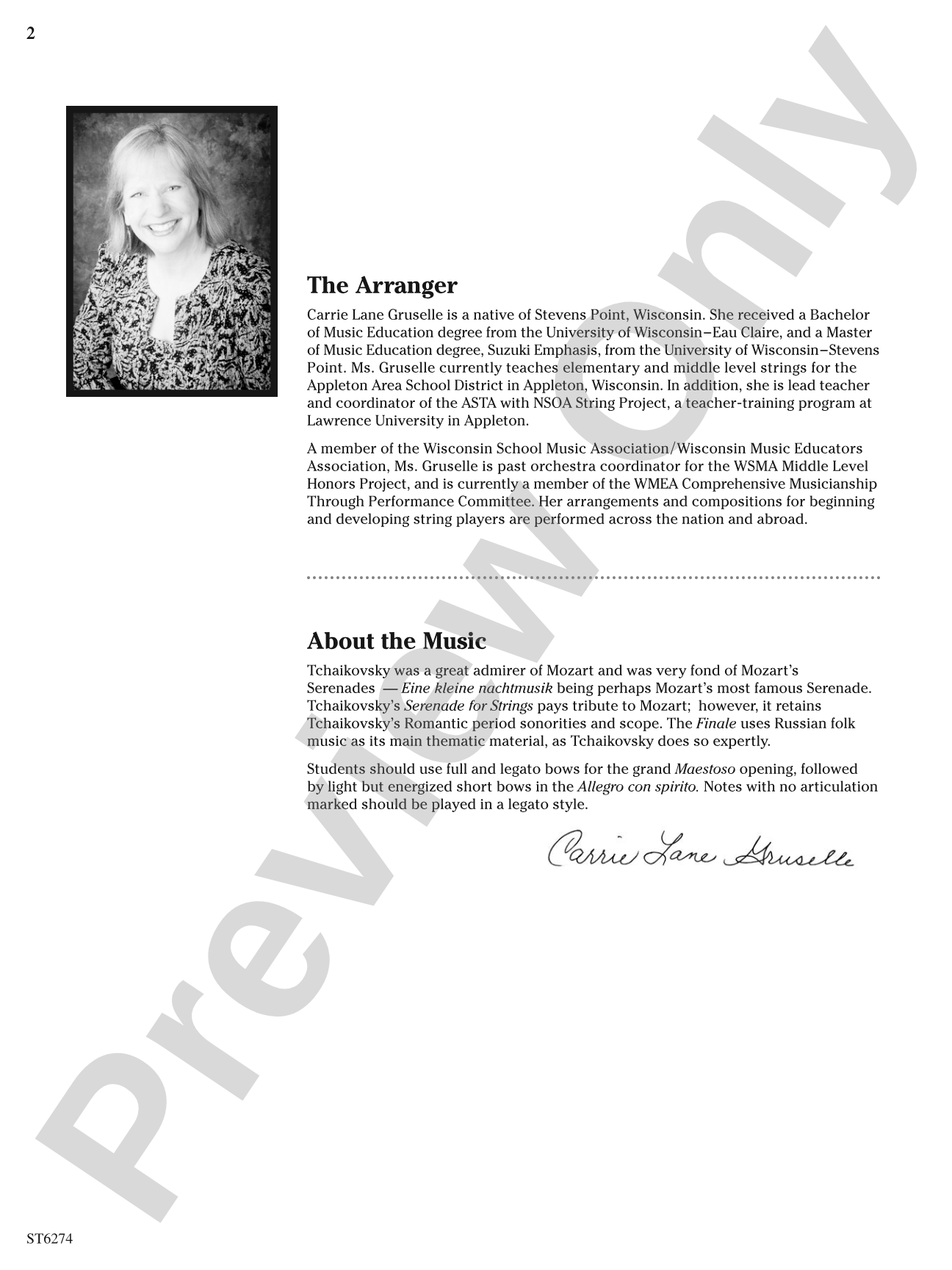
About the Arranger: Carrie Lane Gruselle

Carrie Lane Gruselle earned her Bachelor of Music Education from the University of Wisconsin–Eau Claire and continued her studies at the University of Wisconsin–Stevens Point, where she completed a Master's degree in Music Education with a focus on Suzuki pedagogy. She has taught elementary and middle school strings in the Appleton Area School District while also serving as cello instructor for the Lawrence University Arts Academy.
Why we love this
Gruselle's arrangement respects Tchaikovsky's soaring melodies while scaling the technical demands to genuine Grade 1.5 students. The flexibility to interpret the transition between movements in either cut-time or 4/4 gives conductors real agency based on their ensemble's comfort level, making this both pedagogically smart and artistically satisfying.
What to expect
Grand yet accessible, the Maestoso draws you in with warm, singing lines that feel almost operatic in their breadth. The shift to Allegro con spirito is pure musical joy, buoyant and propulsive, inviting players to discover the rhythmic vitality that lies within their still-developing technical abilities.
Who it's for
String orchestra directors working with students in their first or second years of ensemble experience who are ready to explore genuine masterwork repertoire without overwhelming technical demands. This is also ideal for conductors preparing students for festival or contest performance at the early intermediate level.
How to get the most out of it
- Balance the legato writing in the Maestoso by encouraging consistent bow contact; younger players often rush or lighten the bow in longer note values, which undermines the grandeur of the opening.
- If your section is strong enough for cut-time, use it to streamline the Allegro con spirito and heighten the sense of forward momentum; if 4/4 feels more secure, the energy remains intact and intonation typically improves.
- Lock the rhythmic pulse between violas and cellos in the faster section; this gives your upper strings confidence to shape phrases rather than just counting beats.
- Shape the dynamic arch of the Maestoso over several measures rather than stepping up suddenly; think of it as one long musical gesture that sets the stage for the spirited finale.
How to use it
Program this as a centerpiece in a concert that celebrates how young orchestras can tackle the classical canon with dignity. Its two-movement structure makes it work well alongside shorter contemporary pieces or allows it to stand alone as the substantial work on a spring concert.
Skills your students will build
- Sustaining long, focused legato lines with consistent tone quality
- Reading and conducting (or interpreting) cut-time signatures versus 4/4 in the same passage
- Coordinating independent rhythmic lines between sections, especially in faster passages
- Shaping dynamic architecture across several measures rather than phrase-by-phrase
- Playing with confidence in standard orchestra voicings (SATB string distribution)