Finale - From <i>The Barber of Seville</i>: 2nd E-flat Alto Saxophone Sheet Music Preview

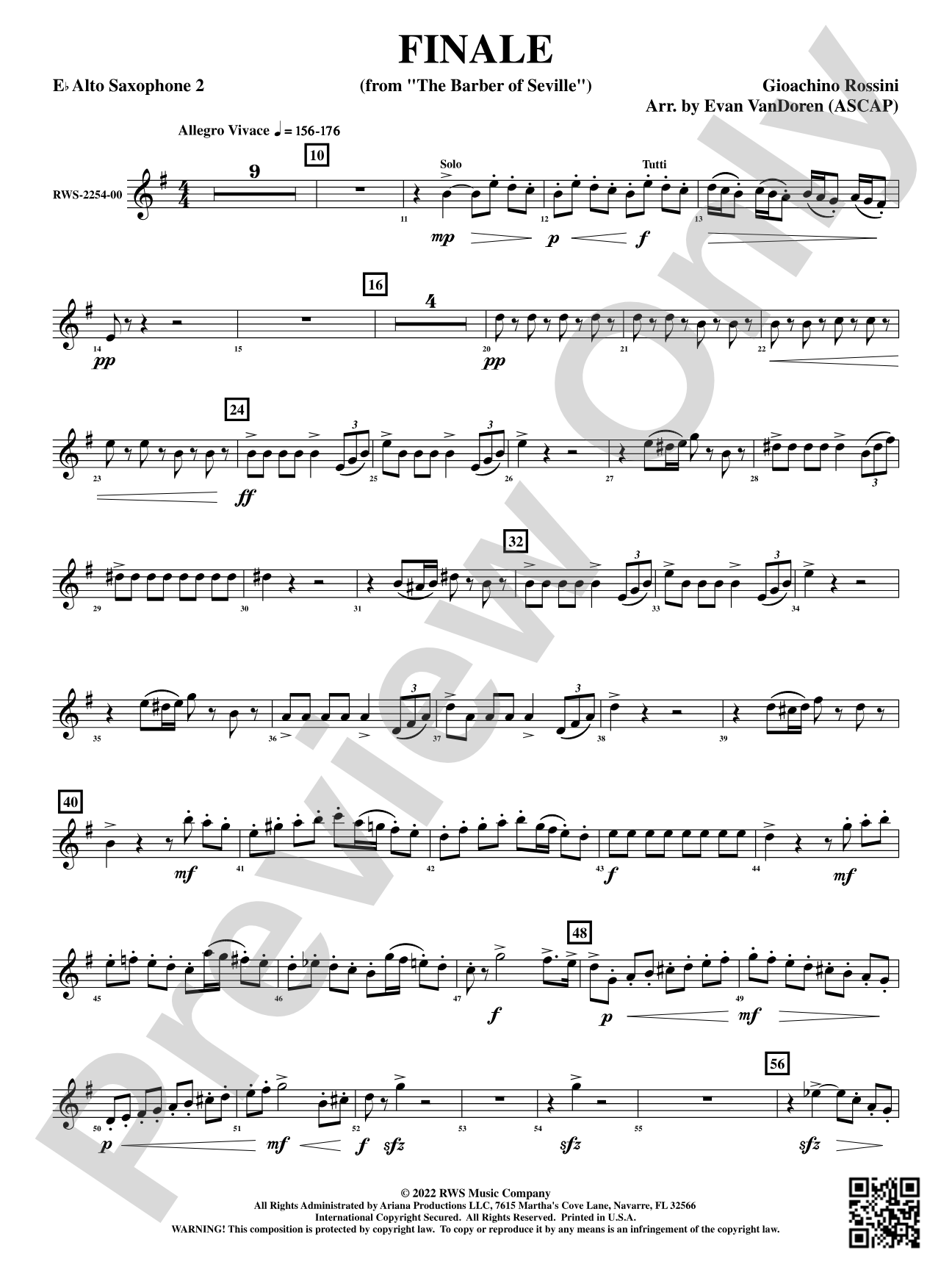
Finale - From The Barber of Seville: 2nd E-flat Alto Saxophone

From The Barber of Seville

By Gioachino Rossini / arr. Evan VanDoren

Grade: 4

Item: 98-PC-RWS2254_AX2

Digital Download
$3.99
Description
Based on the Rossini opera, Evan VanDoren's arrangement for woodwind ensemble is an excellent addition to your solo and ensemble catalog! This work is fun to play, accessible for high school musicians, and has a very recognizable melody. This beautiful and exciting arrangement for woodwind ensemble brings a new perspective to one of our world's most recognized musical scores. Highly recommended!

Original Item#: RWS-2254-00

Finale - From The Barber of Seville: 2nd E-flat Alto Saxophone isn't in MakeMusic Cloud just yet...but it could be. Let us know you'd like to see it, and you'll help shape what comes next. In the meantime, start a free trial and dive into thousands of interactive titles your students can play along with today.

Sample Audio
0:00
0:00
Sample Video
Additional Details
Series: RWS - Festival Ensemble
Publisher: RWS Music Company
SKU: 98-PC-RWS2254_AX2

More about this title

About the Composer: Gioachino Rossini

Gioachino Rossini (1792-1868) composed some of the most performed operas in history, earning a reputation for melodic brilliance and theatrical flair that few composers have matched. His gift for writing instantly memorable themes and comic situations made him a dominant force in early 19th-century opera, and his music continues to anchor repertoires worldwide because of its unfailing musicality and performance vitality.

For music educators, Rossini's music offers a rare combination of accessibility and sophistication. The melodies are straightforward enough for students to grasp immediately, yet the harmonic language and orchestration demand real musical maturity to execute well. Teaching through Rossini rewards both careful attention to style and genuine ensemble listening.

Why we love this

VanDoren's arrangement captures the theatrical energy and singable melodic brilliance that made the Barber overture a concert standard, while crafting an arrangement that sits perfectly in the woodwind ensemble range and technical world. The piece succeeds because it doesn't diminish Rossini's material; instead, it finds the essential character of the finale and lets your ensemble own it without apology.

What to expect

Exuberant and theatrical, with the unmistakable tunefulness that makes Rossini an audience favorite. The music bounces with rhythmic energy and comic vitality; your ensemble will feel the forward propulsion and infectious joy that defined the original opera.

Who it's for

High school woodwind ensembles looking for a piece with genuine musical substance and recognized melodic appeal. This arrangement works equally well for solo and ensemble festival contexts, where judges and audiences both respond to familiar material played with conviction.

How to get the most out of it

  • Establish a clear harmonic foundation in the lower woodwinds (bassoons, bass clarinet if available) so the principal melodic lines can sing over solid support.
  • Shape the phrases with real forward motion and intent; this music thrives on rhythmic vitality and clarity of articulation.
  • Balance the key signature carefully if you're in a sharp key; intonation tuning at sectional rehearsals will pay immediate dividends.
  • Attend to the orchestration cues in the score so that the color shifts between sections feel intentional rather than accidental.

How to use it

Program this as a closer to a concert or festival set, where its energy and recognizable melodic signature can send an audience out smiling. It also pairs well on a concert with other accessible, melodically rich repertoire from the Romantic era.

Skills your students will build

  • Balancing transparent harmonic textures across woodwind ranges
  • Shaping lyrical phrases with rhythmic precision
  • Executing Rossinian articulation and phrasing conventions
  • Reading multiple moving parts while maintaining ensemble cohesion
  • Intonation awareness in sharp key signatures

You May Also Like