
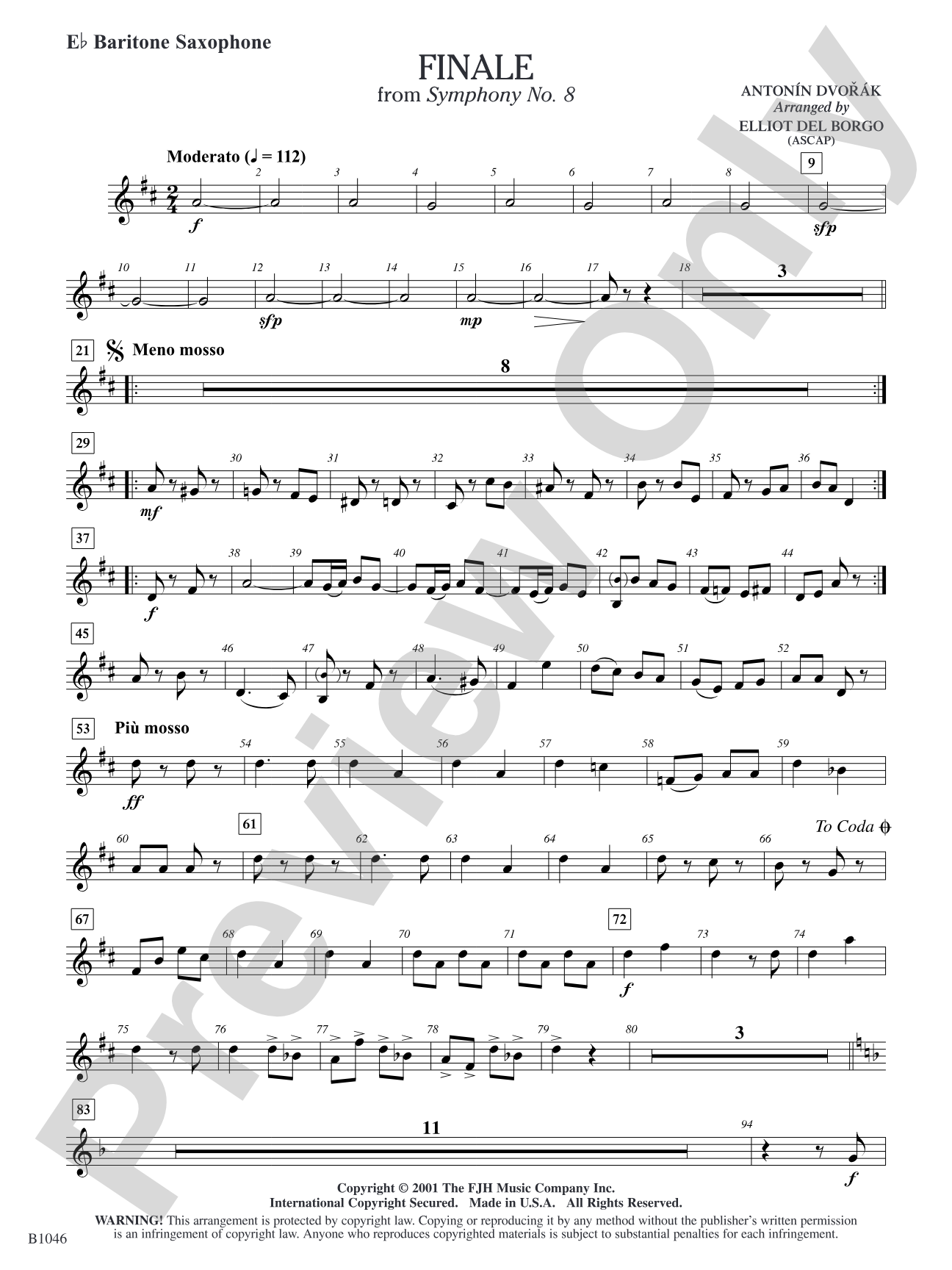

Finale from Dvorák's Symphony No. 8: E-flat Baritone Saxophone
By Antonín Dvorák / arr. Elliot Del Borgo
Grade: 4
Item: 98-PC-DB1046_BTX
$7.00
Pickup currently not available
Description
Expose your students to classic literature from the romantic period in this exceptional arrangement by Elliot Del Borgo. It captures the power and excitement of the original orchestral version, remaining true to the style and intent of the composer. An excellent choice for medium-level bands. (4:50)


Finale from Dvorák's Symphony No. 8: E-flat Baritone Saxophone isn't in MakeMusic Cloud just yet...but it could be. Let us know you'd like to see it, and you'll help shape what comes next. In the meantime, start a free trial and dive into thousands of interactive titles your students can play along with today.
Request This Title
Tell us you want it.
Start Your Free Trial
Explore everything that's ready to play right now.
Sample Audio
1
Audio File
--:--
0:00
0:00
Sample Video
No sample videos found.
Additional Details
Series:
FJH Masterworks for Concert Band
Publisher:
The FJH Music Company, Inc.
SKU:
98-PC-DB1046_BTX
More about this title
About the Composer: Antonín Dvorák
Antonín Dvorák spent much of his career bridging European classical traditions with the musical language of his Czech homeland. His nine symphonies stand among the most performed works in the orchestral canon, each one marked by memorable melodies, rich harmonic color, and an orchestration that serves both drama and intimacy. The Eighth Symphony, composed in 1889, showcases Dvorák at his most confident, blending symphonic structure with the folk-inflected warmth that made his music accessible without sacrificing sophistication.
For American music educators, Dvorák represents an essential bridge between the Romantic era's grand gestures and the musical nationalism that gave voice to composers outside the German-Italian axis. His works appear frequently in concert band arrangements precisely because their strengths, lyrical writing, clear formal architecture, and emotional directness, translate beautifully to student ensembles.
Why we love this
Del Borgo's arrangement respects the orchestral integrity of the original while making smart choices about which voices carry the primary material and where doublings strengthen the band sound. The four-and-a-half minute timeframe keeps energy high without feeling rushed, and the piece lands solidly in the Grade 4 range where students have the technical foundation to shape phrases without wrestling with notation.
What to expect
The Eighth Symphony's finale pulses with forward momentum and lyrical generosity. Themes tumble over one another in a kind of joyful assertion, the orchestration warm and full without ever feeling dense. There's a confidence in Dvorák's writing here that's genuinely contagious; students sense they're playing something substantial.
Who it's for
This works for Grade 4 bands that have solid fundamentals and enough rehearsal time to attend to musical detail. It serves equally well for a first exposure to symphonic literature or as a centerpiece concert selection when you need something that audiences recognize and students find genuinely rewarding to perform.
How to get the most out of it
- Balance the dialogue between melodic sections and accompaniment figures. The Romantic era thrived on this textural conversation, and students need to hear how supporting voices shape the harmonic color rather than simply filling in harmony.
- Shape the opening theme with enough lyrical weight that it can breathe. Dvorák's melodies ask for vocal-quality phrasing; resist the urge to rush through perfect rhythmic alignment at the expense of line.
- Watch for the key area around measure [check score] where the tempo might want to ease slightly before the final push. This is a conducting moment, not a printed one, and it separates competent renditions from ones that feel inevitable.
- Let the brass have clarity in the fortissimo sections without allowing them to overpower the ensemble's overall balance. Romantic scoring often stacks brass heavily, and student sections can easily overwhelm the surrounding parts.
How to use it
Program this alongside American nationalist works or other Romantic-era arrangements to give students context for how composers across Europe were drawing on folk tradition and national identity during the same period. Alternatively, use it as your closing selection on a concert featuring arrangements that build in dramatic intensity; its structural clarity and brilliant finale give it real closing power.
Skills your students will build
- Sustaining lyrical lines across multiple phrases without sacrificing rhythmic precision
- Balancing accompanimental texture against melody in a multi-voice ensemble setting
- Responding to conducting refinements that aren't notated (tempo flexibility, textural balance, phrase shaping)
- Reading and performing idiomatic Romantic-era writing with appropriate harmonic awareness
- Managing dynamic contrast across sections in fuller orchestrations