
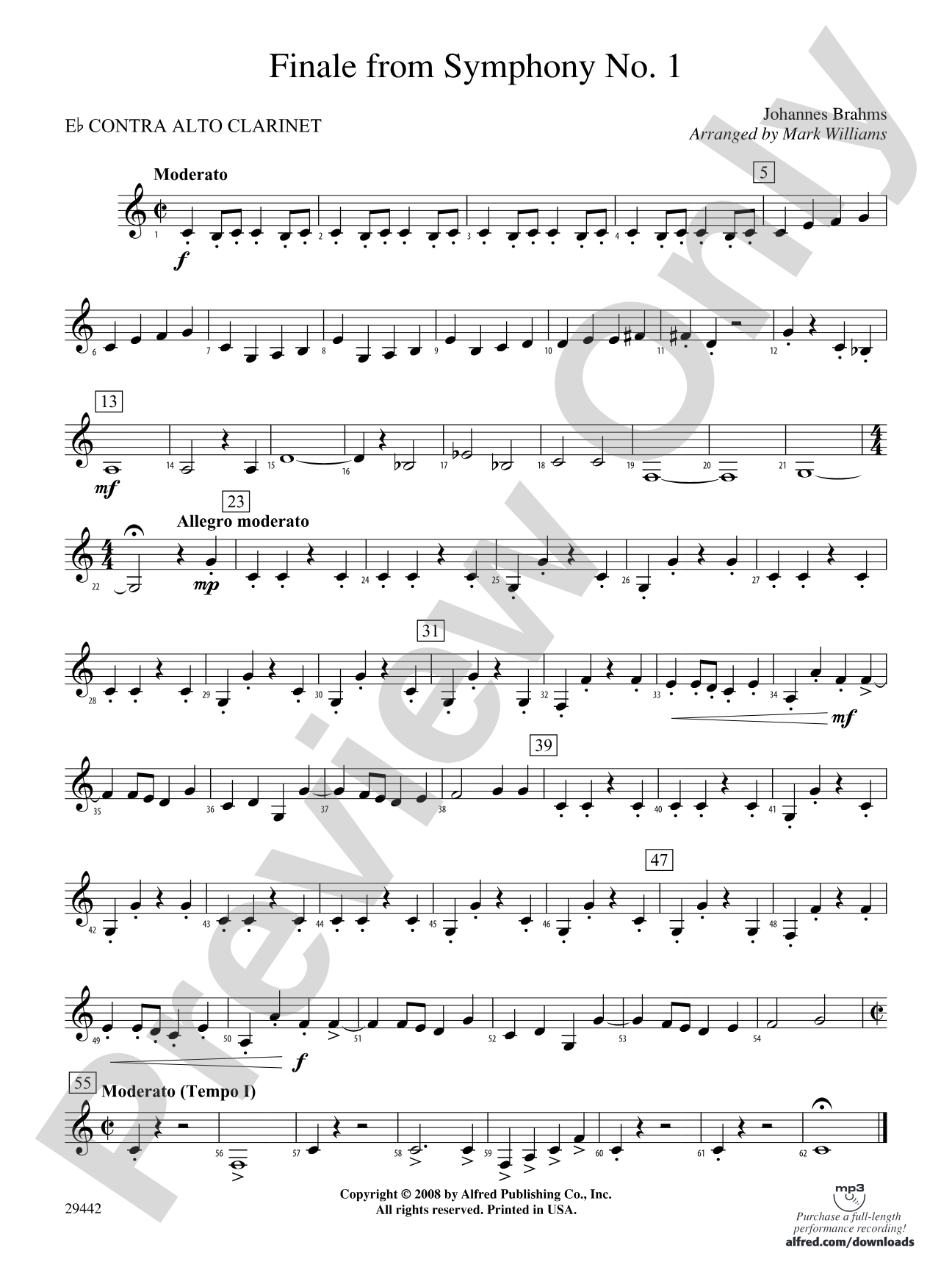

Finale from Brahms's Symphony No. 1: (wp) E-flat Contrabass Clarinet
By Johannes Brahms / arr. Mark Williams
Grade: 1.5 (Easy)
Item: 00-PC-0001399_wpECBC
$3.00
Pickup currently not available
Description
This easy arrangement from one of the most popular symphonies of all time remains remarkably faithful to the spirit of the original. Starting with a rousing cut-time intro, it moves through a beautiful chorale section to the famous lyric theme, which leads to its ultimate conclusion in a return of the opening music. A great introduction to the works of Brahms. (2:00)
Correlated with Accent on Achievement, Book 2, page 28.


Correlated with Accent on Achievement, Book 2, page 28.
Don't just read it, hear it, play along with it, and watch your students grow with it. In MakeMusic Cloud, Finale from Brahms's Symphony No. 1: (wp) E-flat Contrabass Clarinet comes alive with professional accompaniment, adjustable tempo, and built-in practice tools that turn solo practice into real progress.
Open in the Player
Jump straight in and assign it today.
Start Your Free Trial
Open this title and explore the full library in minutes.
Sample Audio
1
Audio File
--:--
0:00
0:00
Sample Video
No sample videos found.
Additional Details
Series:
Accent on Achievement
Publisher:
Alfred Music
Page Count:
122
SKU:
00-PC-0001399_wpECBC
More about this title
About the Composer: Johannes Brahms
Johannes Brahms (1833-1897) stands as one of the most significant composers of the Romantic era, bridging the worlds of classical form and emotional intensity. His symphonies remain cornerstones of the concert repertoire, and his music has shaped music education for generations. Brahms's careful craftsmanship and structural clarity make his works ideal models for student musicians learning to recognize how great composers balance melody, harmony, and architecture.
For band directors, Brahms's symphonic language offers students a direct encounter with masterworks they will recognize and respect. This arrangement opens that door without requiring advanced technical facility, allowing young musicians to grasp how a major work actually sounds and feels.
Why we love this
Mark Williams's arrangement captures the essential drama and melodic beauty of Brahms without sacrificing the original's architectural sweep. At Grade 1.5, students actually get to experience the real structure of the finale—the cut-time opening, the chorale, the famous soaring theme—rather than a simplified echo. Your band will feel the weight and satisfaction of playing something genuine.
What to expect
The opening crashes in with ceremonial vigor, all cut-time momentum and brass brilliance. Then the music turns inward, settling into a warm chorale that feels like you're eavesdropping on intimate conversation. When the soaring lyric theme arrives, it carries real emotional weight, the kind of melody that stays with listeners long after the concert ends. The return to the opening material feels both satisfying and inevitable, bringing everything full circle.
Who it's for
Concert bands at the Grade 1.5 level who want to program a masterwork without extensive rehearsal demands. Directors seeking repertoire that builds student confidence and respect for classical symphonic tradition will find this arrangement exceptionally useful. It works especially well for groups correlated with Accent on Achievement Book 2 and bands preparing for concert or festival performance.
How to get the most out of it
- Shape the cut-time opening with clear articulation and rhythmic precision. The energy needs to feel inevitable, not rushed; let the tempo breathe even as the band leans forward.
- Bring out the chorale section with warm, singing tone quality across all sections. This passage should sound like genuine voices in conversation, not mechanical transitions.
- Feature the lyric theme as the emotional heart of the piece. Balance your dynamics so that this melody soars without drowning supporting lines; consider letting principal players lead and shape this moment.
How to use it
This works beautifully as a centerpiece in a concert celebrating Romantic composers or as an accessible entry point to Brahms for audiences unfamiliar with symphonic literature. It pairs well with lighter works or contemporary pieces, offering ballast and gravitas without overwhelming younger ensembles. Festival programs benefit from including a masterwork arrangement; this one demonstrates that Grade 1.5 bands can tackle substantial repertoire with musical maturity.
Skills your students will build
- Recognizing and maintaining cut-time meter within a fast tempo
- Balancing lyric melody with harmonic accompaniment
- Executing dynamic control across extended phrases
- Understanding large-scale musical form (exposition of themes leading to return)
- Responding to sectional writing that requires both tutti blend and principal prominence