Fifty Ways To Leave Your Lover Sheet Music Preview

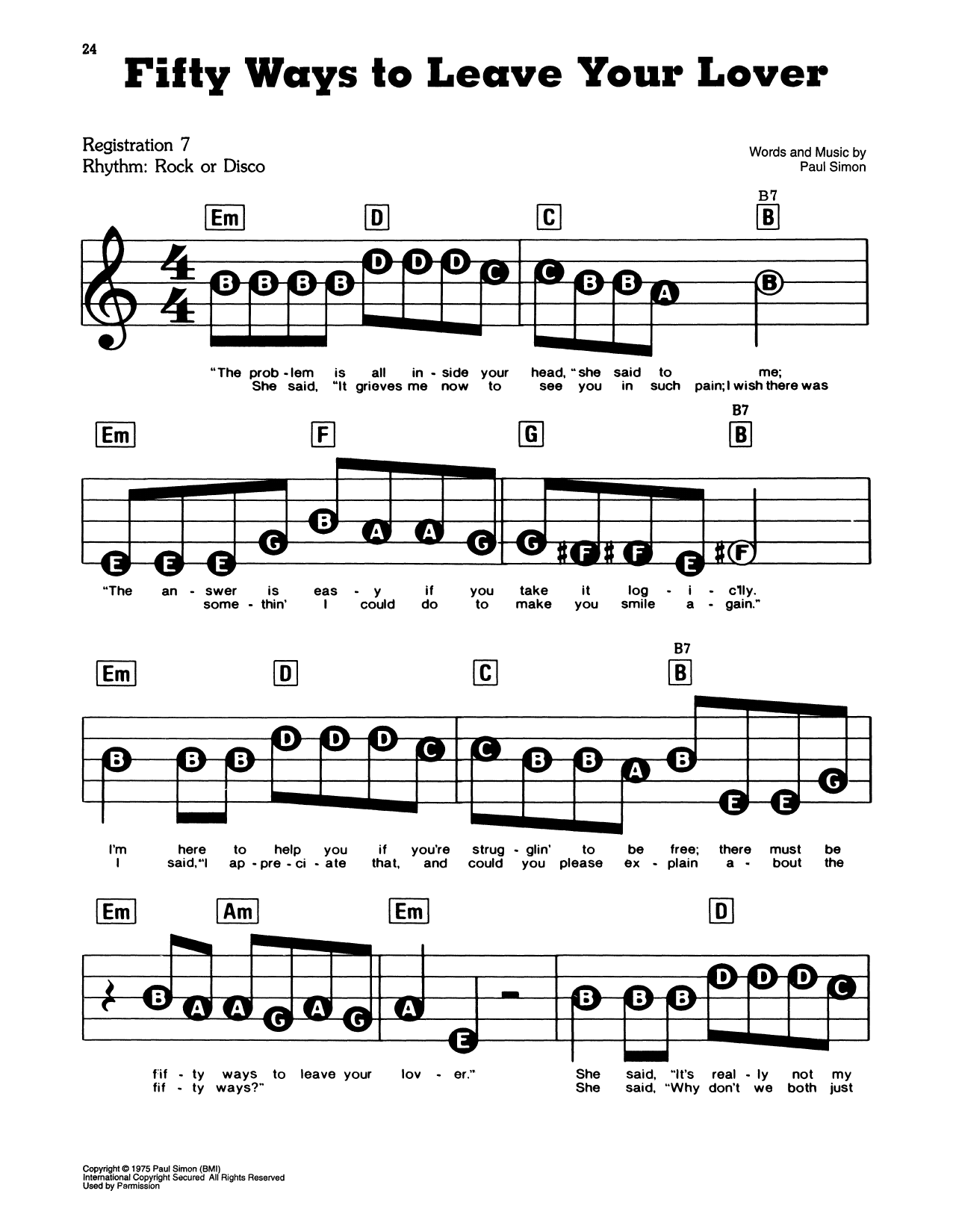
Fifty Ways To Leave Your Lover: E-Z Play Today

As performed by Paul Simon / As performed by Simon & Garfunkel

Item: 35-DS01320007

Digital Download
$4.99

One moment…

Description

Fifty Ways To Leave Your Lover: E-Z Play Today isn't in MakeMusic Cloud just yet...but it could be. Let us know you'd like to see it, and you'll help shape what comes next. In the meantime, start a free trial and dive into thousands of interactive titles your students can play along with today.

Sample Audio
No sample audio found.
Sample Video
Additional Details
Publisher: Hal Leonard
Page Count: 3
SKU: 35-DS01320007

More about this title

About the Artist: Paul Simon

Paul Simon stands as one of the most influential songwriters in American popular music, known for his sophisticated harmonic sensibilities and wry, observational lyrics. As the primary creative force behind Simon & Garfunkel and in his solo career, he consistently brought jazz-inflected chord progressions and unexpected melodic turns to mainstream audiences, proving that commercial success and musical craft need not be mutually exclusive.

Why we love this

This arrangement captures the infectious groove and conversational charm of Simon's original without sacrificing musicality. The three-page format keeps things accessible while preserving the clever harmonic moves that made the song endure, giving students a genuine classic they'll recognize and enjoy learning.

What to expect

Clever and propulsive, with a conversational quality that mirrors Simon's deadpan delivery. The tune sits naturally under the fingers and invites a light, almost jazzy touch rather than grand gestures.

Who it's for

Pianists seeking accessible pop repertoire with real musical substance will find this arrangement rewarding. It works well for students building confidence in groove-based playing and for adult learners who want to learn songs they actually know.

How to get the most out of it

  • Keep the rhythm section tight and relaxed; this song thrives on pocket playing rather than mechanical precision.
  • Balance the melody so it sits naturally against the accompaniment, avoiding the trap of oversinging what's already a hook-driven tune.
  • Pay close attention to any syncopation in the bass line or comping figures, as they anchor the groove that makes this track work.

How to use it

This fits naturally into a casual recital or student showcase where popular music holds its own against classical standards. It also works as a palate cleanser in a longer program, offering listeners a moment of contemporary wit and groove.

Skills your students will build

  • Reading pop and jazz chord changes
  • Maintaining a steady groove while playing melody
  • Voice leading through syncopated accompaniment patterns
  • Interpreting swing and shuffle feels in a pop context

You May Also Like