Fiesta Tropicale: 1st Percussion Sheet Music Preview

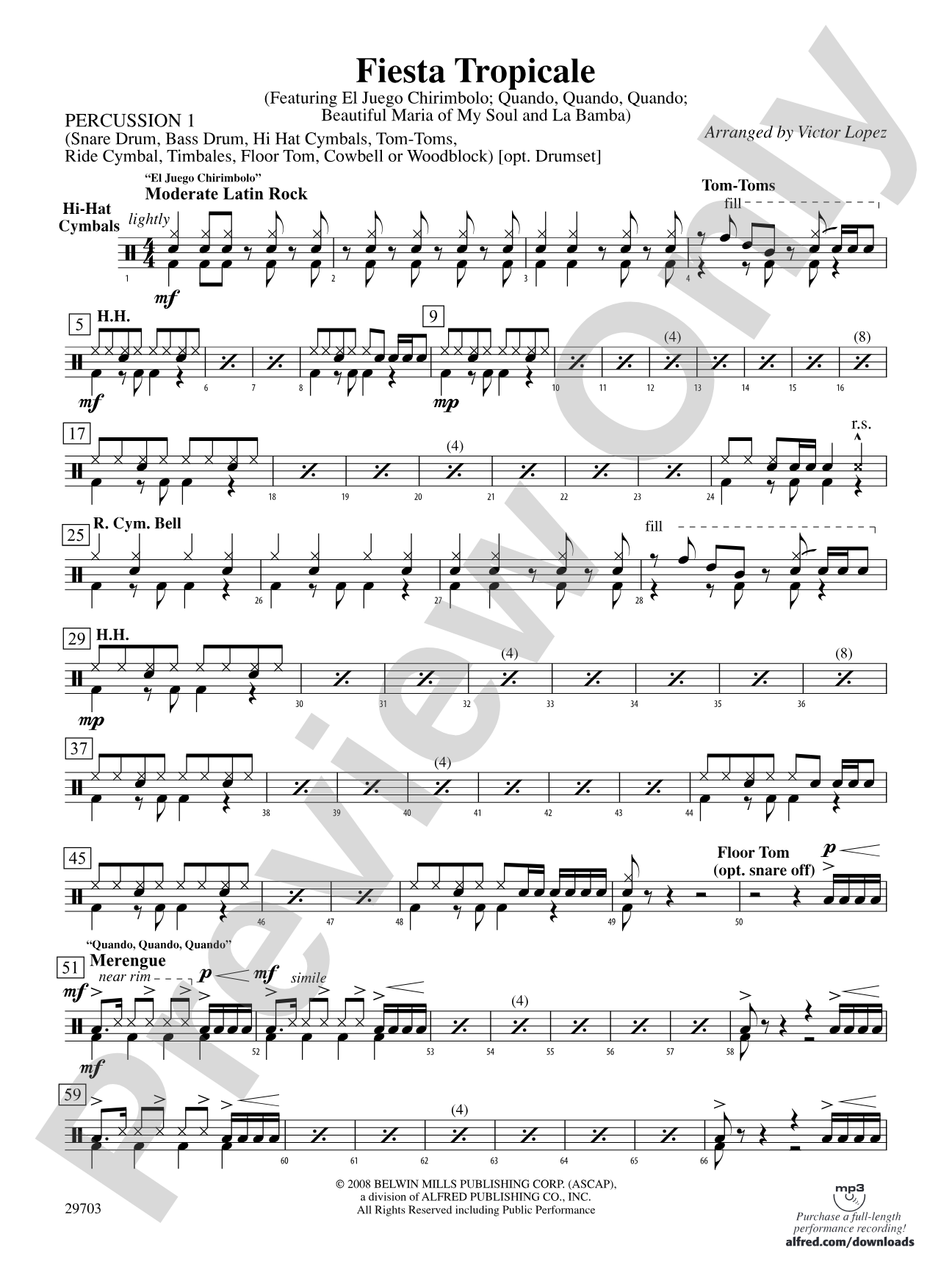
Fiesta Tropicale: 1st Percussion

Featuring: El Juego Chirimbolo / Quando, Quando, Quando / Beautiful Maria of My Soul / La Bamba

Arr. Victor López

Grade: 3

Item: 00-PC-0015715_PC1

Digital Download
$3.00
Description
If you are looking for high energy Latin sounds for your orchestra, this sizzling arrangement will do the trick. Feel the rhythm with this new rendition of "El Juego Chirimbolo," "Quando, Quando, Quando," "Beautiful Maria of My Soul" and "La Bamba." This arrangement integrates the salsa sounds of Latin rock, meringue and bolero. An excellent opportunity to introduce your students to authentic Latin rhythms with strings alone or any combination of winds. (5:00)

Don't just read it, hear it, play along with it, and watch your students grow with it. In MakeMusic Cloud, Fiesta Tropicale: 1st Percussion comes alive with professional accompaniment, adjustable tempo, and built-in practice tools that turn solo practice into real progress.

Sample Audio
0:00
0:00
Sample Video
Additional Details
Series: Pop Intermediate String/Full Orchestra
Publisher: Alfred Music
Page Count: 258
SKU: 00-PC-0015715_PC1

More about this title

About the Arranger: Victor Lopez

Victor Lopez is a prolific arranger and composer with deep expertise in adapting popular and world music for educational ensembles. His arrangements span Latin jazz, pop, Broadway, and global styles, making him a trusted voice for directors seeking authentic yet accessible multicultural repertoire.

Why we love this

Lopez captures the infectious energy of Latin styles without sacrificing musicality or playability at Grade 3. The mix of four beloved melodies keeps students engaged while the flexible instrumentation (strings alone or with winds) lets you customize based on your ensemble's strengths, making this arrangement genuinely useful for building Latin music literacy across multiple lineups.

What to expect

From the opening clave rhythms through the layers of salsa, meringue, and bolero, Fiesta Tropicale radiates warmth and infectious joy. The arrangement breathes like a real dance ensemble, with moments of sultry elegance punctuating the faster sections, creating a five-minute journey through genuine Latin musical traditions.

Who it's for

This arrangement works beautifully for Grade 3 orchestras seeking authentic Latin material that doesn't require advanced rhythmic reading or technical facility. It's equally suited to directors building cultural awareness through world music and those simply looking for a high-energy showpiece that engages both performers and audiences.

How to get the most out of it

  • Isolate the clave rhythm in rehearsal before layering melodic lines. Have rhythm section tap the fundamental pattern while the rest of the orchestra enters, building confidence in the foundational pulse.
  • Shape the bolero sections with legit dynamic control. These moments contrast sharply with the high-energy salsa passages, so mark clear decrescendi and crescendi in the parts to avoid flattening the emotional arc.
  • Balance the horn and saxophone lines in the meringue sections carefully. These colors carry essential rhythmic character, but can easily overwhelm the strings if the wind parts are played too loud.
  • Record a run-through at performance tempo and listen back for clarity in fast passage work. Sixteenth-note figures in the string parts need precision, particularly when doubled across multiple sections.

How to use it

Position this as your spring concert opener or finale to establish an energetic, celebratory mood. It pairs well alongside other world music selections or pop arrangements as part of a thematic concert exploring multicultural sounds, and works equally effectively as a standalone feature showcasing your orchestra's rhythmic confidence.

Skills your students will build

  • Latin rhythmic vocabulary (clave, habanera, montuno patterns)
  • Reading and performing syncopated melodic lines in salsa and meringue contexts
  • Balancing color and rhythm across winds and strings in ensemble writing
  • Maintaining steady subdivision while layering contrasting rhythmic motifs
  • Interpreting stylistically appropriate articulation and phrasing in Latin idioms

You May Also Like