
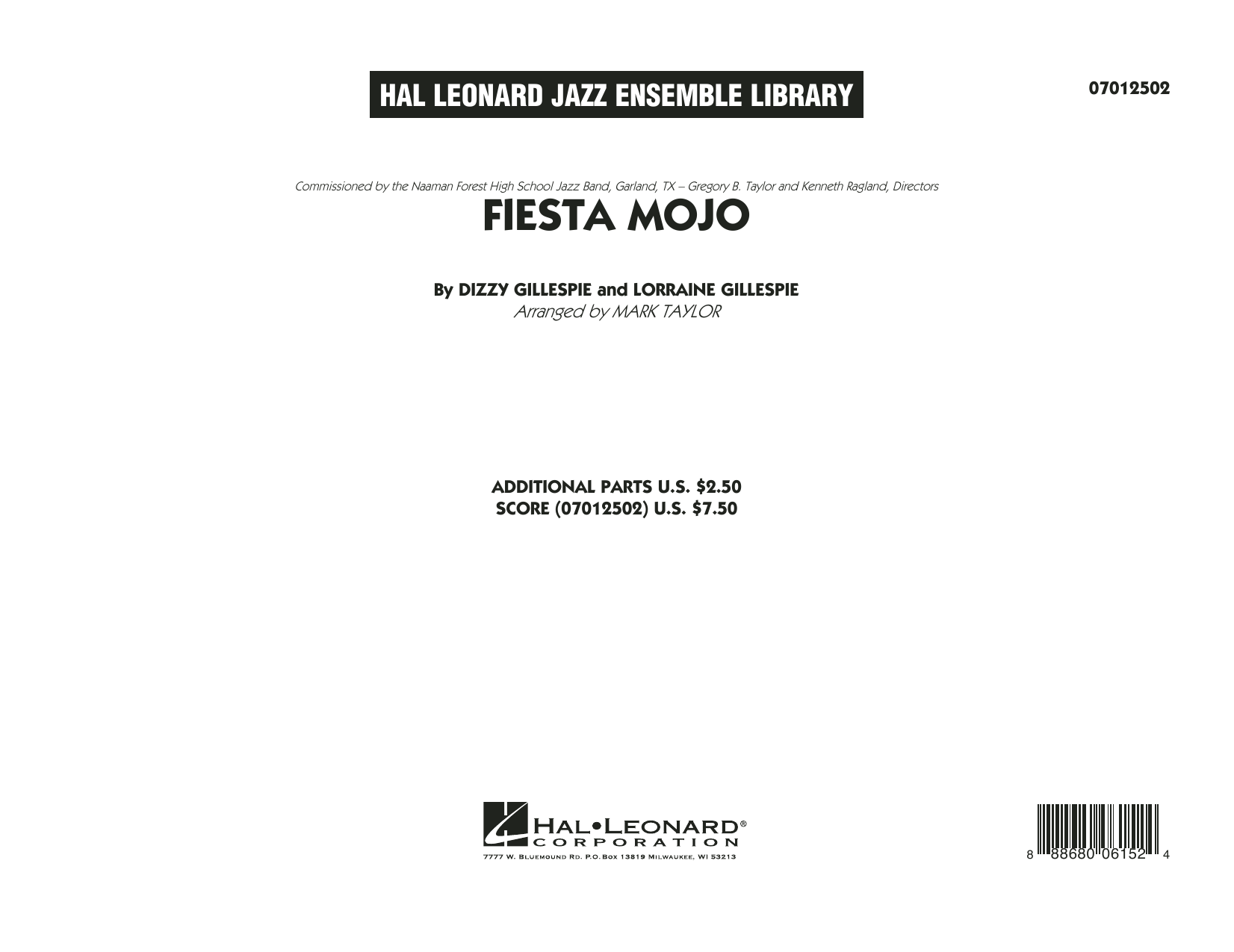

Fiesta Mojo: Jazz Ensemble Conductor Score & Parts
As performed by Dizzy Gillespie / Arranged by Mark Taylor
Grade: 4
Item: 35-PK00313789
$55.00
Pickup currently not available
Buy Extra Parts (Digital PDF Download)
| Product | Price | Quantity |
|---|---|---|
| Fiesta Mojo - Conductor Score (Full Score) | $7.50 | |
| Fiesta Mojo - Alto Sax 1 | $6.00 | |
| Fiesta Mojo - Alto Sax 2 | $6.00 | |
| Fiesta Mojo - Tenor Sax 1 | $6.00 | |
| Fiesta Mojo - Tenor Sax 2 | $6.00 | |
| Fiesta Mojo - Baritone Sax | $6.00 | |
| Fiesta Mojo - Trumpet 1 | $6.00 | |
| Fiesta Mojo - Trumpet 2 | $6.00 | |
| Fiesta Mojo - Trumpet 3 | $6.00 | |
| Fiesta Mojo - Trumpet 4 | $6.00 | |
| Fiesta Mojo - Trombone 1 | $6.00 | |
| Fiesta Mojo - Trombone 2 | $6.00 | |
| Fiesta Mojo - Trombone 3 | $6.00 | |
| Fiesta Mojo - Trombone 4 | $6.00 | |
| Fiesta Mojo - Guitar | $6.00 | |
| Fiesta Mojo - Piano | $6.00 | |
| Fiesta Mojo - Bass | $6.00 | |
| Fiesta Mojo - Drums | $6.00 | |
| Fiesta Mojo - Vibes | $6.00 | |
| Fiesta Mojo - Flute | $6.00 | |
| Fiesta Mojo - C Solo Sheet | $6.00 | |
| Fiesta Mojo - Bb Solo Sheet | $6.00 | |
| Fiesta Mojo - Eb Solo Sheet | $6.00 | |
| Fiesta Mojo - Bass Clef Solo Sheet | $6.00 |
Parts Added to Cart!
Description
From Dizzy Gillespie's Afro-Cuban stylistic period, here is his delightfully infectious Fiesta Mojo set in a bouncy medium samba groove. A small group starts things off (including optional flute) supported by colorful muted brass figures. There are solo opportunities for tenor, trumpet, and alto, along with a soli for the saxes and a full band unison chorus helps to spice things up.


Fiesta Mojo: Jazz Ensemble Conductor Score & Parts isn't in MakeMusic Cloud just yet...but it could be. Let us know you'd like to see it, and you'll help shape what comes next. In the meantime, start a free trial and dive into thousands of interactive titles your students can play along with today.
Request This Title
Tell us you want it.
Start Your Free Trial
Explore everything that's ready to play right now.
Sample Audio
No sample audio found.
Sample Video
No sample videos found.
Additional Details
Publisher:
Hal Leonard
SKU:
35-PK00313789
More about this title
About the Artist: Dizzy Gillespie
Dizzy Gillespie revolutionized jazz trumpet and ensemble writing by fusing bebop's harmonic complexity with Afro-Cuban rhythmic language. His work in the late 1940s and 1950s established him as a fearless experimenter who refused to separate jazz innovation from cultural exploration, influencing generations of composers and arrangers to think beyond genre boundaries.
As an educator and bandleader, Gillespie championed accessible big band writing that never sacrificed sophistication. His compositions remain essential teaching tools because they demand musicianship while rewarding both players and audiences with infectious grooves and memorable melodic hooks.
Why we love this
Mark Taylor's arrangement captures the infectious energy of Gillespie's vision while building in smart pedagogical scaffolding: the opening small group texture invites clarity, the distributed solo opportunities prevent any player from feeling sidelined, and the sax soli and unison chorus sections provide high-impact moments that feel spontaneous rather than overdetermined. Grade 4 ensembles rarely get Latin charts this musically substantial.
What to expect
Fiesta Mojo bubbles with infectious warmth. The samba groove feels festive without becoming carnival pastiche; the sonorities are sophisticated yet joyful, built on the idea that complexity and accessibility aren't enemies. Once the soloists enter, the piece becomes a conversation between individuals and the ensemble, trading space and energy.
Who it's for
Jazz ensembles at the intermediate level who are ready for Latin vocabulary and collaborative soloing but don't yet need the harmonic density of harder bebop writing. Directors seeking a single Gillespie composition that showcases both his rhythmic innovation and his gift for writing singable ensemble lines will find this indispensable.
How to get the most out of it
- Keep the samba pulse elastic without dragging. The medium tempo should feel propulsive, not mechanical; let your rhythm section breathe into the groove rather than locking rigidly to the click.
- Shape the muted brass figures with dynamic precision. These colorful countermelodies can disappear if the voicing isn't crisp and the articulation isn't clean; they're the glue between sections.
- Build the unison chorus moment as a climax. After the solo space, the full band playing together should feel like a celebration of collective energy, not just a return to the head.
- Support your soloists with confident comping from the rhythm section. Whether it's tenor, trumpet, or alto taking a turn, the band's responsiveness to phrasing and space transforms a solo into a conversation.
How to use it
This works beautifully as an opener or closer on a jazz concert, especially alongside bebop standards or contemporary Latin jazz writing. It's also an excellent piece for a program exploring Gillespie's cross-cultural innovations, paired with lecture or listening that contextualizes the Afro-Cuban influence in 1950s modern jazz.
Skills your students will build
- Samba groove feel and the clave relationship between melody and rhythm section
- Comping responsiveness during solo passages
- Muted brass articulation and voicing clarity
- Call-and-response phrasing between soloists and ensemble
- Reading and executing syncopated Latin figures across ensemble parts