Fiesta Cha-Cha Sheet Music Preview

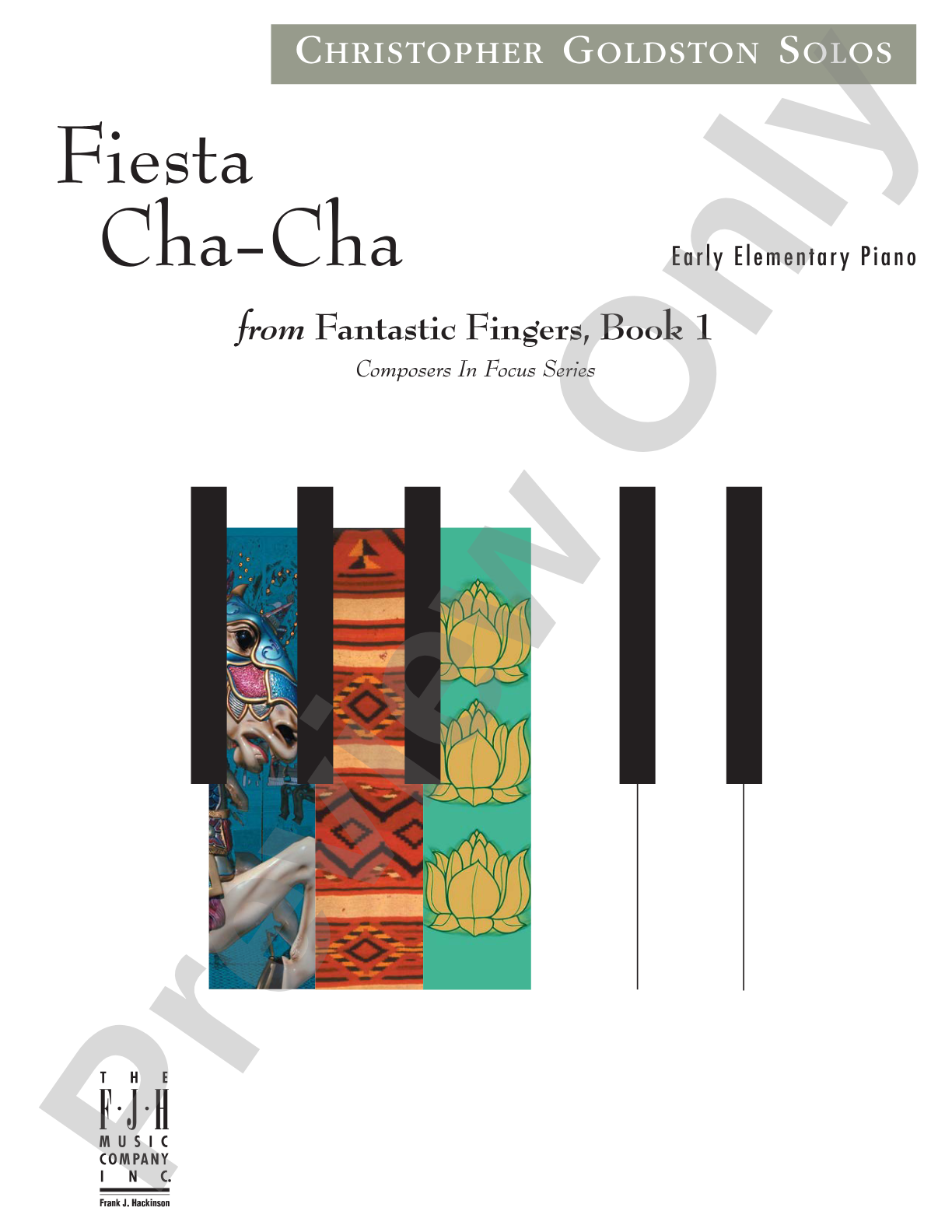
Fiesta Cha-Cha: Piano

By Christopher Goldston

Item: 98-DW9201

Digital Download
$4.95
Description
In this original composition, Goldston inspires us to explore the sounds and rhythms of a traditional Mexican piece. This early elementary work is written in Middle C position, making it easy to learn and memorize. Its rich use of staccatos, slurs, and accents serve as a valuable tool in the teaching of phrasing and articulation.

Fiesta Cha-Cha: Piano isn't in MakeMusic Cloud just yet...but it could be. Let us know you'd like to see it, and you'll help shape what comes next. In the meantime, start a free trial and dive into thousands of interactive titles your students can play along with today.

Sample Audio
No sample audio found.
Sample Video
Additional Details
Series: Written For You
Publisher: The FJH Music Company, Inc.
SKU: 98-DW9201

More about this title

About the Composer: Christopher Goldston

Christopher Goldston

Christopher Goldston earned his Master of Music in piano performance and pedagogy from Northwestern University and his Bachelor of Music from the University of North Carolina-Greensboro. His teaching career spans Columbia College Chicago, Roosevelt University, and Sherwood Conservatory of Music, along with private instruction in Chicago and online.

Goldston's contributions to music education extend beyond the studio. He won the National Federation of Music Clubs Lynn Freeman Olson Composition Award in 1991 for his debut work, Night Train, and has served as national coordinator for the MTNA Composition Competition since 2010. His leadership roles include presidencies of the Illinois State Music Teachers Association and the Chicago Area Music Teachers Association. In 2020, he received the MTNA Foundation Fellowship, and from 2021 to 2023, he served as MTNA National Secretary-Treasurer. MTNA commissioned his work Four Virtues for oboe, violin, and piano, which premiered at the 2022 MTNA National Conference.

Why we love this

Goldston crafts early elementary repertoire with real musical substance. The integration of staccatos, slurs, and accents isn't decorative here; it's purposeful, giving your students legitimate phrasing and articulation work from their very first weeks at the piano. The Middle C position frame and accessible length make this genuinely playable for young hands, while the Latin rhythmic energy keeps everyone engaged.

What to expect

Fiesta Cha-Cha invites you into a bright, rhythmically infectious Latin soundscape. The staccatos sparkle against legato passages, creating conversation and energy on the keyboard that makes a young pianist feel like they're genuinely interpreting something alive and joyful.

Who it's for

Early elementary pianists in their first year of lessons who have mastered basic note reading and hand position. This piece introduces articulation and phrasing in a musical context that feels celebratory rather than like an exercise.

How to get the most out of it

  • Shape the staccato passages by releasing each note crisply but without tension; let the hand stay relaxed between articulations so the rhythm doesn't become rigid.
  • Emphasize the slurred phrases with a gentle weight shift into the first note, then allow the remaining notes to taper naturally without accent.
  • Lean into the accented notes by adding a slight dynamic emphasis and firm key strike, then immediately return to a neutral touch for the surrounding material.
  • Practice hands separately first, listening for the rhythmic swing of the cha-cha feel before bringing them together at tempo.

How to use it

Feature this as a solo piece in an early-season student recital or studio showcase where you want to highlight early elementary progress without the formality of longer classical repertoire. Its style and energy also pair well in a program that includes other world music or culturally diverse pieces, or use it as a confidence-builder before introducing more complex early elementary studies.

Skills your students will build

  • Articulation control (staccato vs. legato in the same phrase)
  • Reading and executing accent marks with appropriate dynamics
  • Rhythmic precision in cha-cha patterns
  • Hand position stability while playing in Middle C position
  • Phrasing awareness through contrasting touch
  • Left-hand independence with basic accompaniment figures

You May Also Like