
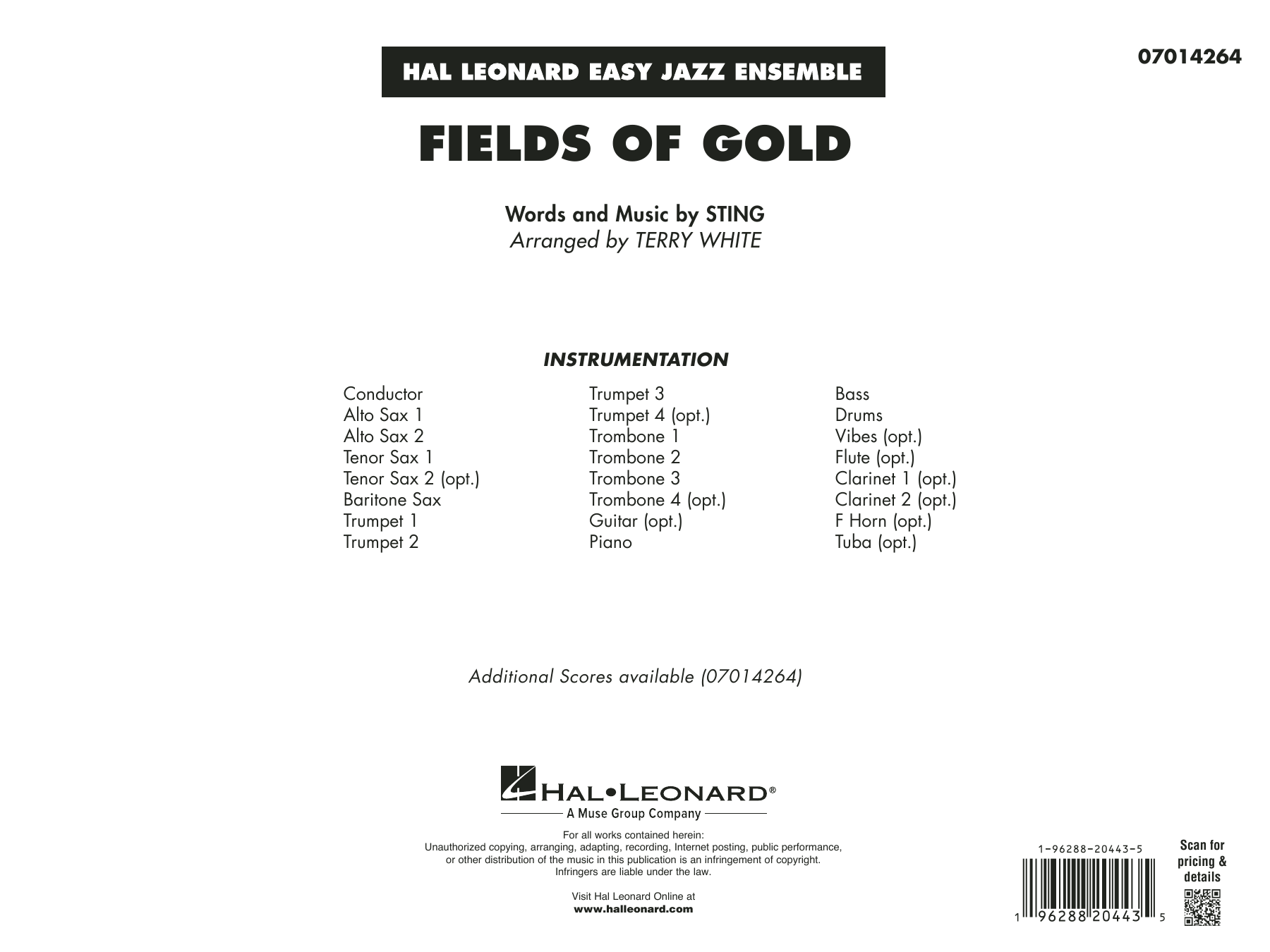

Fields Of Gold (arr. Terry White): Jazz Ensemble Conductor Score & Parts
As performed by Sting / Arranged by Terry White
Grade: 2
Item: 35-PK01487091
$45.00
Pickup currently not available
Buy Extra Parts (Digital PDF Download)
Parts Added to Cart!
Description
Written and recorded by Sting in 1993, "Fields of Gold" is recognized as a masterful yet haunting ballad. This skillfully paced arrangement for young players features a light pop feel along with brief solos for alto sax and trumpet. The key change near the end provides a nice emotional lift.


Fields Of Gold (arr. Terry White): Jazz Ensemble Conductor Score & Parts isn't in MakeMusic Cloud just yet...but it could be. Let us know you'd like to see it, and you'll help shape what comes next. In the meantime, start a free trial and dive into thousands of interactive titles your students can play along with today.
Request This Title
Tell us you want it.
Start Your Free Trial
Explore everything that's ready to play right now.
Sample Audio
No sample audio found.
Sample Video
No sample videos found.
Additional Details
Publisher:
Hal Leonard
SKU:
35-PK01487091
More about this title
About the Artist: Sting
Sting rose to prominence as the bassist and primary songwriter of The Police before establishing himself as a solo artist in the mid-1980s. His songwriting combines sophisticated harmonic sense with memorable melodic hooks, drawing from rock, reggae, and world music influences. "Fields of Gold" exemplifies his gift for crafting emotionally resonant songs that transcend genre boundaries.
Why we love this
Terry White's arrangement strips the production down to its essentials, letting the melody and changes breathe without overwhelming young players. The built-in solo opportunities for alto sax and trumpet give section leaders a featured moment, while the key change delivers real harmonic interest at exactly the right dramatic moment. This is the kind of accessible pop tune that reminds students why they wanted to play jazz in the first place.
What to expect
There is a quiet dignity here, almost cinematic in its restraint. The melody unfolds with the patience of memory, and when the key change arrives, it feels like a gentle hand opening a door you didn't know was there. This is a piece about longing and reflection, filtered through a pop sensibility that never overreaches.
Who it's for
Grade 2 ensembles ready for a ballad with actual emotional content and harmonic sophistication. This works well for groups that can handle a lyrical style without dragging, and who have soloists confident enough to carry a feature without overplaying.
How to get the most out of it
- Balance the melody carefully during the head; this tune lives or dies on a clean, legible line that the audience can follow immediately.
- Keep the tempo flexible and unhurried. The arrangement works best when there's room to breathe between phrases, especially in the quieter passages.
- Shape the solos with clear dynamic arch. These are intimate moments, not showcases for raw speed, so encourage the alto and trumpet to listen to the band's responses.
- Plant the key change firmly. Have the rhythm section lock the new tonality before the horns enter; it should feel like stepping into a new room, not a stumble.
How to use it
Consider this for a concert's second half, where audiences have settled in and you can afford to lower the volume and temperature. It pairs beautifully with other pop or soul-influenced material, and it's substantial enough to stand alongside jazz standards without feeling out of place. For younger ensembles, this is an excellent entry point into playing ballads with maturity.
Skills your students will build
- Phrasing and dynamic shaping in a slow, lyrical context
- Reading and executing key changes
- Solo construction and listening responsively to the ensemble
- Maintaining a steady pulse and feel without rushing
- Balancing rhythmic precision with expressive space