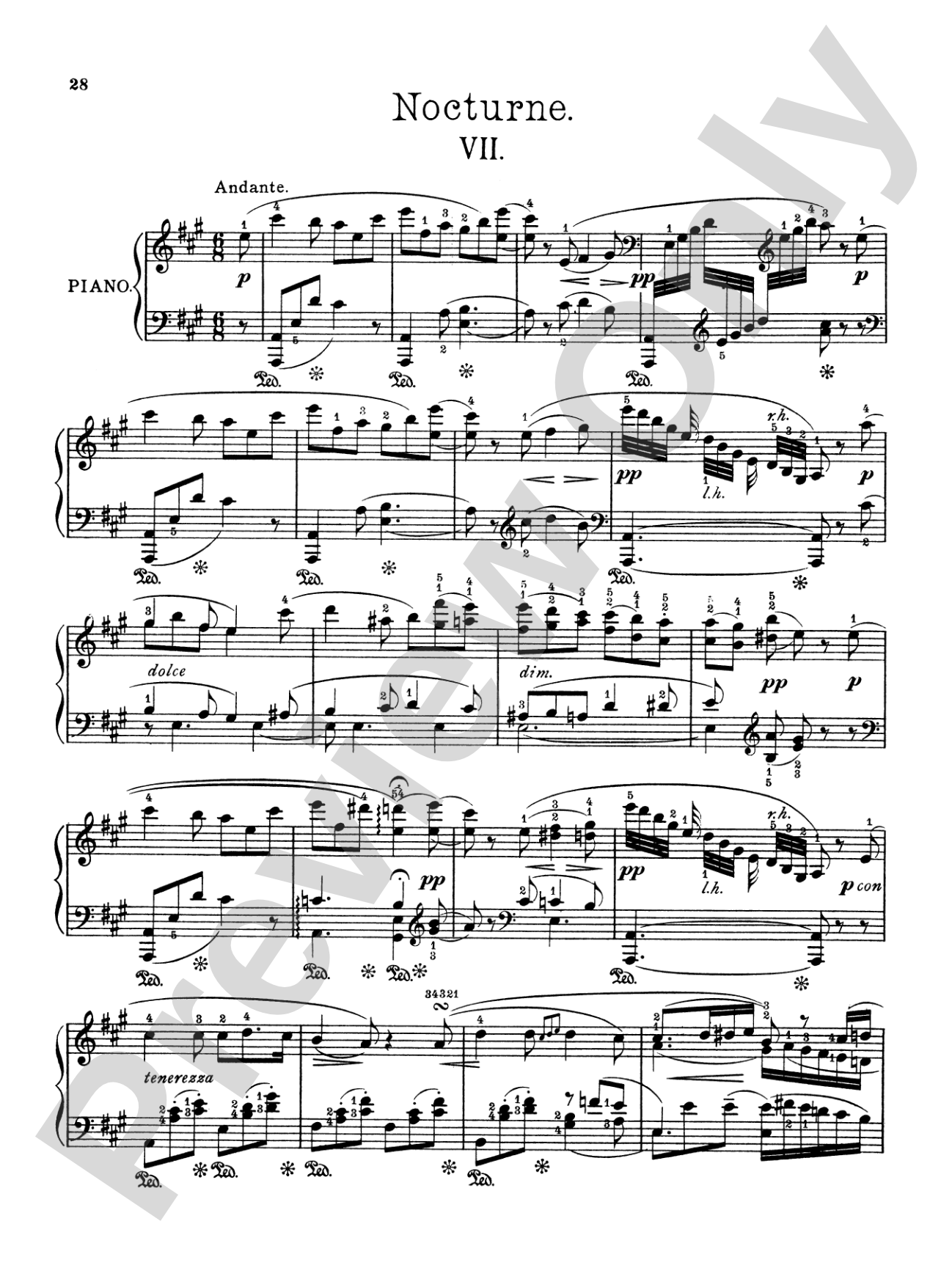
Field: Nine Nocturnes Sheet Music Preview

Field: Nine Nocturnes

By John Field

Item: 00-PC-0007135

Digital Download
$0.99
Description
A collection of piano solos composed by John Field.

Don't just read it, hear it, play along with it, and watch your students grow with it. In MakeMusic Cloud, Field: Nine Nocturnes comes alive with professional accompaniment, adjustable tempo, and built-in practice tools that turn solo practice into real progress.

Sample Audio
No sample audio found.
Sample Video
Additional Details
Series: Kalmus Edition
Publisher: Alfred Music
Page Count: 40
SKU: 00-PC-0007135

More about this title

About the Composer: John Field

John Field (1782-1837) was an Irish pianist and composer whose influence on keyboard music extended far beyond his lifetime. He pioneered the Romantic piano nocturne, a lyrical form that became central to the nineteenth-century piano repertoire; Chopin acknowledged Field's foundational work in the genre. Field spent much of his career in Russia, where he maintained an active performance and teaching practice, and his compositional output reflects both virtuosic keyboard writing and the intimate, song-like qualities that define his musical voice.

Field's nocturnes balance technical demands with emotional directness. They require fluent legato technique and sensitive pedal control, making them an essential study for pianists developing interpretive maturity. His music bridges the Classical and Romantic eras, offering students insight into how the piano's expressive capabilities evolved in the early nineteenth century.

Why we love this

These nocturnes occupy a crucial historical position in piano literature that many collections overlook. Students encounter Chopin regularly, but Field's more measured approach to rubato and ornamentation teaches restraint and clarity alongside lyricism, making these works especially valuable for pianists learning to balance structure with expression. The collection offers programming flexibility, with pieces ranging from intimate and contemplative to brilliantly decorated, suiting recitals from student showcases to faculty concerts.

What to expect

Intimate and unhurried, with long lines that unfold naturally over gently rocking accompaniments. These nocturnes evoke candlelit drawing rooms and the particular quietude of Romantic lyricism, combining melodic beauty with moments of virtuosic sparkle. The emotional tenor is reflective rather than dramatic, rewarding listeners and performers who embrace a slower, more songful approach to the keyboard.

Who it's for

Pianists at the upper intermediate to early advanced level who are ready for Romantic-era repertoire beyond the most familiar names. Teachers seeking nocturne material that develops legato technique, pedal control, and expressive phrasing in a more measured context than Chopin. Students preparing for recitals, competitions, or exams that benefit from access to Field's complete nocturne output.

How to get the most out of it

  • Approach the accompaniment figures as cantabile rather than purely rhythmic; the broken chords beneath the melody need singing quality, not mechanical repetition.
  • Shape each phrase to its natural peak rather than driving relentlessly forward; Field's melodic lines often swell and subside like breath, and that architecture must be audible.
  • Use the sustain pedal deliberately and change it with harmonic shifts to avoid muddiness; clarity of texture is central to Field's aesthetic.
  • Practice the hand independence required in passages where the right hand ornaments the melody while the left maintains steady accompaniment without losing coordination.

How to use it

Field's nocturnes work beautifully as opening or closing pieces in recitals where you want to establish an intimate atmosphere. Program one or two alongside works from the same period (Mendelssohn, early Schumann) to trace the nocturne's evolution and significance. They also serve as excellent encore material, offering audiences a moment of quiet reflection between heavier works.

Skills your students will build

  • Legato pedaling and sustain control
  • Rubato that serves phrase shape rather than disrupts it
  • Hand independence in broken-chord accompaniment patterns
  • Singing tone production across extended melodic phrases
  • Understanding of Romantic-era ornamentation and its expressive function

You May Also Like