
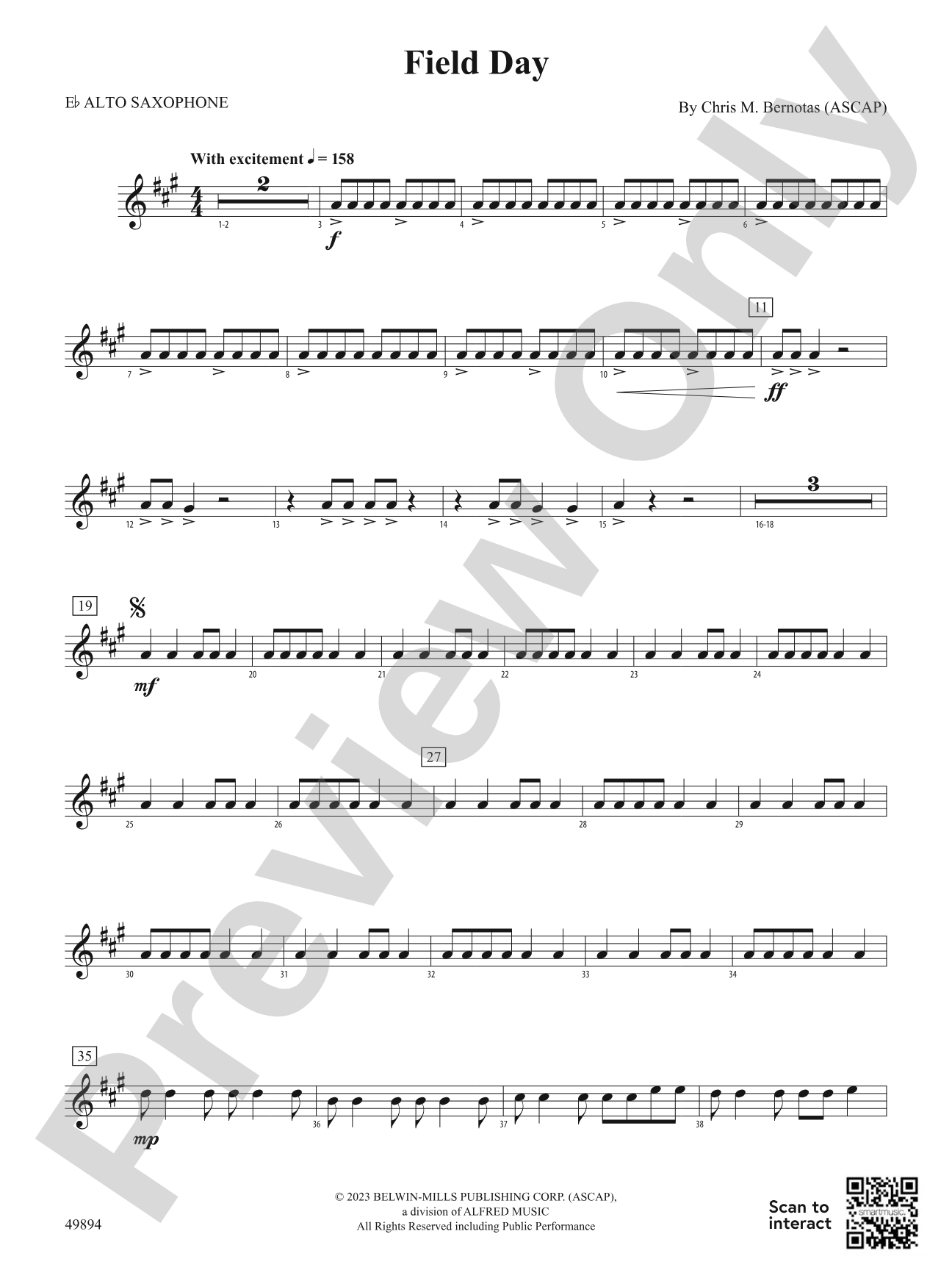

Field Day: E-flat Alto Saxophone
By Chris M. Bernotas
Grade: 1.5
Item: 00-PC-0018937_AX1
$3.00
Pickup currently not available
Description
Your students will have a field day filled with fun as they perform this exciting overture! Field Day, by Chris M. Bernotas, works perfectly for string orchestra alone or with added winds and percussion up to a full orchestra. A fantastic piece for your students' first full-orchestra experience. (2:50)


Don't just read it, hear it, play along with it, and watch your students grow with it. In MakeMusic Cloud, Field Day: E-flat Alto Saxophone comes alive with professional accompaniment, adjustable tempo, and built-in practice tools that turn solo practice into real progress.
Open in the Player
Jump straight in and assign it today.
Start Your Free Trial
Open this title and explore the full library in minutes.
Sample Audio
1
Audio File
--:--
0:00
0:00
Sample Video
Additional Details
Series:
Belwin Beginning Full Orchestra
Publisher:
Alfred Music
SKU:
00-PC-0018937_AX1
More about this title
About the Composer: Chris M. Bernotas

Chris M. Bernotas brings over 25 years of experience as a composer, conductor, and educator to his work at Alfred Music, where he directs instrumental publications. His compositions balance accessibility with genuine musicality, making them equally valuable in the rehearsal room and on stage.
Bernotas draws from extensive classroom experience to write music that meets students where they are developmentally while still challenging them musically. He regularly conducts honor groups and leads clinics nationwide, and has co-authored several influential resources including Sound Innovations Ensemble Development and Sound Artistry. His commitment to music education extends beyond composition into active mentorship of both students and teachers.
Why we love this
Field Day captures that ideal moment when a young ensemble first tastes the power of playing together as a full orchestra. Bernotas writes with such clarity and energy that even Grade 1.5 musicians feel like they're performing something genuinely exciting, not just a stepping stone. The flexible instrumentation means you program it exactly as your ensemble permits, whether you're building from strings or adding winds and percussion as your students advance.
What to expect
Bright, propulsive energy coursing through accessible harmonic language. Field Day bubbles with the joy of ensemble playing, propelled forward by clear melodic writing and rhythmic momentum that feels effortless to execute but satisfying to perform.
Who it's for
This score and parts set is built for conductors launching students into full-orchestra literature. Whether your ensemble includes only strings or spans a complete instrumentation, Field Day provides an accessible entry point that doesn't feel reductive. It works equally well as a teaching piece in mixed-level programs and as festival or contest repertoire for developing ensembles.
How to get the most out of it
- Establish a strong, steady tempo from the opening. Younger orchestras often rush when excited, so a confident conductor beat anchors ensemble cohesion across all sections.
- Balance the melody across your available instruments rather than isolating it in one voice. This shared ownership helps all players feel invested in the musical line.
- Mark dynamics clearly in your parts before rehearsal. Grade 1.5 ensembles benefit from visual reminders that clarify contrast and help maintain shape through transitions.
- Record a rehearsal and play it back. Young musicians often respond powerfully to hearing their own progress, which builds confidence for performance.
How to use it
Place this early in your concert as a statement of ensemble capability and energy. Its 2:50 duration works well paired with longer, more introspective pieces, and its contest-friendly status makes it an excellent selection for fall festivals or winter ensemble competitions. It's equally strong as a spring concert opener that energizes your audience and demonstrates your orchestra's growth across the year.
Skills your students will build
- Reading and balancing multiple independent instrumental parts simultaneously
- Responding to conductor cues and releases in a multi-section ensemble
- Maintaining rhythmic precision while listening across an expanded range of instruments
- Executing dynamic contrasts and phrasing across diverse timbral families
- Adapting articulation and tone to match surrounding instrumental colors