Field: 18 Nocturnes Sheet Music Preview

Field: 18 Nocturnes

By John Field

Level: Early Advanced / Advanced

Item: 00-PC-0003967

Digital Download
$0.99
Description
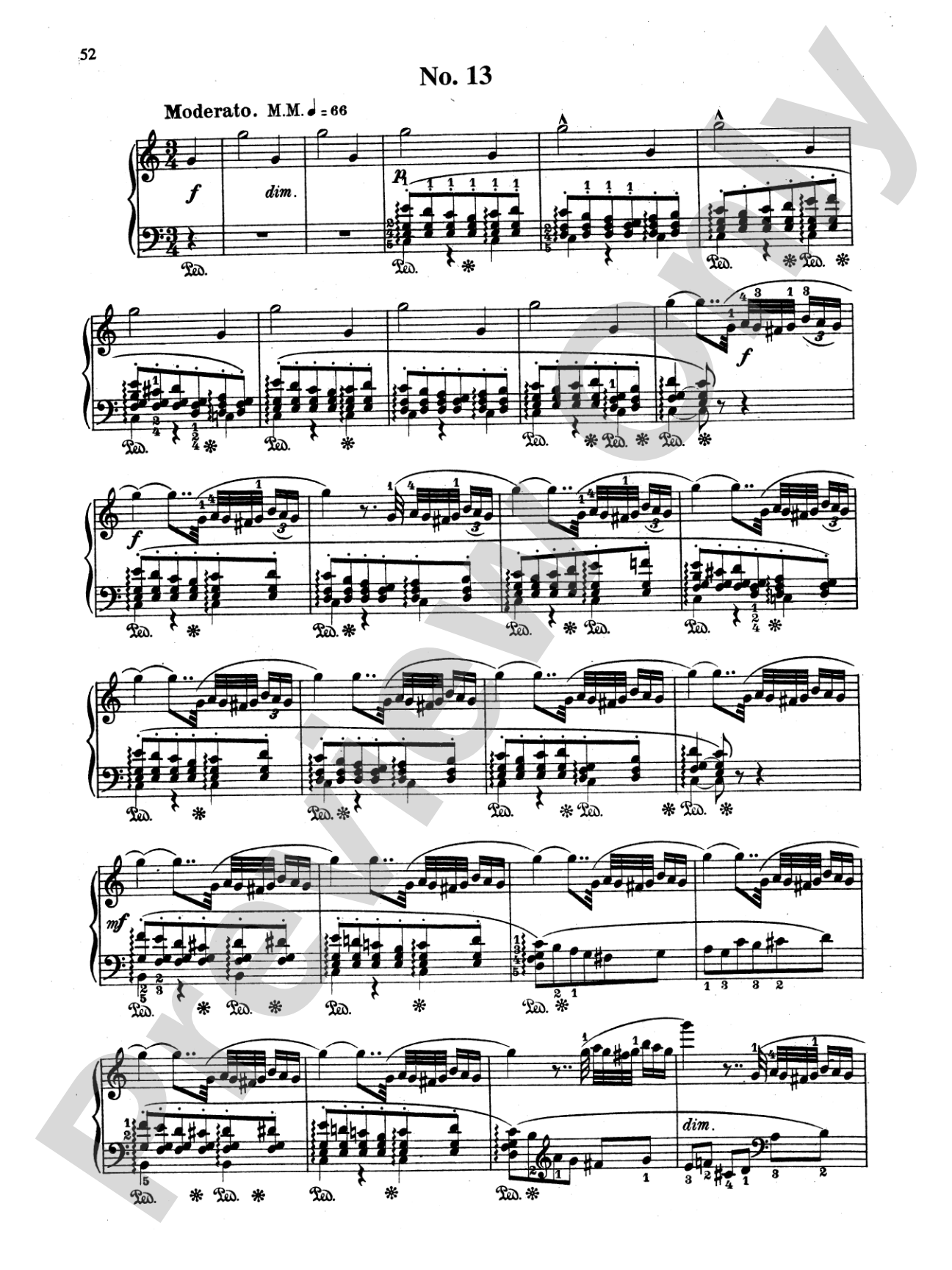
A student of Clementi, the Irish composer John Field was especially known for his nocturnes and the influence of these musical mood pieces on the works of Frederic Chopin. Titles: Nocturne in E-flat Major * Nocturne in C Minor * Nocturne in A-flat Major * Nocturne in A Major * Nocturne in B-flat Major * Nocturne in F Major * Nocturne in A Major * Nocturne in E-flat Major * Nocturne in E Minor * Nocturne in E Major * Nocturne in E-flat Major * Nocturne in E Major * Nocturne in C Major * Nocturne in G Major * Nocturne in F Major * Nocturne in C Major * Nocturne in C Major * Nocturne in F Major.

Don't just read it, hear it, play along with it, and watch your students grow with it. In MakeMusic Cloud, Field: 18 Nocturnes comes alive with professional accompaniment, adjustable tempo, and built-in practice tools that turn solo practice into real progress.

Sample Audio
No sample audio found.
Sample Video
Additional Details
Series: Kalmus Edition
Publisher: Alfred Music
Page Count: 76
SKU: 00-PC-0003967

More about this title

About the Composer: John Field

John Field (1782-1837) was an Irish pianist and composer who studied under Muzio Clementi in London and later established himself as a virtuoso performer across Europe and Russia. He is credited with inventing the nocturne as a distinct musical form, a genre that emphasizes lyrical melody over the keyboard's accompanying textures, and his work profoundly influenced Frédéric Chopin's approach to the form.

Why we love this

Field's nocturnes offer advanced pianists access to a pivotal repertoire that bridges classical form and Romantic expression without requiring the technical fireworks of later piano literature. These 18 pieces provide a complete survey of the form at its source, allowing students to understand the nocturne's DNA before encountering Chopin's more dramatic interpretations. The collection rewards careful musical phrasing and sensitive pedal control over flashy fingerwork.

What to expect

These nocturnes float on gentle, rippling accompaniment figures that cradle luminous melodies. The harmonic language is richer than the classical period yet more restrained than later Romantic music, creating an atmosphere of intimate reflection and subtle melancholy that feels both timeless and distinctly of its era.

Who it's for

Advanced pianists preparing for college auditions or recitals who want to deepen their understanding of Romantic era keyboard writing and the nocturne genre. Teachers seeking substantial repertoire at the early advanced level that bridges classical and Romantic aesthetics without overwhelming their students with extreme technical demands.

How to get the most out of it

  • Shape the melody as a vocalist would, allowing the right hand to breathe naturally at phrase endings even when written in continuous sixteenth-note accompaniment figures.
  • Experiment with the damper pedal across different harmonic changes to create the warm, hazy sonorities that define the nocturne's character without blurring chord clarity.
  • Balance the left-hand accompaniment as genuine support rather than filler; these figuration patterns are essential to the harmonic and textural identity of each piece.
  • Attend to dynamic nuance within phrases rather than relying on large-scale crescendos; Field's nocturnes thrive on subtle tonal gradation and intimate expression.

How to use it

Program nocturnes individually on recitals to create atmospheric moments between more structurally demanding works, or group several together to showcase Field's stylistic range and the evolution of his harmonic language. This collection works particularly well in solo recitals exploring Romantic piano literature or in educational concerts examining the nocturne's historical development.

Skills your students will build

  • Pedal control and the creation of sustained harmonic color
  • Lyrical phrasing and vocal shaping of melody over accompanying textures
  • Navigation of varied harmonic vocabularies across different keys
  • Independence between hands when balancing prominent melody with intricate figuration
  • Historical understanding of the nocturne as a distinct formal and expressive type

You May Also Like