
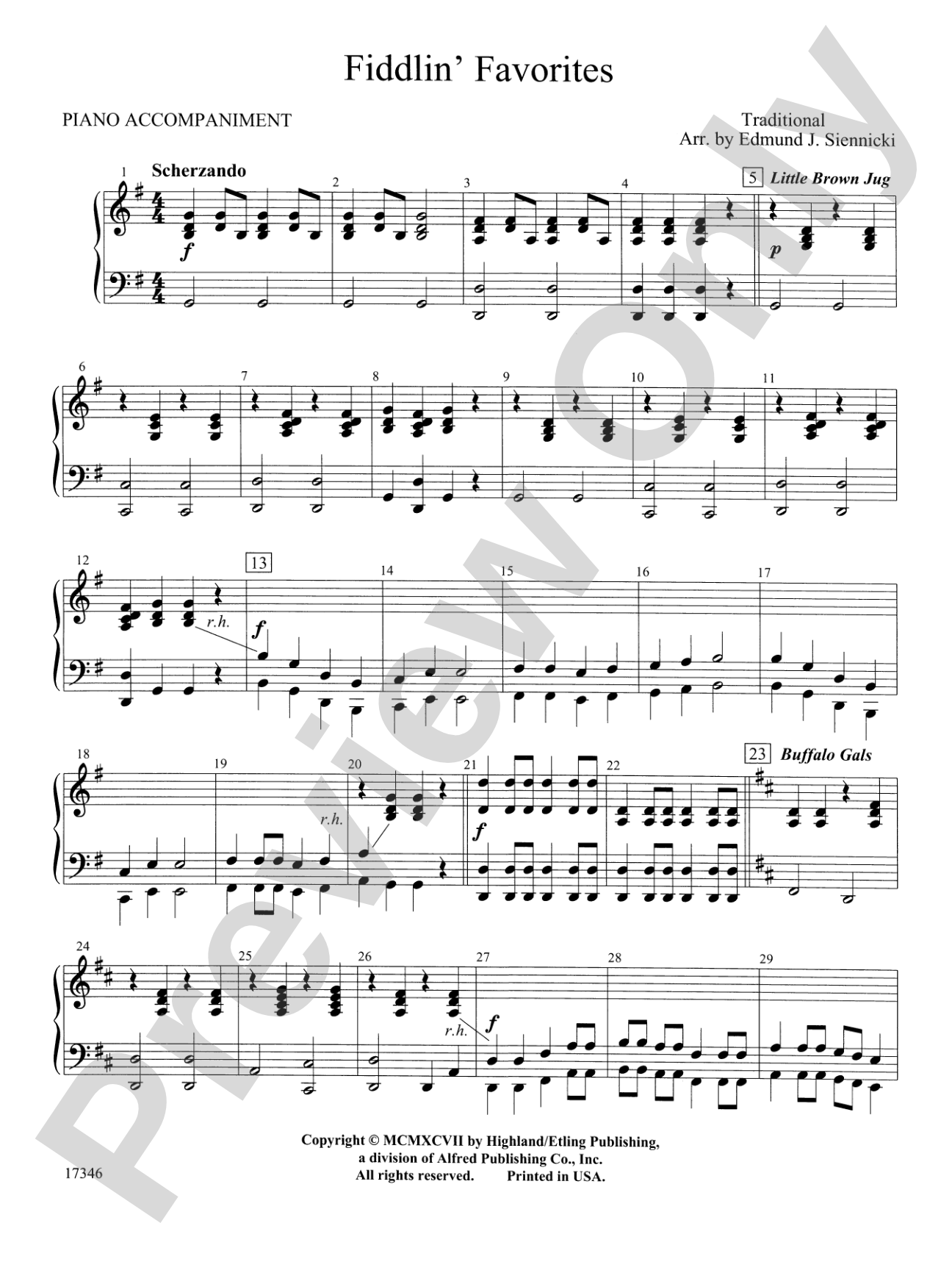

Fiddlin' Favorites: Piano Accompaniment
Arr. Edmund J. Siennicki
Grade: 1
Item: 00-PC-0000227_K
$5.99
Pickup currently not available
Description
This arrangement of all-time favorites in fiddle style is bound to put a smile on the face of your audience(and students). Including "Little Brown Jug," "Buffalo Gals" and "Wabash Cannonball," this is a guaranteed winner for your young string orchestra! Correlated with Strictly Strings, Book 1, page 26.


Don't just read it, hear it, play along with it, and watch your students grow with it. In MakeMusic Cloud, Fiddlin' Favorites: Piano Accompaniment comes alive with professional accompaniment, adjustable tempo, and built-in practice tools that turn solo practice into real progress.
Open in the Player
Jump straight in and assign it today.
Start Your Free Trial
Open this title and explore the full library in minutes.
Sample Audio
1
Audio File
--:--
0:00
0:00
Sample Video
No sample videos found.
Additional Details
Series:
Highland/Etling Strictly Strings
Publisher:
Alfred Music
Page Count:
1
SKU:
00-PC-0000227_K
More about this title
About the Arranger: Edmund J. Siennicki
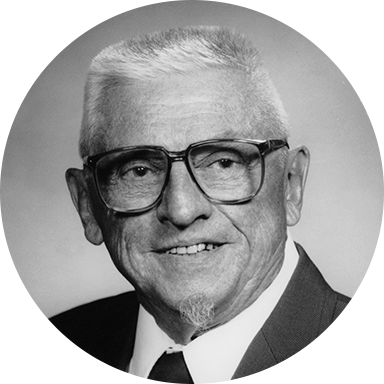
Edmund J. Siennicki grew up in Cleveland, Ohio, where a chance meeting with legendary pianist Ignacy Jan Paderewski at age 12 set the trajectory for his musical life. He earned his Bachelor's degree from Kent State University, where he composed the school's fight song (still performed at football games), and later completed his MA at Teachers College, Columbia University, studying composition with Herbert Elwell and electronic music with Sergio Barroso.
Siennicki built a distinguished career as both a performer on bassoon and piano and a prolific composer with roughly 200 published works to his name. His compositions have won recognition in National School Orchestra contests, and he spent two separate residencies at the MacDowell Colony. He taught for many years in Cleveland junior high schools while also holding positions at Michigan and Kent State University, and he has received ongoing ASCAP awards for decades. Throughout his career, he has remained active as a clinician and composer, bringing his expertise directly to school music programs.
Why we love this
Siennicki understands what young string players need: arrangements that sound authentic and fun without overwhelming them technically. The fiddle style treatment of these beloved folk tunes gives students immediate access to a sound world they recognize and enjoy, making them eager to practice rather than reluctant. At Grade 1, this hits the sweet spot where students have the skills to play real music but still need repertoire that builds confidence.
What to expect
Bright, unpretentious, and genuinely fun. These arrangements capture the spirit of American fiddle music—music meant to make people move and smile. The melodies sit naturally under the fingers, and the supporting parts lock together with satisfying simplicity, giving young musicians the experience of playing "real" music that audiences actually want to hear.
Who it's for
Young string orchestra players at the early elementary level who are ready to play recognizable melodies and basic ensemble parts. This arrangement works equally well for students working through Strictly Strings Book 1 or for violinists, violists, and cellists in any Grade 1 string program looking for folk repertoire with personality.
How to get the most out of it
- Lean into the rhythmic swagger of folk fiddle style. Let students feel the bounce of these melodies rather than playing them stiffly; this is about character, not perfection.
- Work the drone accompaniment parts so they sit solidly underneath the melody. Young players often rush when they're playing harmony, so lock in with deliberate practice before combining sections.
- Encourage open strings and natural vibrato where the style suggests it. Fiddle tradition values a warm, organic tone, and this arrangement gives students permission to explore that.
- Program this where your audience can sing along or at least recognize the tunes immediately. The fun multiplies when people connect with what they're hearing.
How to use it
Program this on a concert featuring American folk traditions or as a standalone opener that gets your audience smiling from the first note. It pairs well with other Grade 1 folk or Americana repertoire and works especially effectively in spring concerts or family-friendly events where recognition and accessibility matter as much as technical achievement.
Skills your students will build
- Reading simple melodic lines in first position
- Playing in unison and basic two-part harmony
- Understanding folk style and rhythmic interpretation beyond classical technique
- Building ensemble balance between melody and supporting parts