
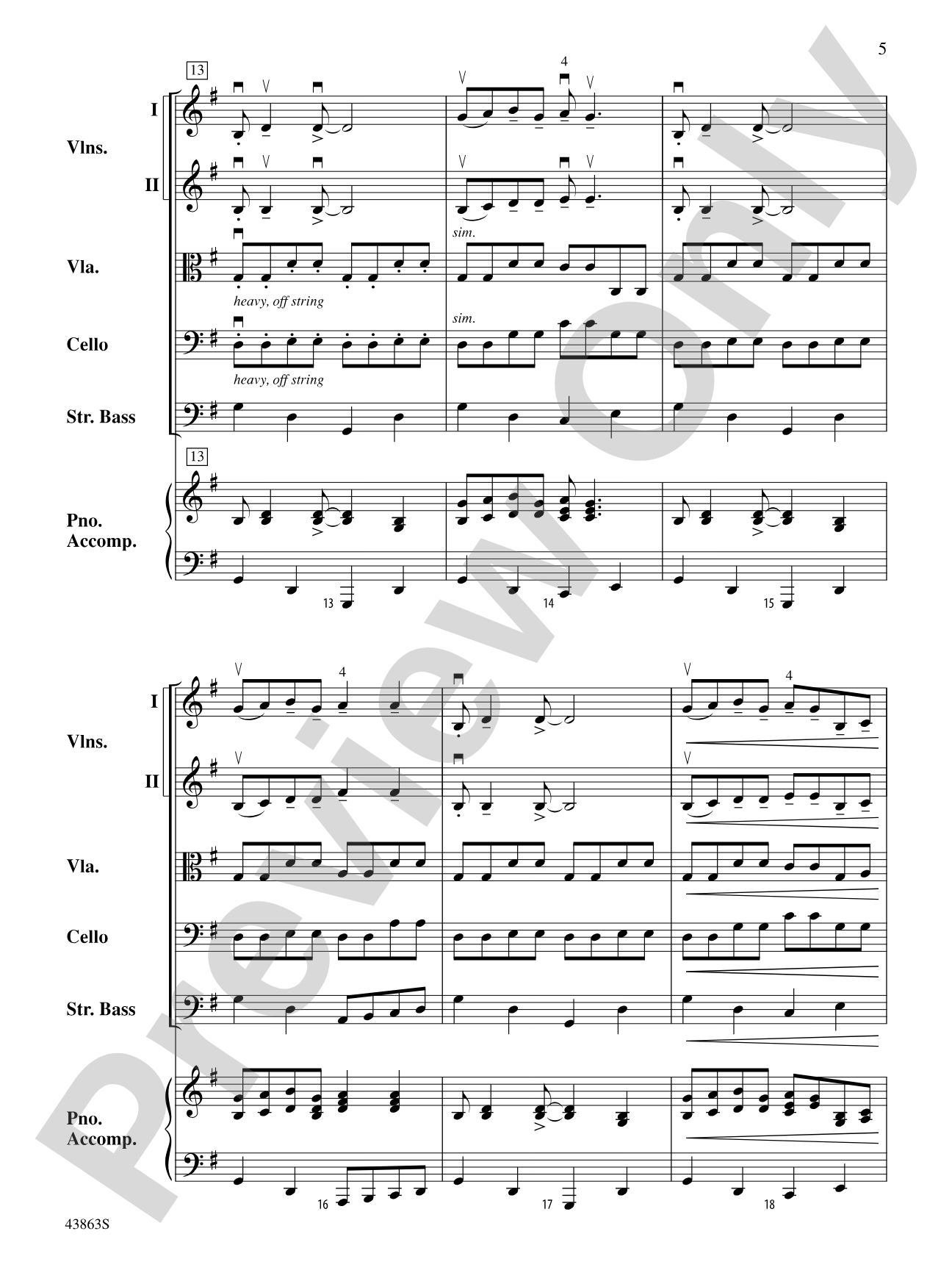
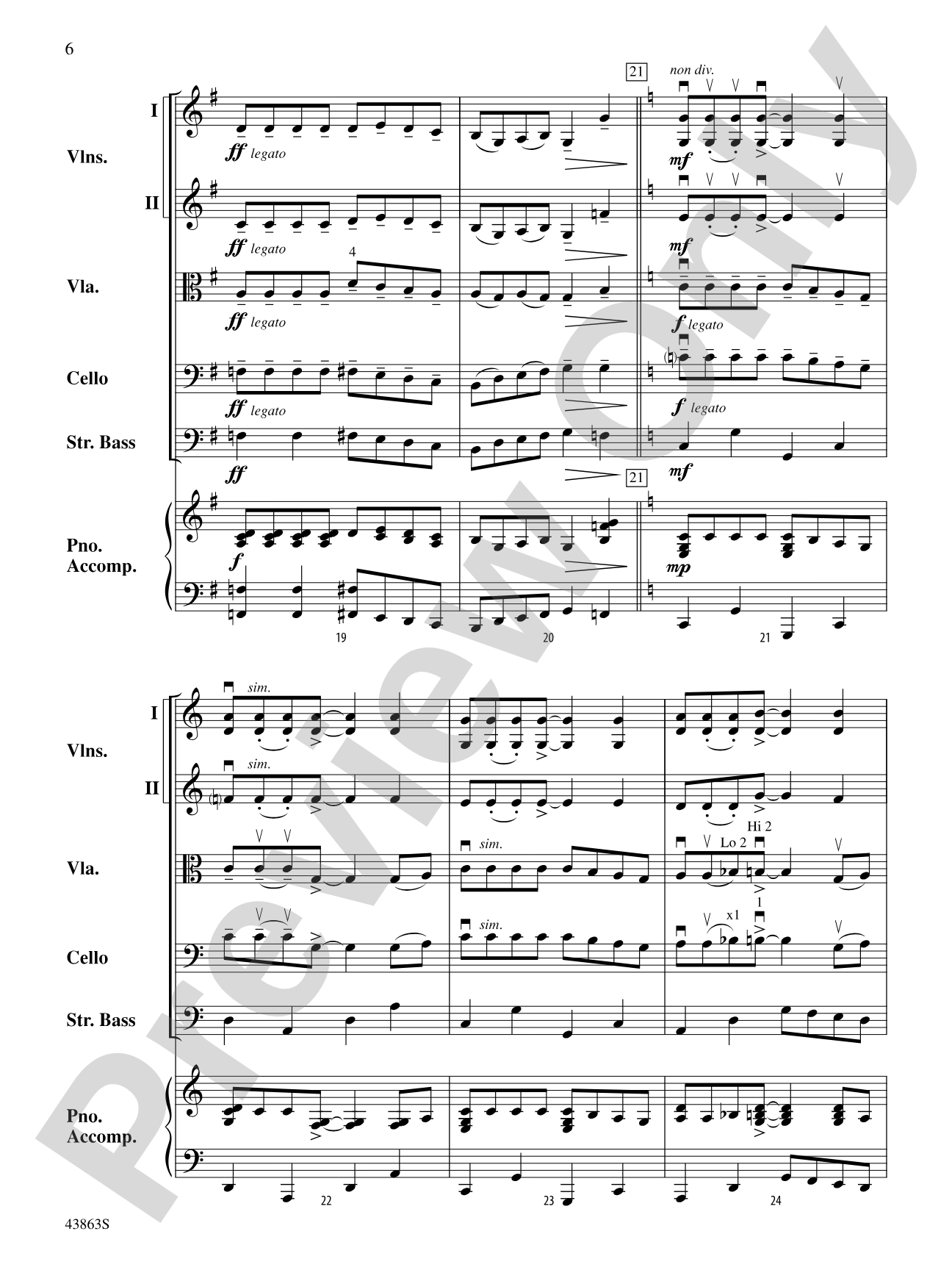
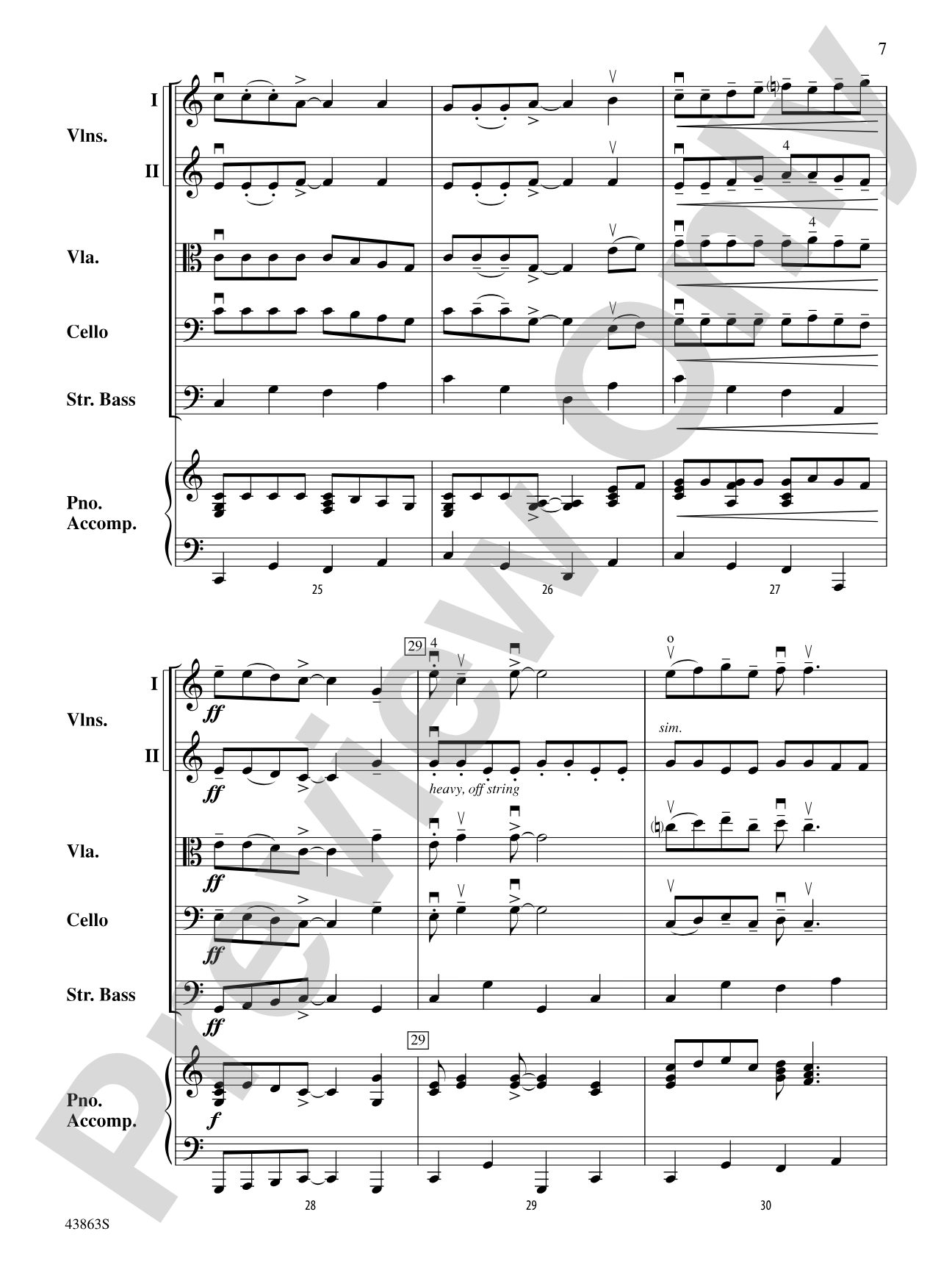
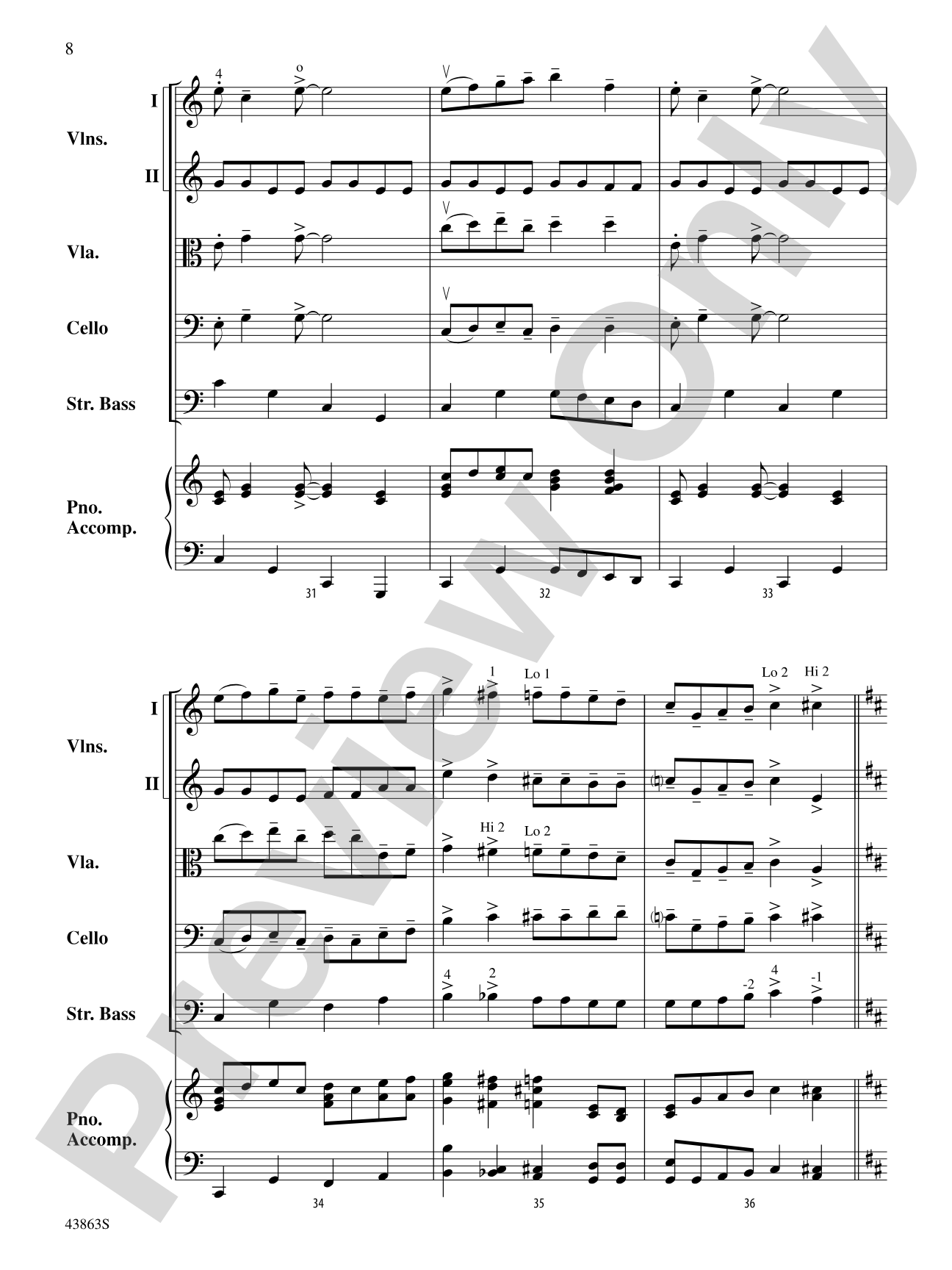
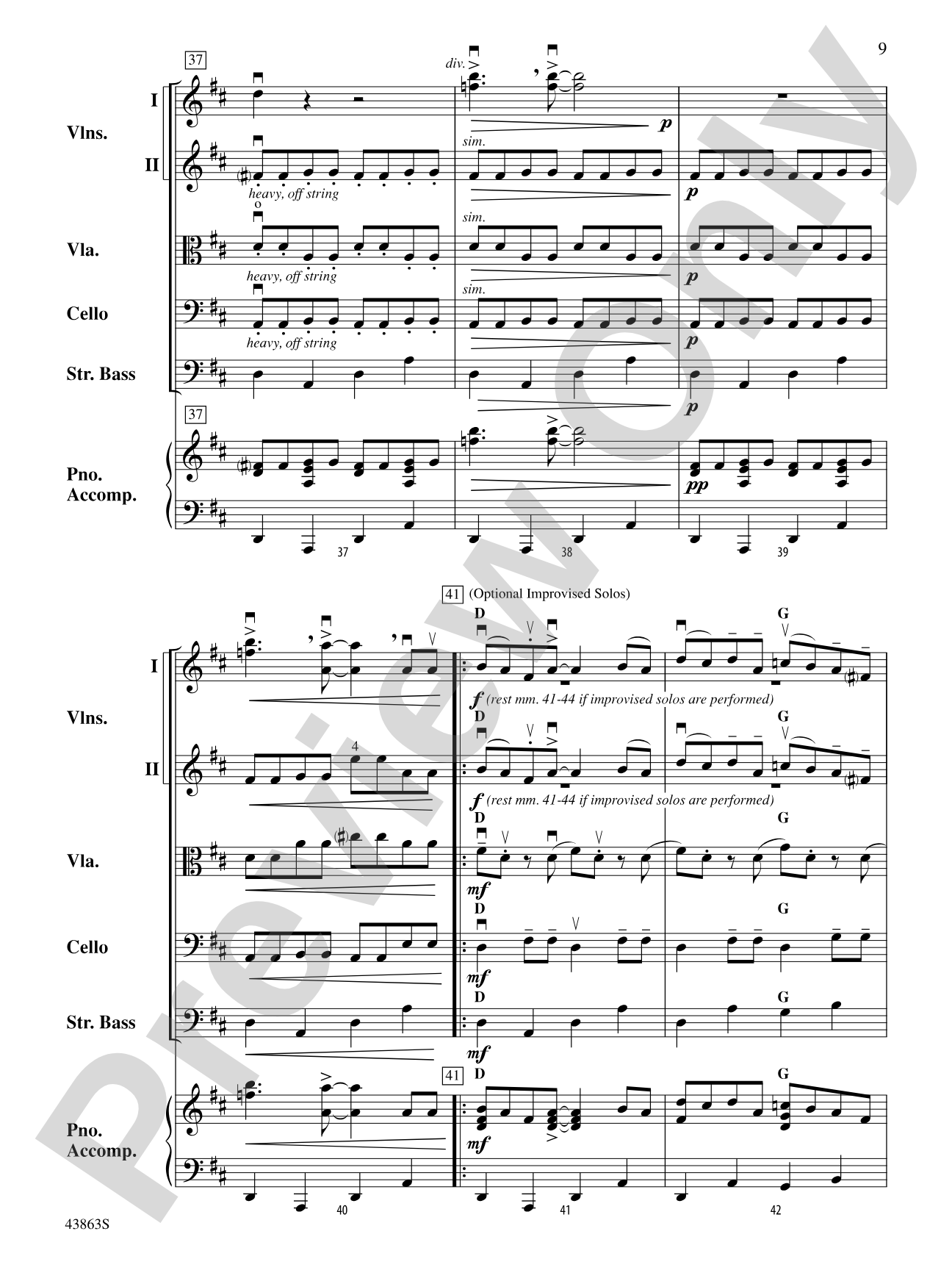
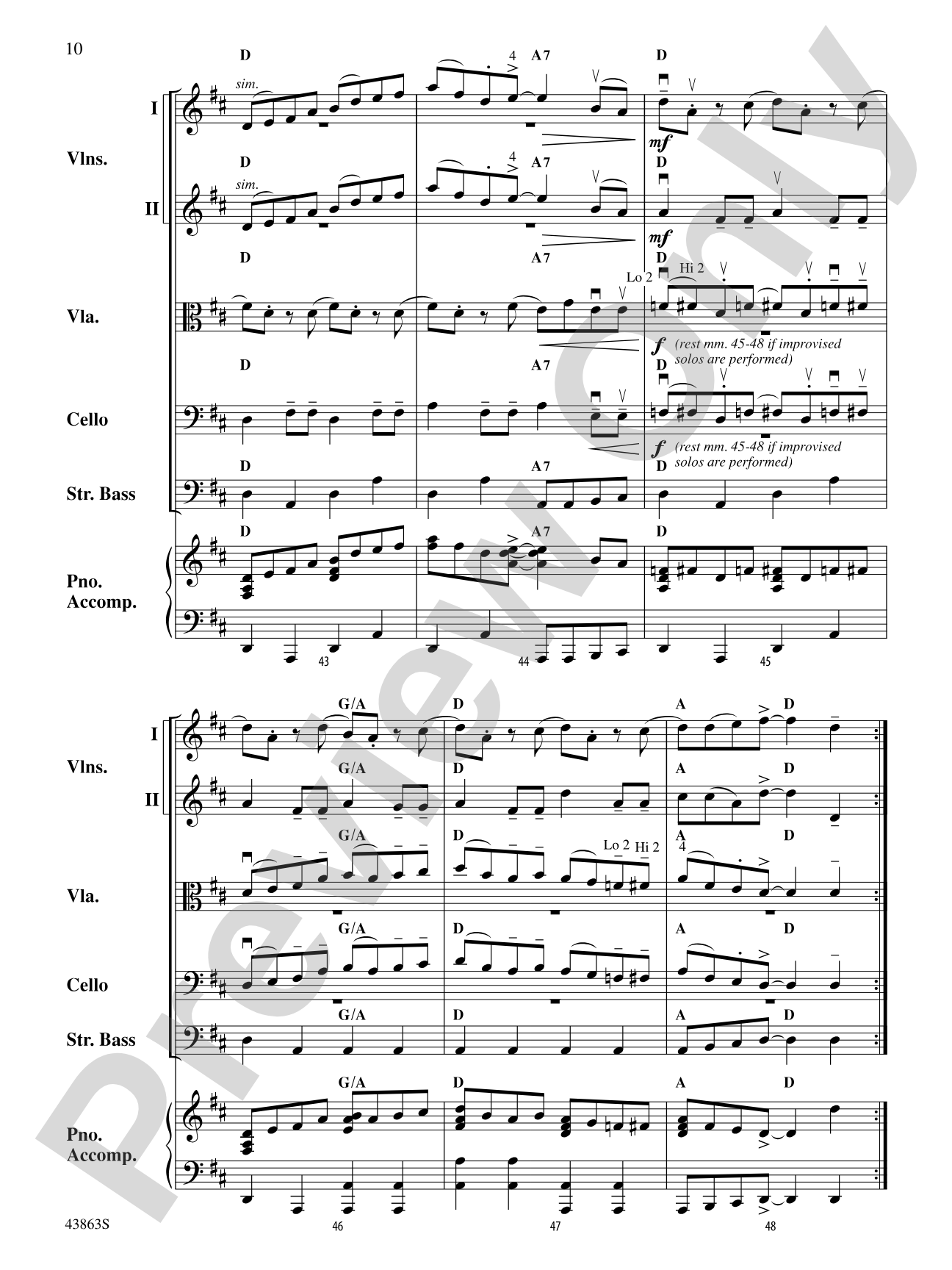
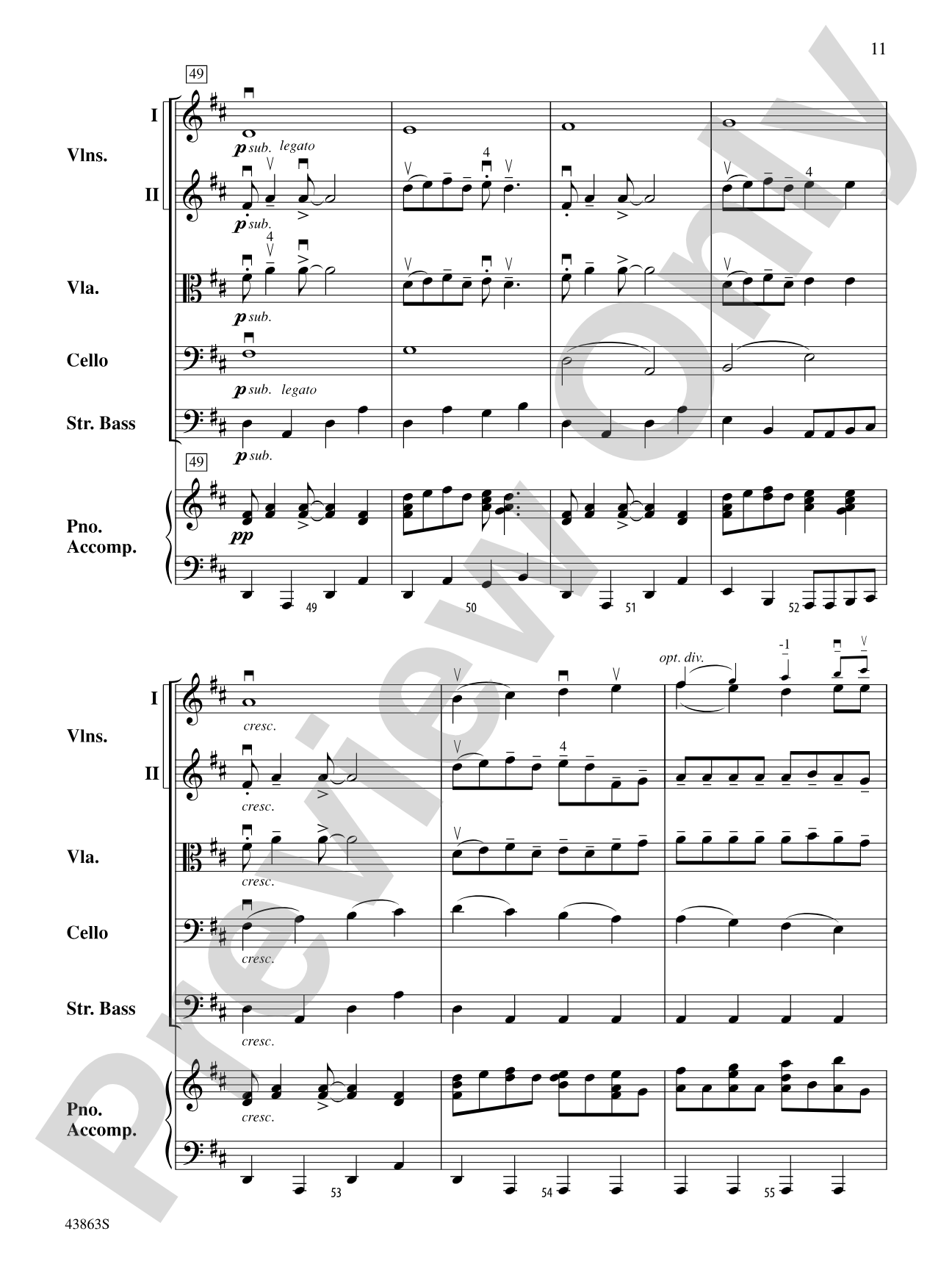
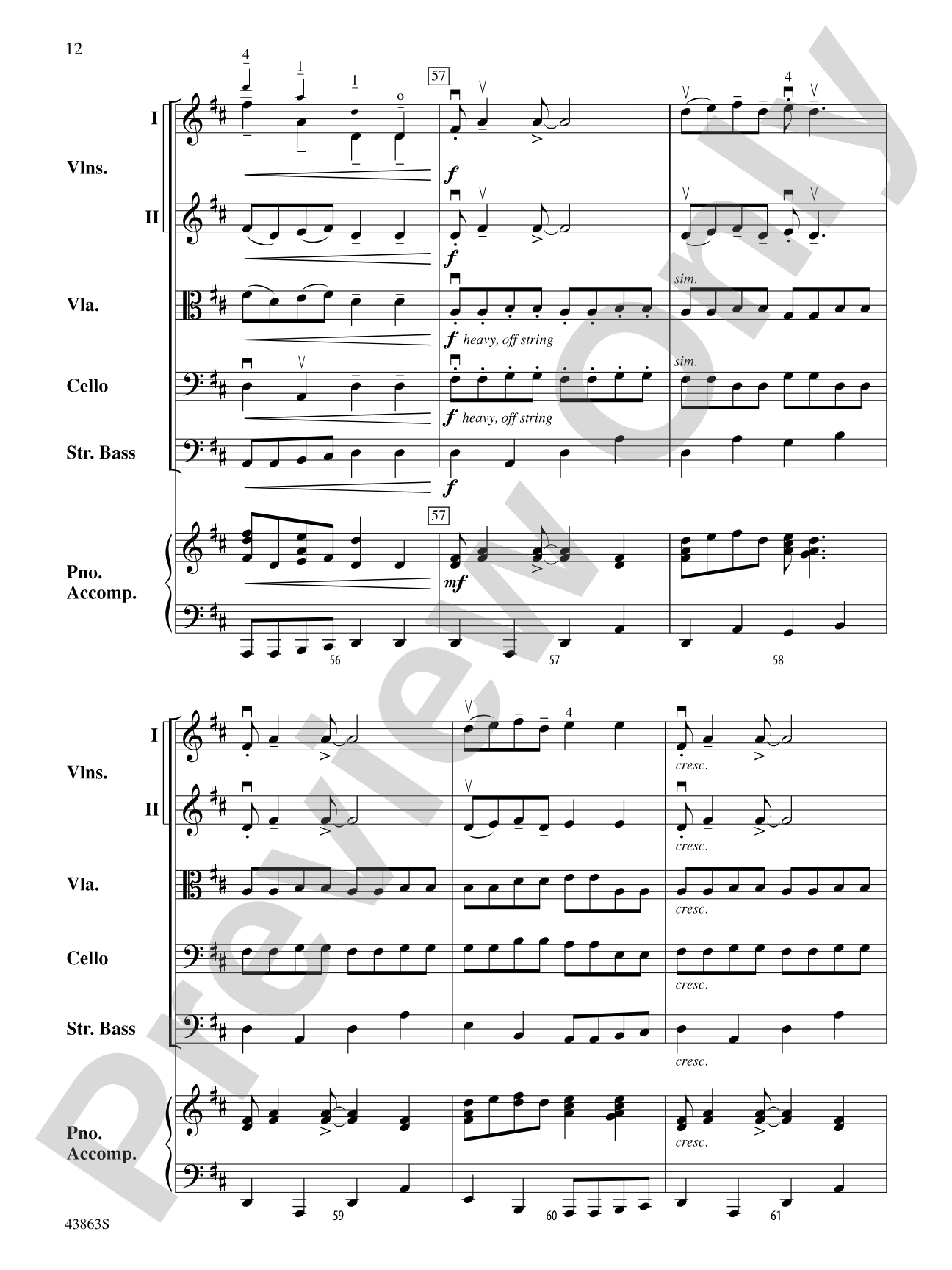
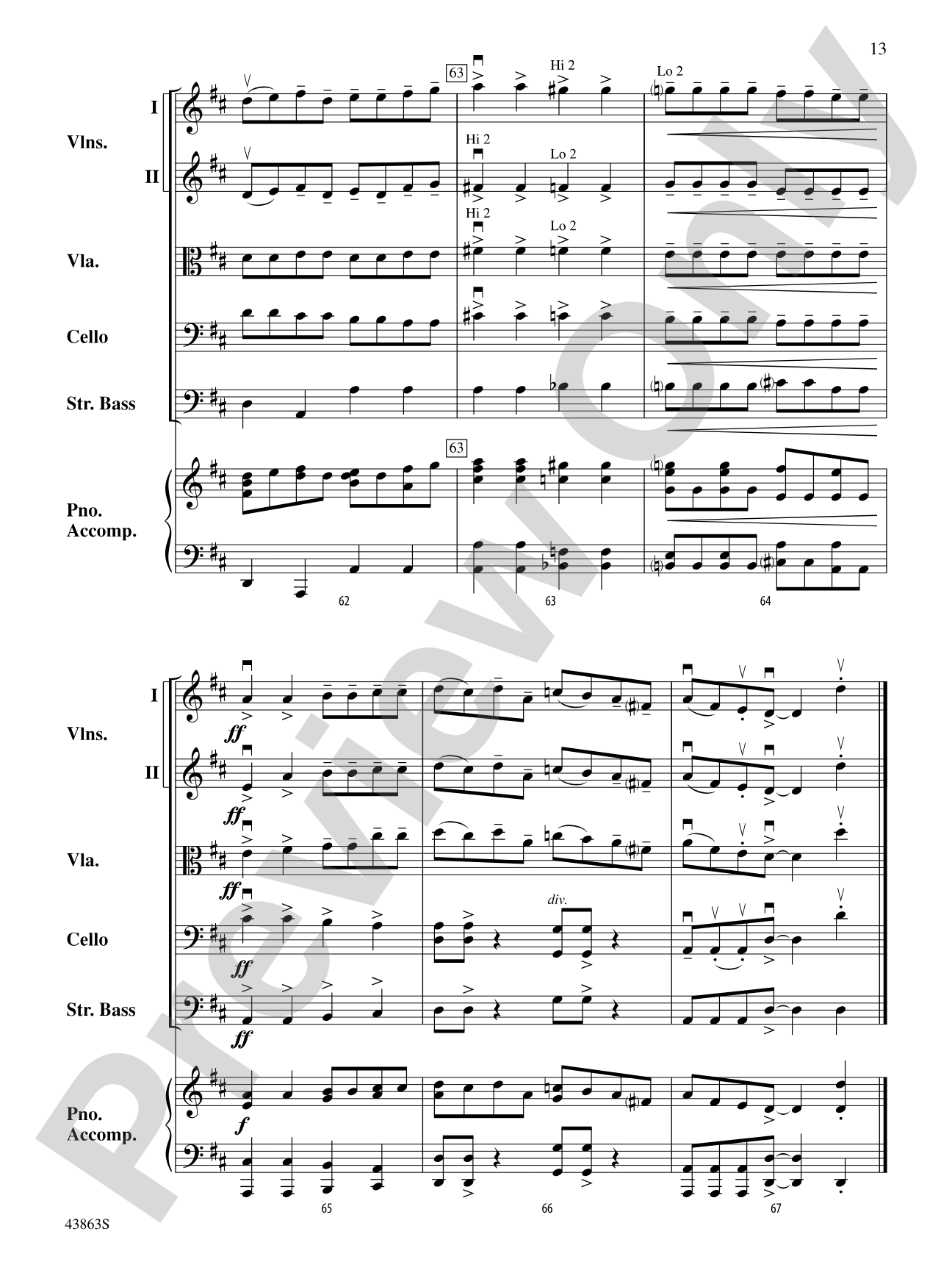

Fiddlin' Casey Jones: String Orchestra Conductor Score & Parts
Traditional American Folk Song / arr. Andrew H. Dabczynski
Grade: 2.5
Item: 00-PK-0006708

$49.00
Pickup currently not available
Buy Extra Parts (Digital PDF Download)
| Product | Price | Quantity |
|---|---|---|
| Fiddlin' Casey Jones: Score | $9.00 | |
| Fiddlin' Casey Jones: 1st Violin | $5.99 | |
| Fiddlin' Casey Jones: 2nd Violin | $5.99 | |
| Fiddlin' Casey Jones: Viola | $5.99 | |
| Fiddlin' Casey Jones: Cello | $5.99 | |
| Fiddlin' Casey Jones: String Bass | $5.99 | |
| Fiddlin' Casey Jones: Piano Accompaniment | $5.99 |
Parts Added to Cart!
Description
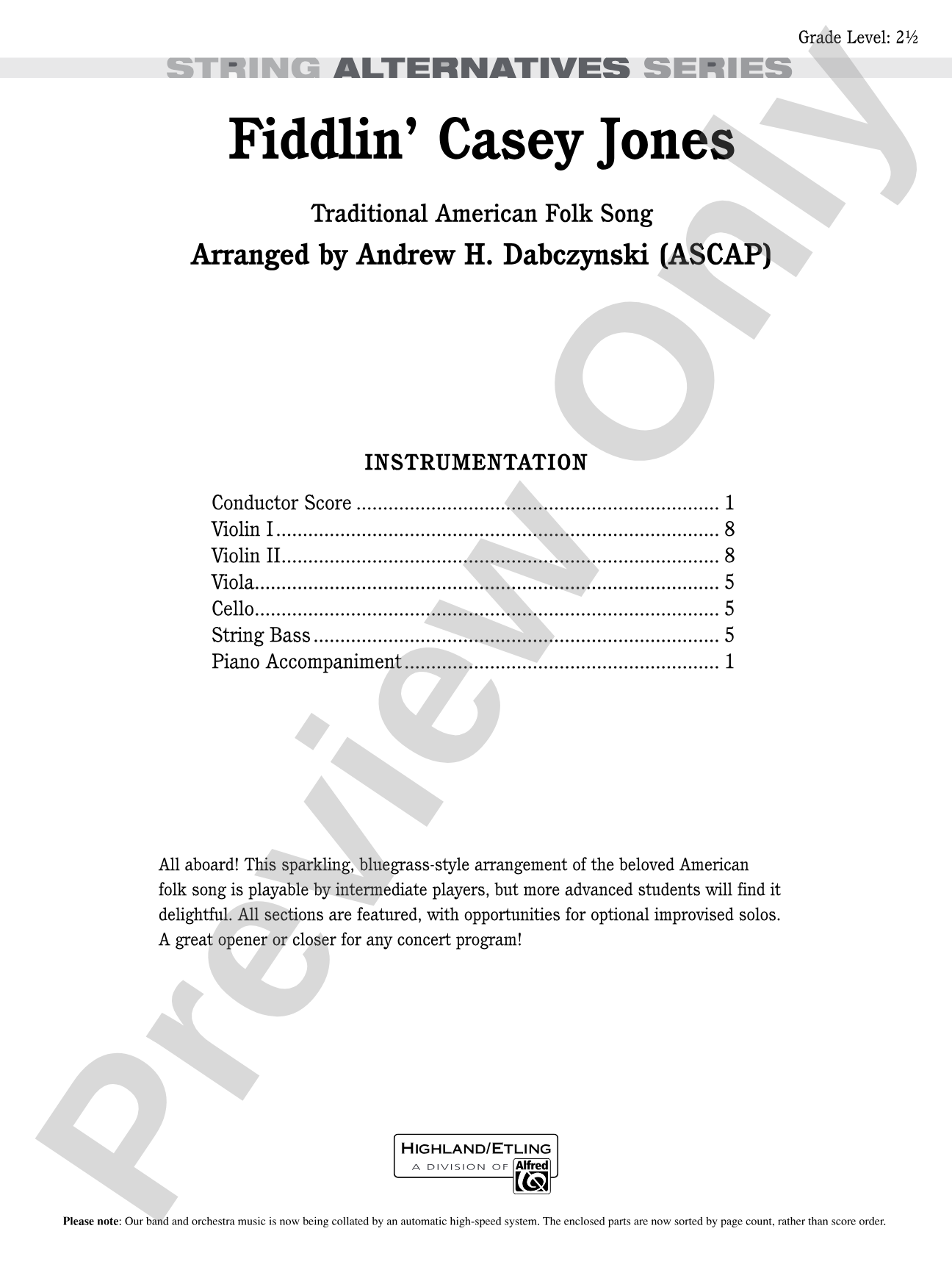
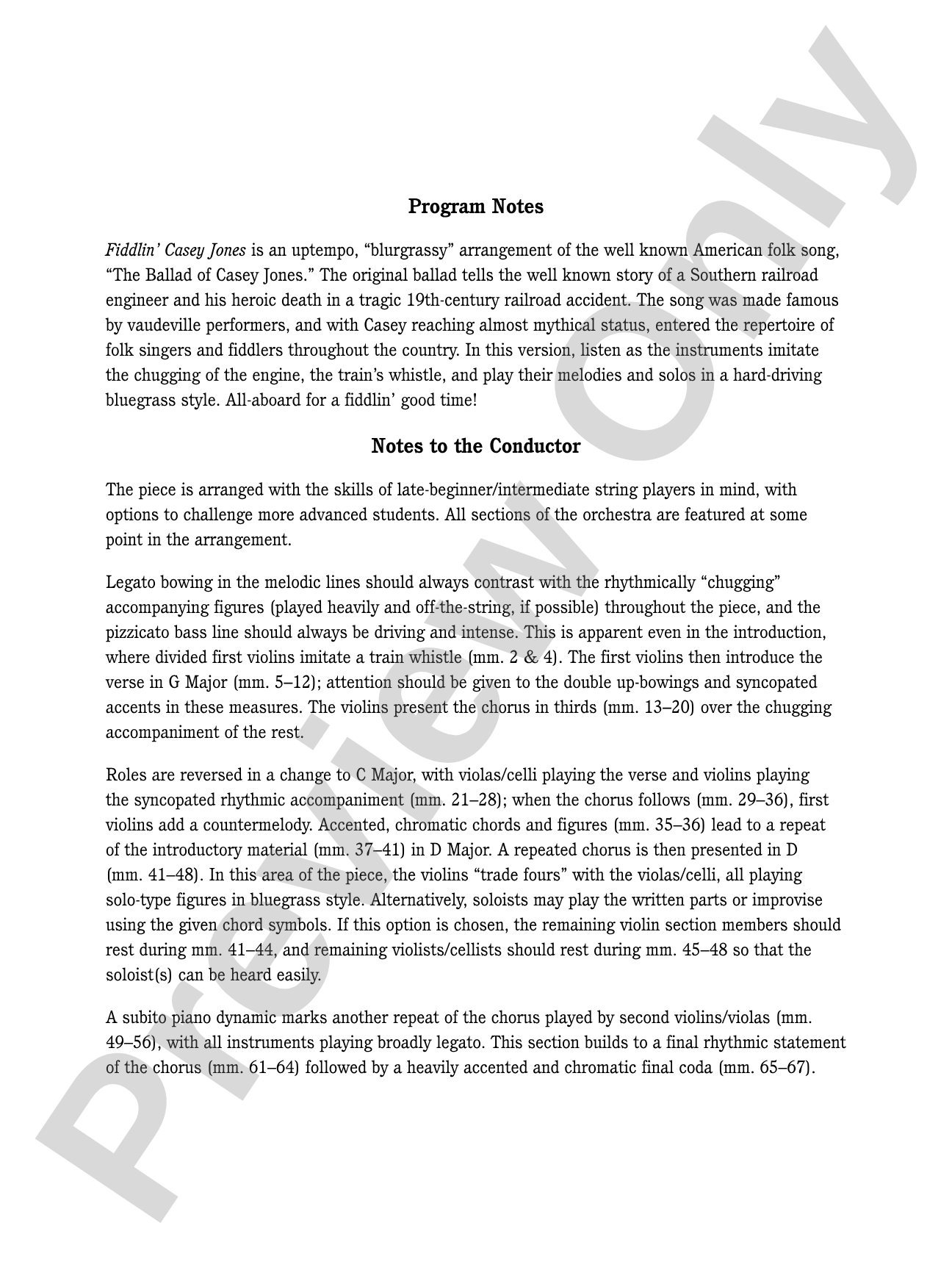
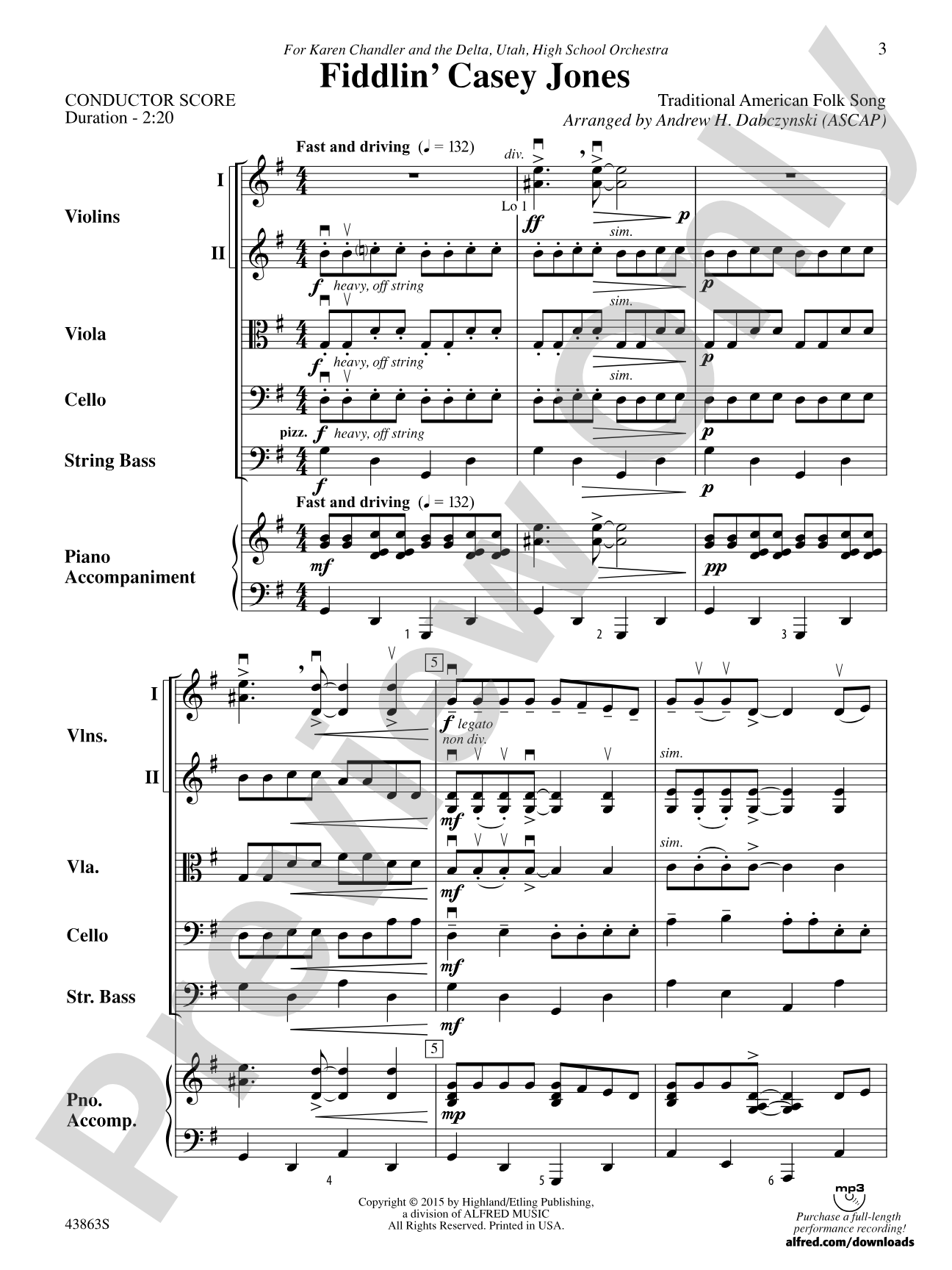
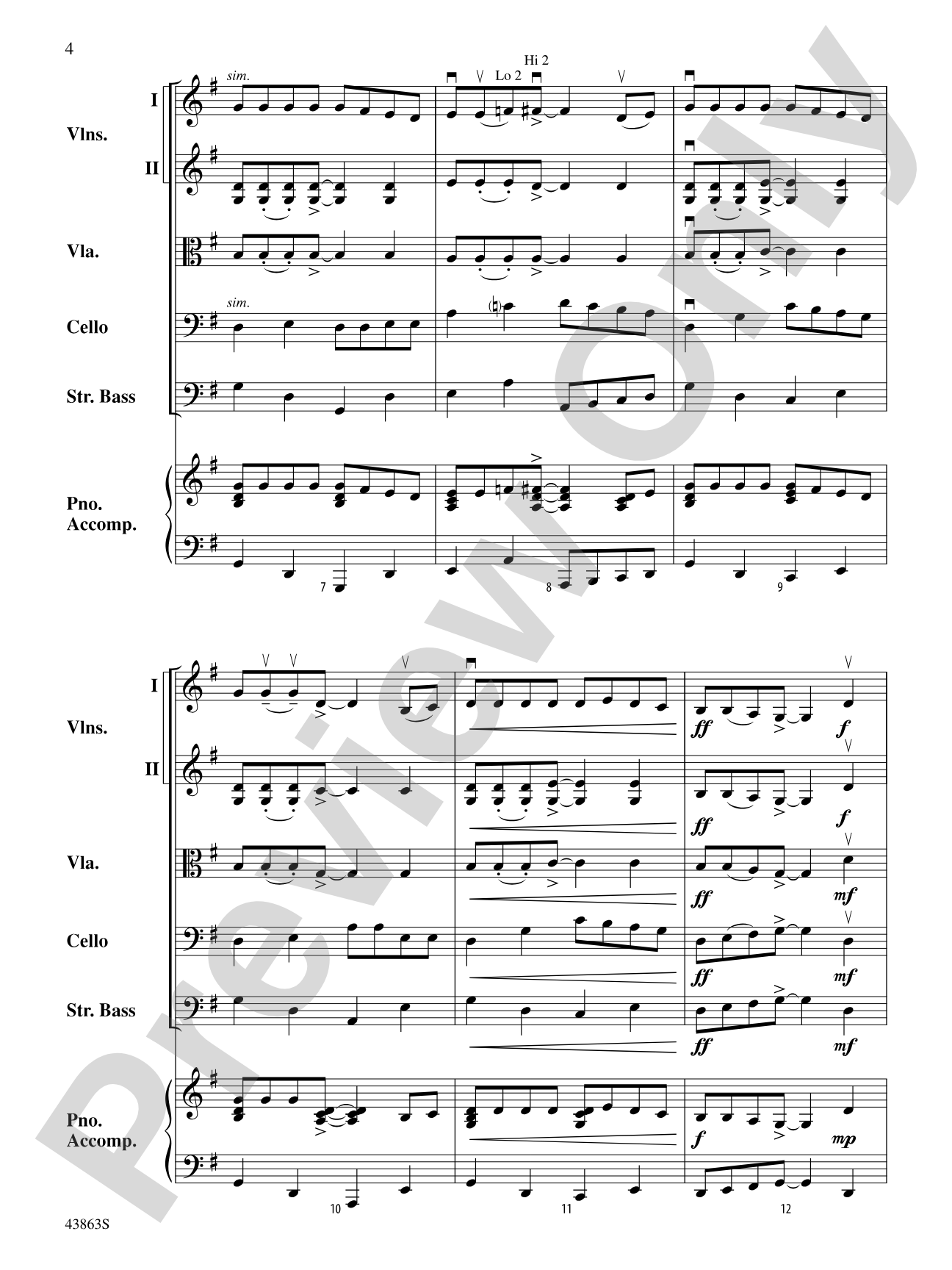
Next stop---"Fiddlin' Casey Jones"--- a piece that's guaranteed to get both the orchestra and audience rolling along! This is a sparkling arrangement of the beloved American folk song that beginning / intermediate string players will have the skills to play, but more advanced students will find delightfully challenging. All sections of the orchestra are featured, with opportunities for optional improvised solos. "Fiddlin' Casey Jones" is a great opener or closer for any concert program. All aboard! (2:20)


Don't just read it, hear it, play along with it, and watch your students grow with it. In MakeMusic Cloud, Fiddlin' Casey Jones: String Orchestra Conductor Score & Parts comes alive with professional accompaniment, adjustable tempo, and built-in practice tools that turn solo practice into real progress.
Open in the Player
Jump straight in and assign it today.
Start Your Free Trial
Open this title and explore the full library in minutes.
Sample Audio
1
Audio File
--:--
0:00
0:00
Sample Video
No sample videos found.
Additional Details
Series:
Highland/Etling String Alternatives
Publisher:
Alfred Music
Page Count:
128
SKU:
00-PK-0006708
More about this title
About the Arranger: Andrew H. Dabczynski

Andrew H. Dabczynski served as Emeritus Professor of Music Education at Brigham Young University, where he established the BYU "New Horizons Orchestra" as both a performance ensemble for adult beginning string players and a training laboratory for string educators. His contributions to music pedagogy earned him BYU's Joseph E. White Fellowship for Teaching and Learning, and in 2005 Utah ASTA named him "Higher Education Teacher of the Year."
Throughout his career, Dabczynski held teaching and administrative positions at the Eastman School of Music and in public school systems across New York and Michigan. His performance experience includes viola positions with the Rochester Philharmonic, Hartford Symphony, Portland Symphony, and other regional orchestras, as well as six years as a member of the Colden String Quartet at Western Michigan University. He holds degrees from Eastman (B.M. in viola performance), the University of Connecticut (M.A.), and the University of Michigan (Ph.D. in Music Education). Beyond his string pedagogy work and co-authorship of the String Explorer method series, Dabczynski has devoted significant research attention to folk music traditions and fiddling practices.
Why we love this
Dabczynski's arrangement captures the infectious energy of this American folk favorite while remaining genuinely playable for developing ensembles. The orchestration distributes musical interest across all sections, preventing any part from dropping out, and the optional improvised solo opportunities give advanced students a chance to stretch without leaving anyone behind.
What to expect
This arrangement sparkles with the charm and humor of the original folk melody, set to a steady, rolling accompaniment that propels the tune forward. The orchestration has the feel of a lively fiddle session adapted for ensemble, complete with the warmth of multiple string voices dancing around a sturdy rhythmic foundation.
Who it's for
String orchestras at the Grade 2.5 level will find both accessible material and genuine musical substance. Beginning and intermediate players have the technical skills to handle the writing, while advanced students discover layered arranging choices and interpretive challenges that keep the piece fresh.
How to get the most out of it
- Keep the forward momentum consistent throughout. This tune lives on its rhythmic pulse, so lock in the bow strokes early in rehearsal and maintain that driving energy from downbeat to final note.
- Bring out the featured sections with clarity. When violas, cellos, or basses trade the melody, let those moments shine by pulling back slightly in the accompaniment figures so listeners track the line.
- If you're using the optional solos, rehearse them separately and establish clear cues with the ensemble so transitions feel natural and the rhythm section stays locked underneath.
- Shape the phrasing with a light touch. Folk material thrives on conversational phrasing rather than heavy dynamic swells, so encourage players to breathe with the tune and let rests speak.
How to use it
"Fiddlin' Casey Jones" works brilliantly as a concert opener to set an energetic, audience-friendly tone, or as a closer to send listeners home smiling. It pairs well with other American folk arrangements or light concert fare and requires minimal setup time, making it ideal for programs where you want a guaranteed crowd-pleaser without sacrificing musical substance.
Skills your students will build
- Reading and maintaining rhythmic precision in a driving, folk-based meter
- Tracking sectional independence when the melody passes between different string parts
- Balancing accompanimental figures in violas and cellos while maintaining transparency
- Shaping musical phrasing with folk idioms rather than classical phrasing conventions
- Responding to optional improvised solos with rhythmic stability and ensemble awareness