

Fiddles Down Under: Viola
Traditional / arr. Andrew H. Dabczynski
Grade: 2
Item: 00-PC-0000934_VA1
$5.99
Pickup currently not available
Description
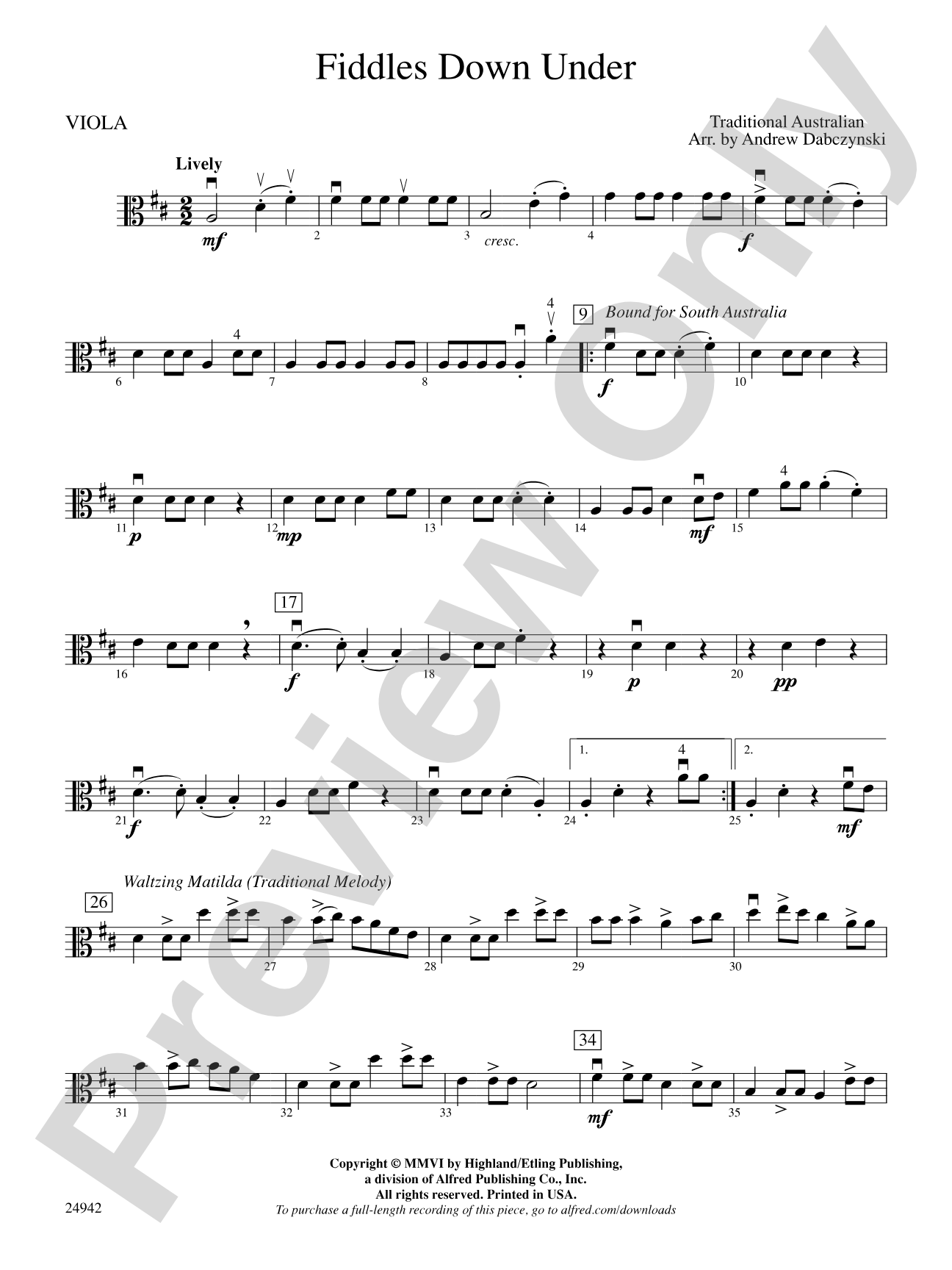
"Fiddles Down Under" presents an opportunity for string students to learn three standard fiddle tunes from the Australian "bush music" tradition. After a brief introduction, the sea chantey "Bound for South Australia" is presented by all the instruments. Later, the orchestra plays two versions of the famous Australian folk tune, "Waltzing Matilda" -- first the older, 'traditional' melody, and finally the popular version so loved throughout the world. Lots of fiddling features -- driving rhythms, shuffles, fun back-up parts, and an energetic bass line -- will make this arrangement a favorite of the players and will leave the audience wanting to shout, "G'day, mate!" This title is available in MakeMusic Cloud.


Don't just read it, hear it, play along with it, and watch your students grow with it. In MakeMusic Cloud, Fiddles Down Under: Viola comes alive with professional accompaniment, adjustable tempo, and built-in practice tools that turn solo practice into real progress.
Open in the Player
Jump straight in and assign it today.
Start Your Free Trial
Open this title and explore the full library in minutes.
Sample Audio
1
Audio File
--:--
0:00
0:00
Sample Video
No sample videos found.
Additional Details
Series:
Highland/Etling String Explorer
Publisher:
Alfred Music
Page Count:
130
SKU:
00-PC-0000934_VA1
More about this title
About the Arranger: Andrew H. Dabczynski

Andrew H. Dabczynski served as Emeritus Professor of Music Education at Brigham Young University, where he founded and directed the BYU "New Horizons Orchestra," an ensemble designed for beginning adult string players and as a teaching laboratory for string educators. His contributions to music education earned him BYU's Joseph E. White Fellowship for Teaching and Learning, along with Utah ASTA's "Higher Education Teacher of the Year" award in 2005 and recognition for "Outstanding Contributions to Music Education" in 2014.
Dabczynski has held teaching positions at the Eastman School of Music and in public school systems across New York and Michigan, while also serving as fine arts supervisor in Waterford, Michigan. A viola performer with credits in major American orchestras including the Rochester Philharmonic and Hartford Symphony, he brings both pedagogical expertise and performance experience to his work. His research interests center on fiddling and folk music transmission, which directly informs his arrangements of traditional repertoire for student ensembles.
Why we love this
Dabczynski captures the driving energy and quirky character of Australian bush music while keeping the technical demands accessible for Grade 2 players. The arrangement balances authentic fiddle idioms (shuffles, driving rhythms, energetic bass lines) with carefully constructed parts that give every player something engaging to do, making the piece rewarding for both seasoned and developing string students.
What to expect
Like stepping into a lively Australian pub where the music never stops. Rhythmic energy propels the piece forward through driving accompaniment and the compelling bass line, while the familiar "Waltzing Matilda" melodies ground the listener in recognized folk tradition. The arrangement captures the warmth and humor of bush music, inviting players and audiences alike to feel the infectious, toe-tapping joy of Australian fiddle culture.
Who it's for
String orchestras and beginning string ensembles at the intermediate level who are ready to explore folk music traditions beyond Western European classical repertoire. This works particularly well for ensembles seeking engaging, culturally diverse material that maintains accessibility while building ensemble musicianship.
How to get the most out of it
- Establish the shuffle rhythm firmly in rehearsal before adding melodic content. Have the rhythm section lock the steady pulse first, then layer in the bow patterns one section at a time.
- Shape the "Bound for South Australia" introduction with slight dynamic swells to mirror the text painting of ocean movement, even though this is an instrumental arrangement.
- Differentiate the two "Waltzing Matilda" versions clearly in performance. The traditional melody should feel more measured and folk-like, while the popular version springs forward with rhythmic vitality.
- Let the bass line drive the piece. Encourage cellists and basses to play with rhythmic confidence and slight articulation to anchor the fiddle-style accompaniment parts above them.
How to use it
Program this alongside other folk or traditional music from your curriculum to build a thematic concert section celebrating global fiddle traditions. It also serves as an excellent spring concert selection, where the energetic character and accessible difficulty level give developing players confidence before larger audiences. The piece works well following a more serious contemporary work, as its exuberant character provides welcome contrast and sends audiences home smiling.
Skills your students will build
- Reading and executing shuffle rhythms and driving syncopated accompaniment patterns
- Maintaining a steady pulse while playing rhythmically complex support parts
- Adapting bow articulation for fiddle-style pizzicato and rhythmic punctuation
- Recognizing stylistic differences in folk melody interpretation (traditional vs. popular variants)
- Building confidence in ensemble balance when multiple rhythmic and melodic layers occur simultaneously